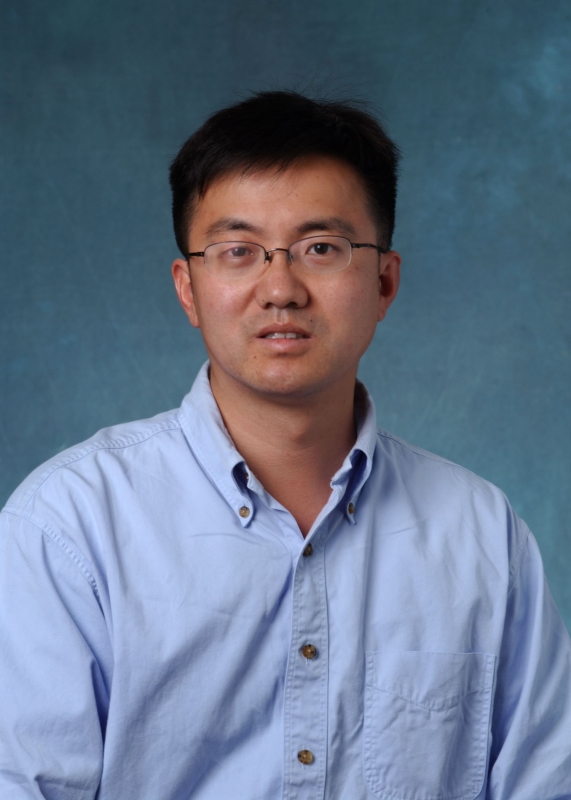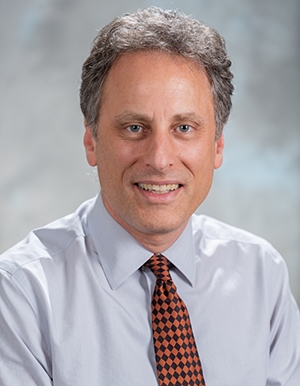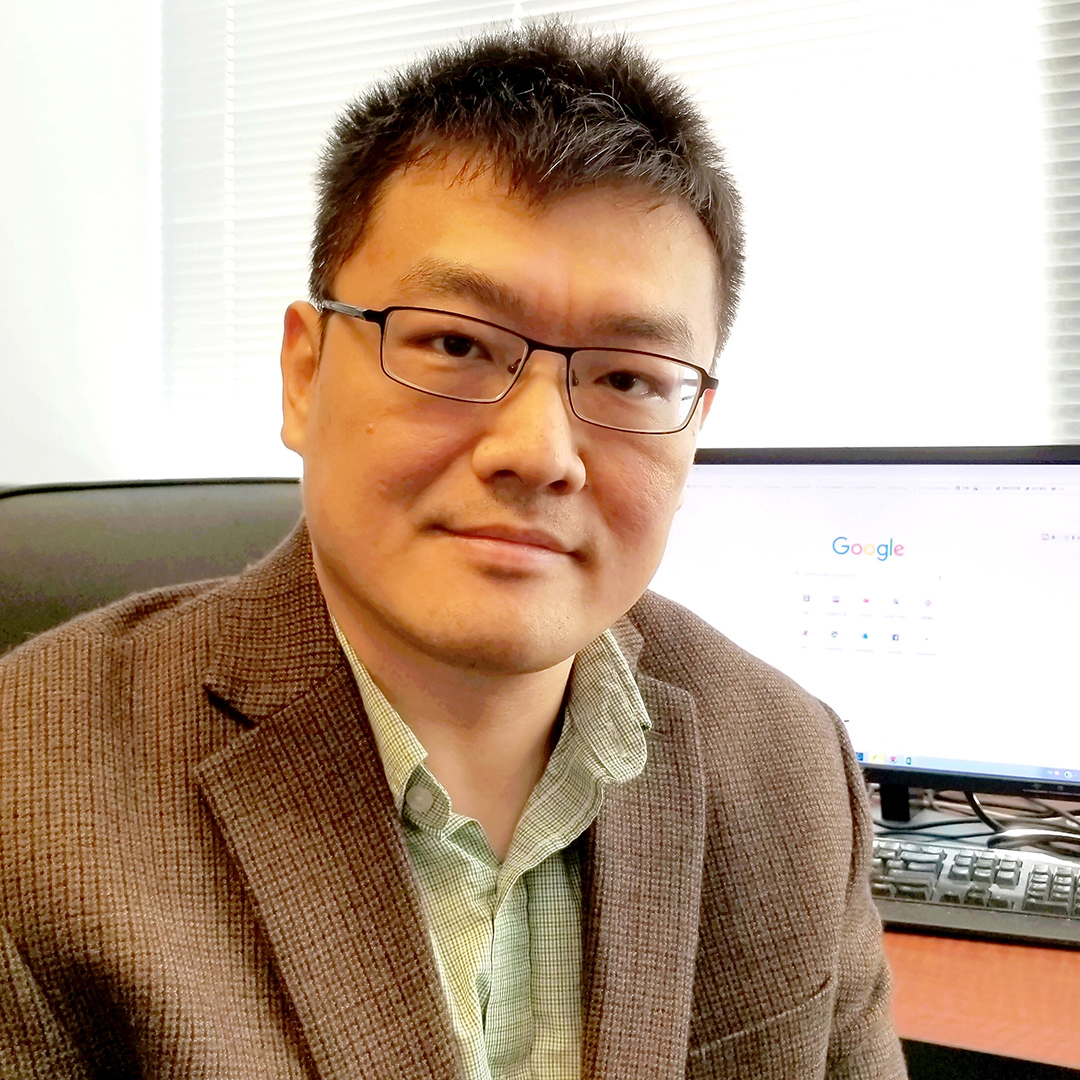
Hailong Chen

Hailong Chen
hailong.chen@me.gatech.edu
nanoACES

The research in Chen Group is cross-disciplinary, bridging mechanical engineering, chemistry, and materials science, focusing on electrochemical energy storage related materials and devices, as well as functional and structural metals/alloys. The technical expertise of the group include development and application of advance in situ characterization methods for energy storage devices, computation-aided materials design and novel synthesis methods for nanostructured materials.

Associate Professor, Woodruff School of Mechanical Engineering
Phone
404.385.5598
Office
Love 329
Additional Research

Materials Design, in situ characterization, energy conversion and Storage, batteries, and functional materials

Google Scholar
https://scholar.google.com/citations?hl=en&user=M0ZEwtEAAAAJ&view_op=list_works&sortby=pubdate
ME Profile Page BBISS Initiative Lead Project - Sustainable Resources for Clean Energy
Hailong
Chen
Show Regular Profile

Thomas Orlando

Thomas Orlando
thomas.orlando@chemistry.gatech.edu
School of Chemistry and Biochemistry Profile Page

Our group is primarily a surface chemistry and physics group which focuses on the use of high-powered pulsed lasers, low-energy electron scattering, micro-plasmas, mass spectrometry and ultrahigh vacuum surface science techniques. We use this "tool-set" as well as some scattering theory to unravel the details of non-thermal processes occurring under a variety of non-equilibrium conditions. Our group is based upon an interdisciplinary approach and thus our research programs span the realm of fundamental investigations in molecular physics, surface physics and chemistry, bio-physics, bio-polymer formation under pre-biotic conditions as well as working in applied areas of relevance to analytical technique developments, atmospheric chemistry, catalysis and molecular hydrogen generation.

Professor, School of Chemistry and Biochemistry
SEI Senior Advisor: Energy Minor
Phone
404.894.4012
Office
MoSE G209C
Additional Research

Surfaces and Interfaces; Catalysis; Advanced Characterization; Hydrogen; Nuclear

Google Scholar
https://scholar.google.com/citations?hl=en&user=6cbXFpkAAAAJ&view_op=list_works&sortby=pubdate

Electron and Photon Induced Chemistry on Surfaces Lab
Thomas
Orlando
Show Regular Profile

Jonathan Colton

Jonathan Colton
jonathan.colton@me.gatech.edu
ME Profile Pag

Colton's research interests are in the areas of design and manufacturing, focusing on polymers and polymer composites. Processing techniques, such as micro-molding, injection molding, filament winding, resin transfer molding and the like, are studied and used to fabricate these devices and products, such as smart composite structures.

The design of processing techniques and equipment for metamaterials also are being studied with applications being dielectric materials for electromagnetic applications. Due to the small-scale physics associated with their engineering, nano-scale metamaterials exhibit superior properties and enhanced performance.

Colton has a strong passion for the application of engineering for the common good – "humanitarian design and engineering" and "design that matters," - such as in developing countries and other resource limited environments. To be successful, multidisciplinary teams must work together to produce products that function as well as delight, that exceed customer's expectations, regardless of where the product is used. Along these lines, product design and role that the interactions between engineering and industrial design forms another research interest.

Professor, Woodruff School of Mechanical Engineering
Phone
404.894.7407
Office
Callaway 434
Additional Research

Manufacturing and CAE & Design; Humanitarian Design and Engineering (HumDE); Manufacturing; Production; and Design; Polymer and polymer composites; Biomedical and Medical Devices; Technologies for developing countries and other resource-limited environment; Product development and industrial design; Computer-Aided Engineering; Polymeric composites; Materials Design

Google Scholar
https://scholar.google.com/citations?hl=en&user=nW3g6dMAAAAJ&view_op=list_works&sortby=pubdate
Jonathan
Colton
S.
Show Regular Profile

David Collard

David Collard
david.collard@cos.gatech.edu
Chemistry Profile Page

The main focus of Collard's research is the molecular self-assembly in polymers which allows for the formation of new supermolecular architectures that take on new functions and promise potential benefits and novel applications. Currently, his group is studying surfactants, spontaneously assembled monolayers, and liquid crystals. Materials under study include conjugated electronically conductive polymers and new functional polyesters. Techniques used to construct and probe the structure of our supramolecular assemblies including: synthesis, electrochemistry, thermal analysis, X-ray diffraction and microscopy.

Professor, School of Chemistry and Biochemistry
Associate Dean, College of Sciences
Phone
404.894.4026
Additional Research

Conducting polymers, diffraction methods, functional co-polymers

Collard Group
David
Collard
M.
Show Regular Profile

Chuck Zhang

Chuck Zhang
chuck.zhang@isye.gatech.edu
ISyE Profile Page

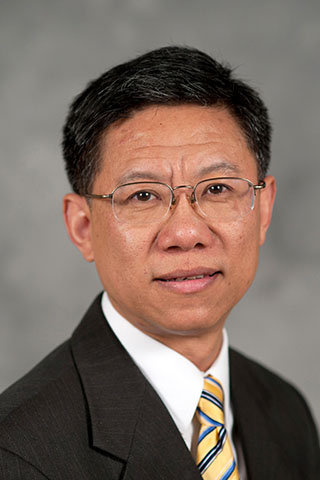
Chuck Zhang is the Harold E. Smalley Professor in the H. Milton Stewart School of Industrial and Systems Engineering at Georgia Tech.

Zhang's research interests include scalable nanomanufacturing, modeling, simulation, and optimal design of advanced composite and nanomaterials manufacturing processes, multifunctional materials development, geometric dimensioning and tolerancing, and metrology. Most recently, he has initiated new research and education programs in advanced materials and manufacturing engineering for orthotics and prosthetics (O&P) applications. His research projects have been sponsored by a number of organizations, including the Air Force Office of Scientific Research, Army Research Laboratory, National Institute of Standards and Technology, National Science Foundation, Office of Naval Research, and Society of Manufacturing Engineers, as well as industrial companies such as ATK Launch Systems, Cummins, General Dynamics, GKN Aerospace Services, Lockheed Martin, and Siemens Power Generation.

Zhang received his Ph.D. degree in Industrial Engineering from the University of Iowa, an M.S. degree in Industrial Engineering from the State University of New York at Buffalo, and B.S. and M.S. degrees in Mechanical Engineering from Nanjing University of Aeronautics and Astronautics in China. Prior to joining ISyE, Zhang served as a professor and chairman of the Department of Industrial and Manufacturing Engineering at the Florida A&M University - Florida State University College of Engineering.

Harold E. Smalley Professor, H. Milton Stewart School of Industrial and Systems Engineering
Phone
404.894.4321
Office
Groseclose 0205 334
Additional Research

CompositesManufacturingNanomanufacturing

Google Scholar
https://scholar.google.com/citations?hl=en&user=8FCK0CIAAAAJ&view_op=list_works&sortby=pubdate
LinkedIn System Informatics and Control Group
Chuck
Zhang
Show Regular Profile

David S. Citrin

David S. Citrin
david.citrin@ece.gatech.edu
Website

Professor Citrin earned a B.A. from Williams College (1985) and a M.S. (1987) and a Ph.D. (1991) from the University of Illinois, all in physics, where his dissertation was on the optical properties of semiconductor quantum wires. Subsequently, he was a post-doctoral research fellow at the Max Planck Institute for Solid State Research, Stuttgart, Germany (1992-1993) and Center Fellow at the Center for Ultrafast Optical Science at the University of Michigan (1993-1995). Dr. Citrin was an assistant professor of physics and materials science at Washington State University (1995 to 2001).

Professor Citrin joined the faculty at Georgia Tech in 2001 where his work focuses on terahertz technology and nanotechnology. He is a recipient of a Presidential Early Career Award for Scientists and Engineers and of a Friedrich Bessel Award from the Alexander Von Humboldt Stiftung. In addition, he is Project Coordinator on Nonlinear Optics and Dynamics at Georgia Tech-CNRS UMI 2958 located at Georgia Tech-Lorraine. Professor Citrin’s research in terahertz imaging is featured in the Georgia Tech press release, ”Imaging Technique Unlocks the Secrets of 17th Century Artists"; a list of some media placements from the press release may be found at http://photonics.georgiatech-metz.fr/node/33.

Research interests: 

  • Terahertz nondestructive testing of materials
  • Terahertz characterization of art and cultural heritage
  • Chaos and nonlinear dynamics in external-cavity semiconductor lasers
  • Nanophotonics
  • High-speed electronic, photonic, and optoelectronic devices
  • Nonlinear optical properties of semiconductor materials and devices
Professor
Phone
404.894.2000
Office
MIRC 211
David
Citrin
S.
Show Regular Profile

Sankar Nair

Sankar Nair
sankar.nair@chbe.gatech.edu
ChBE Profile Page
Professor, School of Chemical and Biomolecular Engineering
James F. Simmons Faculty Fellow, School of Chemical and Biomolecular Engineering
Associate Chair for Industry Outreach, School of Chemical and Biomolecular Engineering
Phone
404.894.4826
Office
ES&T 2224
Additional Research

Nanomaterials; Biofuels; Carbon Capture; Catalysis; Separations Technology; Chemical Recovery; Energy & Water

Google Scholar
https://scholar.google.com/citations?hl=en&user=DCrJnGIAAAAJ&view_op=list_works&sortby=pubdate

Nair Research Group
Sankar
Nair
Show Regular Profile

Vladimir Tsukruk

Vladimir Tsukruk
vladimir@mse.gatech.edu
SEMA Lab

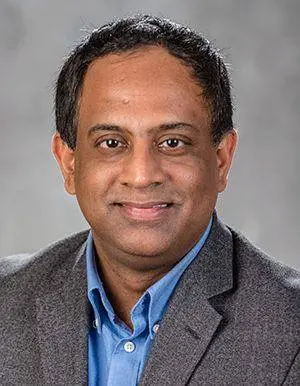
Vladimir V. Tsukruk is a Dean’s Distinguished Professor of Engineering at the School of Materials Science and Engineering, Georgia Institute of Technology, a founding Director of Microanalysis Center, and founding co-director of DoD BIONIC Center of Excellence.  He received MS degree in physics from the National University of Ukraine, PhD in polymer science and DSc in chemistry from the National Academy of Sciences of Ukraine. He carried out his post-doc research at the U. Marburg, Darmstadt TU, and U. Akron.

He serves on the Editorial Advisory Boards of ten professional journals and as an Associate Editor at ACS Applied Materials and Interfaces. He has co-authored more than 400 refereed articles in archival journals and five books, which have been cited more than 15,500 times with H-index of 60 (WoS).  He has organized ten professional symposia and trained about 70 students currently employed in industry, academia, and national labs.  His research in the field of surfaces, interfaces, directed assembly of synthetic/natural polymers and nanostructures, and bioinspired hybrid nanomaterials has been recognized by The Georgia Tech Outstanding Research Author Award (2015), the Humboldt Lectureship (2011), Humboldt Research Award (2010) and the National Science Foundation Special Creativity Award (2006) among others.

Regents' Professor, School of Materials Science and Engineering
Phone
404.894.6081
Office
M Building 3100M
Additional Research

Bio-Inspired Materials; Surfaces and Interfaces; Biomolecular-Solids; Optical Materials; Smart materials. Bionanocomposites, hybrid nanomaterials, optically active materials, photonic materials, responsive materials, and sensors.

Google Scholar
https://scholar.google.com/citations?hl=en&user=vs3ogn8AAAAJ&view_op=list_works&sortby=pubdate
MSE Profile Page
Vladimir
Tsukruk
Show Regular Profile

H. Jerry Qi

H. Jerry Qi
qih@me.gatech.edu
Active Materials & Additive Manufacturing Lab

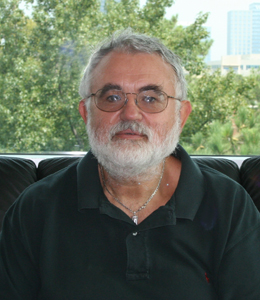
H. Jerry Qi is a professor and the Woodruff Faculty Fellow in the George W. Woodruff School of Mechanical Engineering at Georgia Institute of Technology. He received his bachelor degrees (dual degree), master and Ph.D. degree from Tsinghua University (Beijing, China) and a ScD degree from Massachusetts Institute of Technology (Boston, MA, USA). After one year postdoc at MIT, he joined University of Colorado Boulder as an assistant professor in 2004, and was promoted to associate professor with tenure in 2010. He joined Georgia Tech in 2014 as an associate professor with tenure and was promoted to a full professor in 2016. Qi is a recipient of NSF CAREER award (2007). He is a member of Board of Directors for the Society of Engineering Science. In 2015, he was elected to an ASME Fellow. The research in Qi's group is in the general area of soft active materials, with a focus on 1) 3D printing of soft active materials to enable 4D printing methods; and 2) recycling of thermosetting polymers. The material systems include: shape memory polymers, light activated polymers, vitrimers. On 3D printing, they developed a wide spectrum of 3D printing capability, including: multIMaTerial inkjet 3D printing, digit light process (DLP) 3D printing, direct ink write (DIW) 3D printing, and fused deposition modeling (FDM) 3D printing. These printers allow his group to develop new 3D printing materials to meet the different challenging requirements. For thermosetting polymer recycling, his group developed methods that allow 100% recycling carbon fiber reinforced composites and electronic packaging materials. Although his group develops different novel applications, his work also relies on the understanding and modeling of material structure and properties under environmental stimuli, such as temperature, light, etc, and during material processing, such as 3D printing. Constitutive model developments are typically based on the observations from experiments and are then integrated with finite element through user material subroutines so that these models can be used to solve complicated 3D multiphysics problems involving nonlinear mechanics. A notable example is their recent pioneer work on 4D printing, where soft active materials is integrated with 3D printing to enable shape change (or time in shape forming process). Recently, his developed a state-of-the-art hybrid 3D printing station, which allows his group to integrate different polymers and conduct inks into one system. Currently, his group is working on using this printing station for a variety of applications, including printed 3D electronics, printed soft robots, etc.

Professor, Woodruff School of Mechanical Engineering
Woodruff Faculty Fellow, Woodruff School of Mechanical Engineering
Phone
404.385.2457
Office
MRDC 4104
Additional Research

Additive/Advanced Manufacturing; micro and nanomechanics; Recycling; Soft Materials; Conducting Polymers

Google Scholar
https://scholar.google.com/citations?hl=en&user=JSjlLTgAAAAJ&view_op=list_works&sortby=pubdate
ME Profile Page
H. Jerry
Qi
Show Regular Profile

Mark Prausnitz

Mark Prausnitz
mark.prausnitz@chbe.gatech.edu
Center for Drug Design, Development and Delivery

Professor Mark R. Prausnitz is a Regents' Professor and the Love Family Professor in Chemical and Bimolecular Engineering in the School of Chemical & Bimolecular Engineering. He received his B.S. in 1988 from Stanford University and his Ph.D. in 1994 from the Massachusetts Institute of Technology. Professor Prausnitz and his colleagues carry out research on biophysical methods of drug delivery, which employ microneedles, ultrasound, lasers, electric fields, heat, convective forces and other physical means to control the transport of drugs, proteins, genes and vaccines into and within the body. A major area of focus involves the use of microneedle patches to apply vaccines to the skin in a painless, minimally invasive manner. In collaboration with Emory University, the Centers for Disease Control and Prevention, and other organizations, Professor Prausnitz's group is advancing microneedles from device design and fabrication through pharmaceutical formulation and pre-clinical animal studies through studies in human subjects. In addition to developing a self-administered influenza vaccine using microneedles, Professor Prausnitz is translating microneedle technology especially to make vaccination in developing countries more effective. The Prausnitz group has also developed hollow microneedles for injection into the skin and into the eye in collaboration with Emory University. In the skin, research focuses on insulin administration to human diabetic patients to increase onset of action by targeting insulin delivery to the skin. In the eye, hollow microneedles enable precise targeting of injection to the suprachoroidal space and other intraocular tissues for minimally invasive delivery to treat macular degeneration and other retinal diseases. Professor Prausnitz and colleagues also study novel mechanisms to deliver proteins, DNA and other molecules into cells. Cavitation bubble activity generated by ultrasound and by laser-excitation of carbon nanoparticles breaks open a small section of the cell membrane and thereby enables entry of molecules, which is useful for gene-based therapies and targeted drug delivery. In addition to research activities, Professor Prausnitz teaches an introductory course on engineering calculations, as well as two advanced courses on pharmaceuticals and technical communication, both of which he developed. He also serves the broader scientific and business communities as a frequent consultant, advisory board member and expert witness.

Faces of Research - Profile Article

Regents' Professor, School of Chemical and Bimolecular Engineering
J. Erskine Love Jr. Chair; Chemical and Biomolecular Engineering
Director, Center for Drug Design, Development and Delivery
Phone
404.894.5135
Office
Petit 1312
Additional Research
Micro and Nano Engineering; Nanomedicine; microneedle patches; Microfabrication; nanoparticle drug delivery
Google Scholar
http://scholar.google.com/scholar?hl=en&q=mark+prausnitz&btnG=Search&as_sdt=80001&as_ylo=&as_vis=0
ChBE Profile Page
Mark
Prausnitz
Show Regular Profile