Susan Burns

Susan Burns
susan.burns@ce.gatech.edu
Website

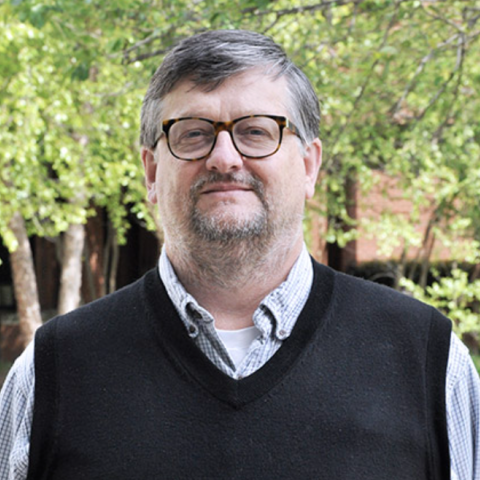
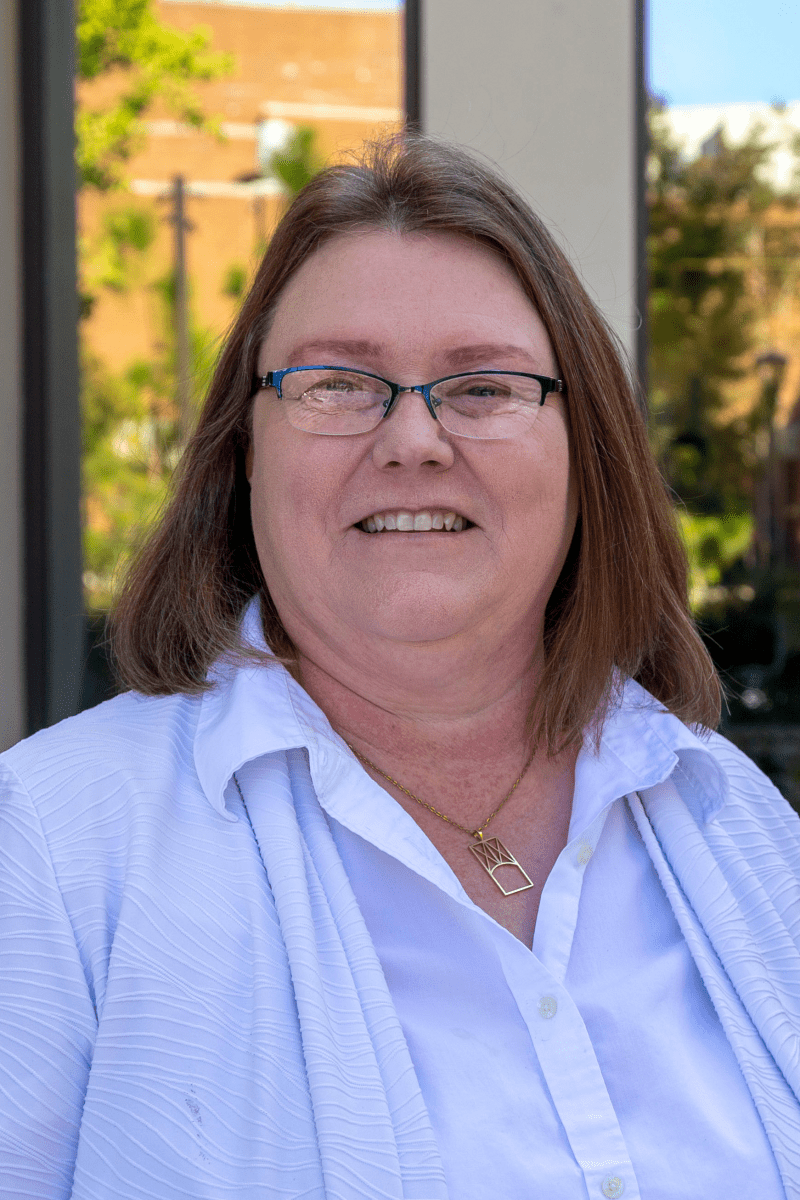
Susan E. Burns, Ph.D., P.E., F.ASCE is a professor in the School of Civil and Environmental Engineering and associate chair for administration and finance at the Georgia Institute of Technology in Atlanta, Georgia, USA. Burns earned a B.C.E. in civil engineering (1990), an M.S. in civil engineering (1996), an M.S. in environmental engineering (1996), and Ph.D. in civil engineering (1997), all from Georgia Tech. After completing her Ph.D., Professor Burns joined the faculty at the University of Virginia where she served for over seven years. In 2004, she joined the faculty at Georgia Tech as an associate professor. 

Burns' research focuses on applications in geoenvironmental engineering, with particular emphasis on the productive reuse of waste materials including dredged sediments, fly ash, and biomass fly ash, treatment of highway stormwater runoff using engineered materials, erosion control of soils on highway rights-of-way, interfacial behavior of organic- and inorganic-coated soils, the transport and behavior of microbubbles in otherwise saturated porous media, and the hydraulic conductivity and consolidation properties of fine-grained soils using seismic piezocone penetration testing (SPCPT). Funding for her research group has come from federal, state, and industry sources, including a CAREER Award from the National Science Foundation in 2000. Burns has also received major funding from the US Department of Energy, the US Army Corps of Engineers, the US Department of Education, the Virginia Transportation Research Council, the Georgia Department of Transportation, Southern Company, and other industrial sources. 

Burns is a recipient of the National Science Foundation CAREER award, the Arthur Casagrande Professional Development Award (ASCE), the Edmund Friedman Young Engineer Award (ASCE), the Alumni Board of Trustees Teaching Award (University of Virginia), and the David Harrison III Award for Undergraduate Advising (University of Virginia). She was awarded a University Teaching Fellowship (University of Virginia), and was named a Class of 1969 Teaching Scholar (Georgia Tech) and a Class of 1969 Teaching Fellow (Georgia Tech). Most recently, she was selected as the recipient of the 2012 CEE appreciation award (CEE, Georgia Tech) and a 2012 Class of 1934 Teaching Effectiveness Award. She was elected Fellow of the American Society of Civil Engineers in 2013. 

Burns has served as the president of the United States Universities Council on Geotechnical Education and Research (USUCGER), an organization of approximately 400 professors of geotechnical engineering in the US and abroad (www.usucger.org). She is a past member of the National Research Council's (NRC) Standing Committee on Geological and Geotechnical Engineering, and a past member of the NRC's Committee on Assessment of the Performance of Engineered Waste Containment Barriers. She has chaired the American Society of Civil Engineers/GeoInstitute Geoenvironmental Engineering Committee, and is a past member of the GeoInstitute Awards Committee, and the Transportation Research Board's Committee on Physicochemical Phenomena in Soils. Additionally, she served as an editorial board member for ASCE's Journal of Geotechnical and Geoenvironmental Engineering. She served on the organizing committee for the International Symposium on Deformational Characteristics of Geomaterials (IS Atlanta 2008) and the Fifth International Conference on Scour and Erosion, and served as the editor for proceedings at both conferences. 

At Georgia Tech, Burns has chaired the School of Civil and Environmental Engineering's graduate committee, served on the School's statutory advisory committee, served as the graduate coordinator for the Geosystems Group, and served as the group leader for the geosystems group in the School of Civil and Environmental Engineering. She was the School's associate chair for undergraduate programs for five years before taking over as associate chair for finance and administration in 2018. At the Institute level, she has served as a member of the Academic Senate and General Faculty Assembly and the Student Academic and Financial Affairs Committee.

Interim Associate Vice President for Research Operations and Infrastructure
Professor, School of Civil and Environmental Engineering
Associate Chair for Finance & Administration; School of Civil & Environmental Engineering
Phone
404.894.2285
Additional Research

Geosystems; Geomaterials; Materials Design; Nanocomposites; Transport of Microbubbles
Google Scholar
https://scholar.google.com/citations?hl=en&user=3biQ8LkAAAAJ&view_op=list_works&sortby=pubdate
Susan
Burns
E.
Show Regular Profile

Preet Singh

Preet Singh
preet.singh@mse.gatech.edu
Corrosion and Materials Lab

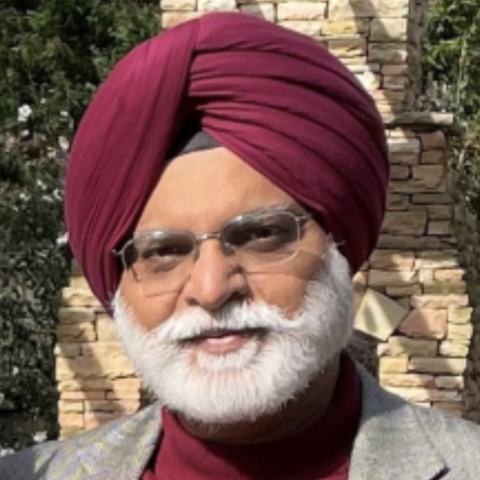
Prior to joining MSE in July 2003 Professor Singh was a faculty member in Corrosion and Materials Engineering Group at The Institute of Paper Science and Technology (IPST) since 1996.  While in IPST Singh worked on fundamental as well as applied research projects related to the corrosion problems in the pulp and paper industry. From 1990 to 1996, he was a Senior Research Associate at Case Western Reserve University, Cleveland, Ohio, working on various materials and corrosion related research projects, including damage accumulation in metal matrix composites (MMCs), Environmental sensitive fracture of Al-alloys MMCs, and High temperature oxidation of Nb/Nb5Si3 composites. He received the Alcan International's Fellowship in 1988-90 to work on "Effects of Low Melting Point Impurities on Slow Crack Growth in Al Alloys,"  He has published over 50 papers in reputed scientific journals and conference proceedings. He is active member of NACE, TMS, TAPPI and has co-organized a number of international symposiums.

Reliable performance of the materials is very important for any industrial process and especially for the chemical process industry for the manufacture of a high quality product. Material selection is generally based on the required material properties, low initial capital investment, and minimum maintenance. Changes in the process parameters to improve products can often lead to higher corrosion susceptibilities of the plant materials. Moreover, with increase in capital cost, there is pressure to extend the life of existing plant equipment beyond its original design life. Corrosion and Materials Engineers are also playing a key role in selecting, maintaining, and modifying materials for changing needs for every industry. Corrosion Science and Engineering research includes understanding the basic mechanisms involved in material degradation in given environments and using that knowledge to develop a mitigation strategy against environment-induced failures

Professor, School of Materials Science and Engineering
Associate Chair of Graduate Studies, School of Materials Science and Engineering
Phone
404.894.6641
Office
IPST 246
Additional Research

Composites; fracture and fatigue; stress corrosion; Materials Failure and Reliability; Biofuels; Chemical Recovery; Environmental Processes; Sustainable Manufacturing; Energy & Water; Corrosion & Reliability

Google Scholar
https://scholar.google.com/citations?hl=en&user=AqrDFI8AAAAJ&view_op=list_works&sortby=pubdate
MSE Profile Page
Preet
Singh
Show Regular Profile

Carson Meredith

Carson Meredith headshot photo
carson.meredith@chbe.gatech.edu
ChBE Profile Page

Carson Meredith is Professor and James Preston Harris Faculty Fellow in the School of Chemical & Biomolecular Engineering at Georgia Tech and serves as Executive Director of the Renewable Bioproducts Institute (RBI). 


His research focuses on sustainable materials and bioproducts, with particular emphasis on biomass-derived polymers such as cellulose and chitin nanomaterials. Representing the contributions of students and collaborators, this work addresses critical challenges in packaging, coatings, and recycling, and has been featured in NewsweekNBC Nightly NewsBBC, and NPR. Meredith’s research also includes innovations in polymer films, foams, composites and particle adhesion.


Meredith has published over 140 peer-reviewed articles and book chapters, with more than 7,600 citations. His recent research includes the development of recyclable nanocellulose coatings and water vapor-resistant films using renewable materials. He has received multiple patents and has led over $30 million in federal and industry funded research. 


Meredith has served in leadership roles across campus and nationally. At Georgia Tech, he has led RBI since 2020, one of eleven interdisciplinary research institutes, where he has built a community of over 70 faculty focused on circular materials, bio industrial manufacturing, and low-impact papermaking. He is also a member of advisory boards for the Bioproducts Institute (University of British Columbia) and the DOE Joint Bioenergy Institute (JBEI) and serves on the editorial board of Green Materials


He teaches courses in forest product technology and sustainable materials, and co-founded GT-EQUAL, the first American Chemistry Society Bridge Program in chemical engineering. He also led the development of a graduate certificate in Data Science for the Chemical Industry and created a MOOC on High-Throughput Development of Materials, which has reached over 14,000 learners. 


Meredith earned his Ph.D. in Chemical Engineering from the University of Texas at Austin and his B.Ch.E. from Georgia Tech. 

Shape 

Research 

Meredith’s research centers on sustainable materials and bioproducts, with a focus on: 

  • Cellulose and chitin nanomaterials 

  • Renewable packaging and coatings         

  • Polymer thin films and foams

  • Particle adhesion 

  • Energy efficient drying in natural fiber manufacturing


His work integrates environmental sustainability into materials design and manufacturing, and he collaborates across disciplines to advance scalable climate solutions. 

Shape 

Awards and Distinctions 


Selected Publications 

  • Hickmann, T., Tao, L., Stingelin, N., Meredith, J.C. (2024). Low-water-permeability foils based on bio-renewable cellulose-derivatives. RSC Sustainability, 2, 3451–3455. 

  • Ji, Y., Shen, D.E., Lu, Y., Schueneman, G.T., Shofner, M.L., Meredith, J.C. (2023). Aqueous-based recycling of cellulose nanocrystal / chitin nanowhisker barrier coatings. ACS Sustainable Chemistry and Engineering, 11, 10874–10883. 

  • Shin, D., Choi, W.T., Lin, H., Qu, Z., Breedveld, V., Meredith, J.C. (2019). Humidity-Tolerant Capillary Viscous Adhesion of the Honey Bee Pollen Basket Fluid. Nature Communications, 10, 1379. 

  • Satam, C., Irvin, C.W., Lang, A.W., Jallorina, J.C.R., Shofner, M.L., Reynolds, J.R., Meredith, J.C. (2018). Spray-Coated Multilayer Cellulose Nanocrystal—Chitin Nanofiber Films for Barrier Applications. ACS Sustainable Chemistry and Engineering, 6, 10637–10644. 


A full list of publications is available on Google Scholar. 

Executive Director, Renewable Bioproducts Institute
Professor and James Harris Faculty Fellow, School of Chemical and Biomolecular Engineering
Phone
404.385.2151
Office
ES&T 1212
Additional Research

Catalysis; Cellulosic Nanomaterials; Separation Technologies; Nanocellulose Applications; Aerogels & Hydrogels; Films & Coatings; Coatings & Barriers; Biomaterials

Google Scholar
https://scholar.google.com/citations?hl=en&user=3qOG6PUAAAAJ&view_op=list_works&sortby=pubdate
https://www.linkedin.com/in/carson-meredith-8aa1838/ The Meredith Group Renewable Bioproducts Institute
Carson
Meredith
Show Regular Profile

J. David Frost

david.frost@ce.gatech.edu
Research Website

James David Frost is the Elizabeth and Bill Higginbotham Professor of civil engineering. He received B.A.I and B.A. degrees in civil engineering and mathematics, respectively, from Trinity College, Dublin, Ireland in 1980 and M.S. and Ph.D. degrees in civil engineering in 1986 and 1989 from Purdue University. Prior to serving as a member of the faculty at Purdue University and Georgia Tech, he worked in industry in Ireland and Canada on a range of natural resource related projects ranging from tailings impoundments to artificial sand islands in the Arctic for oil exploration. At Georgia Tech, where he has been for almost 20 years, he has served as head of the Geosystems Engineering Group and as founding director of the Georgia Tech Regional Engineering Program and subsequently the Georgia Tech Savannah campus.

Elizabeth and Bill Higginbotham Professor, School of Civil and Environmental Engineering
Group Coordinator, Geosystems Engineering Group
Phone
404.894.2280
Office
Mason 2285
Additional Research

Micro and nanomechanics, geomaterials, composites, sustainable communities

Research Focus Areas
Google Scholar
https://scholar.google.com/citations?hl=en&user=OX7qw9MAAAAJ&view_op=list_works&sortby=pubdate
CEE Profile Page
James
Frost
David
Show Regular Profile

Laurence Jacobs

Laurence Jacobs
laurence.jacobs@coe.gatech.edu
CEE Profile Page

Laurence J. Jacobs is associate dean for academic affairs in the College of Engineering at the Georgia Institute of Technology, professor of civil and environmental engineering, and professor of mechanical engineering. Jacobs received his Ph.D. in engineering mechanics from Columbia University and joined the faculty of Georgia Tech in 1988. Prior to receiving his Ph.D., he worked for two years in the aerospace industry and for one year as a structural engineer.

Professor Jacobs’ research focuses on the development of quantitative methodologies for the nondestructive evaluation and life prediction of structural materials. This includes the application of nonlinear ultrasound for the characterization of fatigue, creep, stress-corrosion, thermal embrittlement and radiation damage in metals. His work in cement-based materials includes the application of linear and nonlinear ultrasonic techniques to quantify microstructure and progressive micro-cracking in concrete.

Jacobs’ publications have been cited more than 4900 times with an h-index of 39 (Google Scholar), 31 (Scopus) or 28 (Web of Science) and he is a Fellow of the ASME. Professor Jacobs’ research has been funded by DOE, NSF, ONR, AFOSR, DARPA, NASA, US DOT, Georgia DOT, Exxon-Mobil, EPRI, Sandia National Lab and GE. He has been the PI or co-PI on over $8M worth of contracts since 1990. Jacobs has graduated 16 Ph.D. students (5 women and 2 African Americans) and 65 M.S. thesis students.

Professor, School of Civil and Environmental Engineering and School of Mechanical Engineering
Associate Dean for Academic Affairs, College of Engineering
Phone
404.894.2344
Office
Mason 2132A
Additional Research

Acoustics and dynamics, structural health monitoring, structural materials

Research Focus Areas
Google Scholar
https://scholar.google.com/citations?hl=en&user=5q1HqdwAAAAJ&view_op=list_works&sortby=pubdate
Laurence
Jacobs
J.
Show Regular Profile

Mike Leamy

Mike  Leamy
michael.leamy@me.gatech.edu
Website
Associate Professor, Woodruff School of Mechanical Engineering
Phone
(404) 385.2828
Additional Research

Electric Vehicles; Acoustics and Dynamics; computational mechanics; Multiscale Modeling; Nanostructured Materials; Metamaterials

University, College, and School/Department
Google Scholar
https://scholar.google.com/citations?hl=en&user=F5wzOkgAAAAJ&view_op=list_works&sortby=pubdate
Mike
Leamy
Show Regular Profile

Aaron Stebner

Aaron Stebner
aaron.stebner@gatech.edu
MSE Profile Page

Aarn Stebner works at the intersection of manufacturing, machine learning, materials, and mechanics. He joined the Georgia Tech faculty as an associate professor of Mechanical Engineering and Materials Science and Engineering in 2020.

Previously, he was the Rowlinson Associate Professor of Mechanical Engineering and Materials Science at the Colorado School of Mines (2013 – 2020), a postdoctoral scholar at the Graduate Aerospace Laboratories of the California Institute of Technology (2012 – 2013), a Lecturer in the Segal Design Institute at Northwestern University (2009 – 2012), a Research Scientist at Telezygology Inc. establishing manufacturing and “internet of things” technologies for shape memory alloy-secured latching devices (2008-2009), a Research Fellow at the NASA Glenn Research Center developing smart materials technologies for morphing aircraft structures (2006 – 2008), and a Mechanical Engineer at the Electric Device Corporation in Canfield, OH developing manufacturing and automation technologies for the circuit breaker industry (1995 – 2000).

Associate Professor, School of Mechanical Engineering and Materials Science and Engineering
Phone
404.894.5167
Google Scholar
https://scholar.google.com/citations?hl=en&user=OpRg9IsAAAAJ&view_op=list_works&sortby=pubdate
Stebner Lab
Aaron
Stebner
Show Regular Profile

Christopher Muhlstein

Christopher Muhlstein
christopher.muhlstein@mse.gatech.edu
MSE Profile Page

Muhlstein has worked as an engineering consultant at Exponent, Inc. (Failure Analysis Associates). In September, 2002 he joined the faculty in the Department of Materials Science and Engineering at The Pennsylvania State University and was tenured and promoted to associate professor in 2008.

 Muhlstein’s research focuses on understanding the mechanisms of fracture and fatigue in bulk and thin film materials. Muhlstein is a member of Alpha Sigma Mu and Keramos honor societies and an NSF CAREER award recipient. In 2007 he was also named the Corning Research Faculty Fellow in Materials Science and Engineering at The Pennsylvania State University. 

Associate Professor, School of Materials Science and Engineering
Associate Director, MPRL
Phone
404.385.1235
Office
Love 274
Additional Research

Fracture and Fatigue; Thin Films; Polymeric Composites; Advanced Characterization; Nanomaterials; Structural Materials; Paper & Board Mechanics; Biomaterials; Nanocellulose Applications; Biocomposites; New Materials

Mechanical Properties Characterization Facility
Christopher
Muhlstein
Show Regular Profile

Kyriaki Kalaitzidou

Kyriaki Kalaitzidou
kyriaki.kalaitzidou@me.gatech.edu

Kalaitzidou joined Georgia Tech as an assistant professor in the G.W. Woodruff School of Mechanical Engineering in November of 2007. She also holds an adjunct appointment in the School of Materials Science and Engineering. She obtained her Ph.D. in manufacturing and characterization of polymer nanocomposites (PNCs) from Michigan State University and worked as a post-doctoral researcher on mechanics of soft materials in the Polymer Science and Engineering Department at University of Massachusetts, Amherst. She was promoted to professor in 2019 and was also named a Rae S. and Frank H. Neely Professor in the same year. In November 2019 Kalaitzidou was named the Associate Chair for Faculty Development.

Rae S. and Frank H. Neely Professor, Woodruff School of Mechanical Engineering
Associate Chair for Faculty Development, Woodruff School of Mechanical Engineering
IMat Initiative Lead | Circularity of Biopolymers
Phone
404.385.3446
Office
MARC Building Room 38
Additional Research

Additive/Advanced Manufacturing; multifunctional materials; Nanocomposites; Polymers; Surfaces and Interfaces; Manufacturing; Mechanics of Materials; Biomaterials

Google Scholar
https://scholar.google.com/citations?hl=en&user=RZvLH5QAAAAJ&view_op=list_works&sortby=pubdate
ME Profile Page
Kyriaki
Kalaitzidou
Show Regular Profile

David Flaherty

David Flaherty
dflaherty3@gatech.edu
Website

David Flaherty, PhD is a Professor in the School of Chemical and Biomolecular Engineering at Georgia Tech since June 2023 (starting Summer 2023, previously at the University of Illinois, Urbana-Champaign). His research focuses on developing the science and application of catalysis in the pursuit of sustainability. In recent years, his group’s contributions have been featured in Science, Nature Catalysis, Journal of the American Chemical Society, ACS Catalysis, Journal of Catalysis and other prestigious journals. Dr. Flaherty has received several recognitions for excellence and innovation in catalysis including the Eastman Foundation Distinguished Lecturer in Catalysis, Department of Energy Early Career Award, and the National Science Foundation CAREER Award. Dr. Flaherty engages frequently with industry to translate the groups scientific achievements from the lab into practice. Through university-industry partnerships, the group has filed multiple patents disclosing synthesis of catalytic materials and development of processes. Beyond his research activities, Dr. Flaherty enjoys teaching topics in chemical engineering in the classroom (kinetics, separations, transport, reaction engineering) and mentoring the next generation of research leaders and educators.

Prof. Flaherty received his B.S. in Chemical Engineering from the University of California, Berkeley and his Ph.D. in Chemical Engineering from the University of Texas at Austin under the direction of Prof. C. Buddie Mullins. He conducted postdoctoral work at the University of California, Berkeley with Prof. Enrique Iglesia.

Thomas C. DeLoach Jr. Professor, School of Chemical and Biomolecular Engineering
Phone
404-894-5922
Office
Ford ES&T 2204
ChBE Profile
David
Flaherty
Show Regular Profile