Cyrus Aidun

Cyrus Aidun
cyrus.aidun@me.gatech.edu
Website

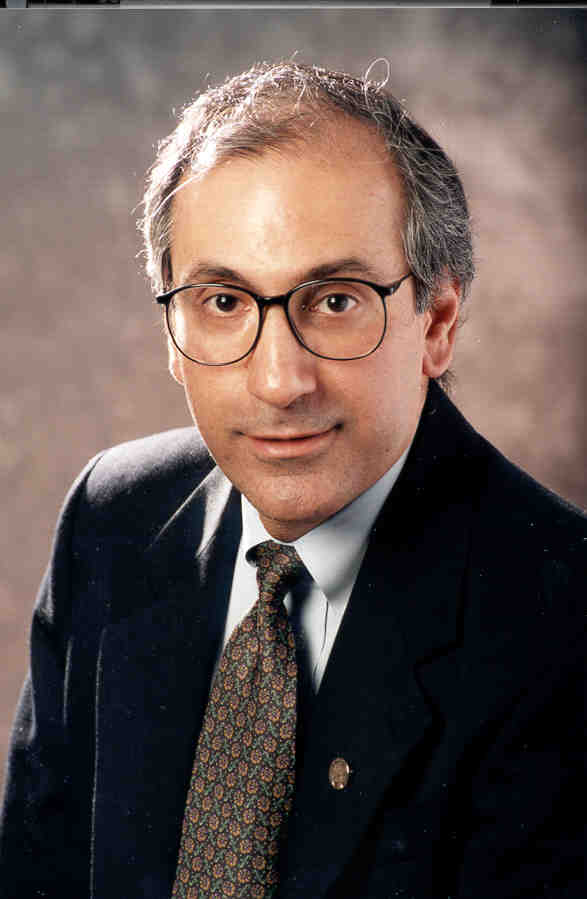
Dr. Aidun joined the Woodruff School as a Professor in 2003 after completion of a two-year period as program director at the National Science Foundation. He began at Tech in 1988 as an Assistant Professor at the Institute of Paper Science and Technology. Prior, he was a research Scientist at Battelle Research Laboratories, Postdoctoral Associate at Cornell University and Senior Research Consultant at the National Science Foundation's Supercomputer Center at Cornell. 

Dr. Aidun's research is at the intersection between fundamentals of the physics of complex fluids/thermal transport and applications to engineering and biotransport. He has a diverse research portfolio in fluid mechanics, bioengineering, renewable bioproducts and decarbonization of industrial processes. 

A major focus has been to understand the physics of blood cell transport and interaction with glycoproteins (e.g., vWF) with applications to cardiovascular diseases.

Professor, Woodruff School of Mechanical Engineering
Phone
404-894-6645
Office
Love Building, Room 320
Additional Research

Computational analysis of cellular blood flow in the cardiovascular system with applications to platelet margination, thrombus formation, and platelet activation in artificial heart valves. Thermal Systems. Chemical Recovery; Papermaking.

Google Scholar
https://scholar.google.com/citations?user=ksg38AgAAAAJ&hl=en&oi=sra
Related Site
Cyrus
Aidun
K.
Show Regular Profile

Stephen Balakirsky

Stephen Balakirsky
stephen.balakirsky@gtri.gatech.edu

Stephen Balakirsky is the Chief Scientist for the Aerospace, Transportation & Advanced Systems Laboratory at the Georgia Tech Research Institute (GTRI), and the Director of Technical Initiatives at the Petit Institute for Bioengineering and Bioscience (IBB) at Georgia Tech.

Balakirsky’s research interests include robotic architectures, planning, bio-automation, robotic standards, and autonomous systems testing. His work in knowledge driven robotics couples real-time sensors and knowledge repositories to allow for flexibility and agility in robotic systems ranging from assembly and manufacturing systems to surveillance and logistics systems. The framework promotes software reuse and the ability to detect and correct for execution errors.

Previously, Balakirsky worked as a project manager at the National Institute of Standards and Technology (NIST) and was a senior research engineer at the Army Research Laboratory (ARL). At ARL, Balakirsky performed mobile robotics research in several areas, including command and control, mapping, human-computer interfaces, target tracking, vision processing and tele-operated control.

Regents' Researcher; Georgia Tech Research Institute
Director of Technical Initiatives; IBB
Chief Scientist | Aerospace, Transportation & Advanced Systems Laboratory (ATAS); GTRI
Phone
404.407.8547
Office
Food Processing Technology Building, 640 Strong St, Atlanta, GA 30318
Additional Research

Robotics; Planning; Knowledge Representation; Ontologies

Research Focus Areas
GTRI
Geogia Tech Research Institute > Aerospace, Transportation & Advanced Systems Laboratory
Google Scholar
https://scholar.google.com/citations?hl=en&user=mMANqk8AAAAJ&view_op=list_works&sortby=pubdate
Stephen
Balakirsky
Show Regular Profile

Ghassan AlRegib

Ghassan AlRegib
alregib@gatech.edu
Website

Prof. AlRegib is currently the John and Marilu McCarty Chair Professor in the School of Electrical and Computer Engineering at the Georgia Institute of Technology. His group is the Omni Lab for Intelligent Visual Engineering and Science (OLIVES) at Georgia Tech. In 2012, he was named the Director of Georgia Tech’s Center for Energy and Geo Processing (CeGP). He is the director of the Center for Signal and Information Processing (CSIP). He also served as the Director of Georgia Tech’s Initiatives and Programs in MENA between 2015 and 2018. He has authored and co-authored more than 300 articles in international journals and conference proceedings. He has been issued several U.S. patents and invention disclosures. He is a Fellow of the IEEE.

Prof. AlRegib received the ECE Outstanding Graduate Teaching Award in 2001 and both the CSIP Research and the CSIP Service Awards in 2003. In 2008, he received the ECE Outstanding Junior Faculty Member Award. In 2017, he received the 2017 Denning Faculty Award for Global Engagement. He and his students received the Beat Paper Award in ICIP 2019. He received the 2024 ECE Distinguished Faculty Achievement Award at Georgia Tech. He and his students received the Best Paper Award in ICIP 2019 and the 2023 EURASIP Best Paper Award for Image communication Journal.

Prof. AlRegib participated in a number of activities. He has served as Technical Program co-Chair for ICIP 2020 and ICIP 2024. He served two terms as a member of the IEEE SPS Technical Committees on Multimedia Signal Processing (MMSP) and Image, Video, and Multidimensional Signal Processing (IVMSP), 2015-2017 and 2018-2020. He was a member of the Editorial Boards of both the IEEE Transactions on Image Processing (TIP), 2009-2022, and the Elsevier Journal Signal Processing: Image Communications, 2014-2022. He was a member of the editorial board of the Wireless Networks Journal (WiNET), 2009-2016 and the IEEE Transaction on Circuits and Systems for Video Technology (CSVT), 2014-2016. He was an Area Chair for ICME 2016/17 and the Tutorial Chair for ICIP 2016. He served as the chair of the Special Sessions Program at ICIP’06, the area editor for Columns and Forums in the IEEE Signal Processing Magazine (SPM), 2009–12, the associate editor for IEEE SPM, 2007-09, the Tutorials co-chair in ICIP’09, a guest editor for IEEE J-STSP, 2012, a track chair in ICME’11, the co-chair of the IEEE MMTC Interest Group on 3D Rendering, Processing, and Communications, 2010-12, the chair of the Speech and Video Processing Track at Asilomar 2012, and the Technical Program co-Chair of IEEE GlobalSIP, 2014. He lead a team that organized the IEEE VIP Cup, 2017 and the 2023 IEEEE VIP Cup. He delivered short courses and several tutorials at international events such as BigData, NeurIPS, ICIP, ICME, CVPR, AAAI, and WACV.

In the Omni Lab for Intelligent Visual Engineering and Science (OLIVES), he and his group work on robust and interpretable machine learning algorithms, uncertainty and trust, and human in the loop algorithms. The group studies interventions into AI systems to enhance their trustworthiness. The group has demonstrated their work on a wide range of applications such as Autonomous Systems, Medical Imaging, and Subsurface Imaging. The group is interested in advancing the fundamentals as well as the deployment of such systems in real-world scenarios. His research group is working on projects related to machine learning, image and video processing, image and video understanding, subsurface imaging, perception in visual data processing, healthcare intelligence, and video analytics. The primary applications of the research span from Autonomous Vehicles to Portable AI-based Ophthalmology and Eye Exam and from Microscopic Imaging to Seismic Interpretation. The group was the first to introduce modern machine learning to seismic interpretation.

In 2024, and after more than three years of continuous work, he co-founded Georgia Tech’s AI Makerspace. The AI Makerspace is a resource for the entire campus community to access AI. Its purpose is to democratize access to AI. Together with his team, they are developing tools and services for the AI Makerspace via a VIP Team called AI Makerspace Nexus. In addition, he created two AI classes from scratch with innovative hands-on exercises using the AI Makerspace. One class is the ECE4252/8803 FunML class (Fundamentals of Machine Learning) where students learn the basics of Machine Learning as well as eight weeks of Deep learning both mathematically and using hands-on exercises on real-world data. The second class is a sophomore-level AI Foundations class (AI First) that teaches any student from any college the basics of AI such as data literacy, learning, decision, planning, and ethics using theory and hands-on exercises on the AI Makerspace. Prof. AlRegib wrote two textbooks for both classes.

Prof. AlRegib has provided services and consultation to several firms, companies, and international educational and R&D organizations. He has been a witness expert in a number of patents infringement cases and Inter Partes Review (IRP) cases.

John and Marilu McCarty Chair Professor, School of Electrical and Computer Engineering
Center Director
Phone
404-894-7005
Office
Centergy-One Room 5224
Additional Research

Machine learning, Trustworthy AI, Explainable AI (XAI), Robust Learning Systems, Multimodal Learning, Annotations Diversity in AI Systems

Google Scholar
https://scholar.google.com/citations?hl=en&user=7k5QSdoAAAAJ&view_op=list_works
LinkedIn Related Site
Ghassan
AlRegib
Show Regular Profile

Edward Botchwey

Edward Botchwey
edward.botchwey@bme.gatech.edu
Website

Edward Botchwey received a B.S. in mathematics from the University of Maryland at College Park in 1993 and both M.E. and Ph.D. degrees in materials science engineering and bioengineering from the University of Pennsylvania in 1998 and 2002 respectively. He was recruited to the faculty at Georgia Tech in 2012 from his previous position at the University of Virginia. His current position is associate professor in the Wallace H. Coulter Department of Biomedical Engineering at Georgia Tech and Emory University. Botchwey is former Ph.D. fellow of the National GEM Consortium, a former postdoctoral fellow of the UNCF-Merk Science Initiative, and a recipient of the Presidential Early Career Awards for Scientists and Engineers from the National Institutes of Health. 

Botchwey’s research focuses on the delivery of naturally occurring small molecules and synthetic derivatives for applications in tissue engineering and regenerative medicine. He is particularly interested in how transient control of immune response using bioactive lipids can be exploited to control trafficking of stem cells, enhance tissue vascularization, and resolve inflammation. Botchwey serves on the Board of Directors of the Biomedical Engineering Society (BMES) and serves as the secretary to the Biomedical Engineering Decade committee.

Botchwey, his wife Nisha Botchwey (also a GT faculty member) and three children reside in east Atlanta in the Lake Claire neighborhood. Botchwey is also an avid cyclist and enjoys reading YA fantasy, behavioral neuroscience and Christian theology books in his personal time.

Professor, Wallace H. Coulter Department of Biomedical Engineering
Phone
404.385.5058
Additional Research

Biomaterials, cellular materials, in situ characterization, tissue engineering, tissue engineering and biomaterials, microvascular growth and remodeling, stem cell engineering.

Google Scholar
https://scholar.google.com/citations?hl=en&user=eyPY0LsAAAAJ&view_op=list_works&sortby=pubdate
Related Site
Edward
Botchwey
Show Regular Profile

Andreas Bommarius

Andreas Bommarius
andreas.bommarius@chbe.gatech.edu
Website

Andreas (Andy) S. Bommarius is a professor of Chemical and Biomolecular Engineering as well of Chemistry and Biochemistry at the Georgia Institute of Technology in Atlanta, GA.  He received his diploma in Chemistry in 1984 at the Technical University of Munich, Germany and his Chemical Engineering B.S. and Ph.D. degrees in 1982 and 1989 at MIT, Cambridge, MA.

From 1990-2000, he led the Laboratory of Enzyme Catalysis at Degussa (now Evonik) in Wolfgang, Germany, where his work ranged from immobilizing homogenous catalysts in membrane reactors to large-scale cofactor-regenerated redox reactions to pharma intermediates.

At Georgia Tech since 2000, his research interests cover green chemistry and biomolecular engineering, specifically biocatalyst development and protein stability studies.  His lab applies data-driven protein engineering to improve protein properties on catalysts ranging from ene and nitro reductases to cellobiohydrolases.  Bommarius has guided the repositioning of the curriculum towards Chemical and Biomolecular Engineering by developing new courses in Process Design, Biocatalysis and Metabolic Engineering, as well as Drug Design, Development, and Delivery (D4), an interdisciplinary course with Mark Prausnitz.

Andy Bommarius in 2008 became a Fellow of the American Institute of Medical and Biological Engineering.  Since 2010, he is Director of the NSF-I/UCR Center for Pharmaceutical Development (CPD), a Center focusing on process development, drug substance and product stability, and novel analytical methods for the characterization of drug substances and excipients.

Professor, School of Chemical and Biomolecular Engineering, School of Chemistry and Biochemistry
RBI Initiative Lead: A Renewables-based Economy from WOOD (ReWOOD)
Phone
404-385-1334
Office
EBB 5018
Additional Research

Biomolecular engineering, especially biocatalysis, biotransformations, and biocatalyst stability. Biofuels. Enzymatic Processing; Biochemicals; Chip Activation.

Google Scholar
https://scholar.google.com/citations?user=rH4O5RQAAAAJ&hl=en&oi=ao
LinkedIn Related Site
Andreas
Bommarius
Show Regular Profile

Saad Bhamla

Saad Bhamla
saadb@chbe.gatech.edu
Website

Saad Bhamla studies biomechanics across species to engineer knowledge and tools that inspire curiosity.

Saad Bhamla is an assistant professor of biomolecular engineering at Georgia Tech. A self-proclaimed "tinkerer," his lab is a trove of discoveries and inventions that span biology, physics and engineering. His current projects include studying the hydrodynamics of insect urine, worm blob locomotion and ultra-low-cost devices for global health. His work has appeared in the New York Times, the Economist, CNN, Wired, NPR, the Wall Street Journal and more.

Saad is a prolific inventor and his most notable inventions includes a 20-cent paper centrifuge, a 23-cent electroporator, and the 96-cent hearing aid. Saad's work is recognised by numerous awards including a NIH R35 Outstanding Investigator Award, NSF CAREER Award, CTL/BP Junior Faculty Teaching Excellence Award, and INDEX: Design to Improve Life Award. Saad is also a National Geographic Explorer and a TED speaker. Newsweek recognized Saad as 1 of 10 Innovators disrupting healthcare.

Saad is a co-founder of Piezo Therapeutics.

Outside of the lab, Saad loves to go hiking with his partner and two dogs (Ollie and Bella).

Assistant Professor
Phone
404-894-2856
Office
ES&T L1224
Additional Research
  • Biotechnology
  • Complex Systems
  • Materials and Nanotechnology
Google Scholar
https://scholar.google.com/citations?user=1tRXS9gAAAAJ&hl=en
Related Site
Saad
Bhamla
Show Regular Profile

Mark Borodovsky

Mark Borodovsky
borodovsky@gatech.edu
Website

Dr. Borodovsky and his group develop machine learning algorithms for computational analysis of biological sequences: DNA, RNA and proteins. Our primary focus is on prediction of protein-coding genes and regulatory sites in genomic DNA. Probabilistic models play an important role in the algorithm framework, given the probabilistic nature of biological sequence evolution.

Regents' Professor
Director, Center for Bioinformatics and Computational Genomics
Senior Advisor in Bioinformatics, Division of High Consequence Pathogens and Pathology, Centers for Disease Control and Prevention in Atlanta
Phone
404-894-8432
Office
EBB 2105
Additional Research

Development and applicaton of new machine learning and pattern recognition methods in bioinformatics and biological systems. Development and applicaton of new machine learning and pattern recognition methods in bioinformatics and biological systems. Chromatin; Epigenetics; Bioinformatics

Google Scholar
https://scholar.google.com/citations?user=ciQ3dn0AAAAJ&hl=en&oi=ao
LinkedIn GeneMark
Mark
Borodovsky
Show Regular Profile

Robert Dickson

Robert Dickson
robert.dickson@chemistry.gatech.edu
Website

Dr. Dickson is the Vassar Woolley Professor of Chemistry & Biochemistry and has been at Georgia Tech since 1998. He was a Senior Editor of The Journal of Physical Chemistry from 2010-2021, and his research has been continuously funded (primarily from NIH) since 2000. Dr. Dickson has developed quantitative bio imaging and signal recovery/modulation schemes for improved imaging of biological processes and detection of medical pathologies. His work on fluorescent molecule development and photoswitching of green fluorescent proteins was recognized as a key paper for W.E. Moerner’s 2014 Nobel Prize in Chemistry. Recently, Dr. Dickson’s lab has developed rapid susceptibility testing of bacteria causing blood stream infections. Their rapid recovery methods, coupled with rigorous multidimensional statistics and machine learning have led to very simple, highly accurate and fast methods for determining the appropriate treatment within a few hours after positive blood cultures. These hold significant potential for drastically improving patient outcomes and reducing the proliferation of antimicrobial resistance.

Professor
Phone
404-894-4007
Office
MoSE G209A
Additional Research
Dr. Dickson's group is developing novel spectroscopic, statistical, and imagingtechnologies for the study of dynamics in biology and medicine.
Google Scholar
https://scholar.google.com/citations?user=p8fJn9EAAAAJ&hl=en&oi=sra
Related Site
Robert
Dickson
Show Regular Profile

Suman Das

Suman Das
suman.das@me.gatech.edu
Direct Digital Manufacturing Laboratory
Morris M. Bryan, Jr. Chair and Professor, Woodruff School of Mechanical Engineering
Director, Direct Digital Manufacturing Laboratory
Phone
404.385.6027
Office
MARC 255
Additional Research

3D printing; Additive/Advanced Manufacturing; Biomaterials; Composites; Emerging Technologies; Nanocomposites; Nanomanufacturing; Manufacturing, Mechanics of Materials, Bioengineering, and Micro and Nano Engineering. Advanced manufacturing and materials processing of metallic, polymeric, ceramic, and composite materials for applications in life sciences, propulsion, and energy. Professor Das directs the Direct Digital Manufacturing Laboratory and Research Group at Georgia Tech. His research interests encompass a broad variety of interdisciplinary topics under the overall framework of advanced design, prototyping, direct digital manufacturing, and materials processing particularly to address emerging research issues in life sciences, propulsion, and energy. His ultIMaTe objectives are to investigate the science and design of innovative processing techniques for advanced materials and to invent new manufacturing methods for fabricating devices with unprecedented functionality that can yield dramatic improvements in performance, properties and costs.

Google Scholar
https://scholar.google.com/citations?hl=en&user=zTQ3q2EAAAAJ&view_op=list_works&sortby=pubdate
ME Profile Page
Suman
Das
Show Regular Profile

Jennifer Curtis

Jennifer Curtis
jcurtis6@gatech.edu
Cell Physics Laboratory

The Curtis lab is primarily focused on the physics of cell-cell and cell-extracellular matrix interactions, in particular within the context of glycobiology and immunobiology. Our newest projects focus on questions of collective and single cell migration in vitro and in vivo; immunophage therapy "an immunoengineering approach - that uses combined defense of immune cells plus viruses (phage) to overcome bacterial infections"; and the study of the molecular biophysics and biomaterials applications of the incredible enzyme, hyaluronan synthase. A few common scientific themes emerge frequently in our projects: biophysics at interfaces, the use of quantitative modeling, collective interactions of cells and/or molecules, cell mechanics, cell motility and adhesion, and in many cases, the role of bulky sugars in facilitating cell integration and rearrangements in tissues.

Professor, School of Physics
Phone
404.894.8839
Office
MoSE G024/G128
Additional Research

Advanced characterization, cell biophysics, soft materials, tissue engineering, cell biophysics, cell mechanics of adhesion, migration and dynamics, immunophysics, immunoengineering, hyaluronan glycobiology, hyaluronan synthase, physics of tissues

University, College, and School/Department
Google Scholar
https://scholar.google.com/citations?hl=en&user=iaWZfIsAAAAJ&view_op=list_works&sortby=pubdate
LinkedIn Physics Profile Page
Jennifer
Curtis
Show Regular Profile