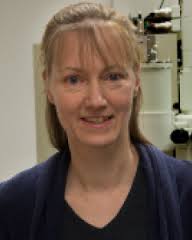
Hyojung Choo

Hyojung Choo
hyojung.choo@emory.edu
Assistant Professor
Phone
404-727-3727
Office
542 Whitehead Research Building, Emory School of Medicine
Additional Research

"Craniofacial muscles are essential muscles for normal daily life. They are involved in facial expressions (facial muscles), blinking and eye movement (eye muscles), as well as speaking and eating (tongue and pharyngeal muscles). Interestingly, craniofacial muscles have differential susceptibility to several muscular dystrophies. For example, craniofacial muscles are the most affected muscles in oculopharyngeal muscular dystrophy but the least affected muscles in Duchenne muscular dystrophy. Among craniofacial muscles, dysfunction of tongue and pharyngeal muscles could cause an eating disability, called dysphagia, afflicts almost 15 million Americans including elderly, neuronal (Parkinson's disease and bulbar-onset amyotrophic lateral sclerosis) and muscular disease (oculopharyngeal muscular dystrophy) patients. However, no cure or therapeutic treatment exists for dysphagia caused by muscular dystrophy. Elucidation of the mechanism(s) behind these differing susceptibilities of craniofacial muscles could lead to development of potential therapeutics targeted to specific skeletal muscles involved in particular types of muscular dystrophy. The mechanisms of skeletal muscles are of interest here because skeletal muscle cells are multinucleated cells. Typically, skeletal muscle cells contain hundreds of nuclei in a single cell since they are generated by fusion of muscle precursor cells during development or by fusion of muscle specific stem cells, called satellite cells, in adult skeletal muscles. However, it is unclear how skeletal muscle cells regulate the quantity and quality of these multi-nuclei. Since craniofacial skeletal muscles, such as extraocular and pharyngeal muscles, have active satellite cell fusion in comparison to limb muscles, they are therefore suitable models to study myonuclear addition and homeostasis."
University, College, and School/Department
Related Site
Hyojung
Choo
Show Regular Profile

Ingeborg Schmidt-Krey

Ingeborg Schmidt-Krey
ingeborg.schmidt-krey@biosci.gatech.edu

Ingeborg Schmidt-Krey is an associate professor in the School of Biological Sciences at Georgia Tech. Her research interests lie in the structure and function of eukaryotic membrane proteins, two-dimensional crystallization, electron crystallography, single particle analysis, and electron cryo-microscopy (cryo-EM).

Associate Professor
Phone
404-385-0286
Office
Cherry Emerson A118
Additional Research
Eukaryotic membrane proteins comprise approximately 60% of all drug targets and are consequently immensely important for biomedical research. Despite their importance, only few could thus far be studied at the structural level. My research focuses on the crystallization, structure and function of eukaryotic membrane proteins. Electron crystallography is the main tool employed to study these proteins in my laboratory. Initially, this involves testing of conditions for growing two-dimensional (2D) crystals, usually by reconstituting the detergent-solubilized membrane protein into a bilayer. Once crystallization parameters have been identified by electron microscopy of negatively stained samples, electron cryo-microscopy is employed to collect high-resolution data. The structure is then obtained by image processing. The approach of 2D crystallization and electron crystallography is particularly suitable for highly fragile membrane proteins such as many eukaryotic ones. Reconstitution ensures an environment that is close to the native one, the detergent is removed, and functional studies are relatively easily undertaken. Experimental phases are obtained due to the fact that images are collected. In some instances the image amplitudes can be substituted with electron diffraction amplitudes. Although electron crystallographic methods are well developed, little is known about the factors important in 2D crystallization, and screening protocols as for 3D crystallization do not exist. An important aspect of my research interests aims at developing screening methods and strategies for 2D crystallization and at understanding the underlying mechanisms.
Google Scholar
https://scholar.google.com/scholar?hl=en&q=Ingeborg+Schmidt-Krey&btnG=&as_sdt=1,11&as_sdtp=
http://biosciences.gatech.edu/people/ingeborg-schmidt-krey
Ingeborg
Schmidt-Krey
Show Regular Profile

Karl Jacob

Karl Jacob
karl.jacob@mse.gatech.edu

Karl I. Jacob, a professor of Materials Science and Engineering with a joint appointment in the G. W. Woodruff School of Mechanical Engineering, teaches graduate and undergraduate courses on polymer physics and engineering, rheology, and mechanics of polymeric materials. His graduate work was in the area of numerical analysis of vibrating three-dimensional structures. He came to Georgia Tech from DuPont Corporation in 1995. His initial work at the DuPont Dacron Research Laboratory was in the area of fiber-reinforced composite materials and in the development and modeling of fiber spinning processes. He then moved to the DuPont Central Research and Development Department, where he was involved in molecular modeling, computational chemistry, and diffusion.

Jacob is a member of the American Academy of Mechanics, the American Society of Mechanical Engineers, the Sigma Xi Research Society, and the Phi Kappa Phi Honor Society.

Professor, School of Materials Science and Engineering and School of Mechanical Engineering
Phone
404.894.2541
Office
MRDC-1 4509
Additional Research

"Dr. Jacob's research is directed at stress induced phase changes, nanoscale characterization of materials, synthesis of polymeric nanofibers, mechanical behavior of fiber assemblies (particularly related to biological systems and biomimitic systems), nanoparticle reinforced composites, transdermal drug delivery systems, large scale deformation of rubbery (networked) polymers, and nanoscale fracture of materials. The objectives in this work, using theoretical, computational and experimental techniques, is to understand the effect of micro- and nano- structures in the behavior of materials in order to try to design the micro/nano structures for specific materials response. Dr. Jacob plans are to continue current research interests with a multidisciplinary thrust with more emphasis in bio related areas and to start some work on the dynamic behavior of materials and structures. Graduate students could benefit from the interdisciplinary nature of the work combining classical continuum mechanics with nanoscale analysis for various applications, particularly in the nano and bio areas. Dr. Jacob has extensive experience in vibrations and stability of structures, mechanics of polymeric materials, behavior of fiber assemblies, stress-induced phase transformation, diffusion, and molecular modeling. His research involves the application of mechanics principles, both theoretical and experimental, in the analysis and design of materials for various applications.";Fibers; smart textiles; fuel cells; Polymeric composites

University, College, and School/Department
MSE Profile Page
Karl
Jacob
I.
Show Regular Profile

Seung Soon Jang

Seung Soon Jang
SeungSoon@mse.gatech.edu
MSE Profile Page

Seung Soon Jang joined the School of Materials Science and Engineering at the Georgia Institute of Technology in July 2007. Jang worked at Samsung Electronics and the Materials and Process Simulation Center (MSC) at CalTech performing various researches in nanoelectronics, fuel cell, and interfacial systems as a director of Supramolecular Technology for six years.

His research interest includes computations and theories to characterize and design nanoscale systems based on the molecular architecture-property relationship, which are especially relevant to molecular electronics, molecular machines, fuel cell technology and biotechnology.

Professor, School of Materials Science and Engineering
Director, Computational NanoBio Technology Lab
Phone
404.385.3356
Office
Love 351
Additional Research

Jang's research interest is to characterize and design nanoscale systems based on the molecular architecture-property relationship using computations and theories, which are especially relevant to designing new biomaterials for drug delivery and tissue engineering. Currently, he is focusing on 1) NanoBio-mechanics for DNA, lipid bilayer, and hydrogel systems; 2) Molecular interaction of Alzheimer proteins with various small molecules. Dr. Jang is also interested in various topics such as nanoelectronics, nanostructured energy technologies for fuel cell, battery and photovoltaic devices.;Computational mechanics; Nanostructured Materials; Polymeric composites; Biomaterials; Fuel Cells; Delivery and Storage

Google Scholar
https://scholar.google.com/citations?hl=en&user=SW0u-asAAAAJ&view_op=list_works&sortby=pubdate
Computational NanoBio Technology Lab
Seung Soon
Jang
Show Regular Profile

David Hu

David Hu
hu@me.gatech.edu
HU Laboratory for Biolocomotion

David Hu is a fluid dynamicist with expertise in the mechanics of interfaces between fluids such as air and water. He is a leading researcher in the biomechanics of animal locomotion. The study of flying, swimming and running dates back hundreds of years, and has since been shown to be an enduring and rich subject, linking areas as diverse as mechanical engineering, mathematics and neuroscience. Hu's work in this area has the potential to impact robotics research. Before robots can interact with humans, aid in minimally-invasive surgery, perform interplanetary exploration or lead search-and-rescue operations, we will need a fundamental physical understanding of how related tasks are accomplished in their biological counterparts. Hu's work in these areas has generated broad interest across the fields of engineering, biology and robotics, resulting in over 30 publications, including a number in high-impact interdisciplinary journals such as Nature, Nature Materials, Proceedings of the National Academy of Sciences as well as popular journals such as Physics Today and American Scientist. Hu is on editorial board member for Nature Scientific Reports, The Journal of Experimental Biology, and NYU Abu Dhabi's Center for Center for Creative Design of Materials. He has won the NSF CAREER award, Lockheed Inspirational Young Faculty award, and best paper awards from SAIC, Sigma Xi, ASME, as well as awards for science education such as the Pineapple Science Prize and the Ig Nobel Prize. Over the years, Hu's research has also played a role in educating the public in science and engineering. He has been an invited guest on numerous television and radio shows to discuss his research, including Good Morning America, National Public Radio, The Weather Channel, and Discovery Channel. His ant research was featured on the cover of the Washington Post in 2011. His work has also been featured in The Economist, The New York Times, National Geographic, Popular Science and Discover His laboratory appeared on 3D TV as part of a nature documentary by 3DigitalVision, "Fire ants: the invincible army," available on Netflix.

Professor, George W. Woodruff School of Mechanical Engineering
Professor, School of Biology
Director, Hu Lab for Biolocomotion
Phone
404.894.0573
Office
LOVE 124
Additional Research

Fluid Mechanics: Fluid dynamics, solid mechanics, biomechanics, animal locomotion, and physical applied mathematics. Dr. David Hu's research focuses on fundamental problems of hydrodynamics and elasticity that have bearing on problems in biology. He is interested in the dynamics of interfaces, specifically those associated with fluid-solid and solid-solid interactions. The techniques used in his work include theory, computation, and experiment. He is also interested in pursuing biomimetic technologies based on nature's designs.

Google Scholar
https://scholar.google.com/citations?hl=en&user=pydtIvYAAAAJ&view_op=list_works&sortby=pubdate
ME Profile Page
David
Hu
L.
Show Regular Profile

Daniel Goldman

Daniel Goldman
dgoldman3@gatech.edu
The Crab Lab

My research integrates my work in complex fluids and granular media and the biomechanics of locomotion of organisms and robots to address problems in nonequilibrium systems that involve interaction of matter with complex media. For example, how do organisms like lizards, crabs, and cockroaches cope with locomotion on complex terrestrial substrates (e.g. sand, bark, leaves, and grass). I seek to discover how biological locomotion on challenging terrain results from the nonlinear, many degree of freedom interaction of the musculoskeletal and nervous systems of organisms with materials with complex physical behavior. The study of novel biological and physical interactions with complex media can lead to the discovery of principles that govern the physics of the media. My approach is to integrate laboratory and field studies of organism biomechanics with systematic laboratory studies of physics of the substrates, as well as to create mathematical and physical (robot) models of both organism and substrate. Discovery of the principles of locomotion on such materials will enhance robot agility on such substrates

Dunn Family Professor; School of Physics
Director; Complex Rheology And Biomechanics (CRAB) Lab
Phone
404.894.0993
Office
Howey C202
Additional Research

biomechanics; neuromechanics; granular media; robotics; robophysics

University, College, and School/Department
Google Scholar
https://scholar.google.com/citations?hl=en&user=r7wE4M4AAAAJ&view_op=list_works&sortby=pubdate
Profile on GT Physics
Daniel
Goldman
I.
Show Regular Profile

Chengzhi Shi

Chengzhi Shi
chengzhi.shi@me.gatech.edu
Departmental Bio

Dr. Shi joined Georgia Tech in August 2018 as an assistant professor. Prior, he worked as a graduate student researcher at the Department of Mechanical Engineering of the University of California, Berkeley and Materials Science Division of Lawrence Berkeley National Laboratory focusing on the study of acoustic angular momentum and the design and realization of acoustic metamaterials and high-speed acoustic communication. His Ph.D. dissertation (2018) focuses on the development of acoustic metamaterials and the physics of the angular momentum of sound. Prior to his Ph.D. study at the Department of Mechanical Engineering of the University of California, Berkeley, Dr. Shi completed his M.S. degree in mechanical engineering at the University of Michigan-Shanghai Jiao Tong University Joint Institute in Shanghai, China. His M.S. thesis (2013) focuses on the dynamics and vibration of cyclically symmetric rotating mechanical systems.

Assistant Professor
Phone
404-894-2558
Office
003 Love Manufacturing Building
Additional Research

Acoustic wave interactions with different cells including neurons, and imaging and treatment techniques resulted from the interactions.

Laboratory Site
Chengzhi
Shi
Show Regular Profile

Thomas Orlando

Thomas Orlando
thomas.orlando@chemistry.gatech.edu
School of Chemistry and Biochemistry Profile Page

Our group is primarily a surface chemistry and physics group which focuses on the use of high-powered pulsed lasers, low-energy electron scattering, micro-plasmas, mass spectrometry and ultrahigh vacuum surface science techniques. We use this "tool-set" as well as some scattering theory to unravel the details of non-thermal processes occurring under a variety of non-equilibrium conditions. Our group is based upon an interdisciplinary approach and thus our research programs span the realm of fundamental investigations in molecular physics, surface physics and chemistry, bio-physics, bio-polymer formation under pre-biotic conditions as well as working in applied areas of relevance to analytical technique developments, atmospheric chemistry, catalysis and molecular hydrogen generation.

Professor, School of Chemistry and Biochemistry
SEI Senior Advisor: Energy Minor
Phone
404.894.4012
Office
MoSE G209C
Additional Research

Surfaces and Interfaces; Catalysis; Advanced Characterization; Hydrogen; Nuclear

Google Scholar
https://scholar.google.com/citations?hl=en&user=6cbXFpkAAAAJ&view_op=list_works&sortby=pubdate
Electron and Photon Induced Chemistry on Surfaces Lab
Thomas
Orlando
Show Regular Profile

Rudolph Gleason

Rudolph Gleason
rudy.gleason@me.gatech.edu

Rudolph (Rudy) L. Gleason began at Tech in Fall 2005 as an assistant professor. Prior, he was a postdoctoral fellow at Texas A&M University. He is currently a professor in the School of Mechanical Engineering and the School of Biomedical Engineering in the College of Engineering. Gleason’s research program has two key and distinct research aims. The first research aim is to quantify the link between biomechanics, mechanobiology, and tissue growth and remodeling in diseases of the vasculature and other soft tissues. The second research aim is to translate engineering innovation to combat global health disparities and foster sustainable development in low-resource settings around the world. Gleason serves as a Georgia Tech Institute for People and Technology initiative lead for research activities related to global health and well-being.

Professor, Mechanical Engineering and Biomedical Engineering
Joint Appointment in the School of Biomedical Engineering
Phone
404-385-7218
Office
TEP 205
Additional Research

Cardiovascular mechanics, soft tissue growth and remodeling, and tissue engineering

Google Scholar
https://scholar.google.com/scholar?hl=en&as_sdt=0,11&q=rl+gleason+jr&oq=RL+Gleason
LinkedIn Related Site
Rudolph
Gleason
L.
Show Regular Profile

Raymond P. Vito

Raymond P. Vito
rpvito@gatech.edu

Having retired as Vice Provost, Dr. Vito is a Professor Emeritus of Mechanical Engineering and currently works part-time. He was one of the founders of The InVenture Prize and has been pivotal in the creation, development, evolution and delivery of the CREATE-X program. His startup expertise is in the area of medical devices, an area where he has conducted research and holds several patents.

Dr. Vito began his research career in nonlinear vibrations but switched within two years of receiving his Ph.D. to biomechanics, especially soft tissue mechanics. He began at Tech in 1974 as an Assistant Professor. Prior, he was a Postdoctoral Fellow at McMaster University, Canada.

Professor Emeritus
Phone
404-894-2792
Office
Petit Biotechnology Building, Office 2308
Additional Research
Dr. Vito's research interest is in the mechanical determinants of rupture of atherosclerotic plaque. Plaque rupture is important in stroke and heart attack because it precipitates the formation of a thrombus (blood clot) which then breaks away and causes an obstruction of flow. Experiments and modeling are used to determine what compositional factors predispose a plaque to rupture. Dr. Vito collaborates with people interested in detecting vulnerable plaque using magnetic resonance imaging and with others who want to intervene with drugs or genetic manipulation to reduce the likelihood of plaque rupture. His current research is sponsored by the National Science Foundation.
Google Scholar
http://scholar.google.com/scholar?q=raymond+p+vito&hl=en&btnG=Search&as_sdt=80001&as_sdtp=on
Related Site
Raymond
Vito
P.
Show Regular Profile