J. Brandon Dixon

J. Brandon Dixon
dixon@gatech.edu
Website

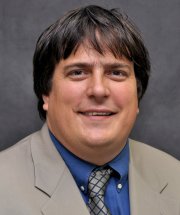
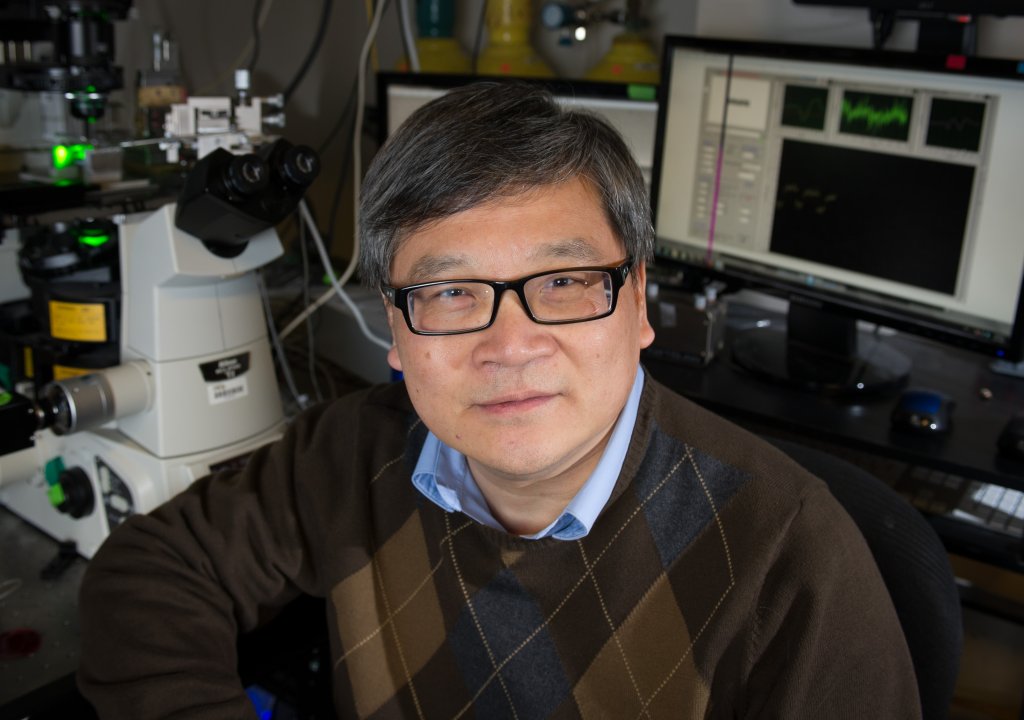
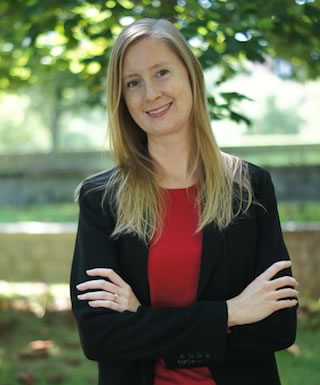
Dr. Dixon began at Georgia Tech in August 2009 as an Assistant Professor. Prior to his current appointment, he was a staff scientist at Ecole Polytechnique Federal de Lausanne (Swiss Federal Institute of Technology - Lausanne) doing research on tissue-engineered models of the lymphatic system. Dr. Dixon received his Ph.D. in biomedical engineering while working in the Optical Biosensing Laboratory, where he developed an imaging system for measuring lymphatic flow and estimating wall shear stress in contracting lymphatic vessels. 

Dr. Dixon's research focuses on elucidating and quantifying the molecular aspects that control lymphatic function as they respond to the dynamically changing mechanical environment they encounter in the body. Through the use of tissue-engineered model systems and animal models, our research is shedding light on key functions of lymphatic transport, and the consequence of disease on these functions. One such function is the lymphatic transport of dietary lipid from the intestine to the circulation. Recent evidence from our lab suggests that this process involves active uptake into lymphatics by the lymphatic endothelial cells. There are currently no efficacious cures for people suffering from lymphedema, and the molecular details connecting lymphedema severity with clinically observed obesity and lipid accumulation are unknown. Knowledge of these mechanisms will provide insight for planning treatment and prevention strategies for people facing lipid-lymphatic related diseases. 

Intrinsic to the lymphatic system are the varying mechanical forces (i.e., stretch, fluid shear stress) that the vessels encounter as they seek to maintain interstitial fluid balance and promote crucial transport functions, such as lipid transport and immune cell trafficking. Thus, we are also interested in understanding the nature of these forces in both healthy and disease states, such as lymphedema, in order to probe the biological response of the lymphatic system to mechanical forces. The complexity of these questions requires the development of new tools and technologies in tissue engineering and imaging. In the context of exploring lymphatic physiology, students in Dr. Dixon's laboratory learn to weave together techniques in molecular and cell biology, biomechanics, imaging, computer programming, and image and signal processing to provide insight into the regulation of lymphatic physiology. Students in the lab also have the opportunity to work in an interdisciplinary environment, as we collaborate with clinicians, life scientists, and other engineers, thus preparing the student for a career in academia and basic science research, or a career in industry.
Professor
Phone
404-385-3915
Office
Petit Biotechnology Building, Office 2312
Google Scholar
https://scholar.google.com/citations?user=mPmRwdkAAAAJ&hl=en
LinkedIn Related Site
J. Brandon
Dixon
Show Regular Profile

Susan Thomas

Susan Thomas
susan.thomas@gatech.edu
Website

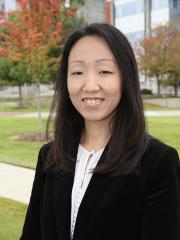
Susan Napier Thomas holds the Woodruff Professorship and is a Professor (full) with tenure of Mechanical Engineering in the Parker H. Petit Institute of Bioengineering and Bioscience at the Georgia Institute of Technology where she holds adjunct appointments in Biomedical Engineering and Biological Science and is a member of the Winship Cancer Institute of Emory University. Prior to this appointment, she was a Whitaker postdoctoral scholar at École Polytechnique Fédérale de Lausanne (one of the Swiss Federal Institutes of Technology) and received her B.S. in Chemical Engineering with an emphasis in Bioengineering cum laude from the University of California Los Angeles and her Ph.D. in Chemical & Biomolecular Engineering Department as a NSF Graduate Research Fellow from The Johns Hopkins University. For her contributions to the emerging field of immunoengineering, she has been honored with the 2022 Award for Young Investigator from Elsevier's journal Biomaterials for "outstanding contributions to the field" of biomaterials science, the 2018 Young Investigator Award from the Society for Biomaterials for "outstanding achievements in the field of biomaterials research" and the 2013 Rita Schaffer Young Investigator Award from the Biomedical Engineering Society "in recognition of high level of originality and ingenuity in a scientific work in biomedical engineering." Her interdisciplinary research program is supported by multiple awards on which she serves as PI from the National Cancer Institute, the Department of Defense, the National Science Foundation, and the Susan G. Komen Foundation, amongst others.

Professor
Associate Director, Integrated Cancer Research Center
Co-Director, Regenerative Engineering and Medicine Research Center
Phone
404-385-1126
Office
Petit Biotechnology Building, Office 2315
Additional Research
Thomas's research focuses on the role of biological transport phenomena in physiological and pathophysiological processes. Her laboratory specializes in incorporating mechanics with cell engineering, biochemistry, biomaterials, and immunology in order to 1) elucidate the role mechanical forces play in regulating seemingly unrelated aspects of tumor progression such as metastasis and immune suppression as well as 2) develop novel immunotherapeutics to treat cancer. Cancer progression is tightly linked to the ability of malignant cells to exploit the immune system to promote survival. Insight into immune function can therefore be gained from understanding how tumors exploit immunity. Conversely, this interplay makes the concept of harnessing the immune system to combat cancer an intriguing approach. Using an interdisciplinary approach, we aim to develop a novel systems-oriented framework to quantitatively analyze immune function in cancer. This multifaceted methodology to study tumor immunity will not only contribute to fundamental questions regarding how to harness immune response, but will also pave the way for novel engineering approaches to treat cancer such as with vaccines and cell- or molecular-based therapies.
Google Scholar
http://scholar.google.com/citations?user=wYgPYC8AAAAJ&hl=en&oi=sra
Related Site
Susan
Thomas
Show Regular Profile

Yuhang Hu

Yuhang Hu
yuhang.hu@me.gatech.edu
Website

Dr. Yuhang Hu Joined the Woodruff School of Mechanical Engineering and the School of Chemical and Biomolecular Engineering at Georgia Institute of Technology as an assistant professor in August 2018. Prior to that, Dr. Hu was an assistant professor in the Department of Mechanical Science and Engineering at University of Illinois at Urbana-Champaign from 2015 to 2018. She received her Ph.D. from Harvard University in the area of Solid Mechanics. She worked in the area of Materials Chemistry as a post-doctoral fellow at Harvard from 2011 to 2014.

Associate Professor, Mechanical Engineering and Chemical and Biomolecular Engineering
Phone
404-894-2555
Office
MRDC 4107
Additional Research

Our study focuses on Soft Active Materials especially those consisting both solid and liquid, such as gels, cells and soft biological tissues. Our research is at the interface between mechanics and materials chemistry. Our studies span from fundamental mechanics to novel applications.

Google Scholar
https://scholar.google.com/citations?user=U9NeaxUAAAAJ&hl=en
Mechanical Engineering Profile
Yuhang
Hu
Show Regular Profile

Luke Brewster

Luke Brewster
lbrewst@emory.edu

Dr. Brewster's clinical practice is focused on general vascular surgery and peripheral arterial disease, and his affiliations include Emory University Hospital and serving as section chief of vascular surgery at the Atlanta VA Healthcare System.

As a surgeon-scientist, his joint affiliations with the Atlanta Clinical and Translational Science Institute and the Wallace Coulter Department of Biomedical Engineering at Georgia Tech/Emory have given him access to an exceptional pool of collaborators, and he has received a steady stream of various federal, foundation, and industry grants.

Dr. Brewster's laboratory focuses on investigations of the biomechanical mechanisms that contribute to pathologic vessel remodeling in peripheral vascular disease, develops regenerative strategies for use in ischemic tissue, and works to improve the function of patients who succumb to major amputation.

Assistant Professor, Division of Vascular Surgery
Program Faculty, Bioengineering Program, Georgia Institute of Technology
Program Faculty, Georgia Institute of Technology and Emory Biomedical Engineering Program
Phone
404-727-8329
Office
Emory WMRB 5211
Additional Research
The Brewster Laboratory is interested in determining the effect of altered biomechanics and extracellular matrix formation during arterial remodeling after vascular intervention in stiffened and diseased arteries. Using animal models and human arterial tissue, I quantify the in and ex vivo contribution of the cellular and extracellular matrix to biomechanical forces of the artery in stiffened and healthy states. In turn these forces manipulate the cellular and extracellular matrix composition of these arteries during remodeling, and this response is different in stiffened arteries, which are commonly encountered clinically. Thus understanding of this pathologic remodeling in model and human tissue is novel and critical to the development of intelligent therapeutics.
University, College, and School/Department
Google Scholar
https://scholar.google.com/citations?user=Mt9YzaoAAAAJ&hl=en&oi=sra
Related Site
Luke
Brewster
P.
Show Regular Profile

John Oshinski

John Oshinski
jnoshin@emory.edu

Dr. Oshinski is known for his efforts at advancing the collaboration between Emory University and the Georgia Institute of Technology, as well as his dedication to advancing the technologies of MR imaging. He received his undergraduate degree from Kalamazoo College and BS, MS, and PhD from Georgia Institute of Technology. The underlying mission of his research is the application of engineering principles and technical problem-solving techniques to current clinical problems in the imaging, diagnosis, and treatment of cardiovascular disease. His research has concentrated on developing imaging applications that directly impact disease diagnosis and patient care.

Professor, Emory/Georgia Tech Department of Biomedical Engineering
Interim Director, Center for Systems Imaging
Phone
404-727-5894
University, College, and School/Department
Google Scholar
https://scholar.google.com/scholar?hl=en&q=John+N+Oshinski&btnG=&as_sdt=1,11&as_sdtp=
LinkedIn Related Site
John
Oshinski
Show Regular Profile

Khalid Salaita

Khalid Salaita
k.salaita@emory.edu
Website

Khalid Salaita is the Samuel Candler Dobbs Professor of Chemistry, and Director for Graduate Studies in the Chemistry Department at Emory University in Atlanta, Georgia (USA). Khalid grew up in Jordan and moved to the US in 1997 to pursue his undergraduate studies at Old Dominion University in Norfolk, Virginia (USA). He worked under the mentorship of Prof. Nancy Xu studying the spectroscopic properties of plasmonic nanoparticles. He then obtained his Ph.D. with Prof. Chad Mirkin at Northwestern University (Evanston, IL) in 2006. 

During that time, he studied the electrochemical properties of organic adsorbates patterned onto gold films and developed massively parallel scanning probe lithography approaches. From 2006-2009, Khalid was a postdoctoral scholar with Prof. Jay T. Groves at the University of California at Berkeley (USA) where he investigated the role of receptor clustering in modulating cell signaling. In 2009, Khalid started his own lab at Emory University, where he is currently investigating the use of nucleic acids as molecular force sensors, smart drugs, and synthetic motors. 

In recognition of his independent work, Khalid has received a number of awards, most notably: the Alfred P. Sloan Research Fellowship, the Camille-Dreyfus Teacher Scholar award, the National Science Foundation Early CAREER award, the Kavli Fellowship, and Merck Future Insight Prize. Khalid is currently the director of the Center on Probes for Molecular Mechanotechnology, and an Associate Editor of SmartMat. Khalid’s program has been supported by NSF, NIH, and DARPA.

Associate Professor
Samuel Candler Dobbs Professor of Chemistry
Director for Graduate Studies in the Chemistry Department
Program Faculty in the Department of Biomedical Engineering at Emory University and Georgia Institute of Technology
Phone
404-727-7522
Office
506 Atwood
Additional Research
In 2009, Khalid started his own lab at Emory University, where he currently investigates biophysical aspects of receptor-mediated cell signaling. To achieve this goal, his group has pioneered the development of molecular force probes and nano-mechanical actuators that are integrated with living cells. These materials are used to investigate the molecular mechanisms of a number of pathways where piconewton forces are thought to be important. These pathways include the Notch-Delta pathway, T cell receptor activation and the integrin-based focal adhesion pathway.
University, College, and School/Department
Google Scholar
https://scholar.google.com/citations?user=ZNhXzgIAAAAJ&hl=en
LinkedIn
Khalid
Salaita
Show Regular Profile

Hicham Drissi

Hicham Drissi
hicham.drissi@emory.edu

Hicham Drissi is a professor in the Department of Orthopaedics at Emory University School of Medicine. He holds a Ph.D. from Paris Descartes University.

Professor
Professor, Department of Orthopaedics
Vice Chairman, Research, Department of Orthopaedics
Office
Emory Orthopaedic and Spine Research Room 2000
Additional Research
Identifying molecular and developmental cues that govern skeletal tissue derived cell growth and differentiation.
University, College, and School/Department
Related Site
Hicham
Drissi
Show Regular Profile

Cheng Zhu

Cheng Zhu
cheng.zhu@bme.gatech.edu
Cellular and Molecular Biomechanics Laboratory

Our interests lie in the adhesion and signaling molecules of the immune system as well as those involved in platelet adhesion and aggregation. We are primarily focused on early cell surface interaction kinetics and their primary signaling responses, as these are critical in determining how a cell will ultimately respond upon contact with another cell. The majority of our work ranges from single molecule interaction studies using atomic force microscopy, molecular dynamics simulations, or biomembrane force probe assays to single cell studies using micropipette adhesions assays, fluorescence imaging techniques, or real-time confocal microscopy. These assays focus on the mechanics and kinetics of receptor-ligand binding and their downstream signaling effects within cells. T cell receptors, selectins, integrins, and their respective ligands are some of the cell surface molecules currently under investigation in our lab. Understanding the initial interaction between molecules such as these and their subsequent early signaling processes is crucial to elucidating the response mechanisms of these physiological systems. Ultimately, our research strives to help better understand the mechanisms within these systems for possible medical applications in autoimmunity, allergy, transplant rejection, and thrombotic disorders. 

Regents' Professor, Coulter Department of Biomedical Engineering
J. Erskine Love Jr. Endowed Chair, Coulter Department of Biomedical Engineering
Executive Director, International Programs, Coulter Department of Biomedical Engineering
Phone
404.894.3269
Office
UAW 1210
Additional Research

BioinformaticsBiomechanicsCell biophysicsElectron MicroscopyMechanobiology

Google Scholar
https://scholar.google.com/citations?hl=en&user=_tPv2wEAAAAJ&view_op=list_works&sortby=pubdate
LinkedIn BME Profile Page
Cheng
Zhu
Show Regular Profile

Aaron Young

Aaron Young
aaron.young@me.gatech.edu
Exoskeleton and Prosthetic Intelligent Controls (EPIC) Lab

Aaron Young is an Associate Professor in Mechanical Engineering and is interested in designing and improving powered orthotic and prosthetic control systems for persons with stroke, neurological injury or amputation. His previous experience includes a post-doctoral fellowship at the University of Michigan in the Human Neuromechanics Lab working with exoskeletons and powered orthoses to augment human performance. He has also worked on the control of upper and lower limb prostheses at the Center for Bionic Medicine (CBM) at the Rehabilitation Institute of Chicago. His master's work at CBM focused on the use of pattern recognition systems using myoelectric (EMG) signals to control upper limb prostheses. His dissertation work at CBM focused on sensory fusion of mechanical and EMG signals to enable an intent recognition system for powered lower limb prostheses for use by persons with a transfemoral amputation.

Associate Professor, George W. Woodruff School of Mechanical Engineering
Director, EPIC Lab
Phone
404.385.5306
Office
GTMI 433
Additional Research

Powered prosthesis; EMG signal processing. Young's research is focused on developing control systems to improve prosthetic and orthotic systems. His research is aimed at developing clinically translatable research that can be deployed on research and commercial systems in the near future. Some of the interesting research questions are how to successfully extract user intent from human subjects and how to use these signals to allow for accurate intent identification. Once the user intent is identified, smart control systems are needed to maximally enable individuals to accomplish useful tasks. For lower limb devices, these tasks might include standing from a seated position, walking, or climbing a stair. We hope to improve clinically relevant measures with powered mechatronic devices, including reducing metabolic cost, improving biomechanics and decreasing the time required to perform daily tasks of living.

Google Scholar
https://scholar.google.com/citations?hl=en&user=NkM21vEAAAAJ&view_op=list_works&sortby=pubdate
ME Profile Page
Aaron
Young
J
Show Regular Profile

Jeannette Yen

Jeannette Yen
jeannette.yen@biology.gatech.edu
School of Biological Sciences Profile Page
Professor, School of Biological Sciences
Phone
404.385.1596
Office
Cherry Emerson A116
Additional Research

Aquatic chemical communicationHydrodynamicsSmall-Scale Biological-Chemical-Physical Interactions in Marine Zooplankton 

Google Scholar
https://scholar.google.com/scholar?q=Jeannette+Yen&btnG=&hl=en&as_sdt=0,11
Aquatic Chemical Ecology Lab
Jeannette
Yen
Show Regular Profile