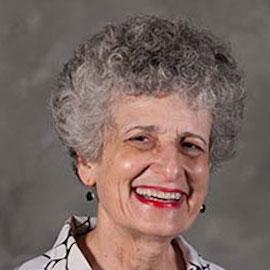
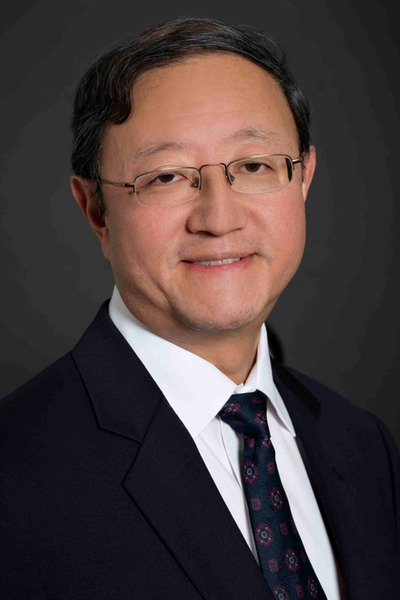
Mary Ann Weitnauer

Mary Ann Weitnauer's profile picture
mary.ann.weitnauer@ece.gatech.edu
Associate Chair-Academic; Senior Associate Chair
Phone
404-894-9482
Additional Research
Wireless Communication; Cooperative Diversity; Distributed MIMO; MAC and Routing for Wireless Multi-Hop Networks; Millimeter Wave Communications
University, College, and School/Department

Irfan Essa

Irfan Essa's profile picture
irfan@cc.gatech.edu

Irfan Essa is a Professor in the School of Interactive Computing and Senior Associate Dean in the College of Computing (CoC), at the Georgia Institute of Technology. Professor Essa works in the areas of Computer Vision, Artificial Intelligence, Machine Learning, Robotics, Computer Graphics, and Social Computing, with potential impact on Content Creation, Analysis and Production (e.g., Computational Photography & Video, Image-based Modeling and Rendering, etc.) Human Computer Interaction, Artificial Intelligence, Computational Behavioral/Social Sciences, and Computational Journalism research.He has published over 150 scholarly articles in leading journals and conference venues on these topics and several of his papers have also won best paper awards. He has been awarded the National Science Foundation CAREER Award and was elected an IEEE Fellow. He has held extended research consulting positions with Disney Research and Google Research and also was an Adjunct Faculty Member at Carnegie Mellon's Robotics Institute. He joined Georgia Tech in 1996 after his earning his Master's (1990), Ph.D. (1994), and holding a research faculty position at the Massachusetts Institute of Technology Media Lab (1988-1996).

Senior Associate Dean; College of Computing
Professor; School of Interactive Computing
Phone
404.894.6856
Additional Research

Healthcare Security; Machine Learning; Mobile & Wireless Communications; Computer Vision and Robotics; Computer Graphics and Animation; Computational Photography and Video; Intelligent and Aware Environments; Digital Special Effects; Computational Journalism; Social Computing

Research Focus Areas

Sudheer Chava

Sudheer Chava's profile picture
sudheer.chava@scheller.gatech.edu

Sudheer Chava, Ph.D, is an associate director of the Institute for Information Security & Privacy for the area of risk management, and professor of finance at Scheller College of Business at the Georgia Institute of Technology. He also serves as finance area coordinator at Scheller and as the director of the nationally top 10 ranked Master of Science in Quantitative and Computational Finance (QCF) program at Georgia Tech (a joint program by the School of Mathematics, Industrial and Systems Engineering, and Scheller).  Dr. Chava has taught a variety of courses at the undergraduate, masters, MBA and Ph.D. levels, including derivatives, risk management, valuation, credit risk, financial technology ("fintech"), and management of financial institutions. He also has taught both theoretical and empirical finance doctoral courses and is a faculty advisor to multiple doctoral students. Dr. Chava's main research interests are risk management, credit risk and financial institutions. He has extensively published on these topics in the leading finance journals such as the Journal of Finance, Journal of Financial Economics, Review of Financial Studies, Journal of Monetary Economics, Journal of Financial and Quantitative Analysis, and Management Science. His research won a Ross Award for the best paper published in Finance Research Letters in 2008, was a finalist for the Brattle Prize for the best paper published in Journal of Finance in 2008, and was nominated for the Goldman Sachs Award for the best paper for published in Review of Finance during 2004.  Dr. Chava is the recipient of multiple external research grants such as FDIC-CFR Fellowship, Morgan Stanley Research grant, Financial Service Exchange Research grant, Q-group Research Award (2010, 2012) and GARP Research Award. He has presented his research at finance conferences such as AFA, WFA, EFA, Federal Reserve Banks and at many universities in the United States and abroad. Chava received his Ph.D. from Cornell University in 2003. Prior to that he earned an MBA degree from the Indian Institute of Management – Bangalore, an undergraduate degree in Computer Science Engineering, and worked as a fixed-income analyst at a leading investment bank in India. In 2014, he was awarded the Linda and Lloyd L. Byars Award for faculty research excellence at Georgia Tech and he has also received multiple research awards and fellowships at Texas A&M University.

Alton M. Costley Chair and Professor of Finance
Associate Director - Risk Management, Institute for Information Security & Privacy
Phone
404.894.4371
Office
Scheller 4125
Additional Research
  • Quantitative & Computational Finance
  • IT Economics
Research Focus Areas
University, College, and School/Department
Google Scholar
https://scholar.google.com/citations?hl=en&user=AXYf-i8AAAAJ&view_op=list_works&sortby=pubdate

Xiaoming Huo

 Xiaoming Huo's profile picture
xiaoming.huo@isye.gatech.edu

Xiaoming Huo is an A. Russell Chandler III Professor in the H. Milton Stewart School of Industrial and Systems Engineering at Georgia Tech. Dr. Huo's research interests include statistical theory, statistical computing, and issues related to data analytics. He has made numerous contributions on topics such as sparse representation, wavelets, and statistical problems in detectability. His papers appeared in top journals, and some of them are highly cited. He is a senior member of IEEE since May 2004. 

Associate Director for Research, IDEaS
Professor
Executive Director, TRIAD (Transdisciplinary Research Institute for Advancing Data Science)
Research Focus Areas

Gil Weinberg

Gil Weinberg's profile picture
gilw@gatech.edu

Gil Weinberg is a professor and the founding director of Georgia Tech Center for Music Technology, where he leads the Robotic Musicianship group. His research focuses on developing artificial creativity and musical expression for robots and augmented humans. Among his projects are a marimba playing robotic musician called Shimon that uses machine learning for Jazz improvisation, and a prosthetic robotic arm for amputees that restores and enhances human drumming abilities. Weinberg presented his work worldwide in venues such as The Kennedy Center, The World Economic Forum, Ars Electronica, Smithsonian Cooper-Hewitt Museum, SIGGRAPH, TED-Ed, DLD and others. His music was performed with Orchestras such as Deutsches Symphonie-Orchester Berlin, the National Irish Symphony Orchestra, and the Scottish BBC Symphony while his research has been disseminated through numerous journal articles and patents. Dr. Weinberg received his MS and Ph.D. degrees in Media Arts and Sciences from MIT and his BA from the interdisciplinary program for fostering excellence in Tel Aviv University.

Professor; School of Music
Coordinator | M.S. & Ph.D. Programs; School of Music
Director; Center for Music Technology
Phone
404.894.8939
Additional Research

Music Technology; Computer Music; Robotics; Developing Artificial Creativity and Musical Expression for Robots and Augmented Humans

University, College, and School/Department
Google Scholar
https://scholar.google.com/citations?hl=en&user=-fyk-8UAAAAJ&view_op=list_works&sortby=pubdate

Janet Murray

Janet Murray's profile picture
jmurray@gatech.edu

Dr. Janet Murray is Professor Emeritus in the School of Literature, Media, and Communication, as well as Director of the Digital Integrative Liberal Arts Center (http://dilac.iac.gatech.edu). She received her PhD in English from Harvard. Her primary research interests are interactive design, interactive narrative, and the history and development of representational media. Her widely known book, Hamlet on the Holodeck: The Future of Narrative in Cyberspace, asks whether we can expect this new medium to support a new expressive art form, comparable to the Shakespearean theater or the Victorian novel in its ability to move and enlighten us. She is mostly optimistic about this possibility. Her textbook, Inventing the Medium: Principles of Interaction Design as a Cultural Practice (MIT Press, 2011) unites the myriad traditional disciplines in which interactive designers are now trained into a single coherent digitally focused design vocabulary. Her Prototyping eNarrative group (PENlab) creates prototypes of emerging narrative structures including interactive television, story-games, and virtual/augmented reality (http://penlab.gatech.edu). She is an emerita member of the Board of Trustees of the American Film Institute and the Board of the Peabody Awards, an Inaugural Fellow of the Higher Education Video Game Alliance, and a frequent keynote speaker for conferences at the intersection of games and narrative.

Professor Emeritus
Phone
404-894-6202
Additional Research

Interactive Narrative and eTV; Interactive Gaming; Encyclopedic Media

University, College, and School/Department

Ruth Kanfer

Ruth Kanfer's profile picture
rkanfer@gatech.edu

Ruth Kanfer is a psychologist and professor at Georgia Institute of Technology in the area of Industrial and Organizational Psychology. She is best known for her research in the fields of motivation, goal setting, self-regulation, job search, adult learning, and future of work. Kanfer has received numerous awards for her research contributions including the American Psychological Association Distinguished Scientific Award for an Early Career Contribution in Applied Research in 1989, the Society for Industrial and Organizational Psychology (SIOP) William R. Owens Scholarly Achievement Award in 2006 and the SIOP Distinguished Scientific Contributions Award in 2007. Ruth Kanfer has authored influential papers on a variety of topics including the interaction of cognitive abilities and motivation on performance, the influence of personality and motivation on job search and employment, and a review chapter on motivation in an organizational setting.

Professor
Phone
404-894-2680
Additional Research

Work & Organizational Psychology; Motivation; Goal Setting; Self-Regulation Adult Learning; Work & Aging; Work Transitions

University, College, and School/Department

Aaron Stebner

Aaron Stebner's profile picture
aaron.stebner@gatech.edu

Aarn Stebner works at the intersection of manufacturing, machine learning, materials, and mechanics. He joined the Georgia Tech faculty as an associate professor of Mechanical Engineering and Materials Science and Engineering in 2020.

Previously, he was the Rowlinson Associate Professor of Mechanical Engineering and Materials Science at the Colorado School of Mines (2013 – 2020), a postdoctoral scholar at the Graduate Aerospace Laboratories of the California Institute of Technology (2012 – 2013), a Lecturer in the Segal Design Institute at Northwestern University (2009 – 2012), a Research Scientist at Telezygology Inc. establishing manufacturing and “internet of things” technologies for shape memory alloy-secured latching devices (2008-2009), a Research Fellow at the NASA Glenn Research Center developing smart materials technologies for morphing aircraft structures (2006 – 2008), and a Mechanical Engineer at the Electric Device Corporation in Canfield, OH developing manufacturing and automation technologies for the circuit breaker industry (1995 – 2000).

Associate Professor, School of Mechanical Engineering and Materials Science and Engineering
Phone
404.894.5167
Google Scholar
https://scholar.google.com/citations?hl=en&user=OpRg9IsAAAAJ&view_op=list_works&sortby=pubdate

Richard Fujimoto

Richard Fujimoto's profile picture
richard.fuijmoto@cc.gatech.edu

Richard Fujimoto is a Regents’ Professor, Emeritus in the School of Computational Science and Engineering at the Georgia Institute of Technology. He received the Ph.D. degree from the University of California-Berkeley in 1983 in Computer Science and Electrical Engineering. He also received an M.S. degree from the same institution as well as two B.S. degrees from the University of Illinois-Urbana. 

Fujimoto is a pioneer in the parallel and distributed discrete event simulation field. Discrete event simulation is widely used in areas such as telecommunications, transportation, manufacturing, and defense, among others. His work developed fundamental understandings of synchronization algorithms that are needed to ensure the correct execution of discrete event simulation programs on high performance computing (HPC) platforms. His team developed many new algorithms and computational techniques to accelerate the execution of discrete event simulations and developed software realizations that impacted several application domains. For example, his Georgia Tech Time Warp software was deployed by MITRE Corp. to create online fast-time simulations of commercial air traffic to help reduce delays in the U.S. National Airspace. An active researcher in this field since 1985, he authored or co-authored three books and hundreds of technical papers including seven that were cited for “best paper” awards or other recognitions. His research included several projects with Georgia Tech faculty in telecommunications, transportation, sustainability, and materials leading to numerous publications co-authored with faculty across campus.

Regents' Professor Emeritus
Phone
404.894.5615
Office
Coda Building, 1313
Additional Research

discrete-event simulation programs on parallel and distributed computing platforms

Yan Wang

Yan Wang's profile picture
yan.wang@me.gatech.edu

Wang's research is in the areas of design, manufacturing, and Integrated computational materials engineering. He is interested in computer-aided design, geometric modeling and processing, computer-aided manufacturing, multiscale simulation, and uncertainty quantification.

Currently, Wang studies integrated product-materials design and manufacturing process design, where process-structure-property relationships are established with physics-based data-driven approaches for design optimization. The Multiscale Systems Engineering research group led by him develops new methodologies and computational schemes to solve the technical challenges of high dimensionality, high complexity, and uncertainty associated with product, process, and systems design at multiple length and time scales.

Computational design tools for multiscale systems with sizes ranging from nanometers to kilometers will be indispensable for engineers' daily work in the near future. The research mission of the Multiscale Systems Engineering group is to create new modeling and simulation mechanisms and tools with underlying scientific rigor that are suitable for multiscale systems engineering for better and faster product innovation. Our education mission is to train engineers of the future to gain necessary knowledge as well as analytical, computational, communication, and self-learning skills for future work in a collaborative environment as knowledge creators and integrators. 

Professor, Woodruff School of Mechanical Engineering
Phone
404.894.4714
Office
Callaway 472
Additional Research

Computer-aided engineering and design and manufacturing, modeling and simulation, nanoscale cad/cam/cae, product lifecycle management, applied algorithms, uncertainty modeling, multiscale modeling, materials design

Google Scholar
https://scholar.google.com/citations?hl=en&user=rK2ow1kAAAAJ&view_op=list_works&sortby=pubdate