Ruth Kanfer

Ruth Kanfer
rkanfer@gatech.edu
Website

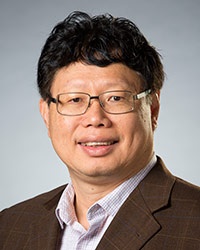
Ruth Kanfer is a psychologist and professor at Georgia Institute of Technology in the area of Industrial and Organizational Psychology. She is best known for her research in the fields of motivation, goal setting, self-regulation, job search, adult learning, and future of work. Kanfer has received numerous awards for her research contributions including the American Psychological Association Distinguished Scientific Award for an Early Career Contribution in Applied Research in 1989, the Society for Industrial and Organizational Psychology (SIOP) William R. Owens Scholarly Achievement Award in 2006 and the SIOP Distinguished Scientific Contributions Award in 2007. Ruth Kanfer has authored influential papers on a variety of topics including the interaction of cognitive abilities and motivation on performance, the influence of personality and motivation on job search and employment, and a review chapter on motivation in an organizational setting.

Professor
Phone
404-894-2680
Additional Research

Work & Organizational Psychology; Motivation; Goal Setting; Self-Regulation Adult Learning; Work & Aging; Work Transitions

University, College, and School/Department
Ruth
Kanfer
Show Regular Profile

Aaron Stebner

Aaron Stebner
aaron.stebner@gatech.edu
MSE Profile Page

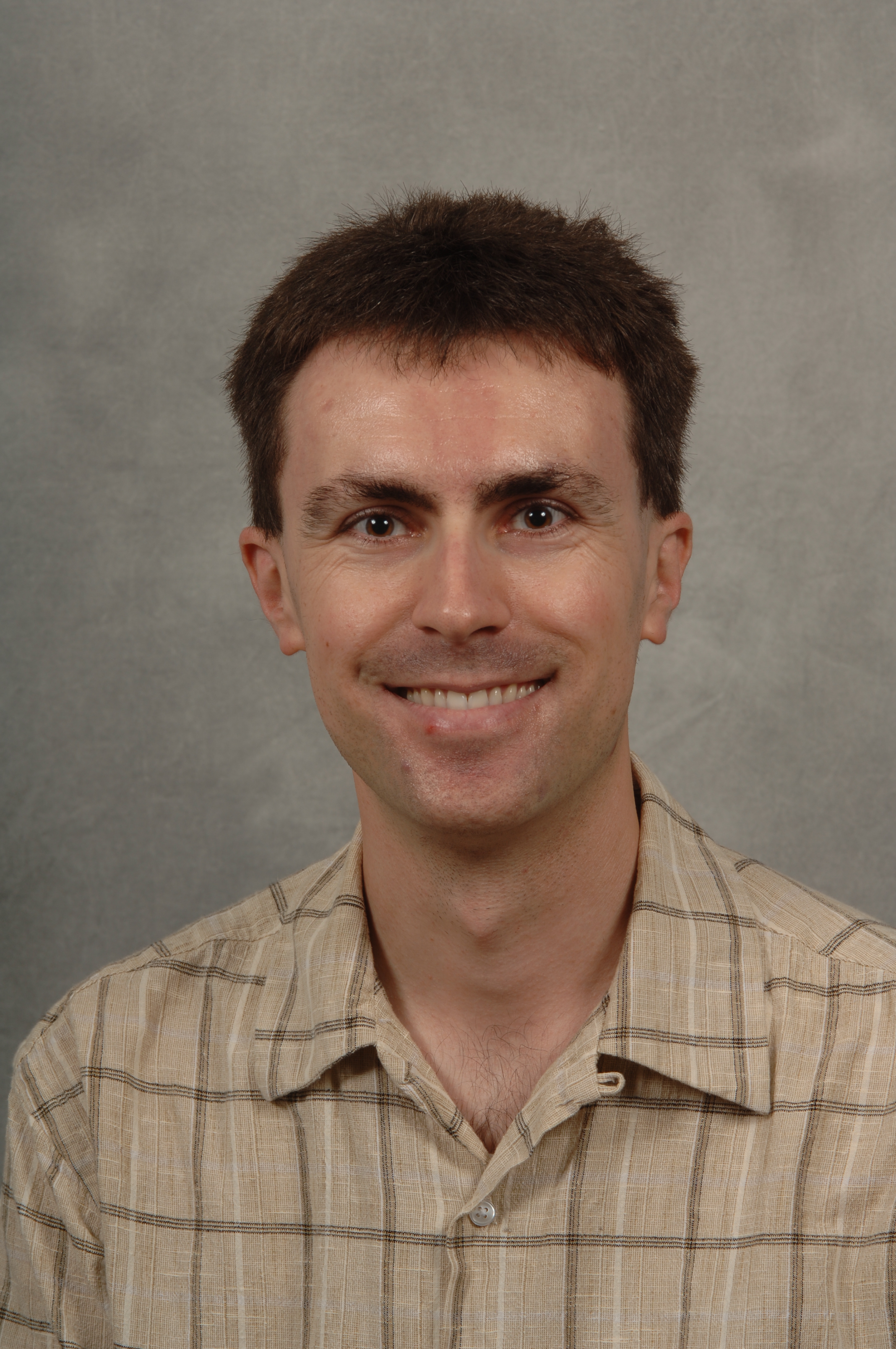
Aarn Stebner works at the intersection of manufacturing, machine learning, materials, and mechanics. He joined the Georgia Tech faculty as an associate professor of Mechanical Engineering and Materials Science and Engineering in 2020.

Previously, he was the Rowlinson Associate Professor of Mechanical Engineering and Materials Science at the Colorado School of Mines (2013 – 2020), a postdoctoral scholar at the Graduate Aerospace Laboratories of the California Institute of Technology (2012 – 2013), a Lecturer in the Segal Design Institute at Northwestern University (2009 – 2012), a Research Scientist at Telezygology Inc. establishing manufacturing and “internet of things” technologies for shape memory alloy-secured latching devices (2008-2009), a Research Fellow at the NASA Glenn Research Center developing smart materials technologies for morphing aircraft structures (2006 – 2008), and a Mechanical Engineer at the Electric Device Corporation in Canfield, OH developing manufacturing and automation technologies for the circuit breaker industry (1995 – 2000).

Associate Professor, School of Mechanical Engineering and Materials Science and Engineering
Phone
404.894.5167
Google Scholar
https://scholar.google.com/citations?hl=en&user=OpRg9IsAAAAJ&view_op=list_works&sortby=pubdate
Stebner Lab
Aaron
Stebner
Show Regular Profile

Richard Fujimoto

Richard Fujimoto
richard.fuijmoto@cc.gatech.edu
Computing Profile

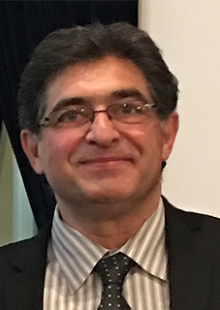
Richard Fujimoto is a Regents’ Professor, Emeritus in the School of Computational Science and Engineering at the Georgia Institute of Technology. He received the Ph.D. degree from the University of California-Berkeley in 1983 in Computer Science and Electrical Engineering. He also received an M.S. degree from the same institution as well as two B.S. degrees from the University of Illinois-Urbana. 

Fujimoto is a pioneer in the parallel and distributed discrete event simulation field. Discrete event simulation is widely used in areas such as telecommunications, transportation, manufacturing, and defense, among others. His work developed fundamental understandings of synchronization algorithms that are needed to ensure the correct execution of discrete event simulation programs on high performance computing (HPC) platforms. His team developed many new algorithms and computational techniques to accelerate the execution of discrete event simulations and developed software realizations that impacted several application domains. For example, his Georgia Tech Time Warp software was deployed by MITRE Corp. to create online fast-time simulations of commercial air traffic to help reduce delays in the U.S. National Airspace. An active researcher in this field since 1985, he authored or co-authored three books and hundreds of technical papers including seven that were cited for “best paper” awards or other recognitions. His research included several projects with Georgia Tech faculty in telecommunications, transportation, sustainability, and materials leading to numerous publications co-authored with faculty across campus.

Regents' Professor Emeritus
Phone
404.894.5615
Office
Coda Building, 1313
Additional Research

discrete-event simulation programs on parallel and distributed computing platforms

Website
Richard
Fujimoto
Show Regular Profile

Yan Wang

Yan Wang
yan.wang@me.gatech.edu
ME Profile Page

Wang's research is in the areas of design, manufacturing, and Integrated computational materials engineering. He is interested in computer-aided design, geometric modeling and processing, computer-aided manufacturing, multiscale simulation, and uncertainty quantification.

Currently, Wang studies integrated product-materials design and manufacturing process design, where process-structure-property relationships are established with physics-based data-driven approaches for design optimization. The Multiscale Systems Engineering research group led by him develops new methodologies and computational schemes to solve the technical challenges of high dimensionality, high complexity, and uncertainty associated with product, process, and systems design at multiple length and time scales.

Computational design tools for multiscale systems with sizes ranging from nanometers to kilometers will be indispensable for engineers' daily work in the near future. The research mission of the Multiscale Systems Engineering group is to create new modeling and simulation mechanisms and tools with underlying scientific rigor that are suitable for multiscale systems engineering for better and faster product innovation. Our education mission is to train engineers of the future to gain necessary knowledge as well as analytical, computational, communication, and self-learning skills for future work in a collaborative environment as knowledge creators and integrators. 

Professor, Woodruff School of Mechanical Engineering
Phone
404.894.4714
Office
Callaway 472
Additional Research

Computer-aided engineering and design and manufacturing, modeling and simulation, nanoscale cad/cam/cae, product lifecycle management, applied algorithms, uncertainty modeling, multiscale modeling, materials design

Google Scholar
https://scholar.google.com/citations?hl=en&user=rK2ow1kAAAAJ&view_op=list_works&sortby=pubdate
Yan
Wang
Show Regular Profile

Steve French

Steve French
steve.french@coa.gatech.edu
Website

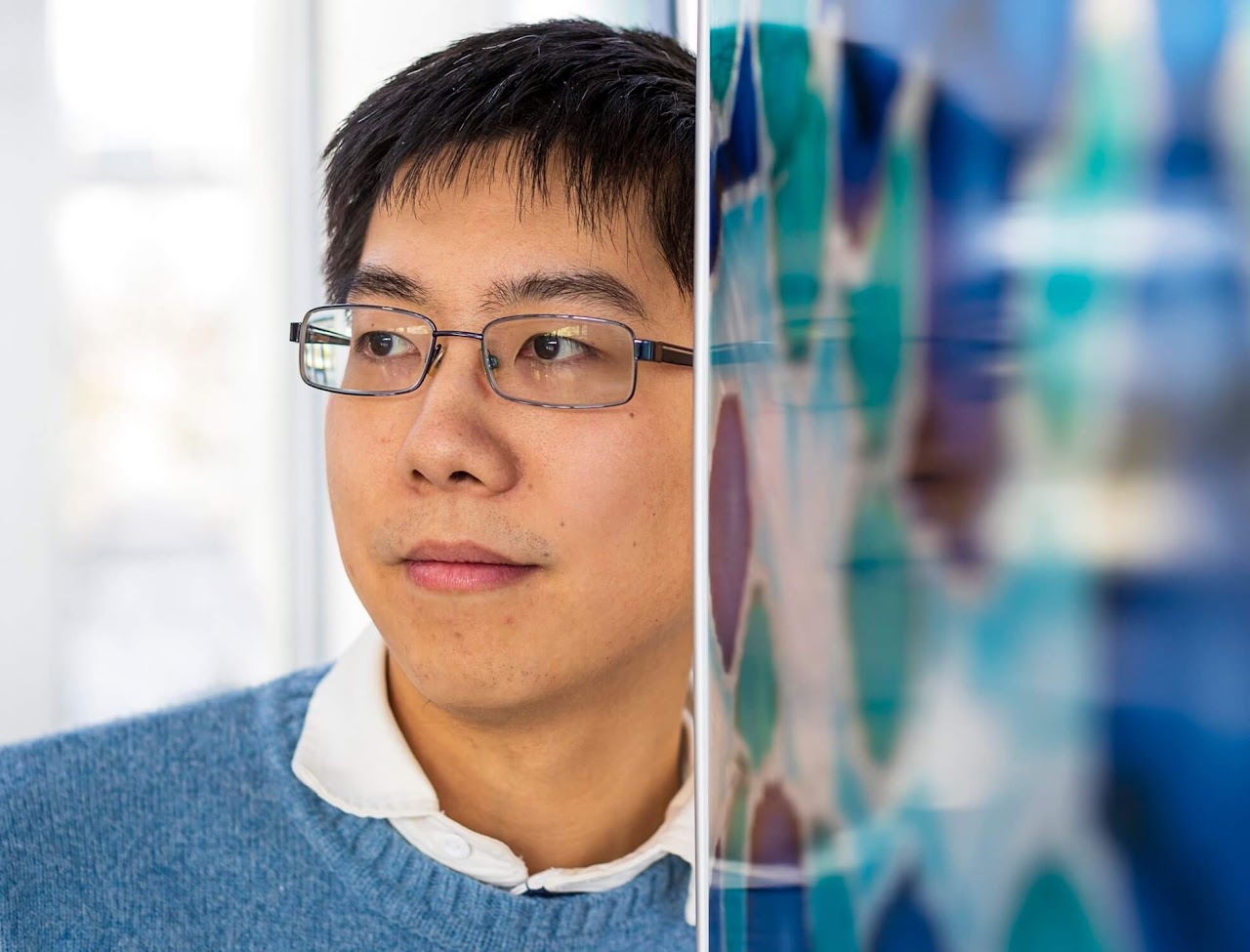
Steven P. French is professor of City and Regional Planning at Georgia Institute of Technology. He joined Georgia Tech in 1992 as the director of the City Planning program and served in that position until August 1999. He was the director of the Center for Geographic Information Systems from 1997 through 2011. He served as associate dean for research for the College of Architecture (now the College of Design) from July 2009 through June 2013 and dean of the College of Design from July 2013-June 2021.

French’s teaching and research activities focus on sustainable urban development, land use planning, GIS applications, and natural hazard risk assessment. In addition to his administrative assignments, Professor French has regularly taught graduate courses in land use, planning, and GIS. He has graduated six Ph.D. students and advised more than 50 Masters students in City and Regional Planning. He has also served on numerous dissertation committees in Architecture, Civil Engineering, and Public Policy.

Over the past twenty-five years, French has been the principal investigator or co-principal investigator on more than seventy research projects. He has participated in a number of National Science Foundation projects dealing with flood and earthquake hazards and was the Social Science Thrust Leader for the Mid-America Earthquake Center, an NSF Engineering Research Center. He has extensive experience in building and managing multidisciplinary teams of social scientists, architects, engineers, and scientists. French is the author or co-author of more than 25 refereed journal articles and four books. He has served on the editorial boards of the Journal of the American Planning Association, Journal of Planning Education and Research, Journal of the Urban and Regional Information Systems Association and Earthquake Spectra.

French holds a Ph.D. in City and Regional Planning from the University of North Carolina at Chapel Hill. Before coming to Georgia Tech, he taught for ten years at California Polytechnic State University-San Luis Obispo. In 1987-88, he served as the visiting professor of resources planning in the Civil Engineering Department at Stanford University. He is a Fellow of the American Institute of Certified Planners and an associate member of the American Institute of Architects.

Professor
John Portman Dean's Chair
Phone
404.894.3880
Office
245 Fourth Street, N.W.
Steve
French
Show Regular Profile

Vigor Yang

Vigor Yang
vigor.yang@aerospace.gatech.edu
Departmental Bio

Vigor Yang earned his Ph.D. from the California Institute of Technology in 1984. After serving for one year as a research fellow in Jet Propulsion at Caltech, he joined the Pennsylvania State University in August 1985, becoming the John L. and Genevieve H. McCain Chair in Engineering in 2006. In 2009, he began his tenure as the William R.T. Oakes Professor Chair at the Daniel Guggenheim School of Aerospace Engineering at the Georgia Tech. He retired from the chair position and returned to teaching and research in August of 2018

Yang’s research encompasses a wide spectrum of topics, including (1) data-enabled design and data science; (2) combustion dynamics in propulsion and power-generation systems;(3) multi-fidelity modeling and simulations of fluid flows and combustion; (4) combustion of energetic materials; (5) high-pressure transport phenomena, thermodynamics and combustion, and (6) nano technologies for propulsion and energetic applications. He has established, as the principal or co-principal investigator, more than 70 research projects, including nine (9) DoD-MURI projects. He has published 10 comprehensive volumes and numerous technical papers on combustion, propulsion, energetics, and data science. He was the recipient of  the Air-Breathing Propulsion Award (2005), the Pendray Aerospace Literature Award (2008), the Propellants and Combustion Award (2009), and the von Karman Lectureship in Astronautics Award (2016) from the American Institute of Aeronautics and Astronautics (AIAA); the Worcester Reed Warner Medal (2014) from the American Society of Mechanical Engineers (ASME); and the Lifetime Achievement Award (2014) from the Joint Army, Navy, NASA, and Air Force (JANNAF) Interagency Propulsion Committee.

Yang was the editor-in-chief of the AIAA Journal of Propulsion and Power (2001-2009) and the JANNAF Journal of Propulsion and Energetics (2009-2012). He is currently a co-editor of the Aerospace Book Series of the Cambridge University Press (2010-).  He serves, or has served, on a large number of steering committees and review/advisory boards for government agencies and universities in the U.S. and abroad. A member of the U.S. National Academy of Engineering and an academician of Academia Sinica, Dr. Yang is a fellow of the AIAA, ASME, and Royal Aeronautical Society (RAeS).

Regents Professor
Additional Research
  • Combustion
  • Energy
  • High Performance Computing
  • Hydrogen Production &  Utilization 
Website
Vigor
Yang
Show Regular Profile

Victor Fung

Victor Fung
victorfung@gatech.edu
Fung Group

Victor Fung is an Assistant Professor in the School of Computational Science and Engineering. Prior to this position, he was a Wigner Fellow and a member of the Nanomaterials Theory Insitute in the Center for Nanophase Materials Sciences at Oak Ridge National Laboratory. A physical chemist by training, Fung now works at the intersection of scientific artificial intelligence, computing, and materials science/chemistry.

Assistant Professor of Computational Science and Engineering
Office
E1354B | CODA Building, 756 W Peachtree St NW, Atlanta, GA 30308
Additional Research

Quantum chemistrySurrogate models for quantum chemistryData-driven inverse designChemically-informed machine learningHigh-throughput computational simulations

Google Scholar
https://scholar.google.com/citations?hl=en&user=2QsddMIAAAAJ&view_op=list_works&sortby=pubdate
LinkedIn
Victor
Fung
Show Regular Profile

Lu Gan

Lu Gan
lgan@gatech.edu
Lunar Lab @ GT

Lu Gan joined the Daniel Guggenheim School of Aerospace Engineering at the Georgia Institute of Technology as an Assistant Professor in January 2024. She leads the Lu's Navigation and Autonomous Robotics (Lunar) Lab at Georgia Tech, and is on the core faculty of the Institute for Robotics and Intelligent Machines. Her research interests include robot perception, robot learning, and autonomous navigation. Her group explores the use of computer vision, machine learning, estimation, probabilistic inference, kinematics and dynamics to develop autonomous systems in ground, air, and space applications.

She holds a B.S. in Automation from the University of Electronic Science and Technology of China, an M.S. in Control Engineering from Beihang University, and received her M.S. and Ph.D. in Robotics from the University of Michigan, Ann Arbor. Before joining Georgia Tech, she had a two-year appointment as a Postdoctoral Scholar at the Graduate Aerospace Laboratories of the California Institute of Technology and the Center for Autonomous Systems and Technologies at Caltech.

Assistant Professor - School of Aerospace Engineering
Office
Guggenheim 448A
Additional Research

Computer VisionPerception & NavigationRobot AutonomyFlight Mechanics & ControlsHuman-Robot Interaction

Google Scholar
https://scholar.google.com/citations?hl=en&user=mVY8wE8AAAAJ&view_op=list_works&sortby=pubdate
AE Profile Page Personal Website
Lu
Gan
Show Regular Profile

May Dongmei Wang

May Dongmei Wang
maywang@bme.gatech.edu
Website

May Dongmei Wang, Ph.D., is The Wallace H Coulter Distinguished Faculty Fellow, professor of BME, ECE and CSE, Director of Biomedical Big Data Initiative, and Georgia Distinguished Cancer Scholar. She is also Petit Institute Faculty Fellow, Kavli Fellow, Fellow of AIMBE, Fellow of IEEE, and Fellow of IAMBE. She received BEng from Tsinghua University China and MS/PhD from Georgia Institute of Technology (GIT). Dr. Wang’s research and teaching are in Biomedical Big Data and AI-Driven Biomedical Health Informatics and Intelligent Reality (IR) for predictive, personalized, and precision health. She has published over 270 referred journal and conference proceeding articles (13,500+ GS-Citations) and delivered over 280 invited and keynote lectures. Dr. Wang’s research has been supported by NIH, NSF, CDC, GRA, GCC, VA, Children’s Healthcare of Atlanta, Enduring Heart Foundation, Wallace Coulter Foundation, Carol Ann and David Flanagan Foundation, Shriner’s Hospitals, Microsoft Research, HP, UCB, and Amazon.

Dr. Wang chairs IEEE Engineering in Medicine and Biology Society (EMBS) BHI-Technical Community and ACM Special Interest Group in Bioinformatics (SIGBio), and is the Senior Editor of IEEE Journal of Biomedical & Health Informatics (IF=7.02), and Associate Editor for IEEE Transactions on BME, and IEEE Review of BME. She was IEEE EMBS Distinguished Lecturer and PNAS (Proceeding of National Academy of Sciences) Emerging Area Editor. During the past decade, Dr. Wang has been a standing panelist for NIH Study Sections, NSF Smart and Connect Health, and Brain Canada, and has co-chaired and helped organize more than 10 conferences by IEEE Engineering in Medicine and Biologics  Gordon Research Conferences, ACM Special Interest Groups in Bioinformatics, and IEEE Future Directions.

Dr. Wang received GIT Outstanding Faculty Mentor for Undergrad Research Award and Emory University MilliPub Award for a high-impact paper cited over 1,000 times. She was selected into 2022 Georgia Tech LeadingWomen Program and 2021 Georgia Tech Provost Emerging Leaders Program. Previously, she was Carol Ann and David Flanagan Distinguished Faculty Fellow, GIT Biomedical Informatics Program Co-Director in ACTSI, and Bioinformatics and Biocomputing Core Director in NIH/NCI-Sponsored U54 Center for Cancer Nanotechnology Excellence.

Professor of BME, ECE, and CSE
The Wallace H. Coulter Distinguished Faculty Fellow
Director of Biomedical Big Data Initiative and Georgia Distinguished Cancer Scholar, Petit Institute Faculty Fellow, Kavli Fellow
AIMBE Fellow, IAMBE Fellow, IEEE Fellow Board of Directors of American Board of AI in Medicine,
Georgia Institute of Technology and Emory University
Phone
404-385-2954
Office
UAW 4106
Additional Research
  • Artificial Intelligence
  • Bioinformatics
  • Health & Life Sciences
Research Focus Areas
Google Scholar
https://scholar.google.com/citations?user=iCx27kUAAAAJ&hl=en&oi=sra
Related Site
May Dongmei
Wang
Show Regular Profile

Hang Lu

Hang Lu
hang.lu@gatech.edu
Lµ Fluidics Group

Hang Lu received her B.S. from the University of Illinois, Urbana-Champaign and her M.S.C.E.P and Ph.D. from the Massachusetts Institute of Technology. She is currently the Associate Dean for Research and Innovation in the College of Engineering and C. J. "Pete" Silas Chair, School of Chemical & Biomolecular Engineering at the Georgia Institute of Technology. Lu's research interests involve the interface of engineering and biology and her lab, the Lu Fluidics Group, is conducting research at these interface levels. The Lu Fluidics Group engineers BioMEMS (Bio Micro-Electro-Mechanical System) and microfluidic devices to address questions in neuroscience, cell biology, and biotechnology that are difficult to answer using conventional techniques.

Faces of Research - Profile Article

Associate Dean for Research and Innovation, College of Engineering
C. J. "Pete" Silas Chair, School of Chemical and Biomolecular Engineering
Phone
404.894.8473
Office
EBB 3017
Additional Research

Microfluidic systems for high-throughput screens and image-based genetics and genomicsSystems biology: large-scale experimentation and data miningMicrotechnologies for optical stimulation and optical recordingBig data, machine vision, automationDevelopmental neurobiology, behavioral neurobiology, systems neuroscienceCancer, immunology, embryonic development, stem cells

Google Scholar
https://scholar.google.com/citations?hl=en&user=DDKNuYgAAAAJ&view_op=list_works&sortby=pubdate
LinkedIn ChBE Profile Page
Hang
Lu
Show Regular Profile