Michael Glenn

michael.glenn@ibb.gatech.edu
Program and Operations Manager, Outreach K-20 Programs
IRI And Role


Karl I. Jacob, a professor of Materials Science and Engineering with a joint appointment in the G. W. Woodruff School of Mechanical Engineering, teaches graduate and undergraduate courses on polymer physics and engineering, rheology, and mechanics of polymeric materials. His graduate work was in the area of numerical analysis of vibrating three-dimensional structures. He came to Georgia Tech from DuPont Corporation in 1995. His initial work at the DuPont Dacron Research Laboratory was in the area of fiber-reinforced composite materials and in the development and modeling of fiber spinning processes. He then moved to the DuPont Central Research and Development Department, where he was involved in molecular modeling, computational chemistry, and diffusion.
Jacob is a member of the American Academy of Mechanics, the American Society of Mechanical Engineers, the Sigma Xi Research Society, and the Phi Kappa Phi Honor Society.
"Dr. Jacob's research is directed at stress induced phase changes, nanoscale characterization of materials, synthesis of polymeric nanofibers, mechanical behavior of fiber assemblies (particularly related to biological systems and biomimitic systems), nanoparticle reinforced composites, transdermal drug delivery systems, large scale deformation of rubbery (networked) polymers, and nanoscale fracture of materials. The objectives in this work, using theoretical, computational and experimental techniques, is to understand the effect of micro- and nano- structures in the behavior of materials in order to try to design the micro/nano structures for specific materials response. Dr. Jacob plans are to continue current research interests with a multidisciplinary thrust with more emphasis in bio related areas and to start some work on the dynamic behavior of materials and structures. Graduate students could benefit from the interdisciplinary nature of the work combining classical continuum mechanics with nanoscale analysis for various applications, particularly in the nano and bio areas. Dr. Jacob has extensive experience in vibrations and stability of structures, mechanics of polymeric materials, behavior of fiber assemblies, stress-induced phase transformation, diffusion, and molecular modeling. His research involves the application of mechanics principles, both theoretical and experimental, in the analysis and design of materials for various applications.";Fibers; smart textiles; fuel cells; Polymeric composites

Grover’s research activities in process systems engineering focus on understanding macromolecular organization and the emergence of biological function. Discrete atoms and molecules interact to form macromolecules and even larger mesoscale assemblies, ultimately yielding macroscopic structures and properties. A quantitative relationship between the nanoscale discrete interactions and the macroscale properties is required to design, optimize, and control such systems; yet in many applications, predictive models do not exist or are computationally intractable.
The Grover group is dedicated to the development of tractable and practical approaches for the engineering of macroscale behavior via explicit consideration of molecular and atomic scale interactions. We focus on applications involving the kinetics of self-assembly, specifically those in which methods from non-equilibrium statistical mechanics do not provide closed form solutions. General approaches employed include stochastic modeling, model reduction, machine learning, experimental design, robust parameter design, and estimation.
Colloids; Crystallization; Organic and Inorganic Photonics and Electronics; Polymers; Discrete atoms and molecules interact to form macromolecules and even larger mesoscale assemblies, ultIMaTely yielding macroscopic structures and properties. A quantitative relationship between the nanoscale discrete interactions and the macroscale properties is required to design, optimize, and control such systems; yet in many applications, predictive models do not exist or are computationally intractable. The Grover group is dedicated to the development of tractable and practical approaches for the engineering of macroscale behavior via explicit consideration of molecular and atomic scale interactions. We focus on applications involving the kinetics of self-assembly, specific those in which methods from non-equilibrium statistical mechanics do not provide closed form solutions. General approaches employed include stochastic modeling, model reduction, machine learning, experimental design, robust parameter design, estIMaTion, and optimal control, monitoring and control for nuclear waste processing and polymer organic electronics

Seung Soon Jang joined the School of Materials Science and Engineering at the Georgia Institute of Technology in July 2007. Jang worked at Samsung Electronics and the Materials and Process Simulation Center (MSC) at CalTech performing various researches in nanoelectronics, fuel cell, and interfacial systems as a director of Supramolecular Technology for six years.
His research interest includes computations and theories to characterize and design nanoscale systems based on the molecular architecture-property relationship, which are especially relevant to molecular electronics, molecular machines, fuel cell technology and biotechnology.
Jang's research interest is to characterize and design nanoscale systems based on the molecular architecture-property relationship using computations and theories, which are especially relevant to designing new biomaterials for drug delivery and tissue engineering. Currently, he is focusing on 1) NanoBio-mechanics for DNA, lipid bilayer, and hydrogel systems; 2) Molecular interaction of Alzheimer proteins with various small molecules. Dr. Jang is also interested in various topics such as nanoelectronics, nanostructured energy technologies for fuel cell, battery and photovoltaic devices.;Computational mechanics; Nanostructured Materials; Polymeric composites; Biomaterials; Fuel Cells; Delivery and Storage
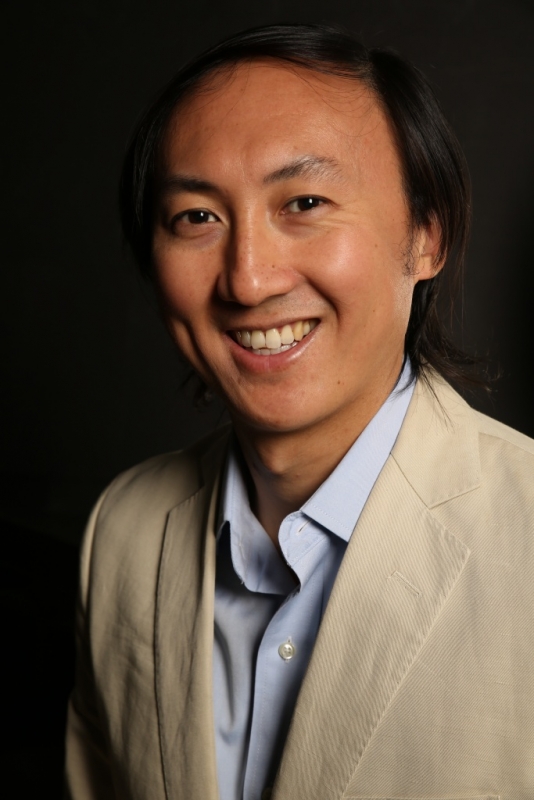
David Hu is a fluid dynamicist with expertise in the mechanics of interfaces between fluids such as air and water. He is a leading researcher in the biomechanics of animal locomotion. The study of flying, swimming and running dates back hundreds of years, and has since been shown to be an enduring and rich subject, linking areas as diverse as mechanical engineering, mathematics and neuroscience. Hu's work in this area has the potential to impact robotics research. Before robots can interact with humans, aid in minimally-invasive surgery, perform interplanetary exploration or lead search-and-rescue operations, we will need a fundamental physical understanding of how related tasks are accomplished in their biological counterparts. Hu's work in these areas has generated broad interest across the fields of engineering, biology and robotics, resulting in over 30 publications, including a number in high-impact interdisciplinary journals such as Nature, Nature Materials, Proceedings of the National Academy of Sciences as well as popular journals such as Physics Today and American Scientist. Hu is on editorial board member for Nature Scientific Reports, The Journal of Experimental Biology, and NYU Abu Dhabi's Center for Center for Creative Design of Materials. He has won the NSF CAREER award, Lockheed Inspirational Young Faculty award, and best paper awards from SAIC, Sigma Xi, ASME, as well as awards for science education such as the Pineapple Science Prize and the Ig Nobel Prize. Over the years, Hu's research has also played a role in educating the public in science and engineering. He has been an invited guest on numerous television and radio shows to discuss his research, including Good Morning America, National Public Radio, The Weather Channel, and Discovery Channel. His ant research was featured on the cover of the Washington Post in 2011. His work has also been featured in The Economist, The New York Times, National Geographic, Popular Science and Discover His laboratory appeared on 3D TV as part of a nature documentary by 3DigitalVision, "Fire ants: the invincible army," available on Netflix.
Fluid Mechanics: Fluid dynamics, solid mechanics, biomechanics, animal locomotion, and physical applied mathematics. Dr. David Hu's research focuses on fundamental problems of hydrodynamics and elasticity that have bearing on problems in biology. He is interested in the dynamics of interfaces, specifically those associated with fluid-solid and solid-solid interactions. The techniques used in his work include theory, computation, and experiment. He is also interested in pursuing biomimetic technologies based on nature's designs.
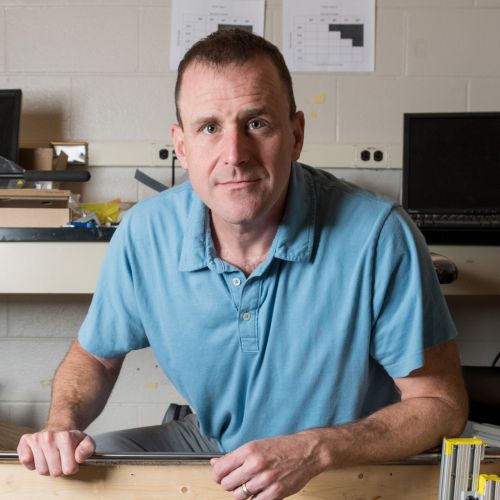
My research integrates my work in complex fluids and granular media and the biomechanics of locomotion of organisms and robots to address problems in nonequilibrium systems that involve interaction of matter with complex media. For example, how do organisms like lizards, crabs, and cockroaches cope with locomotion on complex terrestrial substrates (e.g. sand, bark, leaves, and grass). I seek to discover how biological locomotion on challenging terrain results from the nonlinear, many degree of freedom interaction of the musculoskeletal and nervous systems of organisms with materials with complex physical behavior. The study of novel biological and physical interactions with complex media can lead to the discovery of principles that govern the physics of the media. My approach is to integrate laboratory and field studies of organism biomechanics with systematic laboratory studies of physics of the substrates, as well as to create mathematical and physical (robot) models of both organism and substrate. Discovery of the principles of locomotion on such materials will enhance robot agility on such substrates
biomechanics; neuromechanics; granular media; robotics; robophysics

Peter Hesketh came to Georgia Tech in spring 2000 as a professor in the George W. Woodruff School of Mechanical Engineering. Prior, he was associate professor at the University of Illinois at Chicago. Hesketh's research interests involve sensors and micro/nano-electro-mechanical Systems (MEMS/NEMS). Many sensors are built by micro/nanofabrication techniques and this provides a host of advantages including lower power consumption, small size and light weight. The issue of manipulation of the sample in addition to introduce it to the chemical sensor array is often achieved with microfluidics technology. Combining photolithographic processes to define three-dimensional structures can accomplish the necessary fluid handling, mixing, and separation through chromatography. Hesketh is also interested in nanosensors, impedance based sensors, miniature magnetic actuators and the use of stereolithography for sensor packaging. He has published over sixty papers and edited fifteen books on microsensor systems.
Microfabrication; micromachining; sensors and actuators; biosensors; "Dr. Hesketh's research interests are in Sensors and Micro/Nano-electro-mechanical Systems (MEMS/NEMS).Many sensors are built by micro/nanofabrication techniques and this provides a host of advantages including lower power consumption, small size and light weight.The issue of manipulation of the sample in addition to introduce it to the chemical sensor array is often achieved with microfluidics technology.Combining photolithographic processes to define three-dimensional structures can accomplish the necessary fluid handling, mixing, and separation through chromatography.For example, demonstration of miniature gas chromatographyand liquid chromatography with micromachined separation columns demonstrates how miniaturization of chemical analytical methods reduces the separation time so that it is short enough, to consider the measurementequivalentto ""read-time"" sensing. A second focus area is biosensing. Professor Hesketh has worked on a number of biomedical sensors projects, including microdialysis for subcutaneous sampling, glucose sensors, and DNA sensors. Magnetic beads are being investigated as a means to transport and concentrate a target at a biosensor interface in a microfluidic format, in collaboration with scientists at the CDC. His research interests also include nanosensors, nanowire assembly by dielectrophoresis; impedance based sensors, miniature magnetic actuators; use of stereolithography for sensor packaging. He has published over sixty papers and edited fifteen books on microsensor systems."

Soft materials are materials whose properties are determined by internal structures with dimensions between atomic sizes and macroscopic scales. They are characterized by energies that are typically comparable to kT. As a result, they have low elastic moduli, often ~1-10 Pascals. Typical soft materials include liquid crystals, polymers, colloidal suspensions and emulsion drops. These materials, unlike conventional simple liquids, are locally heterogeneous and can have broken symmetries that affect their physical properties. Hence, although they often exhibit liquid-like behavior, soft materials also often exhibit properties of solids. Our laboratory studies the physics of soft materials with a focus on the connection between microscopic order and macroscopic properties. The underlying theme is to pursue basic understanding and address fundamental questions. However, we also address applied problems and pursue industrial collaborations since many of the materials we study can be viewed as model systems for those that are often used in applications. Current projects include (i) studying the phase and non-equilibrium behavior and properties of dense microgel suspensions, (ii) understanding the consequences of confinement and curvature over the equilibrium states of ordered materials, which in many cases require the existence of topological defects in their ground states, and (iii) electrohydrodynamics of toroidal droplets and jets.
Physics of soft materials with a focus on the connection between microscopic order and macroscopic properties, hydrodynamics, advanced characterization, polymers, computational mechanics

Yonggang Ke's research is highly interdisciplinary combining chemistry, biology, physics, material science, and engineering. The overall mission of his research is to use interdisciplinary research tools to program nucleic-acid-based "beautiful structures and smart devices" at nanoscale, and use them for scientific exploration and technological applications. Specifically, his team focuses on (1) developing new DNA self-assembly paradigms for constructing DNA nanostructures with greater structural complexity, and with controllable sizes and shapes; (2) developing new imaging or drug delivery systems based on DNA nanostructuresl; (3) exploring design of novel DNA-based nanodevices for understanding basic biological questions at molecular level; (4) developing DNA-templated protein devices for constructing artificial bio-reactors.
For cancer-related research/application, Ke will focus on using DNA/RNA nanostructures as drug delivery vehicles. He is also interested in using DNA/RNA nanostructures to study cancer cell biology at molecular level.
Molecular engineeringNucleic acid self-assemblyTargeted imaging and delivery
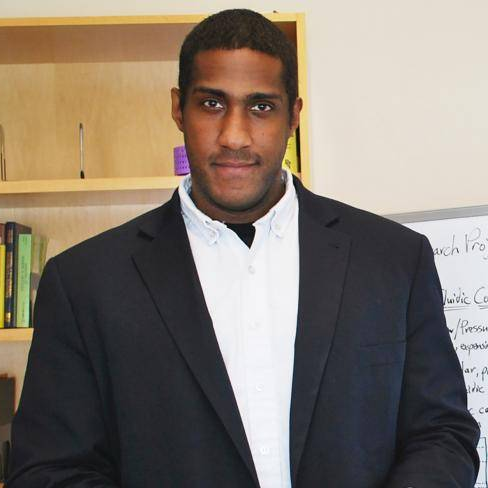
Frank L. Hammond III joined George W. Woodruff George W. Woodruff School of Mechanical Engineering in April 2015. Prior to this appointment, he was a postdoctoral research affiliate and instructor in the Department of Mechanical Engineering at MIT and a Ford postdoctoral research fellow at the Harvard School of Engineering and Applied Sciences. He received his Ph.D. in 2010 from Carnegie Mellon University.
Hammond's research focuses on the design and control of adaptive robotic manipulation (ARM) systems. This class of devices exemplified by kinematic structures, actuation topologies, and sensing and control strategies that make them particularly well-suited to operating in unstructured, dynamically varying environments - specifically those involving cooperative interactions with humans. The ARM device design process uses an amalgamation of bioinspiration, computational modeling and optimization, and advanced rapid prototyping techniques to generate manipulation solutions which are functionally robust and versatile, but which may take completely non-biomorphic (xenomorphic) forms. This design process removes human intuition from the design loop and, instead, leverages computational methods to map salient characteristics of biological manipulation and perception onto a vast robotics design space. Areas of interest for ARM research include kinematically redundant industrial manipulation, wearable robotic devices for human augmentation, haptic-enabled teleoperative robotic microsurgery, and autonomous soft robotic platforms.