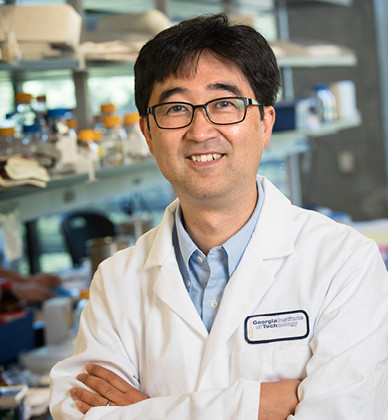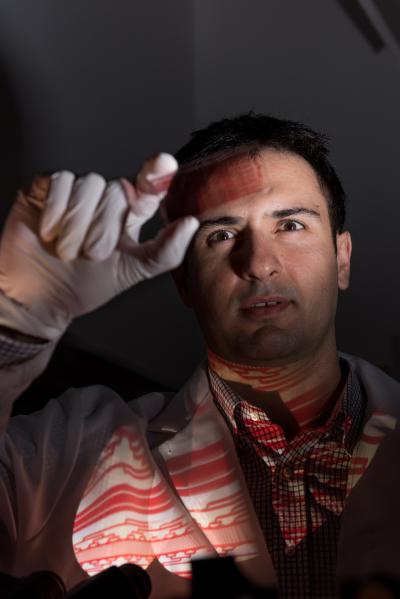
Abhijit Chatterjee

Abhijit Chatterjee
abhijit.chatterjee@ece.gatech.edu
ECE Profile Page

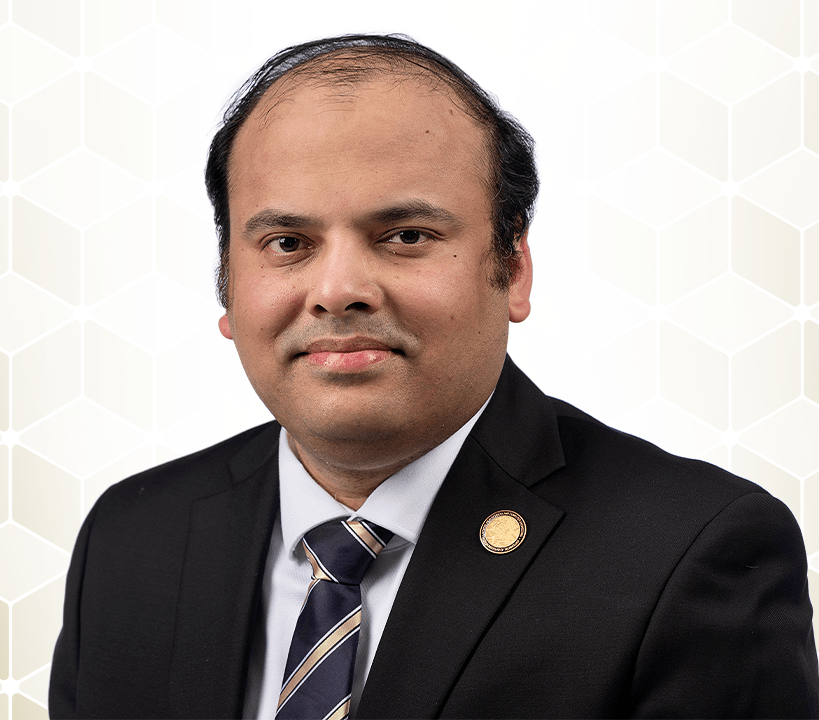
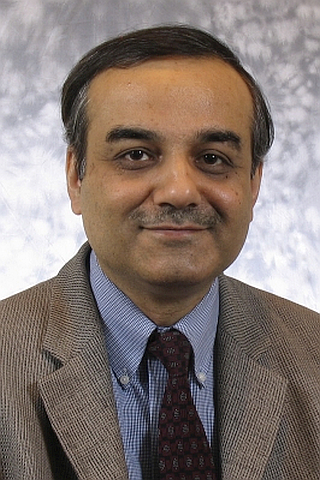
Abhijit Chatterjee is a professor in the School of Electrical and Computer Engineering at Georgia Tech and a Fellow of the IEEE. He received his Ph.D in electrical and computer engineering from the University of Illinois at Urbana-Champaign in 1990. Chatterjee received the NSF Research Initiation Award in 1993 and the NSF CAREER Award in 1995. He has received six Best Paper Awards and three Best Paper Award nominations. His work on self-healing chips was featured as one of General Electric 's key technical achievements in 1992 and was cited by the Wall Street Journal. In 1995, he was named a Collaborating Partner in NASA's New Millennium project. In 1996, he received the Outstanding Faculty for Research Award from the Georgia Tech Packaging Research Center, and in 2000, he received the Outstanding Faculty for Technology Transfer Award, also given by the Packaging Research Center. In 2007, his group received the Margarida Jacome Award for work on VIZOR: Virtually Zero Margin Adaptive RF from the Berkeley Gigascale Research Center (GSRC). Chatterjee has authored over 400 papers in refereed journals and meetings and has 20 patents. He is a co-founder of Ardext Technologies Inc., a mixed-signal test solutions company and served as chairman and chief scientist from 2000-2002. He is currently directing research in mixed-signal/RF design and test funded by NSF, SRC, MARCO-DARPA, and industry, and he served as chair of the VLSI Technical Interest Group at Georgia Tech from 2010-2012. He co-leads the Samsung Center of Excellence in High-Speed Test, established at Georgia Tech in 2011.

Professor, School of Electrical and Computer Engineering
Phone
404.894.1880
Office
Klaus 1352
Additional Research

VLSI and mixed-signal testingFault tolerant computingLow power circuit designComputer algorithmsDigital automation
LinkedIn Low-power, Adaptive, and Resilient Systems Laboratory
Abhijit
Chatterjee
Show Regular Profile

Muhannad S. Bakir

Muhannad S. Bakir
muhannad.bakir@mirc.gatech.edu
Integrated 3D Systems Group @ GT

Muhannad S. Bakir is the Dan Fielder Professor in the School of Electrical and Computer Engineering at Georgia Tech. He and his research group have received more than thirty paper and presentation awards including six from the IEEE Electronic Components and Technology Conference (ECTC), four from the IEEE International Interconnect Technology Conference (IITC), and one from the IEEE Custom Integrated Circuits Conference (CICC). Bakir’s group was awarded 2014 and 2017 Best Papers of the IEEE Transactions on Components Packaging and Manufacturing Technology (TCPMT). He is the recipient of the 2013 Intel Early Career Faculty Honor Award, 2012 DARPA Young Faculty Award, 2011 IEEE CPMT Society Outstanding Young Engineer Award, and was an Invited Participant in the 2012 National Academy of Engineering Frontiers of Engineering Symposium. Bakir is the co-recipient of the 2018 IEEE Electronics Packaging Society (EPS) Exceptional Technical Achievement Award "for contributions to 2.5D and 3D IC heterogeneous integration, with focus on interconnect technologies." He is also the co-recipient of the 2018 McKnight Foundation Technological Innovations in Neuroscience Awards. In 2020, Bakir was the recipient of the Georgia Tech Outstanding Doctoral Thesis Advisor Award.  
 
Bakir serves on the editorial board of IEEE Transactions on Components, Packaging and Manufacturing Technology (TCPMT) and IEEE Transactions on Electron Devices (TED). Dr. Bakir serves as a Distinguished Lecturer for IEEE EPS. 

Dan Fielder Professor, School of Electrical and Computer Engineering
Director, 3D Systems Packaging Research Center
Phone
404.385.6276
Office
Marcus 4135
Additional Research

Advanced cooling and power delivery for emerging system architecturesBiosensor technologies and their integration with CMOSElectrical and photonic interconnect technologiesHeterogeneous microsystem design and integration, including 2.5D and 3D ICs and packagingNanofabrication technologies

LinkedIn ECE Profile Page
Muhannad S.
Bakir
S.
Show Regular Profile

Suresh Sitaraman

Suresh Sitaraman
suresh.sitaraman@me.gatech.edu
ME Profile Page

Suresh Sitaraman is a Professor in the George W. Woodruff School of Mechanical Engineering, and leads the Flexible Hybrid Electronics Initiative at Georgia Tech and directs the Computer-Aided Simulation of Packaging Reliability (CASPaR) Lab at Georgia Tech. He is a Thrust Leader/Faculty Member, Reliability/Mechanical Design Research, 3D Systems Packaging Research Center; a Faculty Member, Georgia Tech Manufacturing Institute; a Faculty Member, Interconnect and Packaging Center, an SRC Center of Excellence, Institute for Electronics and Nanotechnology; a Faculty Member, Nanoscience and Nanotechnology, Nanotechnlogy Research Center, Institute for Electronics and Nanotechnology; a Faculty Member, Institute of Materials. Dr. Suresh Sitaraman's research is exploring new approaches to develop next-generation microsystems. In particular, his research focuses on the design, fabrication, characterization, modeling and reliability of micro-scale and nano-scale structures intended for microsystems used in applications such as aerospace, automotive, computing, telecommunicating, medical, etc. Sitaraman's research is developing physics-based computational models to design flexible as well as rigid microsystems and predict their warped geometry and reliability. His virtual manufacturing tools are able to simulate sequential fabrication and assembly process mechanics to be able to enhance the overall yield, even before prototypes are built. Sitaraman's work is developing free-standing, compliant interconnect technologies that can mechanically decouple the chip from the substrate without compromising the overall electrical functionality. This work is producing single-path and multi-path interconnect technologies as well as nanowire and carbon nanotube interconnects for electrical and thermal applications, and such interconnect technologies can be employed in flexible as well as 3D microelectronic systems. Sitaraman's research is also developing innovative material characterization techniques such as the stressed super layer technique as well as magnetic actuation test that can be used to study monotonic and fatigue crack propagation in nano- and micro-scale thin film interfaces. In addition, Sitaraman has developed fundamental modeling methodologies combined with leading-edge experimentation techniques to study delamination in the dielectric material and copper interface used in back-end-of-the-line (BEOL) stacks and through-silicon vias as well as epoxy/copper and epoxy/glass interfaces as in microelectronic packaging and photovoltaic module applications. Examining the long-term operational as well as accelerated thermal cycling reliability of solder interconnects, his work has direct implications in implantable medical devices, photovoltaic modules, computers and smart devices as well as rugged automobile and aerospace applications. Through the above-mentioned fundamental and applied research and development pursuits, Sitaraman's work aims to address some of the grand challenges associated with clean energy, health care, personal mobility, security, clean environment, food and water, and sustainable infrastructure

Regents' Professor, Woodruff School of Mechanical Engineering
Morris M. Bryan, Jr. Professor, Woodruff School of Mechanical Engineering
Phone
404.894.3405
Office
MARC 471
Additional Research

Computer-Aided Engineering; micro and nanomechanics; Fabrication; Modeling; fracture and fatigue; Flexible Electronics; Emerging Technologies

CASPaR Lab
Suresh
Sitaraman
Show Regular Profile

Christopher E. Carr

Christopher E. Carr
cecarr@gatech.edu
Lab Website

Christopher E. Carr is an engineer/scientist with training in aero/astro, electrical engineering, medical physics, and molecular biology. At Georgia Tech he is an Assistant Professor in the Daniel Guggenheim School of Aerospace Engineering with a secondary appointment in the School of Earth and Atmospheric Sciences. He is a member of the Space Systems Design Lab (SSDL) and runs the Planetary eXploration Lab (PXL). He serves as the Principal Investigator (PI) or Science PI for several life detection instrument and/or astrobiology/space biology projects, and is broadly interested in searching for and expanding the presence of life beyond Earth while enabling a sustainable human future. He previously served as a Research Scientist at MIT in the Department of Earth, Atmospheric and Planetary Sciences and a Research Fellow at the Massachusetts General Hospital in the Department of Molecular Biology. He serves as a Scott M. Johnson Fellow in the U.S. Japan Leadership Program.

Assistant Professor
School of Aerospace Engineering
School of Earth and Atmospheric Sciences
Phone
617-216-5012
Office
ESM 107B
Christopher E.
Carr
E.
Show Regular Profile

David Myers, Ph.D.

David Myers, Ph.D.
david.myers@emory.edu
Website

David’s varied interests have fueled an unusual educational background that fuses engineering, microsystem design, biology, and clinical research. David received his PhD in mechanical engineering from the University of California at Berkeley, under the tutelage of one of the early microsystems pioneers, Albert P. Pisano, PhD. Driven by a desire to see new types of sensors in the clinic, David undertook a postdoctoral fellowship in biomedical and clinical research with Wilbur A. Lam, MD, PhD, in the Wallace H. Coulter Department of Biomedical Engineering at Emory University and the Georgia Institute of Technology. Working at the intersection of these fields, David has authored or contributed to publications in Nature Materials, Nature Communications, PNAS, and Blood. 

Assistant Professor
Office
Emory University, Health Sciences Research Building, Room E-156
David
Myers
Show Regular Profile

Shuichi Takayama

Shuichi Takayama
takayama@gatech.edu
Takayama lab

Shu Takayama earned his BS and MS in Agricultural Chemistry at the University of Tokyo. He earned a Ph.D. in Chemistry at The Scripps Research Institute in La Jolla, California studying bio-organic synthesis with Dr. Chi‐Huey Wong. He then worked as a postdoc with Dr. George Whitesides at Harvard University where he focused on applying microfluidics to studying cell and molecular biology.

Takayama began his career at the University of Michigan, where led his lab in the Department of Biomedical Engineering and Macromolecular Science & Engineering for over 17 years. In 2017, the lab moved to Georgia Tech where Shu became the Georgia Research Alliance Price Gilbert Chair Professor of Biomedical Engineering in the Wallace H. Coulter Department of Biomedical Engineering.

Takayama’s research interests are diverse and motivated by clinical and biotechnology needs. He is always interested in hearing from stakeholders in these areas who are seeking engineering collaboration.

Professor, Wallace H. Coulter Department of Biomedical Engineering
GRA Eminent Scholar, Wallace H. Coulter Department of Biomedical Engineering
Price Gilbert, Jr. Chair in Regenerative Engineering andMedicine
Phone
404.385.5722
Office
EBB 4018
Additional Research

Use of micro/nanofluidics for cell analysis; diagnostics; and chromatin analysis; High throughput 3D cell cultures; Organs-on-a-chip construction and design; Role of rhythm in cell signaling; Self-switching fluidic circuits; Fracture fabrication

Google Scholar
https://scholar.google.com/citations?hl=en&user=IkhTUu4AAAAJ&view_op=list_works&sortby=pubdate
LinkedIn BME Profile Page
Shuichi
Takayama
Show Regular Profile

A. Fatih Sarioglu

A. Fatih Sarioglu
sarioglu@gatech.edu
Biomedical Microsystems Lab

A. Fatih Sarioglu received the B.Sc. degree from Bilkent University, Ankara, Turkey in 2003, and the M.S. and Ph.D. degrees from Stanford University in 2005 and 2010, respectively, all in Electrical Engineering.

Sarioglu worked as a postdoctoral research associate at the Center for Nanoscale Science and Engineering at Stanford University from 2010 to 2012. From 2012-2014, he was a research fellow at the Center for Engineering in Medicine, Massachusetts General Hospital and Harvard Medical School. In October 2014, he joined the School of Electrical and Computer Engineering at the Georgia Institute of Technology as an assistant professor.

Sarioglu's research interests are at the interface of nano-/micro-engineering and biomedicine. He is particularly interested in developing N/MEMS-based technologies for biomedical applications.

Professor, School of Electrical and Computer Engineering
Phone
404.894.5032
Office
Pettit/MiRC 217
Additional Research

Nano- and Micro-systems for bio-molecular sensing and imagingMicrofluidic devices for cell sorting and disease detectionHigh-throughput bio-analytical instrumentation for cellular and molecular characterizationIntegrated platforms for point-of care diagnosticsImplantable medical devices for minimally-invasive health monitoring

Google Scholar
https://scholar.google.com/scholar?hl=en&q=Ali+Fatih+Sarioglu&btnG=&as_sdt=1,11&as_sdtp=
LinkedIn ECE Profile Page
A. Fatih
Sarioglu
Show Regular Profile

Arijit Raychowdhury

Arijit Raychowdhury
arijit.raychowdhury@ece.gatech.edu
ECE Profile Page

Arijit Raychowdhury is currently an Professor in the School of Electrical and Computer Engineering at the Georgia Institute of Technology where he joined in January, 2013. He received his Ph.D. degree in Electrical and Computer Engineering from Purdue University (2007) and his B.E. in Electrical and Telecommunication Engineering from Jadavpur University, India (2001). His industry experience includes five years as a Staff Scientist in the Circuits Research Lab, Intel Corporation, and a year as an Analog Circuit Designer with Texas Instruments Inc. His research interests include low power digital and mixed-signal circuit design, design of power converters, sensors and exploring interactions of circuits with device technologies. Raychowdhury holds more than 25 U.S. and international patents and has published over 80 articles in journals and refereed conferences. He serves on the Technical Program Committees of DAC, ICCAD, VLSI Conference, and ISQED and has been a guest associate-editor for JETC. He has also taught many short courses and invited tutorials at multiple conferences, workshops and universities. He is the winner of the Intel Labs Technical Contribution Award, 2011; Dimitris N. Chorafas Award for outstanding doctoral research, 2007; the Best Thesis Award, College of Engineering, Purdue University, 2007; Best Paper Awards at the International Symposium on Low Power Electronic Design (ISLPED) 2012, 2006; IEEE Nanotechnology Conference, 2003; SRC Technical Excellence Award, 2005; Intel Foundation Fellowship, 2006; NASA INAC Fellowship, 2004; M.P. Birla Smarak Kosh (SOUTH POINT) Award for Higher Studies, 2002; and the Meissner Fellowship 2002. Raychowdhury is a Senior Member of the IEEE

Chair, School of Electrical and Computer Engineering
ON Semiconductor Professor, School of Electrical and Computer Engineering
Phone
404.894.1789
Office
Klaus 2362
Additional Research

Design of low power digital circuits with emphasis on adaptability and resiliencyDesign of voltage regulators, adaptive clocking, and power managementDevice-circuit interactions for logic and storageAlternative compute architectures

Google Scholar
https://scholar.google.com/citations?hl=en&user=Uug6p-AAAAAJ&view_op=list_works&sortby=pubdate
LinkedIn Integrated Circuits & Systems Research Lab
Arijit
Raychowdhury
Show Regular Profile

F. Levent Degertekin

F. Levent Degertekin
levent.degertekin@me.gatech.edu

Dr. F. Levent Degertekin received his B.S. degree in 1989 from M.E.T.U, Turkey; M.S. degree in 1991 from Bilkent University, Turkey; and his Ph.D. in 1997 from Stanford University, California, all in electrical engineering. His M.S. thesis was on acoustic microscopy, and his Ph.D. work was on ultrasonic sensors for semiconductor processing, and wave propagation in layered media. He worked as an engineering research associate at the Ginzton Laboratory at Stanford University from 1997 until joining the George W. Woodruff School of Mechanical Engineering at Georgia Tech in spring 2000. 

He has published over 150 papers in international journals and conference proceedings. He holds 20 U.S. patents, and received an NSF CAREER Award for his work on atomic force microscopy in 2004. Dr. Degertekin served on the editorial board of the IEEE Sensors Journal, and on the technical program committees of several international conferences on ultrasonics, sensors, and micro-opto-mechanical systems (MOEMS).

Professor
George W. Woodruff Chair in Mechanical Systems
Phone
404-385-1357
Office
Love 311B
Additional Research

Degertekin's research focuses on understanding of physical phenomena in acoustics and optics, and utilizing this knowledge creatively in the form of microfabricated devices. The research interests span several fields including atomic force microscopy (AFM), micromachined opto-acoustic devices, ultrasound imaging, bioanalytical instrumentation, and optical metrology. Dr. Degertekin's research group, in collaboration with an array of collaborators, has developed innovative devices for applications such as nanoscale material characterization and fast imaging, hearing aid microphones, intravascular imaging arrays for cardiology, bioanalytical mass spectrometry, and microscale parallel interferometers for metrology.

Research Focus Areas
Google Scholar
https://scholar.google.com/citations?user=-WVPmUkAAAAJ&hl=en&oi=sra
LinkedIn Related Site
F. Levent
Degertekin
Show Regular Profile

Josiah Hester

Josiah Hester
josiah@gatech.edu
Personal Site

Josiah Hester works broadly in computer engineering, with a special focus on wearable devices, edge computing, and cyber-physical systems. His Ph.D. work focused on energy harvesting and battery-free devices that failed intermittentently. He now focuses on sustainable approaches to computing, via designing health wearables, interactive devices, and large-scale sensing for conservation. 
   
His work in health is focused on increasing accessibility and lowering the burden of getting preventive and acute healthcare. In both situations, he designs low-burden, high-fidelity wearable devices that monitor aspects of physiology and behavior, and use machine learning techniques to suggest or deliver adaptive and in-situ interventions ranging from pharmacological to behavioral. 
   
His work is supported by multiple grants from the NSF, NIH, and DARPA. He was named a Sloan Fellow in Computer Science and won his NSF CAREER in 2022. He was named one of Popular Science's Brilliant Ten, won the American Indian Science and Engineering Society Most Promising Scientist/Engineer Award, and the 3M Non-tenured Faculty Award in 2021. His work has been featured in the Wall Street Journal, Scientific American, BBC, Popular Science, Communications of the ACM, and the Guinness Book of World Records, among many others.

Interim Associate Director for Community-Engaged Research
Catherine M. and James E. Allchin Early Career Professor
Professor
Director, Ka Moamoa – Ubiquitous and Mobile Computing Lab
Office
TSRB 246
Ka Moamoa BBISS Initiative Lead Project—Computational Sustainability
Josiah
Hester
Show Regular Profile