Peter Hesketh

Peter Hesketh
peter.hesketh@me.gatech.edu
ME Profile Page

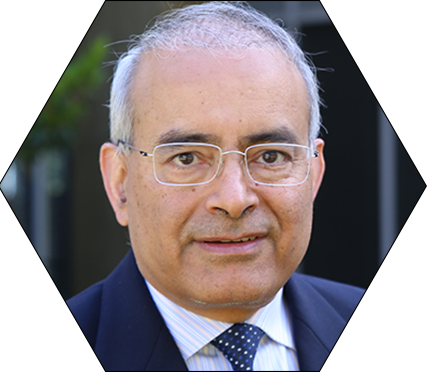
Peter Hesketh came to Georgia Tech in spring 2000 as a professor in the George W. Woodruff School of Mechanical Engineering. Prior, he was associate professor at the University of Illinois at Chicago. Hesketh's research interests involve sensors and micro/nano-electro-mechanical Systems (MEMS/NEMS). Many sensors are built by micro/nanofabrication techniques and this provides a host of advantages including lower power consumption, small size and light weight. The issue of manipulation of the sample in addition to introduce it to the chemical sensor array is often achieved with microfluidics technology. Combining photolithographic processes to define three-dimensional structures can accomplish the necessary fluid handling, mixing, and separation through chromatography. Hesketh is also interested in nanosensors, impedance based sensors, miniature magnetic actuators and the use of stereolithography for sensor packaging. He has published over sixty papers and edited fifteen books on microsensor systems.

Professor, Woodruff School of Mechanical Engineering
Phone
404.894.8496
Office
Love 317
Additional Research

Microfabrication; micromachining; sensors and actuators; biosensors; "Dr. Hesketh's research interests are in Sensors and Micro/Nano-electro-mechanical Systems (MEMS/NEMS).Many sensors are built by micro/nanofabrication techniques and this provides a host of advantages including lower power consumption, small size and light weight.The issue of manipulation of the sample in addition to introduce it to the chemical sensor array is often achieved with microfluidics technology.Combining photolithographic processes to define three-dimensional structures can accomplish the necessary fluid handling, mixing, and separation through chromatography.For example, demonstration of miniature gas chromatographyand liquid chromatography with micromachined separation columns demonstrates how miniaturization of chemical analytical methods reduces the separation time so that it is short enough, to consider the measurementequivalentto ""read-time"" sensing. A second focus area is biosensing. Professor Hesketh has worked on a number of biomedical sensors projects, including microdialysis for subcutaneous sampling, glucose sensors, and DNA sensors. Magnetic beads are being investigated as a means to transport and concentrate a target at a biosensor interface in a microfluidic format, in collaboration with scientists at the CDC. His research interests also include nanosensors, nanowire assembly by dielectrophoresis; impedance based sensors, miniature magnetic actuators; use of stereolithography for sensor packaging. He has published over sixty papers and edited fifteen books on microsensor systems."


Google Scholar
https://scholar.google.com/citations?hl=en&user=H41QBFQAAAAJ&view_op=list_works&sortby=pubdate
Peter
Hesketh
J.
Show Regular Profile

Omer Inan

Omer Inan
omer.inan@ece.gatech.edu
INAN RESEARCH LAB

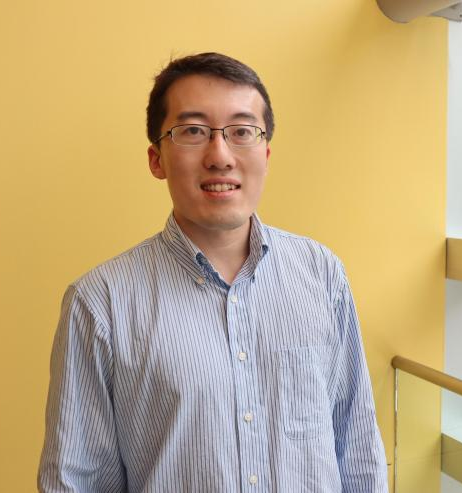
Omer T. Inan received his B.S., M.S., and Ph.D. degrees in Electrical Engineering from Stanford University in 2004, 2005, and 2009, respectively.

He worked at ALZA Corporation in 2006 in the Drug Device Research and Development Group. From 2007-2013, he was chief engineer at Countryman Associates, Inc., designing and developing several high-end professional audio products. From 2009-2013, he was a visiting scholar in the Department of Electrical Engineering at Stanford. In 2013, he joined the School of ECE at Georgia Tech as an assistant professor.

Inan is generally interested in designing clinically relevant medical devices and systems, and translating them from the lab to patient care applications. One strong focus of his research is in developing new technologies for monitoring chronic diseases at home, such as heart failure.

He and his wife were both varsity athletes at Stanford, competing in the discus and javelin throw events respectively.

Professor, School of Electrical and Computer Engineering
Linda J. and Mark C. Smith Chair, School of Electrical and Computer Engineering
Phone
404.385.1724
Office
TSRB 417
Additional Research

Medical devices for clinically-relevant applicationsNon-invasive physiological monitoringHome monitoring of chronic diseaseCardiomechanical signalsMedical instrumentation

Google Scholar
https://scholar.google.com/citations?hl=en&user=CURXz5UAAAAJ&view_op=list_works&sortby=pubdate
LinkedIn ECE Profile Page
Omer
Inan
T.
Show Regular Profile

Samuel Graham

Samuel Graham
sam.graham@me.gatech.edu
ME Profile Page

Samuel Graham is the Rae S. and Frank H. Neely Professor in the School of Mechanical Engineering at the Georgia Institute of Technology. He also holds an appointment in the School of Materials Science and Engineering at Georgia Tech and a joint appointment with the Energy and Transportation Science Division at Oak Ridge National Laboratories. His research focuses on the packaging and reliability of electronic devices ranging from wide bandgap semiconductors to flexible organic electronics and wearable sensors. His is a member of the Center for Organic Photonics and Electronics at Georgia Tech and a co-founder of the Heat Lab which provides thermal solutions for electronics packaging.

Eugene C. Gwaltney, Jr. School Chair, Woodruff School Mechanical Engineering
Professor, Woodruff School of Mechanical Engineering
Director, Electronics Manufacturing and Reliability Laboratory
Phone
404.894.2264
Office
Love 339
Additional Research

Heat Transfer; Nanostructured Materials; Electronic Systems, Devices, Components, & Packaging; Materials Failure and Reliability; Thermal Systems

Google Scholar
https://scholar.google.com/citations?hl=en&user=Fm4mJrsAAAAJ&view_op=list_works&sortby=pubdate
Electronics Manufacturing and Reliability Laboratory
Samuel
Graham
Show Regular Profile

Satish Kumar

Satish Kumar
satish.kumar@me.gatech.edu
MSE Profile Page

Satish Kumar is currently an Associate professor in the George W. Woodruff School of Mechanical Engineering at Georgia Tech. He joined Georgia Tech in 2009 as an Assistant Professor. Prior, he worked at IBM Corporation where he was responsible for the thermal management of electronic devices. Kumar received his Ph.D. in Mechanical Engineering and M.S. degree in Electrical and Computer Engineering from Purdue University, West Lafayette in 2007. He received his M.S. degree in Mechanical Engineering from Louisiana State University, Baton Rouge in 2003 and B.Tech. degree in Mechanical Engineering from the Indian Institute of Technology, Guwahati in 2001. His research interests are in electro-thermal transport in carbon nanotube, graphene, and 2D materials based electronic devices, AlGaN/GaN transistors, thermal management, and thermo-electric coolers. He is author or co-author of over 70 journal or conference publications. His contributions to his research field have been recognized by Purdue Research Foundation Fellowship in 2005, 1969 Teaching Fellow from Center for the Enhancement of Teaching and Learning Center at Georgia Tech, 2012 Summer Faculty Fellow from Air Force Research Lab, 2014 Sigma Xi Young Faculty Award, and 2014 DARPA Young Faculty Award.

Professor Emeritus, George W. Woodruff School of Mechanical Engineering
Professor Emeritus, School of Materials Science and Engineering
Phone
404.385.6640
Office
Love 123
Additional Research

Compund SemiconductorsComputational mechanicsCarbon NanotubesBio-Devices

Google Scholar
https://scholar.google.com/citations?hl=en&user=lb7RF0oAAAAJ&view_op=list_works&sortby=pubdate
Satish
Kumar
Show Regular Profile

Yogendra Joshi

Yogendra Joshi
yogendra.joshi@me.gatech.edu
ME Profile Page

Prior to joining the Georgia Tech faculty in 2001 as a Professor, Yogendra Joshi held academic positions at the University of Maryland, College Park, and the Naval Postgraduate School, Monterey, California. He also worked in the semiconductor assembly industry on process thermal model development. He was named to the McKenney/Shiver Chair in 2004.

John M. McKenney and Warren D. Shiver Distinguished Chair, George W. Woodruff School of Mechanical Engineering
Professor, George W. Woodruff School of Mechanical Engineering and School of Electrical and Computer Engineering
Phone
404.385.2810
Office
Love 338
Additional Research

Thermal SystemsSystem Design & Optimization

Google Scholar
https://scholar.google.com/citations?hl=en&user=YIW1IqcAAAAJ&view_op=list_works&sortby=pubdate
Microelectronics & EmergingTechnologies Thermal Lab
Yogendra
Joshi
Show Regular Profile

Shu Jia

Shu Jia
shu.jia@gatech.edu
The Jia Laboratory for Systems Biophotonics

We strive to innovate in ways that both advance the imaging science and also impact biological and translational research. We are particularly interested in new imaging physics, bottom-up opto-electronic system design, as well as new principles for light propagation, light-matter interaction and image formation in complex biological materials, especially at the single-molecule level. Toward the application end, we have expertise in a wide range of imaging instrumentation and techniques, such as super-resolution, adaptive optics, light-field, miniaturized, light-sheet, computational microscopy and endoscopy.

Assistant Professor, Wallace H. Coulter Department of Biomedical Engineering
Phone
404.894.0290
Office
UAW 2112
Additional Research

Single-molecule biophotonicsSuper-resolution imagingAdvanced optical microscopy and instrumentation

Google Scholar
https://scholar.google.com/citations?hl=en&user=pcEf8kcAAAAJ&view_op=list_works&sortby=pubdate
LinkedIn BME Profile Page
Shu
Jia
Show Regular Profile

Tushar Krishna

Tushar Krishna
tushar@ece.gatech.edu
ECE Profile Page

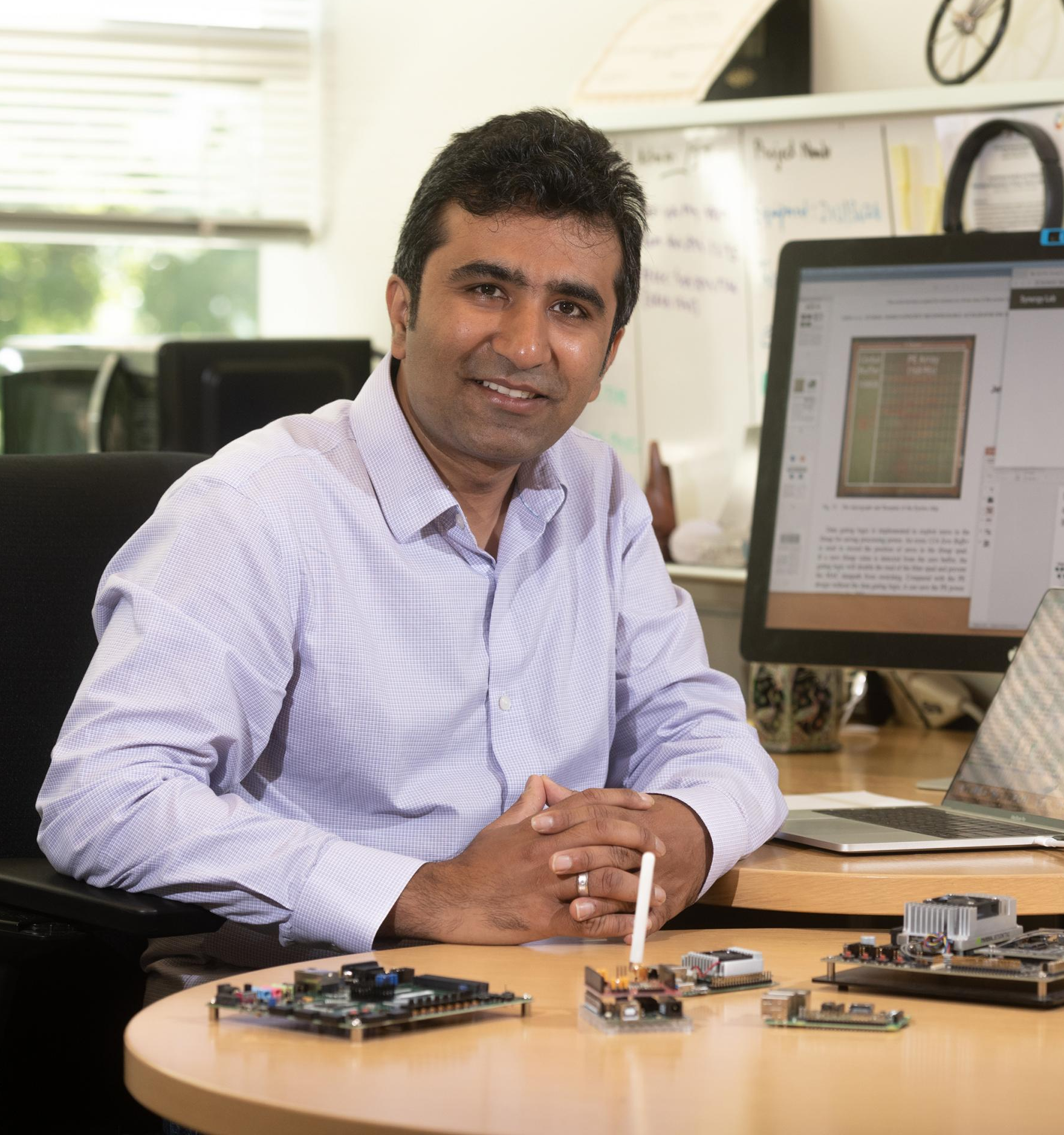
Tushar Krishna is an Associate Professor in the School of Electrical and Computer Engineering at Georgia Tech. He also holds the ON Semiconductor Junior Professorship. He has a Ph.D. in Electrical Engineering and Computer Science from MIT (2014), a M.S.E in Electrical Engineering from Princeton University (2009), and a B.Tech in Electrical Engineering from the Indian Institute of Technology (IIT) Delhi (2007). Before joining Georgia Tech in 2015, Krishna spent a year as a researcher at the VSSAD group at Intel, Massachusetts.

Krishna’s research spans computer architecture, interconnection networks, networks-on-chip (NoC) and deep learning accelerators – with a focus on optimizing data movement in modern computing systems. Three of his papers have been selected for IEEE Micro’s Top Picks from Computer Architecture, one more received an honorable mention, and three have won best paper awards. He received the National Science Foundation (NSF) CRII award in 2018, a Google Faculty Award in 2019, and a Facebook Faculty Award in 2019 and 2020.

ON Semiconductor Junior Professor, School of Electrical and Computer Engineering
Phone
404.894.9483
Office
Klaus 2318
Additional Research

Networks-on-Chip (NoC)Interconnection NetworksReconfigurable Computing and FPGAsHeterogeneous ArchitecturesDeep Learning Accelerators

Google Scholar
https://scholar.google.com/citations?hl=en&user=P__ztgcAAAAJ&view_op=list_works&sortby=pubdate
LinkedIn Personal Research Site
Tushar
Krishna
Show Regular Profile

Eric Vogel

Eric Vogel
eric.vogel@mse.gatech.edu
MSE Profile Page

Eric M. Vogel is currently Hightower Professor of Materials Science and Engineering, courtesy Professor of Electrical and Computer Engineering, and Executive Director of the Institute for Matter and Systems at the Georgia Institute of Technology (GT). Prior to joining GT in 2011, he was Associate Professor of Materials Science and Engineering and Electrical Engineering at the University of Texas at Dallas (UTD). Prior to joining UTD in August of 2006, he was leader of the Semiconductor and Novel Devices Group and founded the Nanofab at the National Institute of Standards and Technology. He received his Ph.D. in 1998 in electrical engineering from North Carolina State University and his B.S. in 1994 in electrical engineering from Penn State University. His research is related to the synthesis, structure, properties and applications of a wide variety of electronic and nanoscale materials and devices (vogellab.gatech.edu). He has published over 240 journal publications and proceedings, written six book chapters, and given over 100 invited talks and tutorials.

Executive Director
Professor, School of Materials Science and Engineering
Phone
404.385.7235
Office
Marcus 2131
Additional Research

2D materials, Electronic Materials, biosensors, Atomic Layer Deposition, III-V Semiconductor devices

Research Focus Areas
Google Scholar
https://scholar.google.com/citations?hl=en&user=mNuerUYAAAAJ&view_op=list_works&sortby=pubdate
Vogel Lab
Eric
Vogel
M.
Show Regular Profile

Billyde Brown

Billyde Brown
billyde.brown@gatech.edu

Billyde Brown is a Senior Research Engineer, and External User Outreach Manager, of the Institute for Matter and Systems (IMS) at the Georgia Institute of Technology. Dr. Brown is currently recruiting new external users from industry (startups, SMEs and large corporations) and academia to take advantage of world-class nano-/microfabrication and materials characterization facilities currently available at Georgia Tech's IMS facilities. Please message me if you want to learn more about Georgia Tech fabrication and characterization capabilities or become a new user.

Brown is also an active researcher with over 20 peer-reviewed publications and earned his Ph.D. degree in Electrical Engineering from Duke University. His research expertise areas include thin-film additive manufacturing, nanomaterial synthesis and characterization, electrochemical energy storage and conversion, and biosensors.

External User Outreach Manager
Senior Research Engineer
Additional Research
  • Nanomaterials
  • Sensors
  • Nano-bio interfaces
  • Small Business/Startup Partnerships
LinkedIn Georgia Minority Business Development Agency (MBDA)
Billyde
Brown
Show Regular Profile

Jonathan Colton

Jonathan Colton
jonathan.colton@me.gatech.edu
ME Profile Pag

Colton's research interests are in the areas of design and manufacturing, focusing on polymers and polymer composites. Processing techniques, such as micro-molding, injection molding, filament winding, resin transfer molding and the like, are studied and used to fabricate these devices and products, such as smart composite structures.

The design of processing techniques and equipment for metamaterials also are being studied with applications being dielectric materials for electromagnetic applications. Due to the small-scale physics associated with their engineering, nano-scale metamaterials exhibit superior properties and enhanced performance.

Colton has a strong passion for the application of engineering for the common good – "humanitarian design and engineering" and "design that matters," - such as in developing countries and other resource limited environments. To be successful, multidisciplinary teams must work together to produce products that function as well as delight, that exceed customer's expectations, regardless of where the product is used. Along these lines, product design and role that the interactions between engineering and industrial design forms another research interest.

Professor, Woodruff School of Mechanical Engineering
Phone
404.894.7407
Office
Callaway 434
Additional Research

Manufacturing and CAE & Design; Humanitarian Design and Engineering (HumDE); Manufacturing; Production; and Design; Polymer and polymer composites; Biomedical and Medical Devices; Technologies for developing countries and other resource-limited environment; Product development and industrial design; Computer-Aided Engineering; Polymeric composites; Materials Design

Google Scholar
https://scholar.google.com/citations?hl=en&user=nW3g6dMAAAAJ&view_op=list_works&sortby=pubdate
Jonathan
Colton
S.
Show Regular Profile