Nazanin Bassiri-Gharb

Nazanin Bassiri-Gharb's profile picture
nazanin.bassirigharb@me.gatech.edu
ME Profile Page

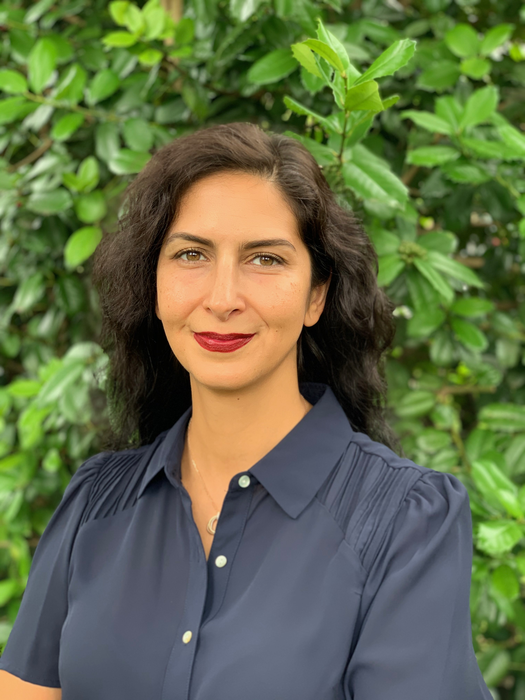
Nazanin Bassiri-Gharb joined Georgia Tech in summer 2007 as an assistant professor at the George W. Woodruff School of Mechanical Engineering. Prior to this, she was a senior engineer in the materials and device R&D group of MEMS Research and Innovation Center at QUALCOMM MEMS Technologies, Inc. Her work included characterization and optimization of optical and electric response of IMOD displays and research on novel materials for improved processing and reliability of IMOD. Bassiri-Gharb's research interests are in smart and energy-related materials (e.g. ferroelectric and multiferroic materials) and their application to nano- and micro-electromechanical systems. Her research projects integrate novel micro and nanofabrication techniques and processes and study of the fundamental science of these materials at the nanoscale, at the interface of physical and electrochemical phenomena.

Harris Saunders, Jr. Chair and Professor, School of Mechanical Engineering
Phone
404.385.0667
Office
Love 315
Additional Research

Ferroelectronic Materials; Functional Materials; In-Situ Characterization; Piezoelectronic Materials; Multiscale Modeling; Organic Electronics

Google Scholar
https://scholar.google.com/citations?hl=en&user=2hwd9xAAAAAJ
SmartLab

Ghassan AlRegib

Ghassan AlRegib's profile picture
alregib@gatech.edu
Website

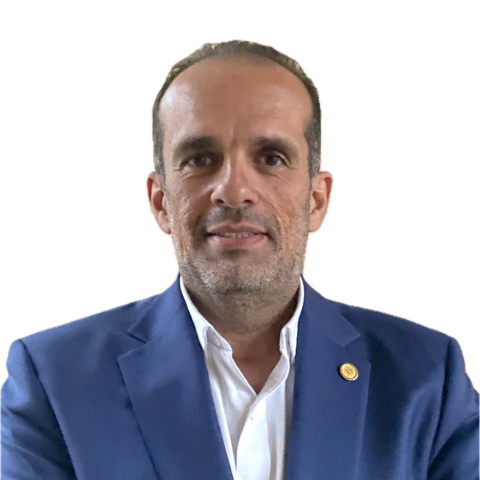
Prof. AlRegib is currently the John and Marilu McCarty Chair Professor in the School of Electrical and Computer Engineering at the Georgia Institute of Technology. His group is the Omni Lab for Intelligent Visual Engineering and Science (OLIVES) at Georgia Tech. In 2012, he was named the Director of Georgia Tech’s Center for Energy and Geo Processing (CeGP). He is the director of the Center for Signal and Information Processing (CSIP). He also served as the Director of Georgia Tech’s Initiatives and Programs in MENA between 2015 and 2018. He has authored and co-authored more than 300 articles in international journals and conference proceedings. He has been issued several U.S. patents and invention disclosures. He is a Fellow of the IEEE.

Prof. AlRegib received the ECE Outstanding Graduate Teaching Award in 2001 and both the CSIP Research and the CSIP Service Awards in 2003. In 2008, he received the ECE Outstanding Junior Faculty Member Award. In 2017, he received the 2017 Denning Faculty Award for Global Engagement. He and his students received the Beat Paper Award in ICIP 2019. He received the 2024 ECE Distinguished Faculty Achievement Award at Georgia Tech. He and his students received the Best Paper Award in ICIP 2019 and the 2023 EURASIP Best Paper Award for Image communication Journal.

Prof. AlRegib participated in a number of activities. He has served as Technical Program co-Chair for ICIP 2020 and ICIP 2024. He served two terms as a member of the IEEE SPS Technical Committees on Multimedia Signal Processing (MMSP) and Image, Video, and Multidimensional Signal Processing (IVMSP), 2015-2017 and 2018-2020. He was a member of the Editorial Boards of both the IEEE Transactions on Image Processing (TIP), 2009-2022, and the Elsevier Journal Signal Processing: Image Communications, 2014-2022. He was a member of the editorial board of the Wireless Networks Journal (WiNET), 2009-2016 and the IEEE Transaction on Circuits and Systems for Video Technology (CSVT), 2014-2016. He was an Area Chair for ICME 2016/17 and the Tutorial Chair for ICIP 2016. He served as the chair of the Special Sessions Program at ICIP’06, the area editor for Columns and Forums in the IEEE Signal Processing Magazine (SPM), 2009–12, the associate editor for IEEE SPM, 2007-09, the Tutorials co-chair in ICIP’09, a guest editor for IEEE J-STSP, 2012, a track chair in ICME’11, the co-chair of the IEEE MMTC Interest Group on 3D Rendering, Processing, and Communications, 2010-12, the chair of the Speech and Video Processing Track at Asilomar 2012, and the Technical Program co-Chair of IEEE GlobalSIP, 2014. He lead a team that organized the IEEE VIP Cup, 2017 and the 2023 IEEEE VIP Cup. He delivered short courses and several tutorials at international events such as BigData, NeurIPS, ICIP, ICME, CVPR, AAAI, and WACV.

In the Omni Lab for Intelligent Visual Engineering and Science (OLIVES), he and his group work on robust and interpretable machine learning algorithms, uncertainty and trust, and human in the loop algorithms. The group studies interventions into AI systems to enhance their trustworthiness. The group has demonstrated their work on a wide range of applications such as Autonomous Systems, Medical Imaging, and Subsurface Imaging. The group is interested in advancing the fundamentals as well as the deployment of such systems in real-world scenarios. His research group is working on projects related to machine learning, image and video processing, image and video understanding, subsurface imaging, perception in visual data processing, healthcare intelligence, and video analytics. The primary applications of the research span from Autonomous Vehicles to Portable AI-based Ophthalmology and Eye Exam and from Microscopic Imaging to Seismic Interpretation. The group was the first to introduce modern machine learning to seismic interpretation.

In 2024, and after more than three years of continuous work, he co-founded Georgia Tech’s AI Makerspace. The AI Makerspace is a resource for the entire campus community to access AI. Its purpose is to democratize access to AI. Together with his team, they are developing tools and services for the AI Makerspace via a VIP Team called AI Makerspace Nexus. In addition, he created two AI classes from scratch with innovative hands-on exercises using the AI Makerspace. One class is the ECE4252/8803 FunML class (Fundamentals of Machine Learning) where students learn the basics of Machine Learning as well as eight weeks of Deep learning both mathematically and using hands-on exercises on real-world data. The second class is a sophomore-level AI Foundations class (AI First) that teaches any student from any college the basics of AI such as data literacy, learning, decision, planning, and ethics using theory and hands-on exercises on the AI Makerspace. Prof. AlRegib wrote two textbooks for both classes.

Prof. AlRegib has provided services and consultation to several firms, companies, and international educational and R&D organizations. He has been a witness expert in a number of patents infringement cases and Inter Partes Review (IRP) cases.

John and Marilu McCarty Chair Professor, School of Electrical and Computer Engineering
Center Director
Phone
404-894-7005
Office
Centergy-One Room 5224
Additional Research

Machine learning, Trustworthy AI, Explainable AI (XAI), Robust Learning Systems, Multimodal Learning, Annotations Diversity in AI Systems

Google Scholar
https://scholar.google.com/citations?hl=en&user=7k5QSdoAAAAJ&view_op=list_works
LinkedIn Related Site

Faisal Alamgir

Faisal Alamgir's profile picture
faisal.alamgir@mse.gatech.edu
Website
Professor, School of Materials Science and Engineering
Initiative Lead, Advanced Real-time Materials Characterization
Phone
404.385.3263
Office
Love 373
Additional Research

Energy Conversion, energy storage, nanomaterials, optical materials, photovoltaics, catalysis, electrical grid, energy storage

Google Scholar
https://scholar.google.com/citations?hl=en&user=CT721oIAAAAJ&view_op=list_works&sortby=pubdate

Cyrus Aidun

Cyrus Aidun's profile picture
cyrus.aidun@me.gatech.edu
Website

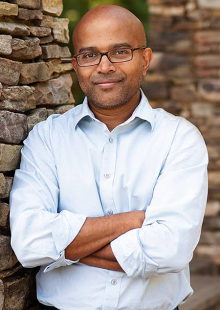
Dr. Aidun joined the Woodruff School as a Professor in 2003 after completion of a two-year period as program director at the National Science Foundation. He began at Tech in 1988 as an Assistant Professor at the Institute of Paper Science and Technology. Prior, he was a research Scientist at Battelle Research Laboratories, Postdoctoral Associate at Cornell University and Senior Research Consultant at the National Science Foundation's Supercomputer Center at Cornell. 

Dr. Aidun's research is at the intersection between fundamentals of the physics of complex fluids/thermal transport and applications to engineering and biotransport. He has a diverse research portfolio in fluid mechanics, bioengineering, renewable bioproducts and decarbonization of industrial processes. 

A major focus has been to understand the physics of blood cell transport and interaction with glycoproteins (e.g., vWF) with applications to cardiovascular diseases.

Professor, Woodruff School of Mechanical Engineering
Phone
404-894-6645
Office
Love Building, Room 320
Additional Research

Computational analysis of cellular blood flow in the cardiovascular system with applications to platelet margination, thrombus formation, and platelet activation in artificial heart valves. Thermal Systems. Chemical Recovery; Papermaking.

Google Scholar
https://scholar.google.com/citations?user=ksg38AgAAAAJ&hl=en&oi=sra
Related Site

Bachir El Fil

Bachir El Fil's profile pic
bachir.elfil@me.gatech.edu
Departmental Bio

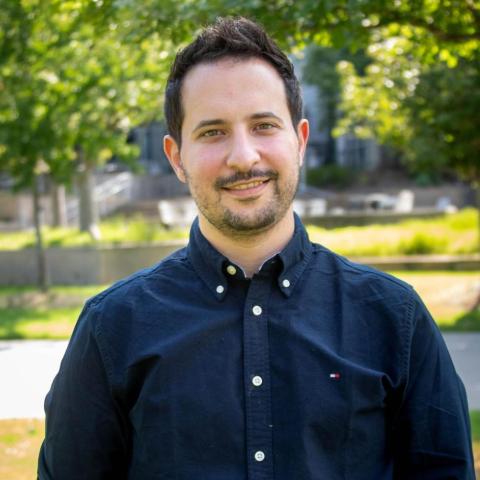
Bachir El Fil, joined the George W. Woodruff School of Mechanical Engineering as an assistant professor in August 2024.

Education

  • Research Scientist, Mechanical Engineering, Massachusetts Institute of Technology (MIT), 2023
  • Postdoctoral associate, Mechanical Engineering, Massachusetts Institute of Technology (MIT), 2022
  • PhD, Mechanical Engineering, Georgia Institute of Technology, 2021
  • MS, Mechanical Engineering, American University of Beirut (AUB), 2015
  • BS, Mechanical Engineering, American University of Beirut (AUB), 2014

Teaching Interests

Professor El Fil’s teaching interests encompass core mechanical engineering courses at both undergraduate and graduate levels, including fluid mechanics, heat transfer, and thermodynamics. He aims to provide students with a strong theoretical foundation and practical problem-solving skills, emphasizing applications relevant to energy systems and advanced fluid dynamics. His instruction integrates experimental and computational approaches to prepare students for research and industry challenges. He currently teaches Thermodynamics (ME3322) and Energy Systems (ME 4315).

Research Interests

Professor El Fil’s research focuses on the investigation of multiphase flows, heat and mass transfer, and energy conversion processes. His work includes experimental and numerical studies aimed at improving the understanding of complex transport phenomena in thermo-fluidic systems. The research supports advancements in energy systems efficiency and sustainability, involving the development of models and techniques to analyze fluid behavior under various flow and thermal conditions. 

His mission is to tackle global challenges at the nexus of energy and water sustainability, combining the rigor of thermal sciences with the creativity of materials and device engineering. He studies and designs cutting-edge technologies for atmospheric water harvesting, thermochemical energy storage, and next-generation heat and mass exchangers, translating fundamental research into scalable solutions.

1) Bridge fundamentals and applications: Combine advanced thermal sciences, transport phenomena, and materials engineering to design devices that move seamlessly from lab-scale discovery to real-world deployment.

2) Reimagine the water–energy nexus: From atmospheric water harvesting to thermochemical energy storage and high-performance heat exchangers, he develops technologies that turn waste heat, humidity, and scarce resources into reliable, sustainable utilities.

3) Prototype, test, and scale: Build and evaluate full systems, experimentally and via techno-economic analysis, to deliver solutions that are not only scientifically novel, but also manufacturable, affordable, and impactful at scale.

Recent Publications 

  •  I. H. Sahin, B. El Fil “Enhancing Sorption Kinetics Via Intracrystalline Diffusivity Tuning for High-Density Thermochemical Energy Storage”.  AIChE Annual Meeting 2025. Nov 2-6, 2025. Boston, MA. 
  • J. P. Mooney, O. R. Caylan, J. Gao, J. Punch, V. Egan, B. El Fil*, and L. Zhang “In Situ X-ray Microscopy Unraveling the Onset of Salt Creeping at a Single-Crystal Level “Langmuir 2025 41 (27), 17741-17748 DOI: 10.1021/acs.langmuir.5c01460.
  •  C.T. Wilson, C.D. Diaz, J. P. Colque, J.P. Mooney, B. El Fil*, “Solar-driven atmospheric water harvesting in the Atacama Desert through physics-based optimization of a hygroscopic hydrogel device”. Device, Volume 3, Issue 8, 100798 (2025). https://doi.org/10.1016/j.device.2025.100798. 
  •  X. Li#, B. El Fil#*, B. Li, G. Graeber, A.C. Li, Y. Zhong, M. Alshrah, C.T. Wilson, E.Lin. “Design of a Compact Multicyclic High-Performance Atmospheric Water Harvester for Arid Environments”. ACS Energy Letters (2024) 9 (7), 3391-3399. https://doi.org/10.1021/acsenergylett.4c01061. 
  • Y. Zhong, L. Zhang, X. Li, B. El Fil, C. D. Díaz-Marín, A. C. Li, X. Liu, A. LaPotin, E. N. Wang Bridging materials innovations to sorption-based atmospheric water harvesting devices. Nat Rev Mater 9, 681–698 (2024). https://doi.org/10.1038/s41578-024-00665-2.
Assistant Professor, Mechanical Engineering
IRI And Role
University, College, and School/Department

Raheem Beyah

Raheem Beyah's profile picture
rbeyah@ece.gatech.edu
Website

Raheem Beyah, Ph.D., is associate chair for Strategic Initiatives and Innovation, and the Motorola Foundation Professor in the School of Electrical & Computer Engineering at the Georgia Institute of Technology. His research is at the intersection of the networking and security fields. He leads the Georgia Tech Communications Assurance and Performance Group (CAP), which develops algorithms that enable a more secure network infrastructure with computer systems that are more accountable and less vulnerable to attacks. Through experimentation, simulation, and theoretical analysis, CAP provides solutions to current network security problems and to long-range challenges as current networks and threats evolve. Dr. Beyah has served as guest editor and associate editor of several journals in the areas of network security, wireless networks, and network traffic characterization and performance. He received the National Science Foundation CAREER award in 2009 and was selected for DARPA's Computer Science Study Panel in 2010. He is a member of NSBE, ASEE, and is a senior member of IEEE and ACM. Beyah is a native of Atlanta, Georgia. He received his Bachelor of Science in Electrical Engineering from North Carolina A&T State University in 1998. He received his Master's and Ph.D. in Electrical and Computer Engineering from Georgia Tech in 1999 and 2003, respectively. Prior to returning to Georgia Tech, Dr. Beyah was a faculty member in the Department of Computer Science at Georgia State University, a research faculty member with the Georgia Tech Communications Systems Center (CSC), and a consultant in Andersen Consulting's (now Accenture) Network Solutions Group.

Dean, College of Engineering
Motorola Foundation Professor
Phone
404.894.2531
Office
KACB 2308
Additional Research

Mobile & Wireless Communications; Network Science

Dragomir Davidovic

Placeholder for headshot
dragomir.davidovic@physics.gatech.edu
Physics Profile Page

Dragomir Davidovic's research focuses on the exploration of physical properties that emerge in objects when their size approaches nanometer-scale. The objects of study are metallic or insulating particles, molecules, atomic-scale diameter wires, and droplets of one phase surrounded by another phase. Recent advances in lithography enable attachment of these objects to larger scale conducting electrodes, making it possible to explore their physical properties by electronic transport. The properties of nanoscale objects can be fundamentally different from those in bulk. As an example, whereas in bulk metals, the energy spectrum of conduction electrons is continuous, in metallic nanoparticles the spectrum is discrete. As a result, metallic nanoparticles are more like atoms than bulk metals, and nanoparticles are commonly referred to as artificial atoms.

Associate Professor, School of Physics
Director, Mesoscopic and Nano Physics Laboratory
Phone
404.385.1284
Office
Howey N115
Additional Research

Electron Microscopy; Ferroelectronic Materials; Nanomaterials

Research Focus Areas
University, College, and School/Department
Google Scholar
https://scholar.google.com/citations?hl=en&user=gFg3AYgAAAAJ&view_op=list_works&sortby=pubdate

Suman Das

Suman Das's profile picture
suman.das@me.gatech.edu
Direct Digital Manufacturing Laboratory
Morris M. Bryan, Jr. Chair and Professor, Woodruff School of Mechanical Engineering
Director, Direct Digital Manufacturing Laboratory
Phone
404.385.6027
Office
MARC 255
Additional Research

3D printing; Additive/Advanced Manufacturing; Biomaterials; Composites; Emerging Technologies; Nanocomposites; Nanomanufacturing; Manufacturing, Mechanics of Materials, Bioengineering, and Micro and Nano Engineering. Advanced manufacturing and materials processing of metallic, polymeric, ceramic, and composite materials for applications in life sciences, propulsion, and energy. Professor Das directs the Direct Digital Manufacturing Laboratory and Research Group at Georgia Tech. His research interests encompass a broad variety of interdisciplinary topics under the overall framework of advanced design, prototyping, direct digital manufacturing, and materials processing particularly to address emerging research issues in life sciences, propulsion, and energy. His ultIMaTe objectives are to investigate the science and design of innovative processing techniques for advanced materials and to invent new manufacturing methods for fabricating devices with unprecedented functionality that can yield dramatic improvements in performance, properties and costs.

Google Scholar
https://scholar.google.com/citations?hl=en&user=zTQ3q2EAAAAJ&view_op=list_works&sortby=pubdate
ME Profile Page

Yongsheng Chen

Yongsheng Chen's profile picture
yongsheng.chen@ce.gatech.edu
Website

Chen has an extensive research interests in environmental science and engineering. More specifically, he is a leading researcher in the environmental applications of nanomaterials and their potential fate, transport, transformation, bioaccumulation and toxicity in the environment. His interests in environmental nanomaterials dated back in his graduate research in 1992. He has also been active on algae based bio-renewable energy and sustainable urban development. Chen has been principle and co-principal investigators for 28 research projects (by June 2010) funded by the National Science Foundation, U.S. Environmental Protection Agency, NASA, Boeing and other organizations. The total funds are $7 million. He has also served as a review member or panel review member in the U.S. National Science Foundation, the U.S. Environmental Protection Agency, the U.S. Department of Energy evaluation committee. He has also been invited to serve as an abroad review expert for the China Changjiang Scholars Program (which is to awarded to the top researchers in China). He has published more than 40 papers and two book chapters in this field.

Chen received his Ph.D in Nankai University, China. He joined the Georgia Tech School of Civil and Environmental Engineering in May 2009.

Bonnie W. and Charles W. Moorman IV Professor, School of Civil and Environmental Engineering
Phone
(404) 894-3089
Office
Daniel Environmental Engineering Laboratory, Room 206
Additional Research

Biofuels; Separations Technology; Water

University, College, and School/Department
Civil Engineering Profile