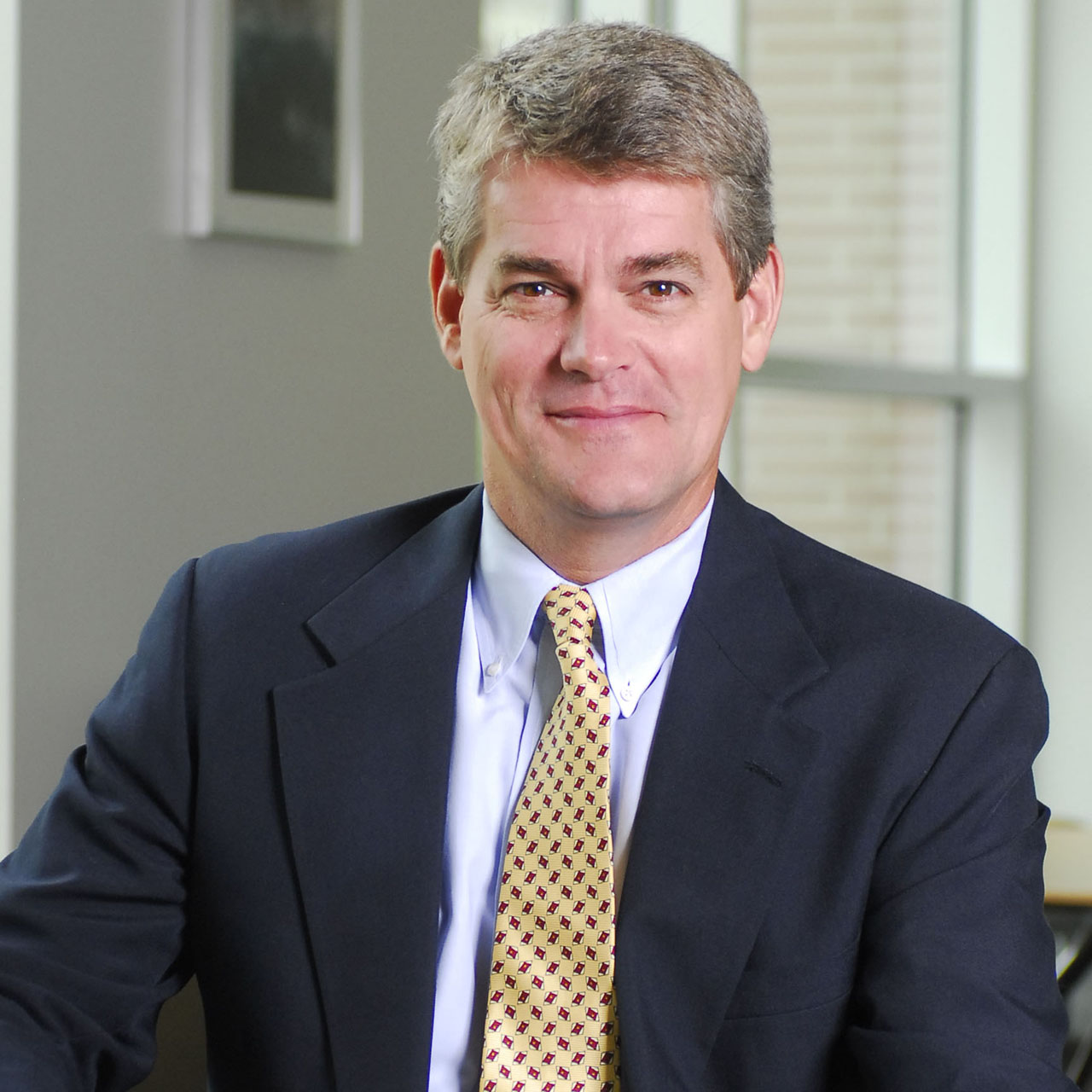
Calton Pu
Cloud Security; Internet Infrastructure & Operating Systems; Large-Scale or Distributed Systems; Cloud Systems
Hamid Garmestani is a professor in the School of Materials Science and Engineering at the Georgia Institute of Technology. He received his education from Cornell University (Ph.D. 1989 in Theoretical and Applied Mechanics) and the University of Florida (B.S. 1982 in Mechanical Engineering, M.S. 1984 in Materials Science and Engineering). After serving a year as a post-doctoral fellow at Yale University, he joined the Mechanical Engineering Department at Florida State University (FAMU-FSU College of Engineering) in 1990.
Primary research and teaching interests include microstructure/property relationship in textured polycrystalline materials, composites, superplastic, magnetic and thin film layered structures. He uses phenomenological and statistical mechanics models in a computational framework to investigate microstructure and texture (micro-texture) evolution during processing and predict effective properties (mechanical, transport and magnetic). His present research interests are processing of fuel cell materials and modeling of their transport and mechanical properties.
Garmestani has been the recipient of a research award (FAR) through NASA in 1997. He received the Superstar in Research award in 1999 by FSU-CRC. He has also been the recipient of the Engineering Research Award at the FAMU-FSU College of Engineering, Spring 2000. He is a member of the editorial board of the International Journal of Plasticity and board of reviewers for journal of Metal Transaction. He is presently funded through NSF (MRD), NASA, Air Force and the Army.
computational mechanics; micro and nanomechanics; Electrical charge storage and transport; Fuel Cells
Dr. Fan Zhang received her Ph.D. in Nuclear Engineering and M.S. in Statistics from UTK in 2019. She is the recipient of the 2021 Ted Quinn Early Career Award from the American Nuclear Society and joined the Woodruff School in July, 2021. She is actively involved with multiple international collaborations on improving nuclear cybersecurity through the International Atomic Energy Agency (IAEA) and the DOE Office of International Nuclear Security (INS). Dr. Zhang’s research primarily focuses on the cybersecurity of nuclear facilities, online monitoring & fault detection using data analytics methods, instrumentation & control, and nuclear systems modeling & simulation. She has developed multiple testbeds using both simulators and physical components to investigate different aspects of cybersecurity as well as process health management.
Research interests include instrumentation & control, autonomous control, cybersecurity, online monitoring, fault detection, prognostics, risk assessment, nuclear system simulation, data-driven models, and artificial intelligence applications.
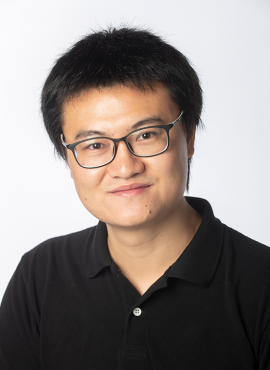
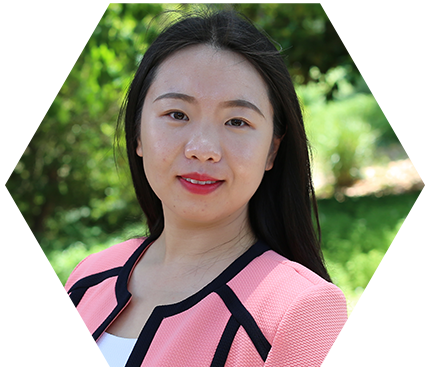
Dr. Shihao Yang is an assistant professor in the School of Industrial & Systems Engineering at Georgia Tech. Prior to joining Georgia Tech, he was a post-doc in Biomedical Informatics at Harvard Medical School after finishing his PhD in statistics from Harvard University. Dr. Yang’s research focuses on data science for healthcare and physics, with special interest in electronic health records causal inference and dynamic system inverse problems.
Xu Chu is an assistant professor in the School of Computer Science at Georgia Tech. He obtained his Ph.D. degree from the University of Waterloo in late 2017, and joined Georgia Tech in Jan 2018. He is a recipient of the JP Morgan Faculty Research Fellow Award, the Microsoft Ph.D. fellowship award, and the David R. Cheriton fellowship award.
He is broadly interested in data management systems and machine learning. In particular, he focuses on (1) how to leverage advanced machine learning techniques to solve hard and practical data management problems, such as large-scale data integration; and (2) how to build data management systems to tackle the common pain points in practical machine learning, such as the lack of high-quality labeled data.
Data Mining
Vivek Sarkar is Chair of the School of Computer Science at Georgia Tech, where he is also the Stephen Fleming Chair for Telecommunications in the College of Computing. He conducts research in multiple aspects of parallel computing software including programming languages, compilers, runtime systems, and debuggers for parallel, heterogeneous and high-performance computer systems. Prof. Sarkar currently leads the Habanero Extreme Scale Software Research Laboratory at Georgia Tech, and is co-director of the Center for Research into Novel Computing Hierarchies (CRNCH). He is also the instructor for a 3-course online specialization on Parallel, Concurrent, and Distributed Programming hosted on Coursera.
Prior to joining Georgia Tech in 2017, Prof. Sarkar was the E.D. Butcher Chair in Engineering at Rice University, where he created the Habanero Lab, served as Chair of the Department of Computer Science during 2013–2016, and created a sophomore-level undergraduate course on Fundamentals of Parallel Programming. Before joining Rice in 2007, Sarkar was Senior Manager of Programming Technologies at IBM Research. His research projects at IBM included the X10 programming language, the Jikes Research Virtual Machine for the Java language, the ASTI optimizer used in IBM’s XL Fortran product compilers, and the PTRAN automatic parallelization system. Sarkar became a member of the IBM Academy of Technology in 1995, and was inducted as an ACM Fellow in 2008. He has been serving as a member of the US Department of Energy’s Advanced Scientific Computing Advisory Committee (ASCAC) since 2009, and on CRA’s Board of Directors since 2015.
Tamara Bogdanović is a theoretical astrophysicist whose research interests include the ins and outs of some of the most massive black holes in the universe known as supermassive black holes. She investigates the physical processes that arise in accretion flows around supermassive black holes and uses them as luminous tracers of these otherwise dark objects. Some of the scenarios she and her colleagues study include the accretion of gas by the single and binary supermassive black holes as well as the accretion of stars that happen to be disrupted by the black hole tides in galactic nuclei. Tamara’s goal as a theorist is to predict the signatures of these interactions which can be searched for in observations, as well as to provide interpretation for some of the puzzling astrophysical events seen on the sky.