Matthew McDowell

Matthew McDowell
mattmcdowell@gatech.edu
McDowell Lab

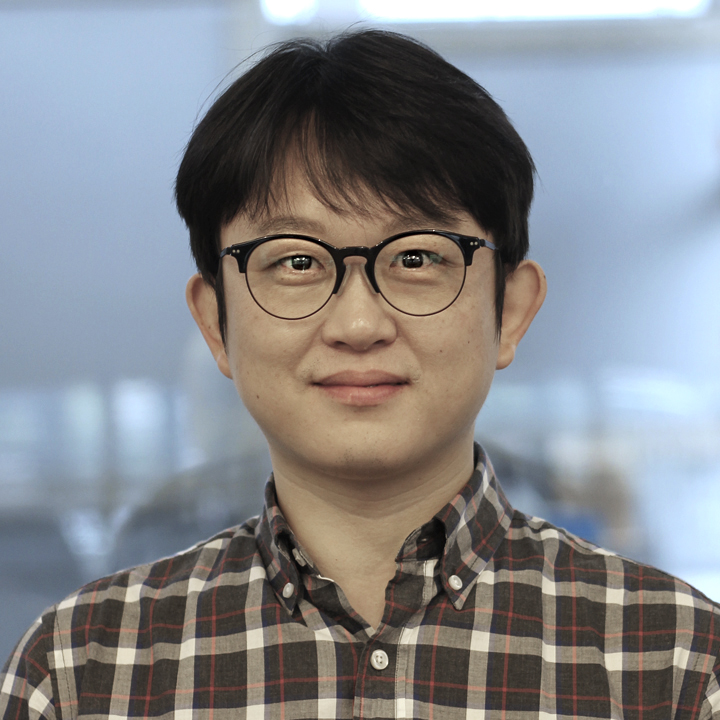
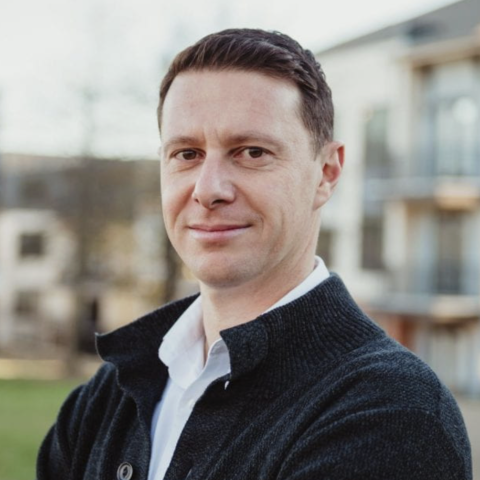
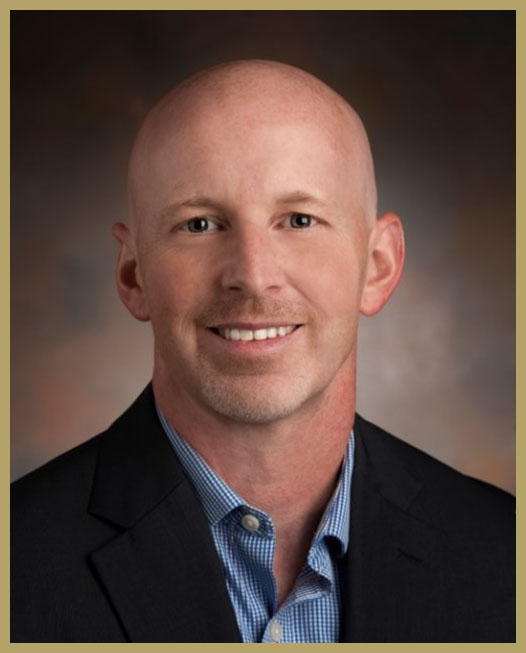
Matthew McDowell joined Georgia Tech in the fall of 2015 as an assistant professor with a joint appointment in the George W. Woodruff School of Mechanical Engineering and the School of Materials Science and Engineering. Prior to this appointment, he was a postdoctoral scholar in the Division of Chemistry and Chemical Engineering at the California Institute of Technology. McDowell received his Ph.D. in 2013 from the Department of Materials Science and Engineering at Stanford University.

McDowell’s research group focuses on understanding how materials for energy and electronic devices change and transform during operation, and how these transformations impact properties. The group uses in situ experimental techniques to probe materials transformations under realistic conditions. The fundamental scientific advances made by the group guide the engineering of materials for breakthrough new devices. Current projects in the group are focused on i) electrode materials for alkali ion batteries, ii) materials for solid-state batteries, iii) interfaces in chalcogenide materials for electronics and catalysis, and iv) new methods for creating nanostructured metals.

Professor, Woodruff School of Mechanical Engineering
Woodruff Faculty Fellow
Director, Georgia Tech Advanced Battery Center
SEI Senior Advisor: Energy Storage
Phone
404.894.8341
Office
MRDC 4408
Additional Research

Batteries; Nanostructured Materials; Composites; Fabrication; Energy Storage; Thermal Systems
Google Scholar
https://scholar.google.com/citations?hl=en&user=VRZVDH8AAAAJ&view_op=list_works&sortby=pubdate
MSE Profile Page
Matthew
McDowell
Show Regular Profile

Scott McWhorter

Scott McWhorter
cmcwhorter7@gatech.edu

The Strategic Energy Institute is excited to welcome Scott McWhorter as a 2023 Distinguished External Fellow. Scott will co-lead the concept development, visioning, partnership, and preliminary capture activities for Georgia Tech on the Department of Commerce Tech Hubs (“Hubs”) and expand Georgia Tech’s hydrogen activities and stature.

Scott is not new to the Georgia Tech campus and has previously worked with Dan Campbell of the Georgia Tech Research Institute (GTRI) on developing trace organic optical sensors based on evanescent waveguides. More recently, Scott worked with David Sholl (professor in the School of Chemical and Biomolecular Engineering at Georgia Tech through 2021), to develop the RAPID (Rapid Advancement in Process Intensification Deployment) Institute and then through his work with Southeast Hydrogen Energy Alliance (SHEA), started working with Comas Haynes of GTRI on hydrogen, where they brought together the ecosystem that was responsible for at least three hydrogen hub efforts in the South East.

Scott's work related to energy in his own words: 
My career has always related to energy even when I didn’t notice it. I started out in DNA microchips where we tried to understand the various aspects of fluidics (mass transport, thermal, and surface science) that influenced efficient separations. Using the tools from those efforts I transitioned into optical sensor development to monitor trace gases from the gas-solid catalyst interface in a fuel cell electrode to an unknown-unknown contaminant that might cause a failure mode in a weapons system. Over the past decade, my work in energy has focused namely on building partnerships in industrial manufacturing consortia (ManufacturingUSA Institutes) where I helped form both CESMII and RAPID and then focusing on developing technologies to solve the hydrogen storage and delivery challenges through either more efficient, energy dense solid-state storage or using electro magnetics to efficiently provide heat to catalysts to decompose a hydrogen carrier or plastic.

Lead, Federal Opportunities and Strategy
IRI And Role
Scott
McWhorter
Show Regular Profile

Jinho Park

Jinho Park
jinho.park@gtri.gatech.edu
Research Scientist II
Additional Research
Hydrogen Generation, Hydrogen Utilization, Electrochemical production of green hydrogen, Design/synthesis of high-performance electrocatalysts for water electrolysis and PEMFCs, design/synthesis/characterization of functional materials for energy storage systems, energy conversion systems, fuel cells, water electrolyzers, ammonia cracking, multifunction sensors
IRI And Role
GTRI
Geogia Tech Research Institute
LinkedIn
Jinho
Park
Show Regular Profile

Ronald Chance

Ronald Chance
ronald.chance@chbe.gatech.edu
Departmental Bio

Dr. Chance retired from Global Thermostat at the end of 2022, where he served as a Senior Science Advisor. He continues at the Georgia Institute of Technology where he serves as an Adjunct Professor. Dr. Chance began his career with Honeywell Corporation, holding a number of research positions including Research Manager for Electronic Materials.

In 1986, he joined Exxon as the Director of their Polymers and Fluids Laboratory, later serving as Division Manager for their Paramins Technology division, and as Distinguished Scientific Advisor in ExxonMobil’s Corporate Strategic Research Laboratories. Dr. Chance retired from ExxonMobil in 2006 and joined the Georgia Institute of Technology as a faculty member with a joint appointment in the School of Chemical and Biomolecular Engineering and the School of Chemistry and Biochemistry, continuing also as Distinguished Scientific Advisor Emeritus at ExxonMobil from 2006-2009. 

He joined Algenol Biofuels (2009-2019) as Executive Vice President for Engineering. Dr. Chance's scientific interests are focused on CO2 capture and utilization, including Direct Air Capture, as a mitigation strategy for climate change. 

Dr. Chance has organized several international scientific meetings and served on numerous university and industrial advisory boards. He has published over 150 peer-reviewed articles, edited two books, and authored over 30 patents. He was elected Fellow in The American Physical Society in 1988 and was the 2018 recipient of the Lawrence B. Evans Award from the American Institute of Chemical Engineers, an institute level award for career achievement.

Professor of the Practice
Phone
(404) 385-1931
Office
B-H 421
Additional Research
Hydrogen Generation, Hydrogen Utilization, Energy, CO2 capture and utilization, materials for CO2 separation, biofuels from cyanobacteria
IRI And Role
Ronald
Chance
R.
Show Regular Profile

David S. Citrin

David S. Citrin
david.citrin@ece.gatech.edu
Website

Professor Citrin earned a B.A. from Williams College (1985) and a M.S. (1987) and a Ph.D. (1991) from the University of Illinois, all in physics, where his dissertation was on the optical properties of semiconductor quantum wires. Subsequently, he was a post-doctoral research fellow at the Max Planck Institute for Solid State Research, Stuttgart, Germany (1992-1993) and Center Fellow at the Center for Ultrafast Optical Science at the University of Michigan (1993-1995). Dr. Citrin was an assistant professor of physics and materials science at Washington State University (1995 to 2001).

Professor Citrin joined the faculty at Georgia Tech in 2001 where his work focuses on terahertz technology and nanotechnology. He is a recipient of a Presidential Early Career Award for Scientists and Engineers and of a Friedrich Bessel Award from the Alexander Von Humboldt Stiftung. In addition, he is Project Coordinator on Nonlinear Optics and Dynamics at Georgia Tech-CNRS UMI 2958 located at Georgia Tech-Lorraine. Professor Citrin’s research in terahertz imaging is featured in the Georgia Tech press release, ”Imaging Technique Unlocks the Secrets of 17th Century Artists"; a list of some media placements from the press release may be found at http://photonics.georgiatech-metz.fr/node/33.

Research interests: 

  • Terahertz nondestructive testing of materials
  • Terahertz characterization of art and cultural heritage
  • Chaos and nonlinear dynamics in external-cavity semiconductor lasers
  • Nanophotonics
  • High-speed electronic, photonic, and optoelectronic devices
  • Nonlinear optical properties of semiconductor materials and devices
Professor
Phone
404.894.2000
Office
MIRC 211
David
Citrin
S.
Show Regular Profile

Bojan Petrovic

Bojan Petrovic
bojan.petrovic@gatech.edu
Website

Bojan Petrovic joined Georgia Tech in 2007 as a Professor. Prior to that he acquired industrial experience as a Fellow Scientist in Westinghouse Science and Technology where his primary responsibility was as the project Deputy Director on the development of the advanced, modular IRIS reactor.

Dr. Petrovic's current research focuses on advanced reactor design, nuclear fuel cycle and waste management, and related modeling and simulation methods.

Over the past ten years, he has been involved in the development of the IRIS Reactor, within an international team of 19 organizations from ten countries. IRIS is an advanced medium power (335 MWe) integral-type PWR, based on proven light-water technology, but incorporating many innovative solutions that improve its operation, safety, security, and economics. Advanced reactors have the potential to offer full benefit in synergy with advanced fuel cycles. Recently, the focus of this research is shifting to judicious selection of fuel cycle, reprocessing, and partition and transmutation options, which  may significantly reduce the radiotoxicity of spent nuclear fuel and enable its safe and economical ultimate disposal.

Novel reactor designs and advanced fuel cycles pose new challenges and require improved, more accurate methods of modeling and simulations. Dr. Petrovic's interest is in developing approaches for using Monte Carlo and hybrid deterministic-Monte Carlo methods (for eigenvalue as well as shielding applications) in a way that will be practical and relevant for analysis of complex nuclear systems.

Dr. Petrovic has a strong interest in interdisciplinary areas, and his research projects have included collaboration related to industrial and medical applications of nuclear technology. His recent research in computational medical physics focuses on proton therapy. His research has been sponsored by the Department of Energy, industry and utilities.

Professor
Phone
(404) 894-8173
Office
Boggs Building, 3-07
Additional Research

Nuclear

Bojan
Petrovic
Show Regular Profile

Dan Kotlyar

Dan Kotlyar
dan.kotlyar@me.gatech.edu
Website

Dr. Dan Kotlyar is an Assistant Professor in the Nuclear and Radiological Engineering, G.W.W. School of Mechanical Engineering. He received his B.Sc. in Engineering in 2008, MSc in Nuclear Engineering in 2010, and PhD in Nuclear Engineering in 2013 from Ben-Gurion University, Israel. In 2014, he joined the University of Cambridge as a Research Associate in the Engineering Design Center. In 2014, he was elected as a Research Fellow at Jesus College. He is the recipient of the NRC Faculty Development Fellowship. Dr. Kotlyar’s research interests include development of numerical methods and algorithms for coupled Monte Carlo, fuel depletion and thermal hydraulic codes. In particular, he specializes in applying these methods to the analysis of advanced reactor systems. Dr. Kotlyar’s research also focuses on optimizing the performance of various fuel cycles in terms of fuel utilization, proliferation, and cost. Dr. Kotlyar profoundly believes in education through research and thus integrates practical reactor system design into his lectures.

Associate Professor, Woodruff School of Mechanical Engineering
Additional Research

Nuclear

University, College, and School/Department
Dan
Kotlyar
Show Regular Profile

William Koros

William Koros
wjk@chbe.gatech.edu
ChBE Profile Page

Materials for membranes, sorbents, and barrier packaging applications rely upon the same fundamental principles. Thermodynamically controlled partitioning of a penetrant, such as carbon dioxide into a membrane, sorbent or barrier packaging layer is the first step in the transport process. If the material is a polymer, cooperative motions of the matrix enable diffusive motion by the penetrant. In highly rigid carbon molecular sieves and zeolites, motion of the matrix is negligible, and penetrant transport is governed by the relative size of pre-existing pores and the penetrant molecule.

Koros’s group is a leader in developing advanced materials for membranes, sorbents, and barrier applications by optimization materials to either promote or retard transport of specific components. For instance, for a chosen penetrant such as carbon dioxide, the Koros group can create a barrier, a selective membrane, or a sorbent by materials engineering. Work is also underway in the Koros group to form “mixed matrix composite” materials comprised of blends of metal organic framework or other specialty components within the matrix of a conventional polymer. This approach allows further optimization of transport properties without sacrificing the ease of processing associated with conventional polymers.

Effects due to non equilibrium thermodynamic and non-Fickian transport phenomena are additional topics his group studies. Long lived conditioning effects due to exposure of membranes and barriers to elevated concentrations of certain penetrants are typical of such non equilibrium phenomena. Protracted aging of glassy polymers, carbons, and inorganic membranes after formation or conditioning treatments also are of interest to his research group. In many cases, these effects seem to defy logic—until one realizes that an expanded set of rules governs these out-of-equilibrium materials.

Professor, School of Chemical and Biomolecular Engineering
GRA Eminent Scholar in Membranes
Roberto C. Goizueta Chair for Excellence in Chemical Engineering
Phone
404.385.2845
Office
B-H 447
Additional Research

Polymers; Seperation Membranes; Heat Transfer

Google Scholar
https://scholar.google.com/citations?hl=en&user=nWxkxtgAAAAJ&view_op=list_works&sortby=pubdate
William
Koros
Show Regular Profile

Sankar Nair

Sankar Nair
sankar.nair@chbe.gatech.edu
ChBE Profile Page
Professor, School of Chemical and Biomolecular Engineering
James F. Simmons Faculty Fellow, School of Chemical and Biomolecular Engineering
Associate Chair for Industry Outreach, School of Chemical and Biomolecular Engineering
Phone
404.894.4826
Office
ES&T 2224
Additional Research

Nanomaterials; Biofuels; Carbon Capture; Catalysis; Separations Technology; Chemical Recovery; Energy & Water

Google Scholar
https://scholar.google.com/citations?hl=en&user=DCrJnGIAAAAJ&view_op=list_works&sortby=pubdate
Nair Research Group
Sankar
Nair
Show Regular Profile

Meilin Liu

Meilin Liu
meilin.liu@mse.gatech.edu
MSE Profile Page

Liu's primary interests lie in fundamental understanding of the effect of structure, defects, and microstructure on transport and electrical properties of surfaces and interfaces. In particular, he is interested in developing new materials for energy storage and conversion, for chemical sensing, and for hydrogen production and separation In addition, he is interested in mathematical modeling of mass and charge transport in solid electrochemical systems and polarization at interfaces.

Liu's current research activities include (1) in-situ characterization of gas-solid interactions using FTIR/Raman spectromicroscopy, impedance spectroscopy, and mass spectrometry; (2) study of transport phenomena and kinetics in ionic and electronic conductors and the effect of imperfections on electrophysical and electrochemical properties; (3) fabrication and characterization of ceramic membranes, thin films, and coatings; mesoporous and nanostructured electrodes and interfaces; and solid-state ionic devices; and (4) development of new materials for high-selectivity gas sensors, for high-energy-density batteries, for low-temperature solid-state fuel cells, and for high temperature PEM fuel cells.

Liu holds 20 U.S. patents and a number of patent applications, co-edited seven proceedings volumes, and published more than 250 papers in reputed journals, book chapter, and conference proceedings. He has also been the co-organizer of 11 international symposia/workshops on materials for energy storage and conversion devices, sensors, and gas separation.

Liu is a fellow of the American Ceramic Society (ACerS) and the Electrochemical Society (ECS). He is the recipient of a Ross Coffin Purdy Award (American Ceramic Society, 2010), an NASA Tech Brief Award (2007), an invited participant, US-Japan Frontiers of Engineering (National Academy of Engineering, 2007); a Crystal Flame Innovation Award in Research (FuelCell South, 2005); an Outstanding Achievement in Research Program Development Award (Georgia Tech, 2003), A Sustained Research Award (Sigma Xi, 2003), a senior Teaching Fellow (Georgia Tech, 2002), a Best Faculty Paper Award (Sigma Xi, 2001), an Outstanding Faculty Research Author Award (Georgia Tech, 1999), an invited participant, Frontiers of Engineering (National Academy of Engineering, 1997), a Best MS Thesis Advisor Award (Sigma Xi, 1996), a National Young Investigator Award (NSF, 1993-98), and a Scholastic Achievement Award (Golden Gate Chapter of ASM, 1986).

Regents' Professor, School of Materials Science and Engineering
Associate Chair, Academics, School of Materials Science and Engineering
Co-Director, Center for Innovative Fuel Cell and Battery Technologies
Phone
404.894.6114
Office
Love 258
Additional Research

Energy Storage; Energy Conversion; Fuel Cells; Batteries; Thin Films; Hydrogen

Google Scholar
https://scholar.google.com/citations?hl=en&user=1YvZ8LAAAAAJ&view_op=list_works&sortby=pubdate
Liu Research Group
Meilin
Liu
Show Regular Profile