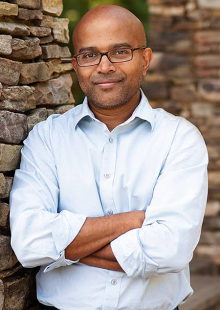
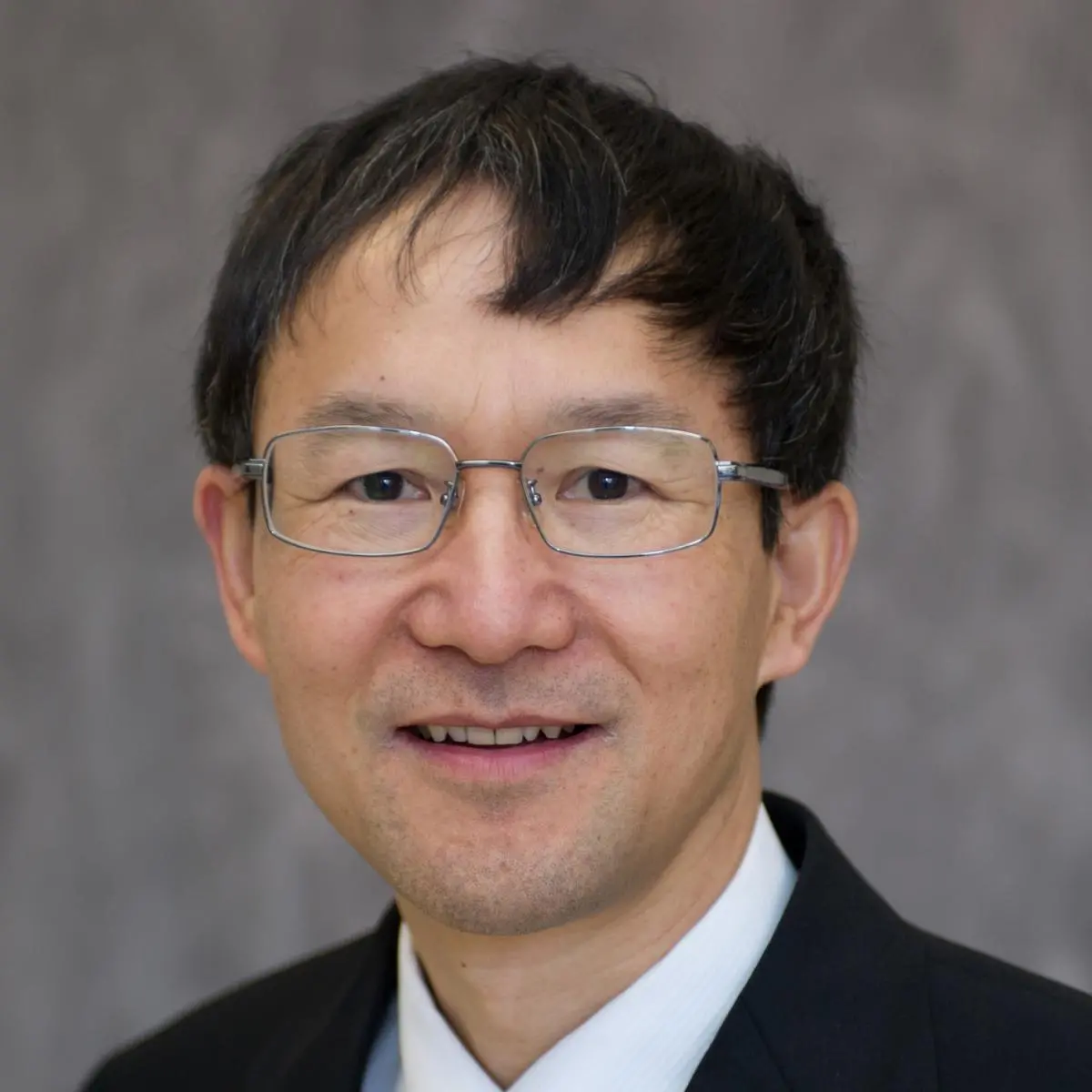
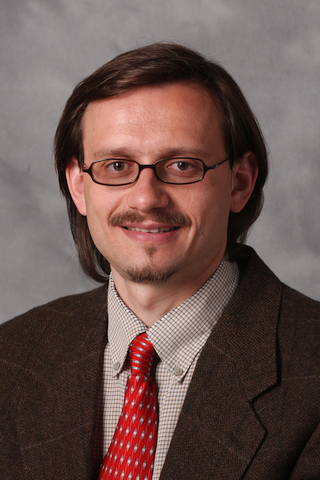
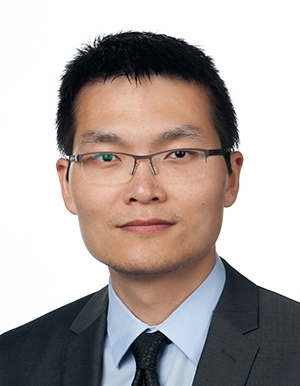
Faisal Alamgir

Faisal Alamgir
faisal.alamgir@mse.gatech.edu
Website
Professor, School of Materials Science and Engineering
Initiative Lead, Advanced Real-time Materials Characterization
Phone
404.385.3263
Office
Love 373
Additional Research

Energy Conversion, energy storage, nanomaterials, optical materials, photovoltaics, catalysis, electrical grid, energy storage

Google Scholar
https://scholar.google.com/citations?hl=en&user=CT721oIAAAAJ&view_op=list_works&sortby=pubdate
Faisal
Alamgir
Show Regular Profile

Yongsheng Chen

Yongsheng Chen
yongsheng.chen@ce.gatech.edu
Website

Chen has an extensive research interests in environmental science and engineering. More specifically, he is a leading researcher in the environmental applications of nanomaterials and their potential fate, transport, transformation, bioaccumulation and toxicity in the environment. His interests in environmental nanomaterials dated back in his graduate research in 1992. He has also been active on algae based bio-renewable energy and sustainable urban development. Chen has been principle and co-principal investigators for 28 research projects (by June 2010) funded by the National Science Foundation, U.S. Environmental Protection Agency, NASA, Boeing and other organizations. The total funds are $7 million. He has also served as a review member or panel review member in the U.S. National Science Foundation, the U.S. Environmental Protection Agency, the U.S. Department of Energy evaluation committee. He has also been invited to serve as an abroad review expert for the China Changjiang Scholars Program (which is to awarded to the top researchers in China). He has published more than 40 papers and two book chapters in this field.

Chen received his Ph.D in Nankai University, China. He joined the Georgia Tech School of Civil and Environmental Engineering in May 2009.

Bonnie W. and Charles W. Moorman IV Professor, School of Civil and Environmental Engineering
Phone
(404) 894-3089
Office
Daniel Environmental Engineering Laboratory, Room 206
Additional Research

Biofuels; Separations Technology; Water

University, College, and School/Department
Civil Engineering Profile
Yongsheng
Chen
Show Regular Profile

Andrei Fedorov

Andrei Fedorov
AGF@gatech.edu
Fedorov Lab

Fedorov's background is in thermal/fluid sciences, chemical reaction engineering as well as in applied mathematics. His laboratory works at the intersection between mechanical and chemical engineering and solid state physics and analytical chemistry with the focus on portable/ distributed power generation with synergetic CO2 capture; thermal management of high power dissipation devices and electronics cooling; special surfaces and nanostructured interfaces for catalysis, heat and moisture management; and development of novel bioanalytical instrumentation and chemical sensors. Fedorov joined Georgia Tech in 2000 as an assistant professor after finishing his postdoctoral work at Purdue University.

Professor and Rae S. and Frank H. Neely Chair, Woodruff School Mechanical Engineering
Associate Chair for Graduate Studies, School Mechanical Engineering
Director, Fedorov Lab
Phone
404.385.1356
Office
Love 307
Additional Research

Heat Transfer; power generation; CO2 Capture; Catalysis; fuel cells; "Fedorov's research is at the interface of basic sciences and engineering. His research portfolio is diverse, covering the areas of portable/ distributed power generation with synergetic carbon dioxide management, including hydrogen/CO2 separation/capture and energy storage, novel approaches to nanomanufacturing (see Figure), microdevices (MEMS) and instrumentation for biomedical research, and thermal management of high performance electronics. Fedorov's research includes experimental and theoretical components, as he seeks to develop innovative design solutions for the engineering systems whose optimal operation and enhanced functionality require fundamental understanding of thermal/fluid sciences. Applications of Fedorov's research range from fuel reformation and hydrogen generation for fuel cells to cooling of computer chips, from lab-on-a-chip microarrays for high throughput biomedical analysis to mechanosensing and biochemical imaging of biological membranes on nanoscale. The graduate and undergraduate students working with Fedorov's lab have a unique opportunity to develop skills in a number of disciplines in addition to traditional thermal/fluid sciences because of the highly interdisciplinary nature of their thesis research. Most students take courses and perform experimental and theoretical research in chemical engineering and applied physics. Acquired knowledge and skills are essential to starting and developing a successful career in academia as well as in many industries ranging from automotive, petrochemical and manufacturing to electronics to bioanalytical instrumentation and MEMS."

Google Scholar
https://scholar.google.com/citations?hl=en&user=_X-PrRkAAAAJ&view_op=list_works&sortby=pubdate
LinkedIn ME Profile Page
Andrei
Fedorov
G.
Show Regular Profile

Andrew Medford

Andrew Medford
andrew.medford@chbe.gatech.edu
Website

Dr. Medford is interested in leveraging materials informatics, statistics, and machine learning to maximize the practical impact of fundamental atomic-scale simulations in the field of surface science and catalysis. His research areas include heterogeneous catalysis, oxide surface chemistry, density functional theory, kinetic models, uncertainty quantification, and Bayesian optimization and inference.

Assistant Professor, School of Chemical and Biomolecular Engineering
Phone
(404) 385-5531
Additional Research

Catalysis, Biochemicals, Biorefining, Chemistry, Sugars, Molecular Simulations, Computational Biology

Andrew
Medford
J.
Show Regular Profile

Nian Liu

Nian Liu
nliu82@mail.gatech.edu
Website

Nian Liu began as an Assistant Professor at Georgia Institute of Technology, School of Chemical and Biomolecular Engineering in January 2017. He received his B.S. in 2009 from Fudan University (China), and Ph.D. in 2014 from Stanford University, where he worked with Prof. Yi Cui on the structure design for Si anodes for high-energy Li-ion batteries. In 2014-2016, he worked with Prof. Steven Chu at Stanford University as a postdoc, where he developed in situ optical microscopy to probe beam-sensitive battery reactions. Dr. Liu 's lab at Georgia Tech is broadly interested in the combination of nanomaterials, electrochemistry, and light microscopy for understanding and addressing the global energy challenges. Dr. Liu is the recipient of the Electrochemical Society (ECS) Daniel Cubicciotti Award (2014) and American Chemical Society (ACS) Division of Inorganic Chemistry Young Investigator Award (2015).

Assistant Professor, School of Chemical and Biomolecular Engineering
Phone
404-894-5103
Office
ES&T 1230
Additional Research

Electronic Systems; Packaging and Components; Nanostructures & Materials; Optoelectronics Photonics & Phononics; Semiconductors; Materials & Processes

Google Scholar
https://scholar.google.com/citations?user=nvMAHY8AAAAJ&hl=en
LinkedIn Related Site
Nian
Liu
Show Regular Profile

Seung Soon Jang

Seung Soon Jang
SeungSoon@mse.gatech.edu
MSE Profile Page

Seung Soon Jang joined the School of Materials Science and Engineering at the Georgia Institute of Technology in July 2007. Jang worked at Samsung Electronics and the Materials and Process Simulation Center (MSC) at CalTech performing various researches in nanoelectronics, fuel cell, and interfacial systems as a director of Supramolecular Technology for six years.

His research interest includes computations and theories to characterize and design nanoscale systems based on the molecular architecture-property relationship, which are especially relevant to molecular electronics, molecular machines, fuel cell technology and biotechnology.

Professor, School of Materials Science and Engineering
Director, Computational NanoBio Technology Lab
Phone
404.385.3356
Office
Love 351
Additional Research

Jang's research interest is to characterize and design nanoscale systems based on the molecular architecture-property relationship using computations and theories, which are especially relevant to designing new biomaterials for drug delivery and tissue engineering. Currently, he is focusing on 1) NanoBio-mechanics for DNA, lipid bilayer, and hydrogel systems; 2) Molecular interaction of Alzheimer proteins with various small molecules. Dr. Jang is also interested in various topics such as nanoelectronics, nanostructured energy technologies for fuel cell, battery and photovoltaic devices.;Computational mechanics; Nanostructured Materials; Polymeric composites; Biomaterials; Fuel Cells; Delivery and Storage

Google Scholar
https://scholar.google.com/citations?hl=en&user=SW0u-asAAAAJ&view_op=list_works&sortby=pubdate
Computational NanoBio Technology Lab
Seung Soon
Jang
Show Regular Profile

Vigor Yang

Vigor Yang
vigor.yang@aerospace.gatech.edu
Departmental Bio

Vigor Yang earned his Ph.D. from the California Institute of Technology in 1984. After serving for one year as a research fellow in Jet Propulsion at Caltech, he joined the Pennsylvania State University in August 1985, becoming the John L. and Genevieve H. McCain Chair in Engineering in 2006. In 2009, he began his tenure as the William R.T. Oakes Professor Chair at the Daniel Guggenheim School of Aerospace Engineering at the Georgia Tech. He retired from the chair position and returned to teaching and research in August of 2018

Yang’s research encompasses a wide spectrum of topics, including (1) data-enabled design and data science; (2) combustion dynamics in propulsion and power-generation systems;(3) multi-fidelity modeling and simulations of fluid flows and combustion; (4) combustion of energetic materials; (5) high-pressure transport phenomena, thermodynamics and combustion, and (6) nano technologies for propulsion and energetic applications. He has established, as the principal or co-principal investigator, more than 70 research projects, including nine (9) DoD-MURI projects. He has published 10 comprehensive volumes and numerous technical papers on combustion, propulsion, energetics, and data science. He was the recipient of  the Air-Breathing Propulsion Award (2005), the Pendray Aerospace Literature Award (2008), the Propellants and Combustion Award (2009), and the von Karman Lectureship in Astronautics Award (2016) from the American Institute of Aeronautics and Astronautics (AIAA); the Worcester Reed Warner Medal (2014) from the American Society of Mechanical Engineers (ASME); and the Lifetime Achievement Award (2014) from the Joint Army, Navy, NASA, and Air Force (JANNAF) Interagency Propulsion Committee.

Yang was the editor-in-chief of the AIAA Journal of Propulsion and Power (2001-2009) and the JANNAF Journal of Propulsion and Energetics (2009-2012). He is currently a co-editor of the Aerospace Book Series of the Cambridge University Press (2010-).  He serves, or has served, on a large number of steering committees and review/advisory boards for government agencies and universities in the U.S. and abroad. A member of the U.S. National Academy of Engineering and an academician of Academia Sinica, Dr. Yang is a fellow of the AIAA, ASME, and Royal Aeronautical Society (RAeS).

Regents Professor
Additional Research
  • Combustion
  • Energy
  • High Performance Computing
  • Hydrogen Production &  Utilization 
Website
Vigor
Yang
Show Regular Profile

Ryan Lively

Ryan Lively
ryan.lively@chbe.gatech.edu
Website

Ryan Lively was born in 1984. He spent approximately 16 years in Gainesville, FL and attended almost every home football game at The Swamp. He enrolled at Georgia Tech in 2002 as an eager Chemical Engineering student and has been a Yellow Jacket at heart ever since. During his studies at Georgia Tech, Ryan worked on research projects as diverse as ab initio quantum mechanical methods to estimate molecular binding energies, fresh Georgia peach preservation, composite spinneret design, dual-layer hollow fiber membrane spinning, and sorbent-loaded fiber spinning. Ryan introduced a rapid temperature swing adsorption (RTSA) approach for post-combustion CO2 capture, which was successfully demonstrated by adapting knowledge developed in membrane science to design unique nanoscale composite adsorbent/heat exchangers. After his Ph.D. (awarded in 2010), he spent almost 3 years as a post-doctoral research engineer at Algenol Biofuels, where he published 25 papers and filed two U.S. patent applications. His work at Algenol focused on developing energy-efficient liquid and vapor separation systems for downstream biofuel purification. 

He is now the Thomas C. DeLoach Professor in the School of Chemical & Biomolecular Engineering at the Georgia Institute of Technology. His current research seeks to revolutionize fluid separation processes critical to the global energy and carbon infrastructure. He has a specific focus on membrane- and adsorbent-based science and technology to address some of the most difficult chemical separations. His group’s research activities range from fundamental material science and discovery to translational engineering applications focusing on making and testing separation devices. 

Ryan has received a variety of awards for his research efforts including the 2020 Allan P. Colburn Award from AIChE, and the 2022 Curtis W. McGraw Award from ASEE. He is currently an Editor for the Journal of Membrane Science and is the Secretary of the North American Membrane Society. He is the Director of the Center for Understanding & Controlling Accelerated and Gradual Evolution of Materials for Energy (UNCAGE-ME), an Energy Frontier Research Center of the US Department of Energy. He has over 160 publications in the field of separations including articles in Science, Nature and other impactful venues.

Professor, School of Chemical and Biomolecular Engineering
Thomas C. DeLoach Jr. Endowed Professorship
Phone
(404) 894-8795
Additional Research

Biofuels; Carbon Capture; Separations Technology; Membranes; Adsorbents;Polymers; Microporous Materials

Google Scholar
https://scholar.google.com/citations?hl=en&user=1ktJriEAAAAJ&view_op=list_works&sortby=pubdate
Research Website
Ryan
Lively
Show Regular Profile

Carsten Sievers

Carsten Sievers
carsten.sievers@chbe.gatech.edu
ChBE Profile Page

Sievers’ research interests are in heterogeneous catalysis, reactor design, applied spectroscopy, and characterization and synthesis of solid materials. Combining these interests he seeks to develop processes for the production of fuels and chemicals. His research program combines fundamental and applied research.

In fundamental studies, a suite of analytical and spectroscopic techniques (e.g. IR, NMR) is used to gain knowledge on structure-reactivity relationships of heterogeneous catalysts. Moreover, surface reactions are studied on a molecular level to identify reaction pathways over different catalysts. Information obtained from these studies provides the foundation for designing innovative catalysts.

Applied studies focus specific catalytic processes. For these projects, continuously operated flow reactor systems are designed. Different catalysts are tested for reactivity, selectivity and stability and the influence of the operating conditions is investigated. Catalyst deactivation is studied in detail to develop suitable regeneration methods or to avoid deactivation entirely by improved catalyst design. Specific projects include hydrodeoxygenation of pyrolysis oils, selective hydration of polyols, conversion of sugars into lactic acid and ethylene glycol, and selective oxidation of methane.

An important goal of Sievers’ research is to enable technology for utilization of alternative resources in order to reduce the current dependence of oil. Among these biomass is a particularly promising candidate because it is renewable and can be produced CO2 neutral.

Sievers has contributed to 80 peer reviewed publications on heterogeneous catalysis in petroleum refining (isobutane/2-butene alkylation, fluid catalytic cracking, hydrotreating), alkane activation, supported ionic liquid as catalysts for fine chemical synthesis, and biomass processing.  He is Director and Past President of the Southeastern Catalysis Society, former Program Chair and Director of the ACS Division of Catalysis Technology & Engineering, former Director of the AIChE Division of Catalysis and Reaction Engineering, and Editor of Applied Catalysis A: General.
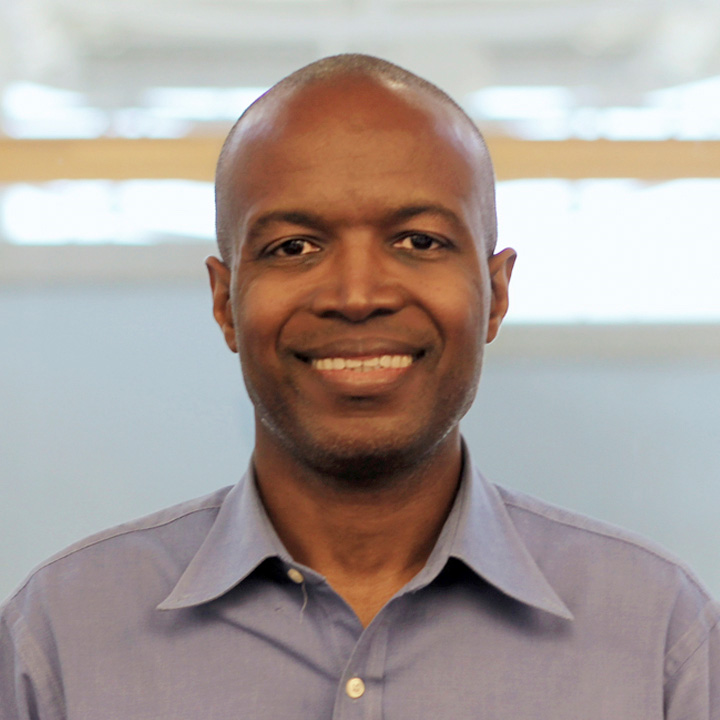
Professor, School of Chemical and Biomolecular Engineering
RBI Initiative Lead: Maximizing the Value of Products from Plastics Upcycling
Phone
404.385.7685
Office
ES&T 2218
Additional Research

Biomass; Biofuels; Catalysis; Advanced Characterization; Gasification; Biorefining; Lignin Upgrading; Catalysis; Energy & Water; Separation Technologies; Chemical Feedstocks; Sugars; Lignin & Hemicellulose

Google Scholar
https://scholar.google.com/citations?hl=en&user=qeq3njwAAAAJ&view_op=list_works&sortby=pubdate
Sievers Research Group
Carsten
Sievers
Show Regular Profile

Comas Haynes

Comas Haynes
comas.haynes@gtri.gatech.edu
Website
Principal Research Engineer, Georgia Tech Research Institute
SEI Lead: Hydrogen
Phone
(404) 407-7578
Additional Research

Building Technologies; System Design & Optimization; Thermal Systems

GTRI
Geogia Tech Research Institute
Comas
Haynes
Show Regular Profile