
Fall 2025 Lunch Lectures
View the Fall 2025 lecture schedule here >> . Lectures are held on Thursdays.
↓ Scroll down ↓ to see detailed lecture information for each speaker. Lunch served at noon, talks are from 12:30-1:30pm.
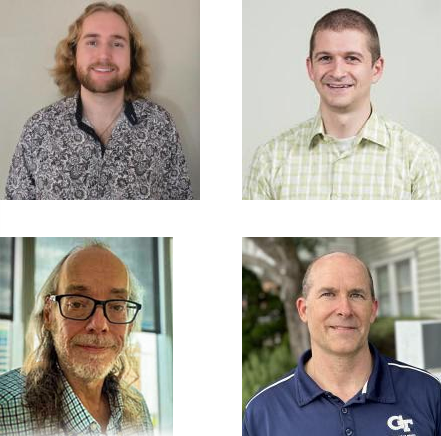
IPaT Research Lightning Talks
Aaron Gabryluk, Research Scientist, IPaT
Brian Jones, Principal Research Engineer, IPaT
Richard Starr, Director of Research Operations and Research Scientist, IPaT
Scott Gilliland, Senior Research Scientist, IPaT
Nov 20, 2025
12:00 p.m. Lunch; 12:30 p.m. talk starts
Location: Hodges Room, 3rd floor, Centergy One building in Technology Square
Abstract: For this lunch lecture, a subset of IPaT's researchers will provide lightning talks about their current work. These talks will give a high level overview of some of IPaT's current research landscape including presentations around Educational VR, the AwareHome and AI Caring, collaborations with GT Aerospace, and healthcare research using IPaT's "Secure Date Enclave".
Bio: The Institute for People and Technology (IPaT) is an Interdisciplinary Research Institute at Georgia Tech offering a unique people-first approach to research and innovation. IPaT assembles academics, industry, government, civil society, and other partners to create people-centered solutions to some of society’s thorniest challenges. Created in 2011, IPaT’s community of researchers has spearheaded breakthroughs in health, aging, usability, sustainability, smart cities, and more. IPaT focuses on real-world impact, translating research out of the lab and into people’s lives in the form of real products, applications, and community education and programming. It accomplishes this through the efforts of over twenty research faculty, more than 100 affiliated faculty, significant research infrastructure and systems, well regarded events and programming, and an incredible staff. This talk will feature the following research faculty:
Aaron Gabryluk, Research Scientist, IPaT
Brian Jones, Principal Research Engineer, IPaT
Richard Starr, Director of Research Operations and Research Scientist, IPaT
Scott Gilliland, Senior Research Scientist, IPaT

The New Shriners Children’s Research Institute
Leanne West, Principal Research Scientist and Chief Engineer of Pediatric Technologies, Georgia Tech
Nov 13, 2025
12:00 p.m. Lunch; 12:30 p.m. talk starts
Location: Hodges Room, 3rd floor, Centergy One building in Technology Square
Abstract: Leanne West will discuss the newly announced Shriners Children’s Research Institute that will be co-located with Georgia Tech at Science Square. Leanne will discuss the research priorities, the data faculty will have access to, the timeline for implementation, examples of current work, and upcoming events.
Bio: Leanne West is Chief Engineer of Pediatric Technologies at the Georgia Tech Pediatric Innovation Network. In her 25+ years working at Georgia Tech, she has led multimillion dollar programs and teams of researchers to develop products for government and industry partners. She also started her own company, Intelligent Access, to take her invention of a wireless personal captioning system to market. She serves as the technical liaison between Georgia Tech and pediatric hospitals around the world, with Children’s Healthcare of Atlanta and Shriners Hospitals being the main partners. West works closely with clinicians to understand and identify problems that need a solution to allow them to take better care of their patients. She is an invited Judge for many medical device pitch competitions and serves on several Boards in the healthcare and technology arenas.
West is the President of the International Children’s Advisory Network (iCAN). Since 2014, iCAN fosters greater global understanding about the importance of the pediatric patient and caregiver voice in healthcare, clinical trials, and research. iCAN gives its members the opportunities to share their stories and experiences in front of organizations like the FDA, AAP, and CDC, and conferences. iCAN is an official partner of the Food and Drug Administration (FDA) Center for Devices and Radiological Health (CDRH) as an official member organization of the Patient and Caregiver Connection Partner program and the Total Product Life Cycle Advisory Program. West is also a patient advocate for one of her two rare diseases, serving on the Foundation for Sarcoidosis Research Patient Advisory Council and Speaker’s Bureau.
She has served as the twice-elected Chair of the Georgia Tech Executive Board (2007, 2008) and was the GT Chair of the State Charitable Campaign (2017). She was recognized by Georgia Trend magazine as one of Georgia’s “40 Under 40” in 2004; she was selected for Leadership Georgia in 2008; she was a member of the team awarded the international Optical Society 2012 Paul F. Forman Engineering Excellence Award; she received Georgia Tech’s Outstanding Achievement in Research Enterprise Enhancement Award in 2014, and she was Women in Technology’s Woman of the year in 2014. In 2017, she was appointed to the board of the Georgia Technology Authority by the late Speaker of the House, David Ralston.

The Hidden Cost of AI: Content Moderation, Mental Health, and the Fight for Ethical AI in Africa
Kauna Ibrahim Malgwi, Founder, Digital Rights and Mental Health Initiative
Nov 6, 2025
12:00 p.m. Lunch; 12:30 p.m. talk starts
Location: Hodges Room, 3rd floor, Centergy One building in Technology Square
Abstract: As artificial intelligence continues to shape the digital landscape, the human labor behind AI remains largely invisible. For over four years, I worked as a Facebook content moderator, witnessing firsthand the emotional and psychological toll of moderating harmful content. This experience fueled my advocacy for fair wages, mental health support, and ethical AI practices in Africa’s digital workforce. In this talk, I will shed light on the realities of content moderation, the urgent need for ethical AI that prioritizes human well-being, and the fight for fair labor conditions in Africa’s data and technology sectors. I will also explore how we can professionalize digital work, ensuring that AI development does not come at the expense of the mental health and dignity of its human contributors. My journey, recognized by Time magazine and BBC News, highlights the resilience of African tech workers and the power of collective action in shaping a fairer digital future.
Bio: Kauna Ibrahim Malgwi is a clinical psychologist, trauma survivor, and leading advocate for the mental health and rights of content moderators and data workers in Africa. A former Facebook content moderator, she turned her lived experience of trauma into activism and advocacy, founding the Digital and Mental Health Initiative and chairing the steering committee of the African Content Moderators Union (Nigeria Chapter)/Gammayyar African Tech Workers Cooperative (GTechCoop). Recognized by TIME’s 100 Most Influential People in AI (2024) and BBC’s 100 Women, Kauna now advances trauma-informed, ethical AI and fair digital labour practices through research, advocacy, and healing-centered frameworks.

Remote Diagnostics and Patient Monitoring Technologies for Ubiquitous Healthcare
Alexander Adams, Assistant Professor, School of Interactive Computing, College of Computing, Georgia Tech
Oct 23, 2025
12:00 p.m. Lunch; 12:30 p.m. talk starts
Location: Hodges Room, 3rd floor, Centergy One building in Technology Square
Abstract: Nearly half of the global population and 35% of the US population report poor access to healthcare, while estimates suggest over 90% of the world’s population has access to smartphones. The overarching goal of our lab, the Uncommon Sense Lab, is to extend the reach of healthcare through leveraging existing infrastructure to access patients in rural areas or who cannot otherwise access healthcare. In this talk, I will present some of our work on novel sensing systems for continuous patient monitoring and remote diagnostics.
Bio: Alex's research focuses on designing, fabricating, and implementing new ubiquitous and wearable sensing systems. In particular, he can develop systems that enable remote monitoring and diagnostics for more pervasive healthcare. Alex leverages sensing, signal processing, and fabrication techniques to design, deploy, and evaluate novel sensing technologies. Originally a musician, Alex became fascinated by how he could capture and manipulate sounds through analog hardware and digital signal processing, which led him back to his hometown (Concord, NC). Alex completed his BS at the University of North Carolina at Charlotte in 2014 and his Ph.D. at Cornell University in 2021 (advised by Professor Tanzeem Choudhury). Alex then became the resident Research Scientist for the Precision Behavioral Health Initiative at Cornell Tech (NYC) until the fall of 2022, when he joined the School of Interactive Computing at the Georgia Institute of Technology. He is currently a faculty member in HCI, Robotics, and human-centered computing with affiliations in the Institute of People and Technology and the Institute of Bioengineering and Bioscience. As Director of the Uncommon Sense Labs, he explores how we can meet people where they are with a novel sensing system that enables lab-quality health assessments for chronic disease, maternal/fetal health, substance use disorder, and chronic pain.
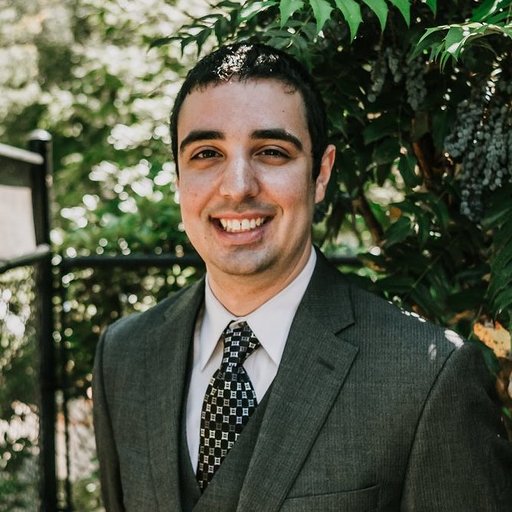
Embracing Ubiquitous Technology to Complement, Scale, and Extend Traditional Healthcare
Alex Mariakakis, Assistant Professor, Department of Computer Science, University of Toronto
Oct 16, 2025
12:00 p.m. Lunch; 12:30 p.m. talk starts
Location: Hodges Room, 3rd floor, Centergy One building in Technology Square
Abstract: Traditional healthcare is centered around face-to-face interactions between patients and clinicians. While these human relationships are important for establishing empathetic and ethical care, they limit the extent to which healthcare can be accessed and delivered. Ubiquitous technologies like smartphones and wearables can augment traditional healthcare workflows by increasing people's access to health-monitoring tools. Rather than viewing healthcare as a reactive endeavor, we can work towards proactive approaches like preventative screening, continuous disease management, and informative visualizations that empower all stakeholders to make informed and timely decisions. To achieve this vision, my research group applies signal processing and machine learning on sensor data to measure vital signs and infer symptoms. Since these technologies may sometimes be intended for people without medical training, my group also explores how such tools should be designed to achieve clinically relevant goals. In this talk, I will highlight three lines of research: (1) acoustic cardiac sensing with earbuds, (2) accurate and informative menstrual health tracking, and (3) chatbots for clinical pre-consultation.
Bio: Alex Mariakakis is an Assistant Professor in the Department of Computer Science at the University of Toronto. He runs the Computational Health and Interaction (CHAI) lab, which leverages ubiquitous and emergent technologies to address problems related to people’s health and wellbeing. He is also an Affiliate Scientist at the KITE Research Institute and an Education Faculty Affiliate within T-CAIREM, which has enabled his passion for digital health research to influence the clinical landscape in the Greater Toronto Area. His work has garnered multiple Best Paper Awards at top computer science venues like ACM CHI and ACM COMPASS, as well as significant attention from media outlets ranging from the BBC to Cosmo Magazine.
""
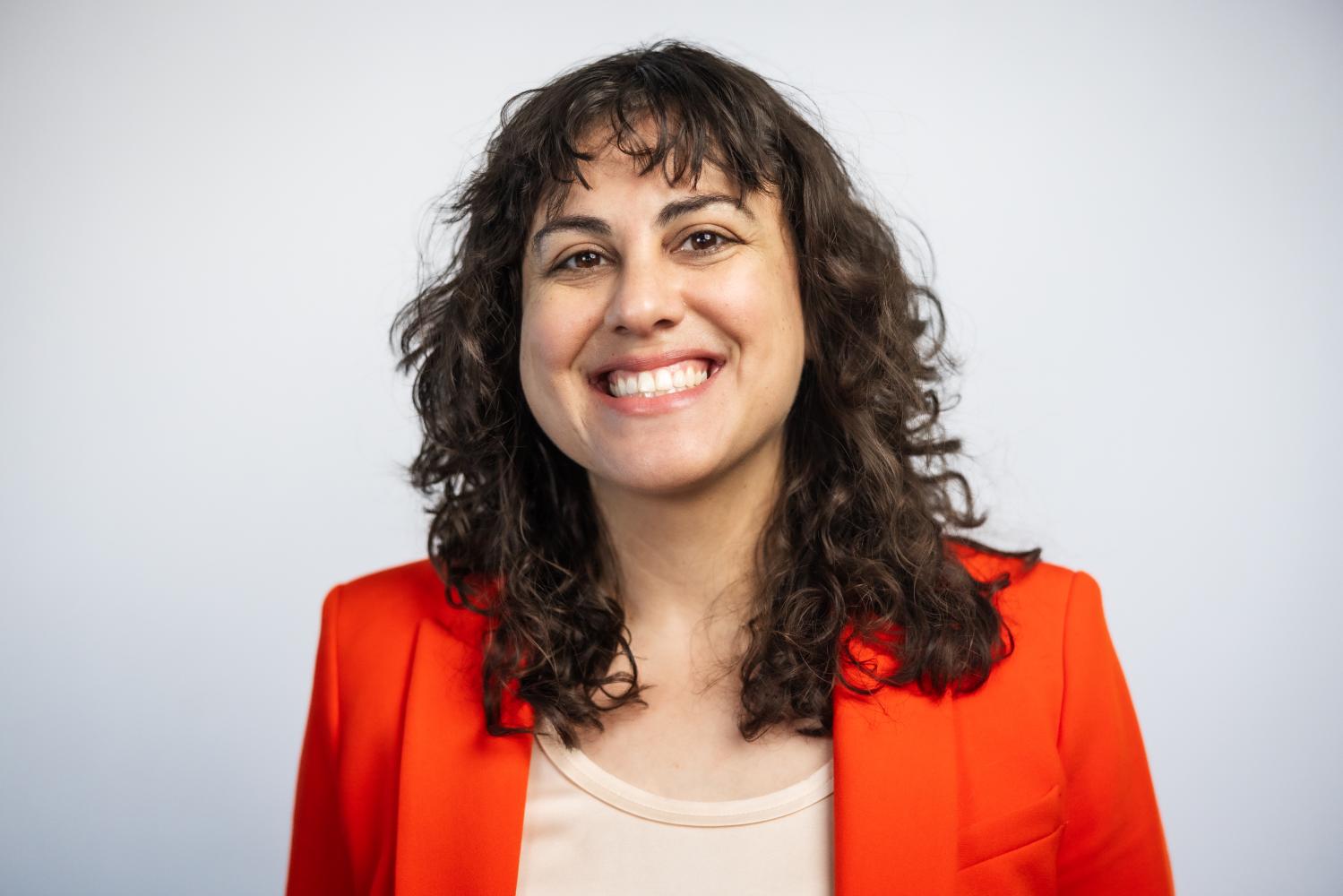
Co-Designed Hyperlocal Sensing for Environmental Justice
Alex Cabral, Postdoctoral Fellow, Ka Moamoa Lab, Georgia Tech
Oct 9, 2025
12:00 p.m. Lunch; 12:30 p.m. talk starts
Location: Hodges Room, 3rd floor, Centergy One building in Technology Square
Abstract: Marginalized communities are disproportionately exposed to environmental hazards but lack comprehensive data to monitor their hyperlocal environments, in part due to the geographic sparsity of regulatory monitors. Although low-cost, commercially available environmental sensors have created new opportunities for underserved areas, much of the research using these sensors is conducted in isolation and focused on small-scale studies. In this talk, I will outline two case studies that aim to address these shortcomings – 1) Eclipse: a 118-node air quality sensor network co-designed with city and community partners in Chicago, and 2) Noondawind: a sensing and data integration platform co-designed with Native American Nations to monitor environmental factors affecting the growth of Manoomin (wild rice), a vital cultural and economic resource for the Ojibwe people. I will discuss three key stages of these projects: hardware design, strategic sensor placement within urban spaces, and the creation of data visualizations. I will reflect on the successes, challenges, and lessons learned throughout these projects, emphasizing technical limitations, data sovereignty, and respect for local knowledge. This work contributes to a vision that integrates cyberinfrastructure, scientific research, and community collaboration to foster long-term sustainability across local and global communities.
Bio: Alex Cabral is a Postdoctoral Fellow in the Ka Moamoa Lab at Georgia Tech and incoming Assistant Professor in the Department of Urban Studies and Planning and Institute for Data, Systems, and Society at MIT. She earned a PhD in Computer Science from Harvard University, where she was selected as a Siebel Scholar and CPS Rising Star and served as a member of the Urban Innovation group at Microsoft Research. Before attending graduate school, she was a Software Engineer at Xbox then middle and high school Computer Science, Math, and Robotics teacher. She has a B.S. in Computer Science from Columbia University and an M.S. in Computational Linguistics from University of Washington.

Minimum Lovable Interaction: Introducing HCI frameworks as part of the "zero to one" startup creation phase
Rahul Saxena, Director, CREATE-X, Georgia Tech
Oct 2, 2025
12:00 p.m. Lunch; 12:30 p.m. talk starts
Location: Hodges Room, 3rd floor, Centergy One building in Technology Square
Abstract: Treat a startup not as “a product to ship,” but as a socio-technical interaction system to be iterated until the smallest repeatable interaction reliably creates user progress. Optimize that interaction first; everything else (features, pricing, growth) composes around it.
Bio: Rahul Saxena is the Director of CREATE-X at Georgia Tech and previously served as Associate Director for the program’s Startup Launch accelerator. His career spans roles as a venture capitalist, startup CEO, entrepreneur, mechatronic design engineer, and published academic researcher. Saxena earned his Bachelor's degree in Mechanical Engineering from Georgia Tech, a European Master’s degree in Fluid Mechanics from the Von Karman Institute for Fluid Dynamics, and an MBA from Emory University. He spent a decade with Seraph Group, a hybrid angel/venture capital firm, where he evaluated and invested in earlystage companies across all industries. During that time, he also served as CEO of a portfolio company and sat on multiple boards, with several companies achieving successful acquisitions.

(Cancelled) Trust: The Foundation of AI Industrialization
(This lecture has been cancelled)
Michael Hanson, Senior Director of Business Transformation, AI & Data, at VerizonSept 25, 202512:00 p.m. Lunch; 12:30 p.m. talk startsLocation: Hodges Room, 3rd floor, Centergy One building in Technology Square
Abstract: We are moving into the era of AI Industrialization, a transformative shift from bespoke AI projects to the full-scale integration of intelligent systems across the enterprise. This evolution promises to redefine productivity and create new value, but it brings a critical leadership challenge: how to manage the systemic risks that emerge when AI operates at an industrial scale. Success in this new age will be built not just on technological power, but on a foundation of trust.
This talk presents a strategic framework for navigating the complexities of AI Industrialization. We will focus on the essential business imperatives required to build and maintain stakeholder confidence as AI becomes a core operational utility. This includes establishing strategic oversight to ensure enterprise-wide alignment and safety, creating new metrics of success that measure both performance and reliability, and implementing clear systems of accountability for AI-driven outcomes.
The core message is that trust is the critical enabler of successful industrialization. Without it, the adoption of scaled AI systems will falter, facing resistance from customers, employees, and regulators. This lecture provides a high-level roadmap for leaders to architect a trustworthy, AI-powered organization, ensuring that this powerful technological shift translates into a durable and responsible competitive advantage.
Bio: Michael Hanson is a Senior Director of Business Transformation, AI & Data at Verizon, where he leads a team responsible for supporting advanced analytics and modeling applied to network operations for a global communications service provider. He has an M.B.A. and an M.Sc. in Corporate Finance from Boston College, and over 15 years of experience in the telecommunications industry, spanning legacy and fiber network operations, data analysis, expense reduction, product development, and capital management.

Accompaniment, Design, and Research
Carl DiSalvo, Professor, School of Interactive Computing, Georgia Tech
Sept 18, 2025
12:00 p.m. Lunch; 12:30 p.m. talk starts
Location: Hodges Room, 3rd floor, Centergy One building in Technology Square
Abstract: For a long time, people have asked how design can shape social and political change. Usually, the answer is found in outcomes—the products, systems, or artifacts designers create. But what if the real power of design isn’t just in what gets made, but in how designers work with people along the way? What if we looked less at outputs and more at relationships? In this talk, we explore accompaniment. It’s both an idea and a practice—one that invites us to see design and research differently, by paying attention to the character of the relationships between designers and the people they work with. Accompaniment opens the door to a more caring, accountable, and transformative way of doing design.
Bio: Carl DiSalvo is a Professor in School of Interactive Computing at the Georgia Institute of Technology. He serves on the steering committee for the AIAI Network, a multi-institution endeavor investigating how the humanities might help us enlist AI ethically, equitably, and in the service of justice, funded by the Mellon Foundation. From 2024-2025 he was the James Wei Visiting Professor at Princeton University. DiSalvo’s research explores how design fosters and thwarts democratic participation, and how communities use and resist data while working toward social change. Throughout his work, he draws together concepts and practices from art and design, and the humanities and social sciences to interpret and make socio-technical systems. He is committed to engaged scholarship and partners with communities, civil society, government, and industry throughout his work. DiSalvo regularly publishes in design, science and technology studies, and human-computer interaction journals and conference proceedings. He’s published two books with MIT Press, Adversarial Design (2012) and Design as Democratic Inquiry (2022). He is a co-editor of the journal Design Issues. In 2025 he was inducted into the SIGCHI Academy for his contributions to the field of Human-Computer Interaction. In 2025 he was also awarded the STS Infrastructure Award from the Society for the Social Studies of Science, as a co-editor of the DigitalSTS Handbook.
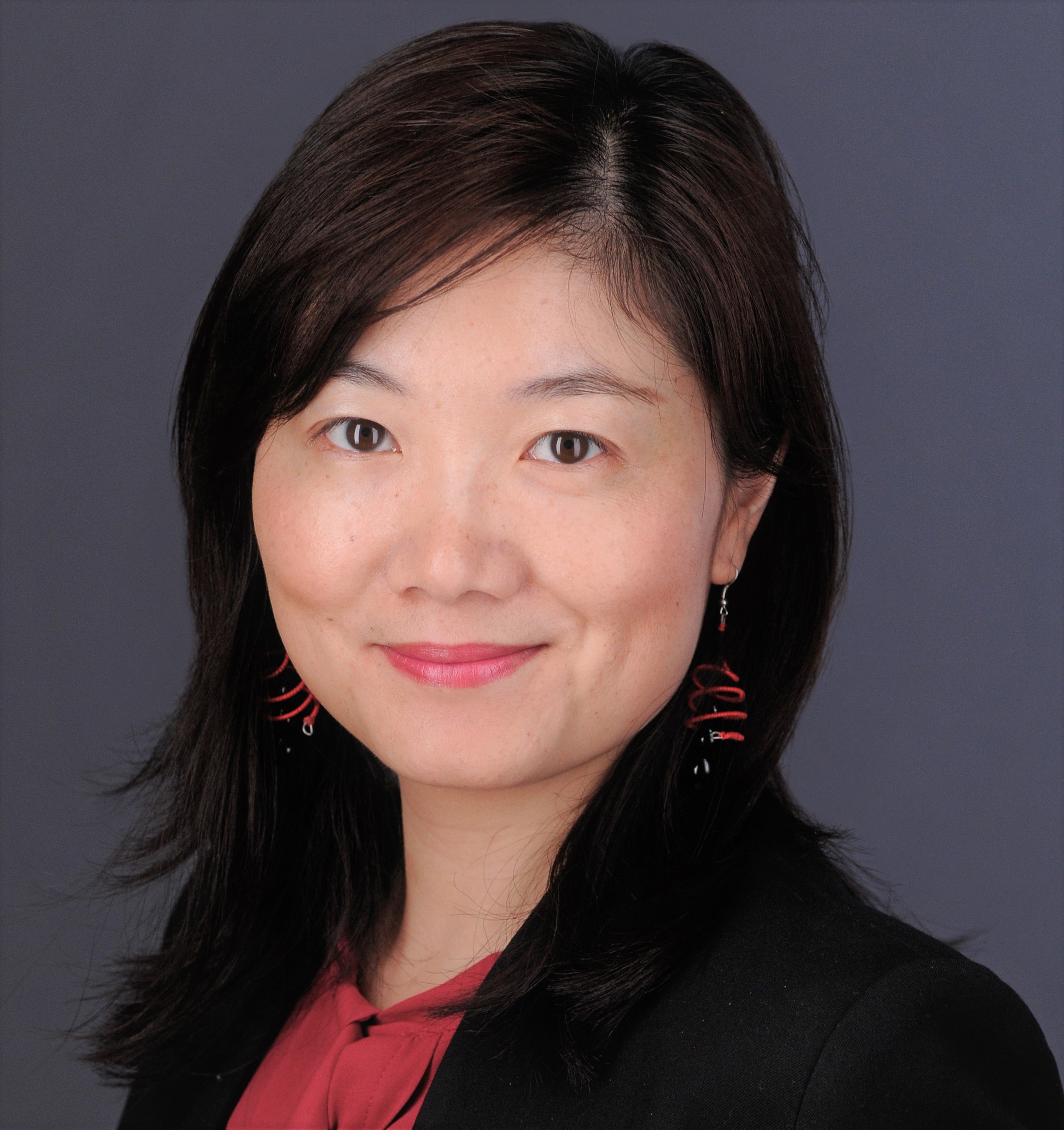
Exploring the Impacts of Environment of Care (EoC) on Nurses' Hand Hygiene Compliance
Hui Cai, Professor, School of Architecture, Georgia Tech; Executive Director, SimTigrate Design Center
Sept 11, 2025
12:00 p.m. Lunch; 12:30 p.m. talk starts
Location: Hodges Room, 3rd floor, Centergy One building in Technology Square
Abstract: Hospital Acquired Infections (HAIs) are associated with increased mortality, prolonged length of stay, and substantial healthcare costs. Research indicates that effective hand hygiene by healthcare staff is one of the most effective ways of reducing the potential for HAI occurrence. Although robust hand hygiene protocols and educational campaigns have established hand hygiene as a cornerstone of HAI prevention, observed compliance rates in environments of care (EoC) remain low (typically 60-70%). This shortfall reflects a complex interplay of behavioral and environmental factors. Human-centered environmental affordances offer a promising avenue for reinforcing reliable compliance. However, the impacts of environment on HHC and nurses’ experience has been underexplored. In this talk, I will share a series of studies based on interdisciplinary collaborations that combined expertise in evidence-based design, human factors, nursing, and industrial engineering. We evaluated how spatial configuration of nursing unit, patient rooms, and hand sanitizer dispenser placement influence compliance rates and nurse experience. Finally, I will discuss future directions of integrating big data analytics and machine learning approaches to predict hand hygiene behavior and develop data-driven interventions to better support patient and staff safety.
Bio: Dr. Hui Cai is a Professor of the School of Architecture at Georgia Tech. She also serves as the Executive Director of the SimTigrate Design Center, an interdisciplinary research center that foster innovation in design to promote health outcomes and human wellbeing. Cai holds a Ph.D. degree in Architecture from Georgia Tech. Dr. Cai’s research focuses on using a performance-driven and evidence-based design approach to analyze the relationship between culture, human behavior, and the physical environment, especially in healthcare settings and healthy communities. Cai combines various analytical tools in her research, such as space syntax analysis, discrete event simulations, and behavioral mappings. Cai disseminates her work extensively through numerous publications and presentations. Her work in healthcare research has received several awards, including the International Academy Award for Best Research project, AIA-AAH/AAH Foundation Burgun Fellowship, and the Inaugural Wilbur H (Tib) Tusler, Jr. Health Design Research Prize awarded by the Foundation for Health Environments Research. She was recently named as 2021 HCD 10 Healthcare Design Educator. She also served on the Board of Directors for the Environmental Design Research Association (EDRA).

What Can Get Lost Within User Experience
Robert Rosenberger, Professor of Philosophy, Carter School of Public Policy, Georgia Tech
Sept 4, 2025
12:00 p.m. Lunch; 12:30 p.m. talk starts
Location: Hodges Room, 3rd floor, Centergy One building in Technology Square
Abstract: People grow accustomed to technology usage. The devices we use every day become normal to us. However, it can be important to sometimes step back and unpack the sense of normalcy that gets attached to our technologies. Some ideas from the field of philosophy of technology can be useful for articulating the details of our relationships to our devices and inspecting these relationships for places where problems can pop up. Here in this talk, I introduce some concepts from a growing school of thought called “postphenomenology,” a practical perspective for describing the details of user experience, and one that has found wide interdisciplinary application. In particular, I focus on the potential for this perspective to help draw out how our relationships with technologies can at times capture, direct, or divert our attention in problematic ways. I instantiate these ideas in two lines of study, the problem of smartphones and driver distraction, and the problem of the hidden politics of public spaces.
Bio: Robert Rosenberger is a Professor of Philosophy in the Carter School of Public Policy here at Georgia Tech. He serves as the Coordinator of the IAC Graduate Certificate in Science & Technology Studies, and has just completed his term as President of the Society for Philosophy of Technology. His edited and co-edited books include Postphenomenological Investigations, Postphenomenology and Imaging, and The Critical Ihde. His monographs include Callous Objects: Designs Against the Homeless, and Distracted: A Philosophy of Cars and Phones which recently received The Dorothy Lee Award for Outstanding Scholarship in the Ecology of Culture from the Media Ecology Association.
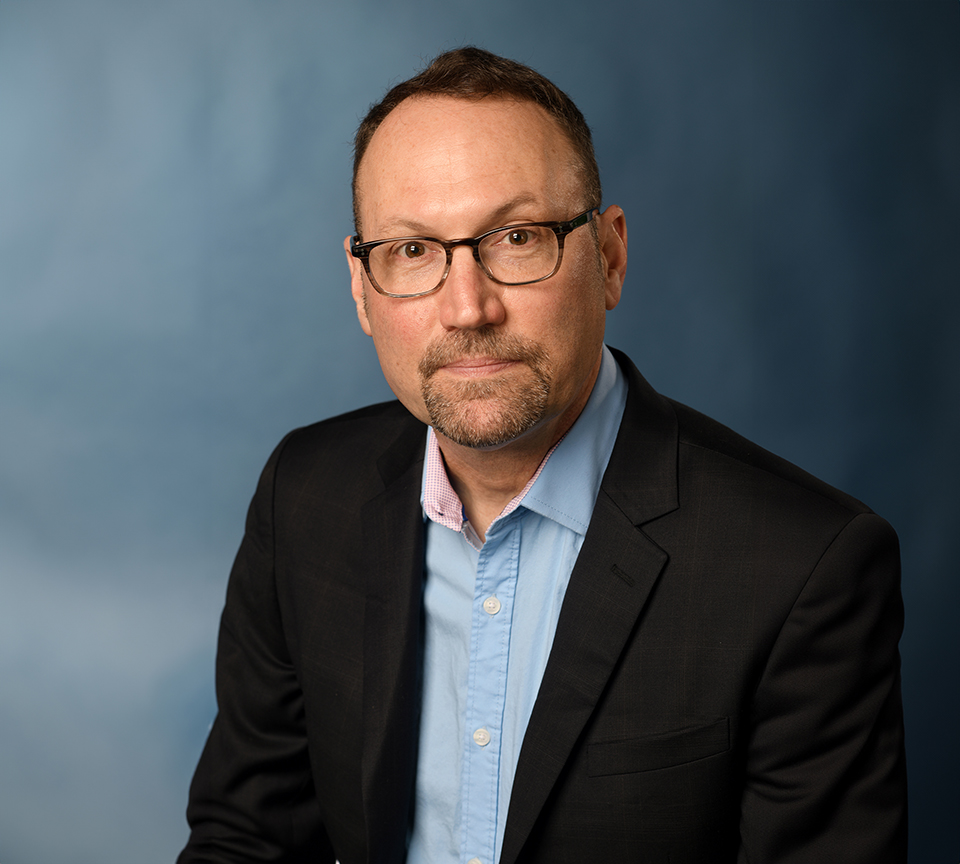
The IPaT Way: Things happening at the Institute for People and Technology
Micheal Best, Executive Director, Institute for People and Technology
August 28, 2025
12:00 p.m. Lunch; 12:30 p.m. talk starts
Location: Hodges Room, 3rd floor, Centergy One building in Technology Square
Abstract: For the first IPaT: GVU Lunch Lecture of the academic year, and per tradition, Michael Best, executive director of the Institute for People and Technology (IPaT), will present an overview of IPaT's activities, offerings, and partners. He’ll introduce The IPaT Way, our new, signature workshop that develops participants' awareness and capacity for people centered technical innovation. The IPaT Way is an amalgamation of methods and mindsets that starts with people, communities, societies; develops a shared understanding of their passions, pain points, and problems; and only then considers potential technical solutions and innovations. Best will also foreshadow some of this term's events, including a stellar line-up for the Lunch Lecture series itself, a second annual Wearable Innovations for Health Workshop, the Fall Town Hall, and other programs. He will announce this Fall's IPaT/GTRI Research & Engagement Grant recipients. Finally, he will announce Conversations@TechSquare, a new jam centered on novel ideas and exchange. The lecture will end with an opportunity for dialogue, input, and interaction.
Bio: Dr. Michael L. Best is Executive Director of the Institute for People and Technology (IPaT) and Professor with the Sam Nunn School of International Affairs and the School of Interactive Computing at Georgia Institute of Technology where he directs the Technologies and International Development Lab. He was founding director of the United Nations University Institute on Computing and Society (UNU-CS) in Macau SAR, China. He holds a Ph.D. from MIT and has served as director of Media Lab Asia in India and head of the eDevelopment group at the MIT Media Lab.


