Matthew McDowell

Matthew McDowell
mattmcdowell@gatech.edu
McDowell Lab

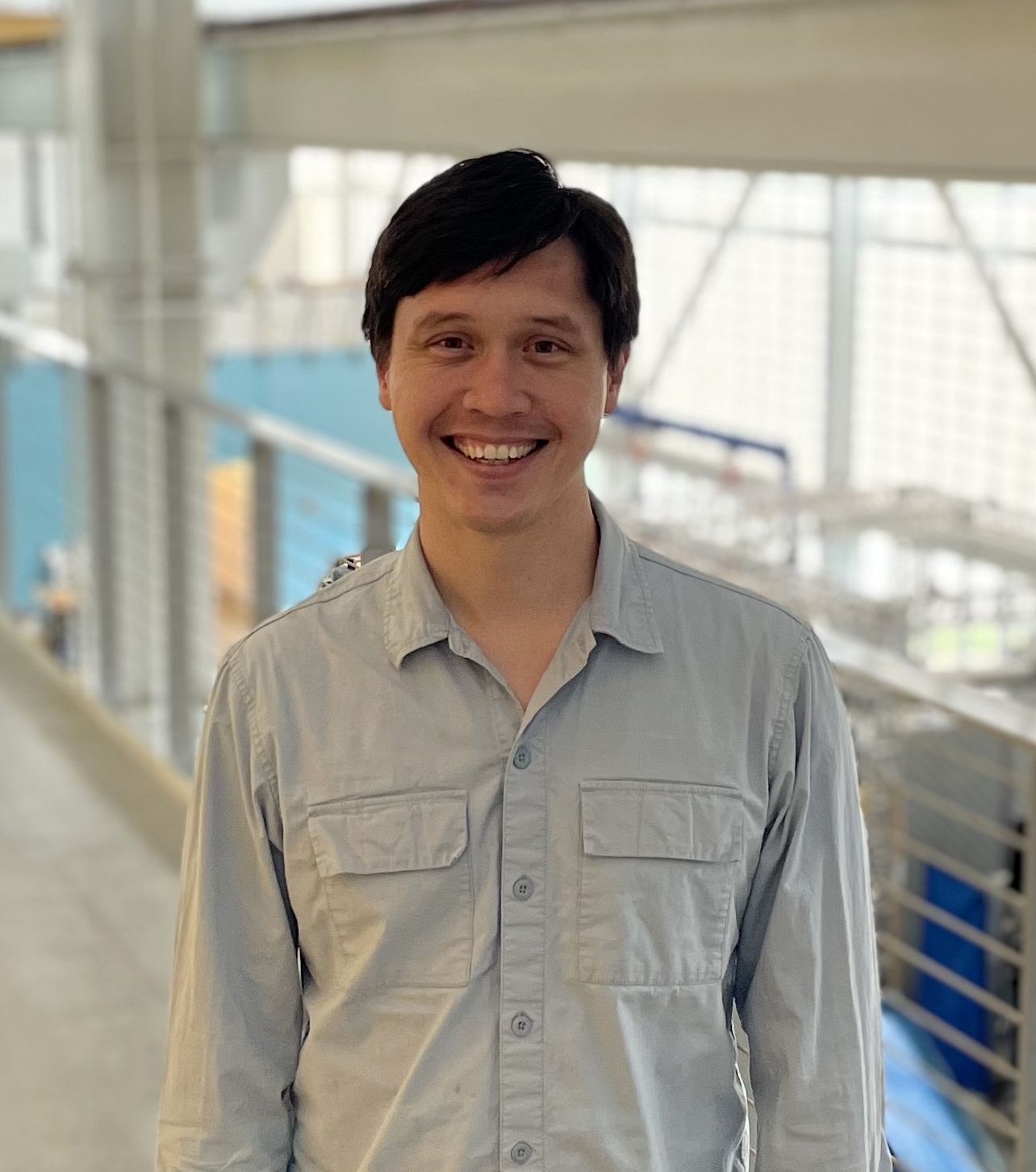
Matthew McDowell joined Georgia Tech in the fall of 2015 as an assistant professor with a joint appointment in the George W. Woodruff School of Mechanical Engineering and the School of Materials Science and Engineering. Prior to this appointment, he was a postdoctoral scholar in the Division of Chemistry and Chemical Engineering at the California Institute of Technology. McDowell received his Ph.D. in 2013 from the Department of Materials Science and Engineering at Stanford University.

McDowell’s research group focuses on understanding how materials for energy and electronic devices change and transform during operation, and how these transformations impact properties. The group uses in situ experimental techniques to probe materials transformations under realistic conditions. The fundamental scientific advances made by the group guide the engineering of materials for breakthrough new devices. Current projects in the group are focused on i) electrode materials for alkali ion batteries, ii) materials for solid-state batteries, iii) interfaces in chalcogenide materials for electronics and catalysis, and iv) new methods for creating nanostructured metals.

Professor, Woodruff School of Mechanical Engineering
Woodruff Faculty Fellow
Director, Georgia Tech Advanced Battery Center
SEI Senior Advisor: Energy Storage
Phone
404.894.8341
Office
MRDC 4408
Additional Research

Batteries; Nanostructured Materials; Composites; Fabrication; Energy Storage; Thermal Systems

Google Scholar
https://scholar.google.com/citations?hl=en&user=VRZVDH8AAAAJ&view_op=list_works&sortby=pubdate
MSE Profile Page
Matthew
McDowell
Show Regular Profile

Tequila A. L. Harris

Tequila A. L. Harris
tequila.harris@me.gatech.edu
Departmental Bio

Tequila A. L. Harris is a Professor in the George W. Woodruff School of Mechanical Engineering, and is the director of the Highly Advanced Roll-to-Roll iManufacturing Systems (HARRiS) group. Her research focuses on investigating the fundamental science associated with manufacture of polymer thin films from fluids (e.g., solutions, dispersions, slurries, etc.) as they are coated onto permeable or impermeable surfaces to make components or devices. She explores the connectivity between thin film functionality, based on their manufacture or structure, and their life expectancy, to elucidate mechanisms by which performance or durability can be predicted. In addition to conducting computational analysis, developing analytical models and running experiments, Harris also develops new manufacturing technologies to fabricate thin films, in wide area or discrete patterns. Target applications are well-suited for a variety of industries including food, energy, electronic, and environmental systems to name a few. In conjunction with her research activities, she is committed to the education, mentoring, and advisement of students towards scholarly achievements. She has published over fifty peer-reviewed articles. Harris has several awards including the National Science Foundation's young investigator CAREER Award and the Lockheed Inspirational Young Faculty Award.

Professor, Woodruff School of Mechanical Engineering
Director, Highly Advanced Roll-to-Roll iManufacturing Systems (HARRiS) group
SEI Lead: Energy & Manufacturing
Phone
404.385.6335
Office
MARC 436
Additional Research

Additive/Advanced Manufacturing; Flexible Electronics; Polymers; micro and nanomechanics; Thin Films; Electronics; Energy Storage; Thermal Systems; Manufacturing and Fluid Mechanics; Polymer processing; mechanical system design; fluid flow; mechanical and physical property characterization of thin film

Highly Advanced Roll-to-Roll iManufacturing Systems (HARRiS) Group
Tequila A. L.
Harris
Show Regular Profile

John Reynolds

John Reynolds
reynolds@chemistry.gatech.edu
Academic Profile

John R. Reynolds is a Professor of Chemistry and Biochemistry, and Materials Science and Engineering at the Georgia Institute of Technology with expertise in polymer chemistry and serves as a member of the Center for Organic Photonics and Electronics (COPE). His research interests have involved electrically conducting and electroactive conjugated polymers for over 30 years with work focused to the development of new polymers by manipulating their fundamental organic structure in order to control their optoelectronic and redox properties. His group has been heavily involved in developing new polyheterocycles, visible and infrared light electrochromism, along with light emission from polymer and composite LEDs (both visible and near-infrared) and light emitting electrochemical cells (LECs). Further work is directed to using organic polymers and oligomers in photovoltaic cells.  Reynolds obtained his M.S. (1982) and Ph.D. (1984) degrees from the University of Massachusetts in Polymer Science and Engineering, he has published over 300 peer-reviewed scientific papers, has 15 patents issued and ~25 patents pending, and served as co-editor of the “Handbook of Conducting Polymers” which was published in 2007.  He was awarded the ACS Award in Applied Polymer Science in 2012.  He serves on the editorial board for the journals ACS Applied Materials and Interfaces, Macromolecular Rapid Communications, Polymers for Advanced Technologies, and the Journal of Macromolecular Science, Chemistry.

Professor, Chemistry and Biochemistry and Materials Science and Engineering
Phone
404.385.4390
Office
MoSE 2120B
Additional Research

Organic and Inorganic Photonics and Electronics; Conducting Polymers; LEDs & OLEDs; Materials Synthesis and Processing; Materials discovery; Chemistry; Polymers; Biomaterials

University, College, and School/Department
Google Scholar
https://scholar.google.com/citations?hl=en&user=QJOkOXUAAAAJ&view_op=list_works&sortby=pubdate
John
Reynolds
Show Regular Profile

George White

George White
george.white@gatech.edu

George will oversee activities designed to facilitate individual faculty members and teams of researchers in attracting extramural research funding, particularly opportunities with a focus or component involving external partnerships. This proactive and strategic role will allow George to assemble teams for creating collaborative research relationships with HBCUs and other MSIs, industry, government agencies, and other external organizations in order to respond to large-scale research opportunities.

Senior Director for Strategic Partnerships
Executive Director, Research Program Administration
Principal Research Engineer
Phone
404.407.6313
Additional Research

Additive/Advanced Manufacturing; Biomaterials; High Performance Computing; Quantum Computing

Research Focus Areas
George
White
Show Regular Profile

David Collard

David Collard
david.collard@cos.gatech.edu
Chemistry Profile Page

The main focus of Collard's research is the molecular self-assembly in polymers which allows for the formation of new supermolecular architectures that take on new functions and promise potential benefits and novel applications. Currently, his group is studying surfactants, spontaneously assembled monolayers, and liquid crystals. Materials under study include conjugated electronically conductive polymers and new functional polyesters. Techniques used to construct and probe the structure of our supramolecular assemblies including: synthesis, electrochemistry, thermal analysis, X-ray diffraction and microscopy.

Professor, School of Chemistry and Biochemistry
Associate Dean, College of Sciences
Phone
404.894.4026
Additional Research

Conducting polymers, diffraction methods, functional co-polymers

Collard Group
David
Collard
M.
Show Regular Profile

David S. Citrin

David S. Citrin
david.citrin@ece.gatech.edu
Website

Professor Citrin earned a B.A. from Williams College (1985) and a M.S. (1987) and a Ph.D. (1991) from the University of Illinois, all in physics, where his dissertation was on the optical properties of semiconductor quantum wires. Subsequently, he was a post-doctoral research fellow at the Max Planck Institute for Solid State Research, Stuttgart, Germany (1992-1993) and Center Fellow at the Center for Ultrafast Optical Science at the University of Michigan (1993-1995). Dr. Citrin was an assistant professor of physics and materials science at Washington State University (1995 to 2001).

Professor Citrin joined the faculty at Georgia Tech in 2001 where his work focuses on terahertz technology and nanotechnology. He is a recipient of a Presidential Early Career Award for Scientists and Engineers and of a Friedrich Bessel Award from the Alexander Von Humboldt Stiftung. In addition, he is Project Coordinator on Nonlinear Optics and Dynamics at Georgia Tech-CNRS UMI 2958 located at Georgia Tech-Lorraine. Professor Citrin’s research in terahertz imaging is featured in the Georgia Tech press release, ”Imaging Technique Unlocks the Secrets of 17th Century Artists"; a list of some media placements from the press release may be found at http://photonics.georgiatech-metz.fr/node/33.

Research interests: 

  • Terahertz nondestructive testing of materials
  • Terahertz characterization of art and cultural heritage
  • Chaos and nonlinear dynamics in external-cavity semiconductor lasers
  • Nanophotonics
  • High-speed electronic, photonic, and optoelectronic devices
  • Nonlinear optical properties of semiconductor materials and devices
Professor
Phone
404.894.2000
Office
MIRC 211
David
Citrin
S.
Show Regular Profile

Shannon Yee

Shannon Yee
shannon.yee@me.gatech.edu
ME Profile Page

Shannon Yee began as an Assistant Professor in the George W. Woodruff School of Mechanical Engineering in January 2014. He completed his Ph.D. at the University of California - Berkeley under the supervision of Prof. Arun Majumdar, Prof. Chris Dames, and Prof. Rachel Segalman. In 2010, he was named the first fellow to the U.S. Dept. of Energy 's Advanced Research Project Agency - Energy (ARPA-E) assisting to form the agency in its inaugural year. In 2008 he was awarded the prestigious Hertz Fellowship to support his graduate studies and research in energy. Yee received his Master 's degree in Nuclear Engineering in 2008 from The Ohio State University where he was a U.S. Dept. of Energy Advanced Fuel Cycle Initiative Fellow. He received his Bachelor 's degree in Mechanical Engineering in 2007, also from The Ohio State University.

Professor, George W. Woodruff School of Mechanical Engineering
Phone
404.385.2176
Office
Love 307
Additional Research

Heat Transfer; Combustion and Energy Systems; Micro and Nano Engineering; Nuclear & Radiological Engineering

Google Scholar
https://scholar.google.com/citations?hl=en&user=GSDT2XYAAAAJ&view_op=list_works&sortby=pubdate
The Scalable Thermal Engineering Lab (STEEL)
Shannon
Yee
Show Regular Profile

Seung Woo Lee

Seung Woo Lee
seung.lee@me.gatech.edu
ME Profile Page

Seung Woo Lee joined the Woodruff School of Mechanical Engineering at the Georgia Institute of Technology as an assistant professor in January of 2013. Lee received his Ph.D. in chemical engineering at MIT, focusing on designing high-energy and high-power density nanostructured electrodes for electrochemical energy storage devices, and synthesizing catalysts for electrochemical energy conversion of small molecules such as methanol oxidation and O2 reduction. He conducted his postdoctoral research in designing electrodes for lithium rechargeable batteries and catalysts for solar energy storage in the Department of Mechanical Engineering and the Department of Chemistry at MIT.

Assistant Professor, Woodruff School of Mechanical Engineering
Director, Energy Storage and Conversion Lab
Phone
404.385.0764
Office
Love 137
Additional Research

Heat Transfer; Micro and Nano Engineering; Energy Conversion; Energy Storage; Batteries; Supercapacitors; Catalysis; Fuel Cells; Self-Assembly; Nanostructured Materials

Google Scholar
https://scholar.google.com/citations?hl=en&user=nGYeKpIAAAAJ&view_op=list_works&sortby=pubdate
Energy Storage and Conversion Lab
Seung Woo
Lee
Show Regular Profile

Paul Kohl

Paul Kohl
paul.kohl@chbe.gatech.edu
ChBE Profile Page

Paul Kohl received a B.S. degree from Bethany College in 1974 and Ph.D. from The University of Texas, both in Chemistry. After graduation, Kohl was employed at AT&T Bell Laboratories in Murray Hill, NJ from 1978 to 1989. During that time, he was involved in the design and processing of electronic packages for Bell system components. He created new chemical processes for silicon, compound semiconductor, and MEMS devices. In 1989, he joined the faculty of the Georgia Institute of Technology in the School of Chemical and Biomolecular Engineering, where he is currently a Regents' Professor and holder of the Thomas L. Gossage/Hercules Inc. Chair. He is the President of The Electrochemical Society and past Editor of Journal of The Electrochemical Society and past founding editor of Electrochemical and Solid-State Letters. Kohl's research interests include the design of new materials, processes, and packages for advanced interconnect for integrated circuits and MEMS devices. He is the past Director of the Semiconductor Research Corporation/DARPA Interconnect Focus Center. The goal of this center was to create new technological solutions for future electronic devices. Current projects include creation of new photosensitive dielectric materials for electronic packaging and the design and fabrication of MEMS packages. He also has programs in new approaches to fuel cells and lithium batteries. The new direct methanol alkaline fuel cells and hybrid alkaline/acid fuel cells have the potential reduced water management and platinum free usage. The integration of high energy density lithium batteries for self-powered integrated circuits and sensors is of interest. Many of these electrochemical devices use ionic liquids as the electrolytes, including the all-sodium battery. Ionic liquids are also being used as the absorber in a new absorption refrigeration cycle. The first ever ionic liquid/fluorocarbon absorption refrigeration cycle has been demonstrated and modeled.

Regents' Professor and Fellow, School of Chemical and Biomolecular Engineering
Thomas L. Gossage Chair, School of Chemical and Biomolecular Engineering
Phone
404.894.2893
Office
B-H 386
Additional Research

Interconnect and Electronic Packaging; MEMS; Electronic Systems, Devices, Components, & Packaging; Fuel Cells; Separation Membranes

The Kohl Group
Paul
Kohl
A.
Show Regular Profile

Chandra Raman

Professor Chandra Raman

The Raman Group has two main thrusts.  The team utilizes sophisticated tools to cool atoms to temperatures less than one millionth of a degree above absolute zero. Using these tools, they explore topics ranging from superfluidity in Bose-Einstein condensates (BECs) to quantum antiferromagnetism in a spinor condensate.  In another effort the team partners with engineers to build cutting edge atomic quantum sensors on-chip that can one day be mass-produced.