Mohan Srinivasarao

Mohan Srinivasarao
mohan@mse.gatech.edu

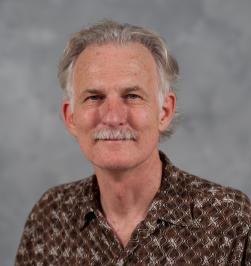
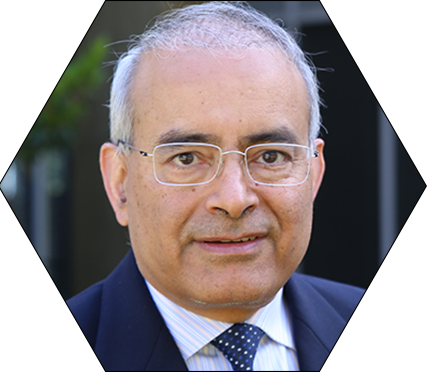
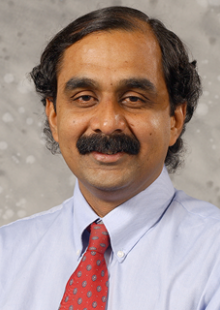
Mohan Srinivasarao is a Professor with the School of Materials Science and Engineering. Srinivasarao received his Ph.D. in Chemistry in 1990 from Carnegie Mellon University, a M.Sc in Applied Chemistry in 1981 from PSG College of Technology (University of Madras, India), and a B.Sc in Applied Science in 1979 from Madurai University, India.

Srinivasarao specializes in physical chemistry of polymers, physics of nematic liquid crystals, optics of liquid crystals, rheology/rheo-optics of polymeric fluids and liquid crystals, polymer/liquid crystal dispersions, various forms of light microscopy including confocal microscopy and photon tunneling microscopy, color science, and nano-optics in the biological world (color of butterfly wings, beetles, moths, and bird feathers).

Srinivasarao is a member os several professional organizations including the American Chemical Society, Materials Research Society, Optical Society of America, Society of Rheology, American Physical Society, and the American Association for the Advancement

Professor, School of Materials Science and Engineering
Phone
404.894.9348
Office
Love 166
Additional Research

Conducting Polymers; Optical Materials; Bio-Inspired Materials; Advanced Characterization; Biomaterials; Nanocellulose Applications; Biocomposites; Polymer & Fiber

Google Scholar
https://scholar.google.com/citations?hl=en&user=etxBTz4AAAAJ&view_op=list_works&sortby=pubdate
MSE Profile Page
Mohan
Srinivasarao
Show Regular Profile

Martha Grover

Martha Grover
martha.grover@chbe.gatech.edu
Grover Group

Grover’s research activities in process systems engineering focus on understanding macromolecular organization and the emergence of biological function. Discrete atoms and molecules interact to form macromolecules and even larger mesoscale assemblies, ultimately yielding macroscopic structures and properties. A quantitative relationship between the nanoscale discrete interactions and the macroscale properties is required to design, optimize, and control such systems; yet in many applications, predictive models do not exist or are computationally intractable.

The Grover group is dedicated to the development of tractable and practical approaches for the engineering of macroscale behavior via explicit consideration of molecular and atomic scale interactions. We focus on applications involving the kinetics of self-assembly, specifically those in which methods from non-equilibrium statistical mechanics do not provide closed form solutions. General approaches employed include stochastic modeling, model reduction, machine learning, experimental design, robust parameter design, and estimation.

Professor, School of Chemical and Biomolecular Engineering
James Harris Faculty Fellow, School of Chemical and Biomolecular Engineering
Member, NSF/NASA Center for Chemical Evolution
Phone
404.894.2878
Office
ES&T 1228
Additional Research

Colloids; Crystallization; Organic and Inorganic Photonics and Electronics; Polymers; Discrete atoms and molecules interact to form macromolecules and even larger mesoscale assemblies, ultIMaTely yielding macroscopic structures and properties. A quantitative relationship between the nanoscale discrete interactions and the macroscale properties is required to design, optimize, and control such systems; yet in many applications, predictive models do not exist or are computationally intractable. The Grover group is dedicated to the development of tractable and practical approaches for the engineering of macroscale behavior via explicit consideration of molecular and atomic scale interactions. We focus on applications involving the kinetics of self-assembly, specific those in which methods from non-equilibrium statistical mechanics do not provide closed form solutions. General approaches employed include stochastic modeling, model reduction, machine learning, experimental design, robust parameter design, estIMaTion, and optimal control, monitoring and control for nuclear waste processing and polymer organic electronics

Google Scholar
https://scholar.google.com/citations?hl=en&user=PgpLoqIAAAAJ&view_op=list_works&sortby=pubdate
ChBE Profile Page
Martha
Grover
A.
Show Regular Profile

Ajeet Rohatgi

Ajeet Rohatgi
ajeet.rohatgi@ece.gatech.edu
ECE Profile Page

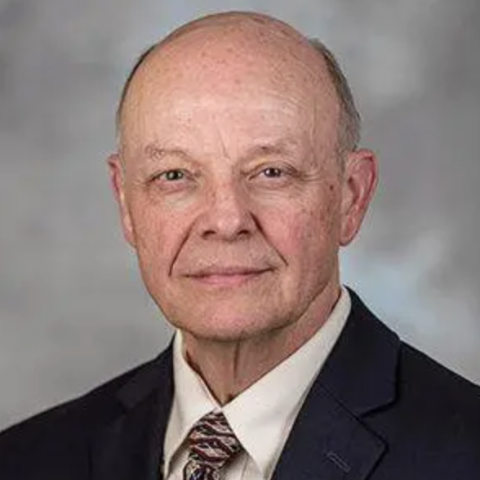
Ajeet Rohatgi received the B.S. (E.E.) degree from Indian Institute of Technology in 1971, the M.S. (Materials Engineering) from Virginia Polytechnic Institute and State University in 1973, and the Ph.D. in Metallurgy and Materials Science from Lehigh University in 1977. He joined the Westinghouse Research and Development Center in Pittsburgh, Pennsylvania in 1977 and became a Westinghouse Fellow while working on the science and technology of photovoltaic and microelectronic devices. Rohatgi joined the ECE faculty at Georgia Tech in 1985 and started a program on photovoltaics, which has become one of the best in the country. He has become an internationally recognized leader in photovoltaics. He is the founding director of the first university-based DOE Center of Excellence in Photovoltaic Research and Education. He is the author of more than 300 publications and holds 10 U.S. patents. Rohatgi has received numerous awards and distinctions from professional societies and Georgia Tech. He is the founder and CTO for Suniva.

Regents Professor, School of Electrical and Computer Engineering
John H. Weitnauer, Jr. Chair, College of Engineering
Georgia Research Alliance Eminent Scholar
Phone
404.894.7692
Office
VL W121
Additional Research

silicon devices; solar cells; dielectrics; Compund Semiconductors; solar energy

Google Scholar
https://scholar.google.com/citations?hl=en&user=qJ98P7EAAAAJ&view_op=list_works&sortby=pubdate
University Center of Excellence for Photovoltaics
Ajeet
Rohatgi
Show Regular Profile

Walter de Heer

Walter de Heer
eheer@physics.gatech.edu
Physics Profile

Walter Alexander “Walt” de Heer is a Dutch physicist and nanoscience researcher known for discoveries in the electronic shell structure of metal clusters, magnetism in transition metal clusters, field emission and ballistic conduction in carbon nanotubes, and graphene-based electronics.

De Heer earned a doctoral degree in Physics from the University of California, Berkeley in 1986 under the supervision of Walter D. Knight. He worked at the École Polytechnique Fédérale de Lausanne in Switzerland from 1987 to 1997, and is currently a Regents' Professor of Physics at the Georgia Institute of Technology. He directs the Epitaxial Graphene Laboratory in the School of Physics and leads the Epitaxial Graphene Interdisciplinary Research Group at the Georgia Tech Materials Research Science and Engineering Center.

Regents' Professor, School of Physics
Phone
(404) 894-7879
Additional Research

Electronics; Carbon Nanotubes; Epitaxial Growth; Graphene; Nanomaterials; quantum materials

University, College, and School/Department
Google Scholar
https://scholar.google.com/citations?hl=en&user=klW4cOMAAAAJ&view_op=list_works&sortby=pubdate
Website Wikipedia Article
Walter
de Heer
Show Regular Profile

Satish Kumar

Satish Kumar
satish.kumar@me.gatech.edu
MSE Profile Page

Satish Kumar is currently an Associate professor in the George W. Woodruff School of Mechanical Engineering at Georgia Tech. He joined Georgia Tech in 2009 as an Assistant Professor. Prior, he worked at IBM Corporation where he was responsible for the thermal management of electronic devices. Kumar received his Ph.D. in Mechanical Engineering and M.S. degree in Electrical and Computer Engineering from Purdue University, West Lafayette in 2007. He received his M.S. degree in Mechanical Engineering from Louisiana State University, Baton Rouge in 2003 and B.Tech. degree in Mechanical Engineering from the Indian Institute of Technology, Guwahati in 2001. His research interests are in electro-thermal transport in carbon nanotube, graphene, and 2D materials based electronic devices, AlGaN/GaN transistors, thermal management, and thermo-electric coolers. He is author or co-author of over 70 journal or conference publications. His contributions to his research field have been recognized by Purdue Research Foundation Fellowship in 2005, 1969 Teaching Fellow from Center for the Enhancement of Teaching and Learning Center at Georgia Tech, 2012 Summer Faculty Fellow from Air Force Research Lab, 2014 Sigma Xi Young Faculty Award, and 2014 DARPA Young Faculty Award.

Professor Emeritus, George W. Woodruff School of Mechanical Engineering
Professor Emeritus, School of Materials Science and Engineering
Phone
404.385.6640
Office
Love 123
Additional Research

Compund SemiconductorsComputational mechanicsCarbon NanotubesBio-Devices

Google Scholar
https://scholar.google.com/citations?hl=en&user=lb7RF0oAAAAJ&view_op=list_works&sortby=pubdate
Satish
Kumar
Show Regular Profile

Rosario Gerhardt

Rosario Gerhardt
rosario.gerhardt@mse.gatech.edu
MSE Profile Page

Rosario A. Gerhardt joined the faculty of Georgia Tech as associate professor in January 1991.  She was promoted to full professor in 2001.  Prior to coming to Georgia Tech she worked as an assistant research professor at the Center for Ceramics Research at Rutgers University from 1986-1990 and as a post-doctoral research associate at Rutgers for two years and at Columbia University in New York City for one year.  She also worked as an ASEE/NASA Faculty Fellow at the NASA Marshall Space Flight Center in Huntsville, AL during summer 1995 and as a visiting professor at the Center for Nanomaterials Science (CNMS) at Oak Ridge National Laboratory in Oak Ridge, TN during the 2007-2008 academic year. She regularly interacts with researchers at various industrial companies and national laboratories. Her research work has been funded by the National Science Foundation, the U.S. Department of Energy, NASA and various industrial companies.

Gerhardt's research focuses on determining structure-property-processing relationships in a wide range of materials. Most recently, her research group has focused on making and characterizing polymer and ceramic composites containing conducting and semiconducting nanofillers and on the synthesis and assembly of nanoparticles into thin films useful for use as transparent electrodes, solar cell components, microwave heatable inserts, conductive paper, etc. Over the years, she has worked with a variety of ceramic materials such as dielectric insulators, ionic conductors and ceramic superconductors in bulk and thin film form, as well as with intrinsic conducting polymers. Her work also extends onto non-electronics related materials such as fiber and particulate reinforced composites and metallic alloys that are used for wear applications and as components in the hot-sections of gas turbine engines. Most of her work has dealt with the electrical and microstructural characterization of materials using impedance and dielectric spectroscopy, resistivity measurements, and structural characterization via microscopic techniques such as optical, SEM, TEM and AFM, and x-ray and neutron scattering methods. More recently, her group has also added various optical spectroscopy techniques to their repertoire of characterization methods (FTIR, UV-Vis and Raman).

Gerhardt is a fellow of the American Ceramic Society (ACeRS) and a member of the Materials Research Society(MRS), the IEEE/Dielectrics Division and Instrument and Measurement Division, the Metallurgical Society(TMS), the American Association for the Advancement of Science (AAAS), the American Society for Non-Destructive Testing (ASNT), the International Microelectronics and Packaging Society(IMAPS) and the Microscopy Society of America(MSA). She is also a member of Sigma Xi, Keramos and Tau Beta Pi. She has been active as an executive officer of the Electronics Division of the American Ceramic Society, having served as Chair of that division during the 2000-2001 year and on other capacities since then. She also serves as the faculty advisor for the Student Chapter of ACeRS and MRS at Georgia Tech and has been co-organizer of numerous symposia both at ACerS, MRS and other societies. She is a member of the National Research Council Associateship Panel Review Program. She is the author or co-author of over 200 refereed publications and has served as research advisor to more than 40 graduate students. Gerhardt and one of her students recently received one of the 2011 ASNT fellowship awards. 

One of Gerhardt’s long term research goals is to establish that electrical measurements can be used as a non-destructive method for microstructural characterization at all length scales. She was the leading organizer of a symposium series on the same subject at the Materials Research Society Meetings during the 1995, 1997 and 2001 Fall Meetings from which three proceedings books were published (MRS Proc. Vols. 411, 500 and 699). In addition, she teaches a graduate course at Georgia Tech (MSE7140) where she covers the theory and applications of impedance spectroscopy from the microstructural point of view.  She is currently writing a textbook on this subject, which is due to be published in 2013.  She is also the editor of a recent book entitled “Properties and Applications of Silicon Carbide” that was published by In-Tech publications in 2011

Professor and Goizueta Foundation Faculty Chair, School of Materials Science and Engineering
Phone
404.894.6886
Office
Love 168
Additional Research

Advanced Characterization; Ceramics; Conducting Polymers; Plasmonics; Nanostructured Materials; Printing Technology; Nanocellulose Applications; Films & Coatings; Biomaterials

Google Scholar
https://scholar.google.com/citations?hl=en&user=J1WD2TwAAAAJ&view_op=list_works&sortby=pubdate
Rosario
Gerhardt
Show Regular Profile

Dennis Hess

Dennis Hess
dennis.hess@chbe.gatech.edu
ChBE Profile Page

Dennis Hess’s research interests are in thin film science and technology, surface and interface modification and characterization, microelectronics processing and electronic materials. His group focuses on the establishment of fundamental structure-property relationships and their connection to chemical process sequences used in the fabrication of novel films, electronic materials, devices, and nanostructures. Control of the surface properties of materials such as dielectrics, semiconductors, metals, and paper or paper board by film deposition or surface modification allows the design of such surfaces for a variety of applications in microelectronics, packaging, sensors, microfluidics, and separation processes.

Professor Emeritus, School of Chemical and Biomolecular Engineering
Phone
(404) 894-5922
Additional Research

Electronics; Thin Films; Surfaces and Interfaces; plasma processing; Papermaking; Coatings & Barriers; Films & Coatings; Biomaterials

University, College, and School/Department
Hess Group
Dennis
Hess
W.
Show Regular Profile

Mark Losego

Mark Losego
losego@gatech.edu
Research Website

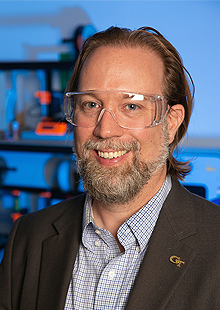
Mark D. Losego is a professor in the School of Materials Science and Engineering at Georgia Tech. The Losego research lab focuses on materials processing to develop novel organic-inorganic hybrid materials and interfaces for microelectronics, sustainable energy devices, national security technologies, and advanced textiles. The Losego Lab combines a unique set of solution and vapor phase processing methods to convert organic polymers into organic-inorganic hybrid materials, including developing the science to scale these processes for manufacturing.  Prof. Losego’s work is primarily experimental, and researchers in his lab gain expertise in the vapor phase processing of materials (atomic layer deposition, physical vapor deposition, vapor phase infiltration, etc.), the design and construction of vacuum equipment, interfacial and surface science, and materials and surface characterization. Depending on the project, Losego Lab researchers explore a variety of properties ranging from electrical to electrochemical to optical to thermal to sorptive to catalytic and more.

Professor, MSE Faculty Fellow, and Dean’s Education Innovation Professor
Phone
404.385.3630
Additional Research

Catalysis; Cellulose Nanomaterials; Coatings; Coatings and Barriers; Corrosion & Materials Engineering; Corrosion and Reliability; Energy; Films and Coatings; Microporous Materials; Nanocellulose Applications; Nanomaterials; New Materials; Polymers; Vapor Phase Processing

Related Site
Mark
Losego
Show Regular Profile

Zhigang Jiang

Zhigang Jiang
zhigang.jiang@physics.gatech.edu
Physics Profile Page

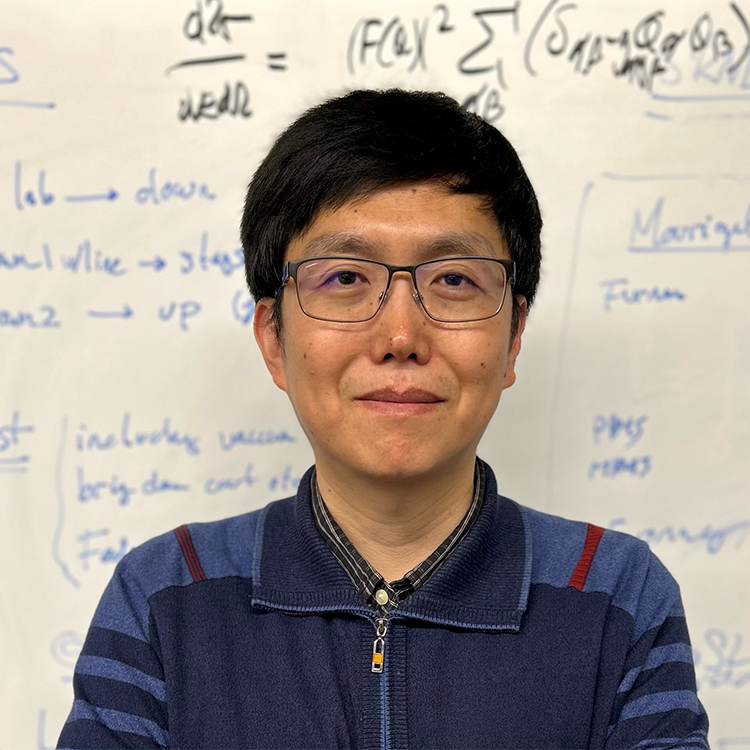
Zhigang Jiang received his B.S. in physics in 1999 from Beijing University and his Ph.D. in 2005 from Northwestern University. He was also a postdoctoral research associate at Columbia University jointly with Princeton University and NHMFL from 2005 till 2008. Jiang is interested in the quantum transport and infrared optical properties of low dimensional condensed matter systems. The current ongoing projects include: (1) infrared spectroscopy study of graphene and topological insulators, (2) spin transport in graphene devices, and (3) Andreev reflection spectroscopy of candidate topological superconductors.

Professor, School of Physics
Initiative Lead, Georgia Tech Quantum Alliance
Phone
404.385.3906
Office
Boggs B-18
Additional Research

quantum materials; nanoelectronics; Graphene; Epitaxial Growth

University, College, and School/Department
Google Scholar
https://scholar.google.com/citations?hl=en&user=6MNSoU8AAAAJ&view_op=list_works&sortby=pubdate
Jiang Group Website
Zhigang
Jiang
Show Regular Profile

Yogendra Joshi

Yogendra Joshi
yogendra.joshi@me.gatech.edu
ME Profile Page

Prior to joining the Georgia Tech faculty in 2001 as a Professor, Yogendra Joshi held academic positions at the University of Maryland, College Park, and the Naval Postgraduate School, Monterey, California. He also worked in the semiconductor assembly industry on process thermal model development. He was named to the McKenney/Shiver Chair in 2004.

John M. McKenney and Warren D. Shiver Distinguished Chair, George W. Woodruff School of Mechanical Engineering
Professor, George W. Woodruff School of Mechanical Engineering and School of Electrical and Computer Engineering
Phone
404.385.2810
Office
Love 338
Additional Research

Thermal SystemsSystem Design & Optimization

Google Scholar
https://scholar.google.com/citations?hl=en&user=YIW1IqcAAAAJ&view_op=list_works&sortby=pubdate
Microelectronics & EmergingTechnologies Thermal Lab
Yogendra
Joshi
Show Regular Profile