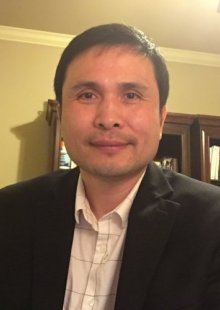
Jianxin (Roger) Jiao

Jianxin (Roger) Jiao
roger.jiao@me.gatech.edu

Jianxin (Roger) Jiao (M’01) received the Bachelor's degree in mechanical engineering from Tianjin University of Science and Technology, Tianjin, China, the Master's degree in manufacturing engineering from Tianjin University, Tianjin, China, and the Ph.D. degree in industrial engineering from Hong Kong University of Science and Technology, Kowloon, Hong Kong, in 1998.,He is currently an Associate Professor of enterprise systems engineering in the G. W. Woodruff School of Mechanical Engineering, Georgia Institute of Technology, Atlanta. He was an Assistant Professor and Associate Professor in the School of Mechanical and Aerospace Engineering, Nanyang Technological University, Singapore. His research interests include engineering design, manufacturing systems and logistics, affective computing, and engineering management.

Associate Professor
Phone
(404) 894-9633
Additional Research
Sustainable Manufacturing
Website
Jianxin (Roger)
Jiao
Show Regular Profile

Billyde Brown

Billyde Brown
billyde.brown@gatech.edu

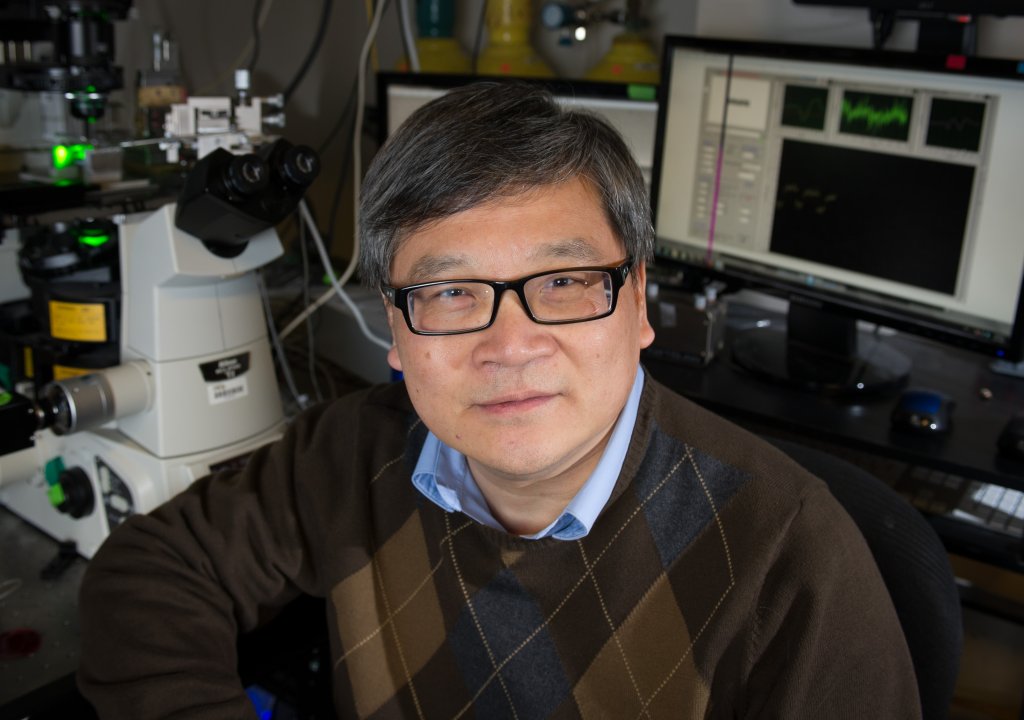
Billyde Brown is a Senior Research Engineer, and External User Outreach Manager, of the Institute for Matter and Systems (IMS) at the Georgia Institute of Technology. Dr. Brown is currently recruiting new external users from industry (startups, SMEs and large corporations) and academia to take advantage of world-class nano-/microfabrication and materials characterization facilities currently available at Georgia Tech's IMS facilities. Please message me if you want to learn more about Georgia Tech fabrication and characterization capabilities or become a new user.

Brown is also an active researcher with over 20 peer-reviewed publications and earned his Ph.D. degree in Electrical Engineering from Duke University. His research expertise areas include thin-film additive manufacturing, nanomaterial synthesis and characterization, electrochemical energy storage and conversion, and biosensors.

External User Outreach Manager
Senior Research Engineer
Additional Research
  • Nanomaterials
  • Sensors
  • Nano-bio interfaces
  • Small Business/Startup Partnerships
LinkedIn Georgia Minority Business Development Agency (MBDA)
Billyde
Brown
Show Regular Profile

Jonathan Colton

Jonathan Colton
jonathan.colton@me.gatech.edu
ME Profile Pag

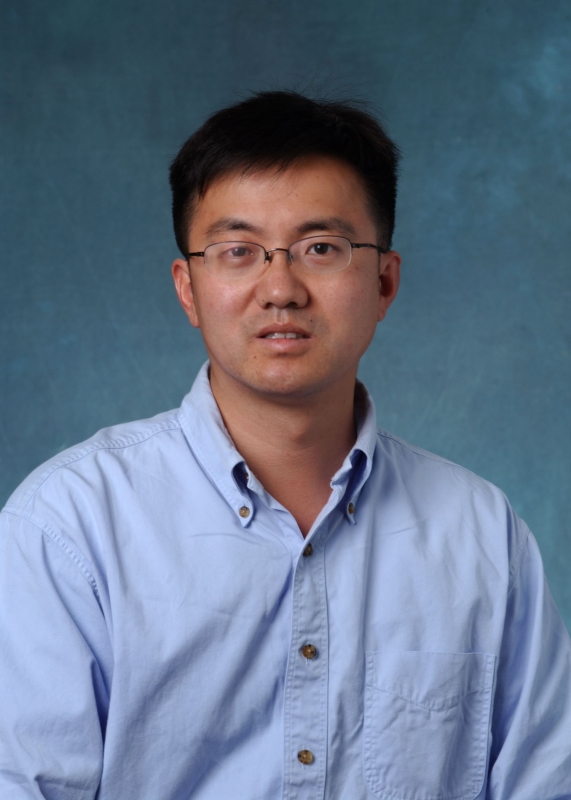
Colton's research interests are in the areas of design and manufacturing, focusing on polymers and polymer composites. Processing techniques, such as micro-molding, injection molding, filament winding, resin transfer molding and the like, are studied and used to fabricate these devices and products, such as smart composite structures.

The design of processing techniques and equipment for metamaterials also are being studied with applications being dielectric materials for electromagnetic applications. Due to the small-scale physics associated with their engineering, nano-scale metamaterials exhibit superior properties and enhanced performance.

Colton has a strong passion for the application of engineering for the common good – "humanitarian design and engineering" and "design that matters," - such as in developing countries and other resource limited environments. To be successful, multidisciplinary teams must work together to produce products that function as well as delight, that exceed customer's expectations, regardless of where the product is used. Along these lines, product design and role that the interactions between engineering and industrial design forms another research interest.

Professor, Woodruff School of Mechanical Engineering
Phone
404.894.7407
Office
Callaway 434
Additional Research

Manufacturing and CAE & Design; Humanitarian Design and Engineering (HumDE); Manufacturing; Production; and Design; Polymer and polymer composites; Biomedical and Medical Devices; Technologies for developing countries and other resource-limited environment; Product development and industrial design; Computer-Aided Engineering; Polymeric composites; Materials Design

Google Scholar
https://scholar.google.com/citations?hl=en&user=nW3g6dMAAAAJ&view_op=list_works&sortby=pubdate
Jonathan
Colton
S.
Show Regular Profile

Donggang Yao

Donggang Yao
yao@gatech.edu
Website

Donggang Yao is a professor in the School of Materials Science and Engineering at Georgia Institute of Technology. He received his Ph.D. and Master’s degrees both from University of Massachusetts Amherst, and his B.S. degree from Shanghai Jiao Tong University, China. He teaches and directs research in the broad area of polymer engineering. His current research focuses on polymer micromolding, fiber spinning, single-polymer composites, constitutive modeling, and process modeling and simulation. He has published over 60 journal papers and 80 conference papers on polymer processing. He was a recipient of NSF Career Award in 2003 for his research on polymer micromolding. He chaired the ASME Composites and Textile Engineering Technical Committee from 2009 to 2011. He currently serves as an associate editor for ASME Journal of Manufacturing Science and Engineering and an editorial board member for Polymer Engineering and Science.

Professor, School of Materials Science and Engineering
Phone
404.894.9076
Office
MRDC, Room 4407
Additional Research

Biocomposites; Biomanufacturing; Biomaterials; Bioprocessing; Bioproducts; Fiber Properties; Forming; Lignin & Hemicellulose; Manufacturing; Mechanics of Materials; Microfluidics; Microporous Materials; New Materials for 3D Printing; Polymer & Fiber; Process Modeling; Non-Newtonian Fluid Mechanics

About his research
Donggang
Yao
Show Regular Profile

David Rosen

David Rosen
david.rosen@me.gatech.edu
Website

When Dr. Rosen arrived at Georgia Tech, he helped form the Systems Realization Laboratory, along with Drs. Janet Allen, Bert Bras, and Farrokh Mistree. In August 1995, Dr. Rosen was appointed the Academic Director of the Georgia Tech Rapid Prototyping and Manufacturing Institute (RPMI), where he has responsibility for developing educational and research programs in rapid prototyping. In 1998, he was appointed the Director of the RPMI. He began at Tech in Fall 1992 as an Assistant Professor.

Professor
Associate Chair for Administration
Phone
404.894.9668
Office
Callaway Manufacturing Research Center, Room 252
Additional Research
Papermaking; Energy & Water; Separation Technologies; New Materials for 3D Printing; Paper & Board Mechanics; Microfluidics; Computer-Aided Engineering; Design and Manufacturing; Virtual and rapid prototyping; intelligent CAD/CAM/CAE
David
Rosen
Show Regular Profile

Sankar Nair

Sankar Nair
sankar.nair@chbe.gatech.edu
ChBE Profile Page
Professor, School of Chemical and Biomolecular Engineering
James F. Simmons Faculty Fellow, School of Chemical and Biomolecular Engineering
Associate Chair for Industry Outreach, School of Chemical and Biomolecular Engineering
Phone
404.894.4826
Office
ES&T 2224
Additional Research

Nanomaterials; Biofuels; Carbon Capture; Catalysis; Separations Technology; Chemical Recovery; Energy & Water

Google Scholar
https://scholar.google.com/citations?hl=en&user=DCrJnGIAAAAJ&view_op=list_works&sortby=pubdate
Nair Research Group
Sankar
Nair
Show Regular Profile

Cheng Zhu

Cheng Zhu
cheng.zhu@bme.gatech.edu
Cellular and Molecular Biomechanics Laboratory

Our interests lie in the adhesion and signaling molecules of the immune system as well as those involved in platelet adhesion and aggregation. We are primarily focused on early cell surface interaction kinetics and their primary signaling responses, as these are critical in determining how a cell will ultimately respond upon contact with another cell. The majority of our work ranges from single molecule interaction studies using atomic force microscopy, molecular dynamics simulations, or biomembrane force probe assays to single cell studies using micropipette adhesions assays, fluorescence imaging techniques, or real-time confocal microscopy. These assays focus on the mechanics and kinetics of receptor-ligand binding and their downstream signaling effects within cells. T cell receptors, selectins, integrins, and their respective ligands are some of the cell surface molecules currently under investigation in our lab. Understanding the initial interaction between molecules such as these and their subsequent early signaling processes is crucial to elucidating the response mechanisms of these physiological systems. Ultimately, our research strives to help better understand the mechanisms within these systems for possible medical applications in autoimmunity, allergy, transplant rejection, and thrombotic disorders. 

Regents' Professor, Coulter Department of Biomedical Engineering
J. Erskine Love Jr. Endowed Chair, Coulter Department of Biomedical Engineering
Executive Director, International Programs, Coulter Department of Biomedical Engineering
Phone
404.894.3269
Office
UAW 1210
Additional Research

BioinformaticsBiomechanicsCell biophysicsElectron MicroscopyMechanobiology

Google Scholar
https://scholar.google.com/citations?hl=en&user=_tPv2wEAAAAJ&view_op=list_works&sortby=pubdate
LinkedIn BME Profile Page
Cheng
Zhu
Show Regular Profile

Paul Russo

Paul Russo
paul.russo@mse.gatech.edu
MSE Profile Page

Paul S. Russo is a Professor of Materials Science and Engineering with a joint appointment in the School of Chemistry and Biochemistry at the Georgia Institute of Technology with expertise in polymer, biopolymer and particle chemistry.

His research interests are rooted in rodlike polymers, such as plant viruses, cellulose derivatives and aromatic backbone materials. Particular emphasis has been paid to molecular transport in complex fluids containing rods and to related measurement methods. Static and dynamic laser light scattering have been joined by fluorescence photobleaching recovery and pulsed field gradient NMR spectroscopy to measure diffusion in dilute and concentrated solutions, gels, and liquid crystals. Dialysis implementations of these techniques have permitted stability studies of the amyloid protein responsible for Alzheimer’s disease. Other materials of interest include organophilic polypeptides, which have been coupled to silica cores to yield hybrid particles that can carry hydrophobic payloads, such as enzymes. The same particles can also form colloidal crystals and linear arrays. Small-angle x-ray scattering plays a role in the characterization of these materials. Hydrophobic proteins are being used to template the synthesis of polymers in new and unusual shapes and to disperse oil following marine spills.

Professor, Materials Science and Engineering and School of Chemistry and Biochemistry
Hightower Chair in Biopolymers
Phone
404.385.2607
Office
MRDC 3508
Additional Research

Biomaterials; Polymers; Colloids; Biomaterials; Nanocellulose Applications; Biocomposites; New Materials; Cellulosic Nanomaterials; Polymer & Fiber

Google Scholar
https://scholar.google.com/citations?hl=en&user=K4CmCWMAAAAJ&view_op=list_works&sortby=pubdate
Russo Lab
Paul
Russo
S.
Show Regular Profile

H. Jerry Qi

H. Jerry Qi
qih@me.gatech.edu
Active Materials & Additive Manufacturing Lab

H. Jerry Qi is a professor and the Woodruff Faculty Fellow in the George W. Woodruff School of Mechanical Engineering at Georgia Institute of Technology. He received his bachelor degrees (dual degree), master and Ph.D. degree from Tsinghua University (Beijing, China) and a ScD degree from Massachusetts Institute of Technology (Boston, MA, USA). After one year postdoc at MIT, he joined University of Colorado Boulder as an assistant professor in 2004, and was promoted to associate professor with tenure in 2010. He joined Georgia Tech in 2014 as an associate professor with tenure and was promoted to a full professor in 2016. Qi is a recipient of NSF CAREER award (2007). He is a member of Board of Directors for the Society of Engineering Science. In 2015, he was elected to an ASME Fellow. The research in Qi's group is in the general area of soft active materials, with a focus on 1) 3D printing of soft active materials to enable 4D printing methods; and 2) recycling of thermosetting polymers. The material systems include: shape memory polymers, light activated polymers, vitrimers. On 3D printing, they developed a wide spectrum of 3D printing capability, including: multIMaTerial inkjet 3D printing, digit light process (DLP) 3D printing, direct ink write (DIW) 3D printing, and fused deposition modeling (FDM) 3D printing. These printers allow his group to develop new 3D printing materials to meet the different challenging requirements. For thermosetting polymer recycling, his group developed methods that allow 100% recycling carbon fiber reinforced composites and electronic packaging materials. Although his group develops different novel applications, his work also relies on the understanding and modeling of material structure and properties under environmental stimuli, such as temperature, light, etc, and during material processing, such as 3D printing. Constitutive model developments are typically based on the observations from experiments and are then integrated with finite element through user material subroutines so that these models can be used to solve complicated 3D multiphysics problems involving nonlinear mechanics. A notable example is their recent pioneer work on 4D printing, where soft active materials is integrated with 3D printing to enable shape change (or time in shape forming process). Recently, his developed a state-of-the-art hybrid 3D printing station, which allows his group to integrate different polymers and conduct inks into one system. Currently, his group is working on using this printing station for a variety of applications, including printed 3D electronics, printed soft robots, etc.

Professor, Woodruff School of Mechanical Engineering
Woodruff Faculty Fellow, Woodruff School of Mechanical Engineering
Phone
404.385.2457
Office
MRDC 4104
Additional Research

Additive/Advanced Manufacturing; micro and nanomechanics; Recycling; Soft Materials; Conducting Polymers


Google Scholar
https://scholar.google.com/citations?hl=en&user=JSjlLTgAAAAJ&view_op=list_works&sortby=pubdate
ME Profile Page
H. Jerry
Qi
Show Regular Profile

Alexander Adams

Alex Adams

Alex Adams’s research focuses on designing, fabricating, and implementing new ubiquitous and wearable sensing systems. In particular, he is interested in how to develop these systems using equity-driven design principles for healthcare. Alex leverages sensing, signal processing, and fabrication techniques to design, deploy, and evaluate novel sensing technologies.