Rosario Gerhardt

Rosario Gerhardt
rosario.gerhardt@mse.gatech.edu
MSE Profile Page

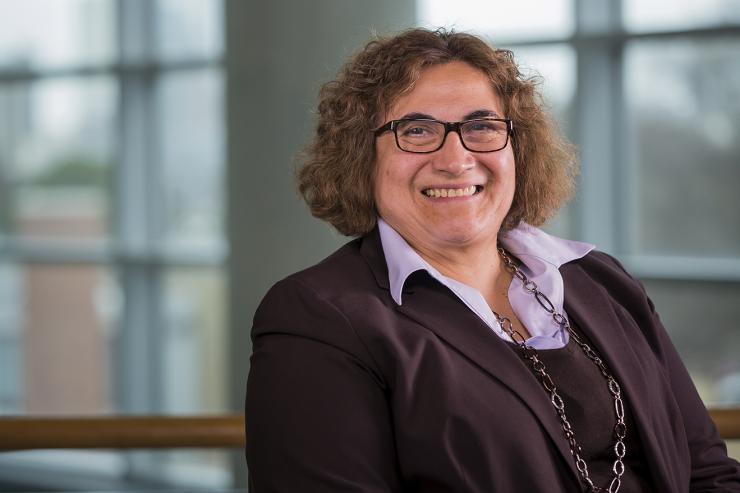
Rosario A. Gerhardt joined the faculty of Georgia Tech as associate professor in January 1991.  She was promoted to full professor in 2001.  Prior to coming to Georgia Tech she worked as an assistant research professor at the Center for Ceramics Research at Rutgers University from 1986-1990 and as a post-doctoral research associate at Rutgers for two years and at Columbia University in New York City for one year.  She also worked as an ASEE/NASA Faculty Fellow at the NASA Marshall Space Flight Center in Huntsville, AL during summer 1995 and as a visiting professor at the Center for Nanomaterials Science (CNMS) at Oak Ridge National Laboratory in Oak Ridge, TN during the 2007-2008 academic year. She regularly interacts with researchers at various industrial companies and national laboratories. Her research work has been funded by the National Science Foundation, the U.S. Department of Energy, NASA and various industrial companies.

Gerhardt's research focuses on determining structure-property-processing relationships in a wide range of materials. Most recently, her research group has focused on making and characterizing polymer and ceramic composites containing conducting and semiconducting nanofillers and on the synthesis and assembly of nanoparticles into thin films useful for use as transparent electrodes, solar cell components, microwave heatable inserts, conductive paper, etc. Over the years, she has worked with a variety of ceramic materials such as dielectric insulators, ionic conductors and ceramic superconductors in bulk and thin film form, as well as with intrinsic conducting polymers. Her work also extends onto non-electronics related materials such as fiber and particulate reinforced composites and metallic alloys that are used for wear applications and as components in the hot-sections of gas turbine engines. Most of her work has dealt with the electrical and microstructural characterization of materials using impedance and dielectric spectroscopy, resistivity measurements, and structural characterization via microscopic techniques such as optical, SEM, TEM and AFM, and x-ray and neutron scattering methods. More recently, her group has also added various optical spectroscopy techniques to their repertoire of characterization methods (FTIR, UV-Vis and Raman).

Gerhardt is a fellow of the American Ceramic Society (ACeRS) and a member of the Materials Research Society(MRS), the IEEE/Dielectrics Division and Instrument and Measurement Division, the Metallurgical Society(TMS), the American Association for the Advancement of Science (AAAS), the American Society for Non-Destructive Testing (ASNT), the International Microelectronics and Packaging Society(IMAPS) and the Microscopy Society of America(MSA). She is also a member of Sigma Xi, Keramos and Tau Beta Pi. She has been active as an executive officer of the Electronics Division of the American Ceramic Society, having served as Chair of that division during the 2000-2001 year and on other capacities since then. She also serves as the faculty advisor for the Student Chapter of ACeRS and MRS at Georgia Tech and has been co-organizer of numerous symposia both at ACerS, MRS and other societies. She is a member of the National Research Council Associateship Panel Review Program. She is the author or co-author of over 200 refereed publications and has served as research advisor to more than 40 graduate students. Gerhardt and one of her students recently received one of the 2011 ASNT fellowship awards. 

One of Gerhardt’s long term research goals is to establish that electrical measurements can be used as a non-destructive method for microstructural characterization at all length scales. She was the leading organizer of a symposium series on the same subject at the Materials Research Society Meetings during the 1995, 1997 and 2001 Fall Meetings from which three proceedings books were published (MRS Proc. Vols. 411, 500 and 699). In addition, she teaches a graduate course at Georgia Tech (MSE7140) where she covers the theory and applications of impedance spectroscopy from the microstructural point of view.  She is currently writing a textbook on this subject, which is due to be published in 2013.  She is also the editor of a recent book entitled “Properties and Applications of Silicon Carbide” that was published by In-Tech publications in 2011

Professor and Goizueta Foundation Faculty Chair, School of Materials Science and Engineering
Phone
404.894.6886
Office
Love 168
Additional Research

Advanced Characterization; Ceramics; Conducting Polymers; Plasmonics; Nanostructured Materials; Printing Technology; Nanocellulose Applications; Films & Coatings; Biomaterials
Google Scholar
https://scholar.google.com/citations?hl=en&user=J1WD2TwAAAAJ&view_op=list_works&sortby=pubdate
Rosario
Gerhardt
Show Regular Profile

Scott Sinquefield

Scott Sinquefield
Scott.Sinquefield@rbi.gatech.edu
Website

Scott Sinquefield completed his Ph.D. in Chemical Engineering in 1998 at Oregon State University. He spent three years working with the Multi-Fuel Combustion Group at the Combustion Research Facility at Sandia National Labs (Livermore); where he performed the experimental portion of his thesis research. He joined the Chemical Recovery group at IPST in 1998 and was lead.engineer in the construction and operation of the Pressurize Entrained Flow Reactor facility. He now leads the research program on black liquor gasification. He has extensive experience in the design and construction of pilot research reactors and control systems. He also has expertise in boiler fire-side fouling and thermodynamic modeling of aqueous electrolyte systems.

Senior Research Engineer
Phone
(404) 385-0241
Additional Research

Gasification; Biofuels; Chemical Recovery; Environmental Processes; Separation Technologies

University, College, and School/Department
Scott
Sinquefield
Show Regular Profile

Preet Singh

Preet Singh
preet.singh@mse.gatech.edu
Corrosion and Materials Lab

Prior to joining MSE in July 2003 Professor Singh was a faculty member in Corrosion and Materials Engineering Group at The Institute of Paper Science and Technology (IPST) since 1996.  While in IPST Singh worked on fundamental as well as applied research projects related to the corrosion problems in the pulp and paper industry. From 1990 to 1996, he was a Senior Research Associate at Case Western Reserve University, Cleveland, Ohio, working on various materials and corrosion related research projects, including damage accumulation in metal matrix composites (MMCs), Environmental sensitive fracture of Al-alloys MMCs, and High temperature oxidation of Nb/Nb5Si3 composites. He received the Alcan International's Fellowship in 1988-90 to work on "Effects of Low Melting Point Impurities on Slow Crack Growth in Al Alloys,"  He has published over 50 papers in reputed scientific journals and conference proceedings. He is active member of NACE, TMS, TAPPI and has co-organized a number of international symposiums.

Reliable performance of the materials is very important for any industrial process and especially for the chemical process industry for the manufacture of a high quality product. Material selection is generally based on the required material properties, low initial capital investment, and minimum maintenance. Changes in the process parameters to improve products can often lead to higher corrosion susceptibilities of the plant materials. Moreover, with increase in capital cost, there is pressure to extend the life of existing plant equipment beyond its original design life. Corrosion and Materials Engineers are also playing a key role in selecting, maintaining, and modifying materials for changing needs for every industry. Corrosion Science and Engineering research includes understanding the basic mechanisms involved in material degradation in given environments and using that knowledge to develop a mitigation strategy against environment-induced failures

Professor, School of Materials Science and Engineering
Associate Chair of Graduate Studies, School of Materials Science and Engineering
Phone
404.894.6641
Office
IPST 246
Additional Research

Composites; fracture and fatigue; stress corrosion; Materials Failure and Reliability; Biofuels; Chemical Recovery; Environmental Processes; Sustainable Manufacturing; Energy & Water; Corrosion & Reliability

Google Scholar
https://scholar.google.com/citations?hl=en&user=AqrDFI8AAAAJ&view_op=list_works&sortby=pubdate
MSE Profile Page
Preet
Singh
Show Regular Profile

Carson Meredith

Carson Meredith headshot photo
carson.meredith@chbe.gatech.edu
ChBE Profile Page

Carson Meredith is Professor and James Preston Harris Faculty Fellow in the School of Chemical & Biomolecular Engineering at Georgia Tech and serves as Executive Director of the Renewable Bioproducts Institute (RBI). 


His research focuses on sustainable materials and bioproducts, with particular emphasis on biomass-derived polymers such as cellulose and chitin nanomaterials. Representing the contributions of students and collaborators, this work addresses critical challenges in packaging, coatings, and recycling, and has been featured in NewsweekNBC Nightly NewsBBC, and NPR. Meredith’s research also includes innovations in polymer films, foams, composites and particle adhesion.


Meredith has published over 140 peer-reviewed articles and book chapters, with more than 7,600 citations. His recent research includes the development of recyclable nanocellulose coatings and water vapor-resistant films using renewable materials. He has received multiple patents and has led over $30 million in federal and industry funded research. 


Meredith has served in leadership roles across campus and nationally. At Georgia Tech, he has led RBI since 2020, one of eleven interdisciplinary research institutes, where he has built a community of over 70 faculty focused on circular materials, bio industrial manufacturing, and low-impact papermaking. He is also a member of advisory boards for the Bioproducts Institute (University of British Columbia) and the DOE Joint Bioenergy Institute (JBEI) and serves on the editorial board of Green Materials


He teaches courses in forest product technology and sustainable materials, and co-founded GT-EQUAL, the first American Chemistry Society Bridge Program in chemical engineering. He also led the development of a graduate certificate in Data Science for the Chemical Industry and created a MOOC on High-Throughput Development of Materials, which has reached over 14,000 learners. 


Meredith earned his Ph.D. in Chemical Engineering from the University of Texas at Austin and his B.Ch.E. from Georgia Tech. 

Shape 

Research 

Meredith’s research centers on sustainable materials and bioproducts, with a focus on: 

  • Cellulose and chitin nanomaterials 

  • Renewable packaging and coatings         

  • Polymer thin films and foams

  • Particle adhesion 

  • Energy efficient drying in natural fiber manufacturing


His work integrates environmental sustainability into materials design and manufacturing, and he collaborates across disciplines to advance scalable climate solutions. 

Shape 

Awards and Distinctions 


Selected Publications 

  • Hickmann, T., Tao, L., Stingelin, N., Meredith, J.C. (2024). Low-water-permeability foils based on bio-renewable cellulose-derivatives. RSC Sustainability, 2, 3451–3455. 

  • Ji, Y., Shen, D.E., Lu, Y., Schueneman, G.T., Shofner, M.L., Meredith, J.C. (2023). Aqueous-based recycling of cellulose nanocrystal / chitin nanowhisker barrier coatings. ACS Sustainable Chemistry and Engineering, 11, 10874–10883. 

  • Shin, D., Choi, W.T., Lin, H., Qu, Z., Breedveld, V., Meredith, J.C. (2019). Humidity-Tolerant Capillary Viscous Adhesion of the Honey Bee Pollen Basket Fluid. Nature Communications, 10, 1379. 

  • Satam, C., Irvin, C.W., Lang, A.W., Jallorina, J.C.R., Shofner, M.L., Reynolds, J.R., Meredith, J.C. (2018). Spray-Coated Multilayer Cellulose Nanocrystal—Chitin Nanofiber Films for Barrier Applications. ACS Sustainable Chemistry and Engineering, 6, 10637–10644. 


A full list of publications is available on Google Scholar. 

Executive Director, Renewable Bioproducts Institute
Professor and James Harris Faculty Fellow, School of Chemical and Biomolecular Engineering
Phone
404.385.2151
Office
ES&T 1212
Additional Research

Catalysis; Cellulosic Nanomaterials; Separation Technologies; Nanocellulose Applications; Aerogels & Hydrogels; Films & Coatings; Coatings & Barriers; Biomaterials

Google Scholar
https://scholar.google.com/citations?hl=en&user=3qOG6PUAAAAJ&view_op=list_works&sortby=pubdate
https://www.linkedin.com/in/carson-meredith-8aa1838/ The Meredith Group Renewable Bioproducts Institute
Carson
Meredith
Show Regular Profile

Dennis Hess

Dennis Hess
dennis.hess@chbe.gatech.edu
ChBE Profile Page

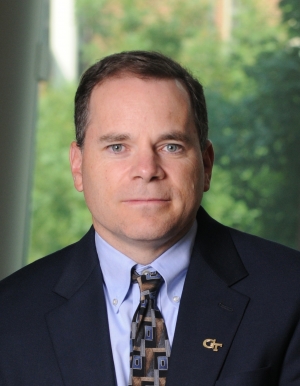
Dennis Hess’s research interests are in thin film science and technology, surface and interface modification and characterization, microelectronics processing and electronic materials. His group focuses on the establishment of fundamental structure-property relationships and their connection to chemical process sequences used in the fabrication of novel films, electronic materials, devices, and nanostructures. Control of the surface properties of materials such as dielectrics, semiconductors, metals, and paper or paper board by film deposition or surface modification allows the design of such surfaces for a variety of applications in microelectronics, packaging, sensors, microfluidics, and separation processes.

Professor Emeritus, School of Chemical and Biomolecular Engineering
Phone
(404) 894-5922
Additional Research

Electronics; Thin Films; Surfaces and Interfaces; plasma processing; Papermaking; Coatings & Barriers; Films & Coatings; Biomaterials
University, College, and School/Department
Hess Group
Dennis
Hess
W.
Show Regular Profile

Mark Losego

Mark Losego
losego@gatech.edu
Research Website

Mark D. Losego is a professor in the School of Materials Science and Engineering at Georgia Tech. The Losego research lab focuses on materials processing to develop novel organic-inorganic hybrid materials and interfaces for microelectronics, sustainable energy devices, national security technologies, and advanced textiles. The Losego Lab combines a unique set of solution and vapor phase processing methods to convert organic polymers into organic-inorganic hybrid materials, including developing the science to scale these processes for manufacturing.  Prof. Losego’s work is primarily experimental, and researchers in his lab gain expertise in the vapor phase processing of materials (atomic layer deposition, physical vapor deposition, vapor phase infiltration, etc.), the design and construction of vacuum equipment, interfacial and surface science, and materials and surface characterization. Depending on the project, Losego Lab researchers explore a variety of properties ranging from electrical to electrochemical to optical to thermal to sorptive to catalytic and more.

Professor, MSE Faculty Fellow, and Dean’s Education Innovation Professor
Phone
404.385.3630
Additional Research

Catalysis; Cellulose Nanomaterials; Coatings; Coatings and Barriers; Corrosion & Materials Engineering; Corrosion and Reliability; Energy; Films and Coatings; Microporous Materials; Nanocellulose Applications; Nanomaterials; New Materials; Polymers; Vapor Phase Processing

Related Site
Mark
Losego
Show Regular Profile

Bernard Kippelen

Bernard Kippelen
bernard.kippelen@ece.gatech.edu
ECE Profile Page

Bernard Kippelen was born and raised in Alsace, France. He studied at the University Louis Pasteur in Strasbourg where he received a Maitrise in Solid-State Physics in 1985, and a Ph.D. in Nonlinear Optics in 1990. From 1990 to 1997 he was Charge de Recherches at the CNRS, France. In 1994, he joined the faculty of the Optical Sciences Center at the University of Arizona. There, he developed a research and teaching program on polymer optics and plastic electronics. In August 2003, Dr. Kippelen joined the School of Electrical and Computer Engineering at the Georgia Institute of Technology where his research ranges from the investigation of fundamental physical processes (nonlinear optical activity, charge transport, light harvesting and emission), to the design, fabrication and testing of light-weight flexible optoelectronic devices and circuits based on nanostructured organic materials. He currently serves as director of the Center for Organic Photonics and Electronics, and as co-president of the Lafayette Institute, a major optoelectronics commercialization initiative that is based at Georgia Tech-Lorraine in Metz, France. He currently holds 25 patents and has co-authored over 270 refereed publications and 14 book chapters. His publications have received over 20,000 citations and his h-index is 73 (Google Scholar). He served as chair and co-chair of numerous international conferences on organic optoelectronic materials and devices and as deputy editor of Energy Express. He was the founding editor of Energy Express.

Professor, School of Electrical and Computer Engineering
Director, Center for Organic Photonics and Electronics
Vice Provost for International Initiatives
Steven A. Denning Chair for Global Engagement
Phone
404.385.5163
Office
MoSE 4239
Additional Research

Photovoltaics; Organic Photonics and Electronics; Integrated Photonics; Flexible Electronics; Optical Materials; Nanocellulose Applications; Films & Coatings; Sustainable Manufacturing; Biomaterials

Google Scholar
https://scholar.google.com/citations?hl=en&user=aAfyDCsAAAAJ&view_op=list_works&sortby=pubdate
Kippelen Group
Bernard
Kippelen
Show Regular Profile

David S. Sholl

David S.  Sholl
david.sholl@chbe.gatech.edu
ChBE Profile Page

Sholl’s research focuses on materials whose macroscopic dynamic and thermodynamic properties are strongly influenced by their atomic-scale structure. Much of this research involves applying computational techniques such as molecular dynamics, Monte Carlo simulations and quantum chemistry methods to materials of interest. Although the group's work is centered on computational methods, it involves extensive collaboration with experimental groups and industrial partners.

Professor, School of Chemical and Biomolecular Engineering
Phone
404.894.2822
Office
ES&T 2214
Additional Research

Metal-Organic Frameworks; Separation Membranes; Separations Technology; Carbon Capture; Hydrogen; SMART Manufacturing; Sustainable Manufacturing; Biochemicals

Google Scholar
https://scholar.google.com/citations?hl=en&user=BR7UkKYAAAAJ&view_op=list_works&sortby=pubdate
Sholl Research Group
David S.
Sholl
Show Regular Profile

Joseph Perry

Joseph Perry
joe.perry@chemistry.gatech.edu
Research Website
Professor, School of Chemistry and Biochemistry
Phone
(404) 385-6046
Additional Research

Analytical Chemistry; Characterization; Energy; Sustainability; Materials Chemistry; Molecular Biophysics; Nanoscience and Technology; Physical Chemistry; Polymer Chemistry; Spectroscopy; Surface and Interfacial Chemistry; Theory and Modeling

http://www.chemistry.gatech.edu/faculty/perry/
Joseph
Perry
Show Regular Profile

Christopher Muhlstein

Christopher Muhlstein
christopher.muhlstein@mse.gatech.edu
MSE Profile Page

Muhlstein has worked as an engineering consultant at Exponent, Inc. (Failure Analysis Associates). In September, 2002 he joined the faculty in the Department of Materials Science and Engineering at The Pennsylvania State University and was tenured and promoted to associate professor in 2008.

 Muhlstein’s research focuses on understanding the mechanisms of fracture and fatigue in bulk and thin film materials. Muhlstein is a member of Alpha Sigma Mu and Keramos honor societies and an NSF CAREER award recipient. In 2007 he was also named the Corning Research Faculty Fellow in Materials Science and Engineering at The Pennsylvania State University. 

Associate Professor, School of Materials Science and Engineering
Associate Director, MPRL
Phone
404.385.1235
Office
Love 274
Additional Research

Fracture and Fatigue; Thin Films; Polymeric Composites; Advanced Characterization; Nanomaterials; Structural Materials; Paper & Board Mechanics; Biomaterials; Nanocellulose Applications; Biocomposites; New Materials

Mechanical Properties Characterization Facility
Christopher
Muhlstein
Show Regular Profile