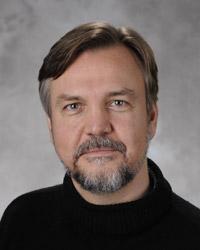
Frank Dellaert

Frank  Dellaert
frank.dellaert@cc.gatech.edu
IC Page

Dr. Dellaert does research in the areas of robotics and computer vision, which present some of the most exciting challenges to anyone interested in artificial intelligence. He is especially keen on Bayesian inference approaches to the difficult inverse problems that keep popping up in these areas. In many cases, exact solutions to these problems are intractable, and as such he is interested in examining whether Monte Carlo (sampling-based) approxIMaTions are applicable in those cases.

Professor; School of Interactive Computing
Robotics Ph.D. Coordinator; College of Computing
Phone
404.385.2923
Office
GVU Center
Additional Research

Advanced sequential Monte Carlo methods; Spatio-Temporal Reconstruction from Images; Simultaneous Localization and Mapping; Robotics; Computer Vision

Google Scholar
https://scholar.google.com/citations?hl=en&user=ZxXBaswAAAAJ&view_op=list_works&sortby=pubdate
Frank
Dellaert
Show Regular Profile
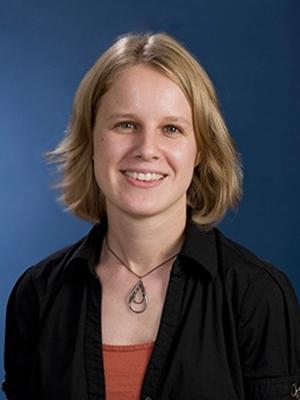
Sonia Chernova

Sonia Chernova
chernova@cc.gatech.edu
Personal Page

I am an Associate Professor in the School of Interactive Computing at Georgia Tech. I received my Ph.D. and B.S. degrees in Computer Science from Carnegie Mellon University, and held positions as a Postdoctoral Associate at the MIT Media Lab and as Assistant Professor at Worcester Polytechnic Institute prior to joining Georgia Tech. I direct the Robot Autonomy and Interactive Learning (RAIL) lab, where we work on developing robots that are able to effectively operate in human environments. My research interests span robotics and artificial intelligence, including semantic reasoning, adjustable autonomy, human computation and cloud robotics. Please visit the RAIL lab website for a description of our latest projects.

Associate Professor; School of Interactive Computing
Director; Robot Autonomy and Interactive Learning (RAIL) Lab
Phone
404.385.4753
Additional Research

Robotics; Artificial Intelligence; Semantic Reasoning; Adjustable Autonomy; Human Computation and Cloud Robotics.

Google Scholar
https://scholar.google.com/citations?hl=en&user=EYo_WkEAAAAJ&view_op=list_works&sortby=pubdate
RAIL Lab
Sonia
Chernova
Show Regular Profile

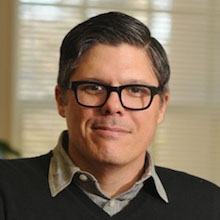
Carl DiSalvo

Carl DiSalvo
carl.disalvo@lmc.gatech.edu
Website

Carl DiSalvo is an Associate Professor in the Digital Media Program in the School of Literature, Media, and Communication at the Georgia Institute of Technology. At Georgia Tech he directs the Public Design Workshop: a design research studio that explores socially engaged design and civic media. 

DiSalvo is also co-director of the Digital Interdisciplinary Liberal Arts Center and its Digital Civics initiative, funded by the Mellon Foundation, and he leads the Serve-Learn-Sustain Fellows program, which brings together faculty, staff, students, and community partners to explore pressing social research themes (the 2016-2017 themes are Smart Cities and Food, Energy, Water, Systems). He has a courtesy appointment in the School of Interactive Computing and is an affiliate of the GVU Center and the Center for Urban Innovation.  DiSalvo also coordinates the Digital Media track of the interdisciplinary M.S. in Human-Computer Interaction. 

DiSalvo’s scholarship draws together theories and methods from design research and design studies, the social sciences, and the humanities, to analyze the social and political qualities of design, and to prototype experimental systems and services. Current research domains include civics, smart cities, the Internet of Things, food systems, and environmental monitoring. Across these domains, DiSalvo is interested in how practices of participatory and public design work to articulate issues and provide resources for new forms of collective action.  

Areas of Expertise:

  • Civic Media
  • Design
  • Design Studies
  • Digital Civics
  • Food Systems
  • Public And Civic IoT
  • Smart Cities
Associate Professor, School of Literature, Media, and Communication
Director, Public Design Workshop
Office
TSRB 328
Additional Research

Design; Sustainability and Design; Design and the Humanities; New Media Art/Art and Technology; Public Enagagement with Technology; Participatory Media/Participatory Culture; Design and Culture/Society

Google Scholar
https://scholar.google.com/citations?hl=en&user=YR1EmaAAAAAJ&view_op=list_works&sortby=pubdate
Public Design Workshop
Carl
DiSalvo
Show Regular Profile

Jaydev Desai

Jaydev Desai
jaydev@gatech.edu
Website

Jaydev P. Desai, Ph.D, is currently a Professor and BME Distinguished Faculty Fellow in the Wallace H. Coulter Department of Biomedical Engineering at Georgia Tech. Prior to joining Georgia Tech in August 2016, he was a Professor in the Department of Mechanical Engineering at the University of Maryland, College Park (UMCP). He completed his undergraduate studies from the Indian Institute of Technology, Bombay, India, in 1993. He received his M.A. in Mathematics in 1997, M.S. and Ph.D. in Mechanical Engineering and Applied Mechanics in 1995 and 1998 respectively, all from the University of Pennsylvania. He was also a Post-Doctoral Fellow in the Division of Engineering and Applied Sciences at Harvard University. He is a recipient of several NIH R01 grants, NSF CAREER award, and was also the lead inventor on the "Outstanding Invention of 2007 in Physical Science Category" at the University of Maryland, College Park. He is also the recipient of the Ralph R. Teetor Educational Award. In 2011, he was an invited speaker at the National Academy of Sciences "Distinctive Voices" seminar series on the topic of "Robot-Assisted Neurosurgery" at the Beckman Center. He was also invited to attend the National Academy of Engineering's 2011 U.S. Frontiers of Engineering Symposium. He has over 150 publications, is the founding Editor-in-Chief of the Journal of Medical Robotics Research, and Editor-in-Chief of the Encyclopedia of Medical Robotics (currently in preparation). His research interests are primarily in the area of image-guided surgical robotics, rehabilitation robotics, cancer diagnosis at the micro-scale, and rehabilitation robotics. He is a Fellow of the ASME and AIMBE.

Professor and Distinguished Faculty Fellow, Wallace H. Coulter Department of Biomedical Engineering
Associate Director, Institute for Robotics and Intelligent Machines
Director, Georgia Center for Medical Robotics
Phone
404.385.5381
Office
UA Whitaker Room 3112
Additional Research

Image-guided surgical robotics, Rehabilitation robotics; Cancer diagnosis at the micro-scale.

Google Scholar
https://scholar.google.com/citations?hl=en&user=hpbQN-AAAAAJ&view_op=list_works&sortby=pubdate
Related Site
Jaydev
Desai
Show Regular Profile

W. Hong Yeo

W. Hong Yeo
woonhong.yeo@me.gatech.edu
ME Profile Page

Dr. Yeo holds the titles of G.P. "Bud" Peterson and Valerie H. Peterson Endowed Professor, as well as Harris Saunders Jr. Endowed Professor, in the Woodruff School of Mechanical Engineering and the Coulter Department of Biomedical Engineering at Georgia Tech. He is also the director of the Wearable Intelligent Systems and Healthcare Center (WISH Center) and the KIAT-Georgia Tech Semiconductor Electronics Center (K-GTSEC). Dr. Yeo's research focuses on understanding the fundamentals of soft materials, deformable mechanics, interfacial physics, manufacturing, and the integration of hard and soft materials for the development of biomedical systems. He earned his Ph.D. in mechanical engineering and genome sciences from the University of Washington in Seattle and subsequently worked as a postdoctoral research fellow at the University of Illinois at Urbana-Champaign. With over 180 peer-reviewed publications, Dr. Yeo has contributed to many prestigious journals, including Nature Materials, Nature Machine Intelligence, Nature Communications, and Science Advances. He is an IEEE Senior Member and has received numerous awards, including the Visiting Professorship from the Institute Jean Lamour at the Université de Lorraine in France, the Lucy G. Moses Lectureship Award at the Mount Sinai School of Medicine, the NIH Trailblazer Young Investigator Award, the IEEE Outstanding Engineer Award, the Emory School of Medicine Research Award, the Imlay Innovation Award, the American Heart Association Innovative Project Award, the Sensors Young Investigator Award, the Med-X Young Investigator Award, and the Outstanding Service Award from the Korea Institute for Advancement of Technology, as well as the Outstanding Yonsei Scholar Award. Dr. Yeo is also the founder of two startup companies: Huxley Medical, Inc. and WisMedical, Inc.

Professor, Woodruff School of Mechanical Engineering
Faculty, Wallace H. Coulter Department of Biomedical Engineering
Director, WISH Center
Phone
404.894.9425
Office
Marcus Nano 4133
Additional Research

Human-machine interface; hybrid materials; bio-MEMS; Soft robotics. Flexible Electronics; Human-machine interface; hybrid materials; Electronic Systems, Devices, Components, & Packaging; bio-MEMS; Soft robotics. Yeo's research in the field of biomedical science and bioengineering focuses on the fundamental and applied aspects of biomolecular interactions, soft materials, and nano-microfabrication for the development of nano-biosensors and soft bioelectronics.

Google Scholar
https://scholar.google.com/citations?hl=en&user=ryhsv18AAAAJ&view_op=list_works&sortby=pubdate
Bio-Interfaced Translational Nanoengineering Group Wearable Intelligent Systems and Healthcare Center (WISH Center)
W. Hong
Yeo
Show Regular Profile

Amirali Aghazadeh

Amirali Aghazadeh
aaghazadeh3@gatech.edu
Profile Page

Amirali Aghazadeh is an Assistant Professor in the School of Electrical and Computer Engineering and also program faculty of Machine Learning, Bioinformatics, and Bioengineering Ph.D. programs. He has affiliations with the Institute for Data Engineering and Science (IDEAS) and Institute for Bioengineering and Biosciences. Before joining Georgia Tech, Aghazaeh was a postdoc at Stanford and UC Berkeley and completed his Ph.D. at Rice University. His research focuses on developing machine learning and deep learning solutions for protein and small molecular design and engineering.
 

Assistant Professor
Phone
713-257-5758
Office
CODA S1209
Google Scholar
https://scholar.google.com/citations?hl=en&user=87wBxzUAAAAJ&view_op=list_works&sortby=pubdate
Amirali
Aghazadeh
Show Regular Profile

Alexander T. Adams

Alexander Adams
aadams322@gatech.edu
https://www.uncommonsenselabs.com

Alex Adams’s research focuses on designing, fabricating, and implementing new ubiquitous and wearable sensing systems. In particular, he is interested in how to develop these systems using equity-driven design principles for healthcare. Alex leverages sensing, signal processing, and fabrication techniques to design, deploy, and evaluate novel sensing technologies.

Originally a musician, Alex became fascinated by how he could capture and manipulate sounds through analog hardware and digital signal processing, which led him back to his hometown (Concord, NC). Alex completed his BS at the University of North Carolina at Charlotte in 2014 and his Ph.D. at Cornell University in 2021 (advised by Professor Tanzeem Choudhury). Alex then became the resident Research Scientist for the Precision Behavioral Health Initiative at Cornell Tech (NYC) until the fall of 2022, when he joined the School of Interactive Computing at the Georgia Institute of Technology. Currently, his research focuses on the equity-driven design and the development of multi-modal sensing systems to simultaneously assess mental and physical health to enable a new class of mobile health technologies.

Assistant Professor
Office
237 TSRB
Google Scholar
https://scholar.google.com/citations?hl=en&user=assJWZYAAAAJ&view_op=list_works&sortby=pubdate
Alexander
Adams
T.
Show Regular Profile

Alex Abramson

Alex Abramson
aabramson6@gatech.edu
Abramson Lab

Alex Abramson is an assistant professor in the School of Chemical and Biomolecular Engineering at Georgia Tech. His research, which focuses on drug delivery and bioelectronic therapeutics, has been featured in news outlets such as The New York Times, NPR, and Wired. Abramson has received several recognitions for scientific innovation, including being named a member of the Forbes 30 Under 30 Science List and the MIT Technology Review Innovators Under 35 List. He is passionate about translating scientific endeavors from bench to bedside. Large pharmaceutical companies have exclusively licensed a portfolio of his patents to bring into clinical trials, and Abramson serves as a scientific advisor overseeing their commercialization. In addition to his scientific endeavors, Abramson plays an active role in his community by leading diversity and inclusion efforts on campus and volunteering as a STEM tutor to local students.

Abramson received a B.S. in chemical and biomolecular engineering from Johns Hopkins University and a Ph.D. in chemical engineering from MIT as an NSF Graduate Research Fellow under the direction of Professors Robert Langer and Giovanni Traverso. He conducted postdoctoral work at Stanford University as an NIH fellow with Professors Zhenan Bao and the late Sanjiv S. Gambhir.

The Abramson Lab develops ingestible, implantable, and wearable robotic therapeutic devices that solve key healthcare problems and provide measurable therapeutic outcomes. Our translationally focused research spans a multitude of areas, including (1) drug delivery devices for optimal drug adherence, (2) soft materials for bioelectronic sensors and therapeutics, and (3) preclinical drug screening technologies.

Assistant Professor, School of Chemical and Biomolecular Engineering
Office
MoSE 4120B
Additional Research
  • Biosensors
Google Scholar
https://scholar.google.com/citations?user=9-E5owYAAAAJ
ChBE Profile Page
Alex
Abramson
Show Regular Profile

Jacob Abernethy

Jacob Abernethy
prof@gatech.edu
Website

Jacob Abernethy is an Associate Professor in the College of Computing at Georgia Tech. He started his faculty career in the Department of Electrical Engineering and Computer Science at the University of Michigan. He completed his Ph.D. in Computer Science at the University of California at Berkeley, and then spent two years as a Simons postdoctoral fellow at the CIS department at UPenn. Abernethy's primary interest is in Machine Learning, with a particular focus in sequential decision making, online learning, online algorithms and adversarial learning models. He did his Master's degree at TTI-C, and his Bachelor's Degree at MIT.

Director for Student Engagement, IDEaS
Jacob
Abernethy
Show Regular Profile

Simon Zhang

Simon Zhang
simon.zhang@gatech.edu

Simon Zhang is a research scientist in the Institute for People and Technology. Zhang graduated with a degree in Industrial Design at Georgia Tech in 2024. As a frontend engineer and UX designer, Zhang currently supports AI-CARING (AI Institute for Collaborative Assistance and Responsive Interaction for Networked Groups) and GT Research Connect, a career platform to connect research faculty with funding. They focus on building interfaces gounded in people's needs and crafting robust modern web applications. Outside of work, their interests lie in color systems, typography, and Asian American studies.

Research Scientist
University, College, and School/Department
Simon
Zhang
Show Regular Profile