Mariel Borowitz

Mariel Borowitz
mariel.borowitz@inta.gatech.edu

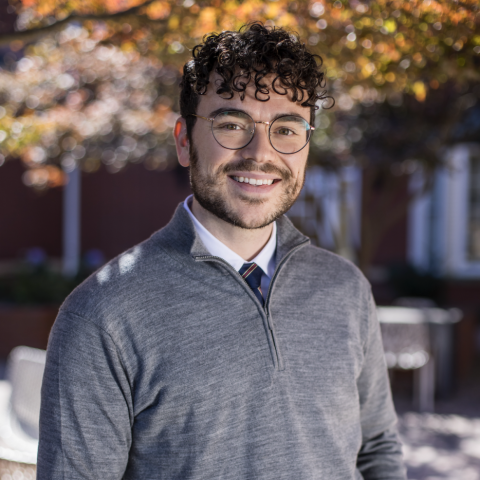
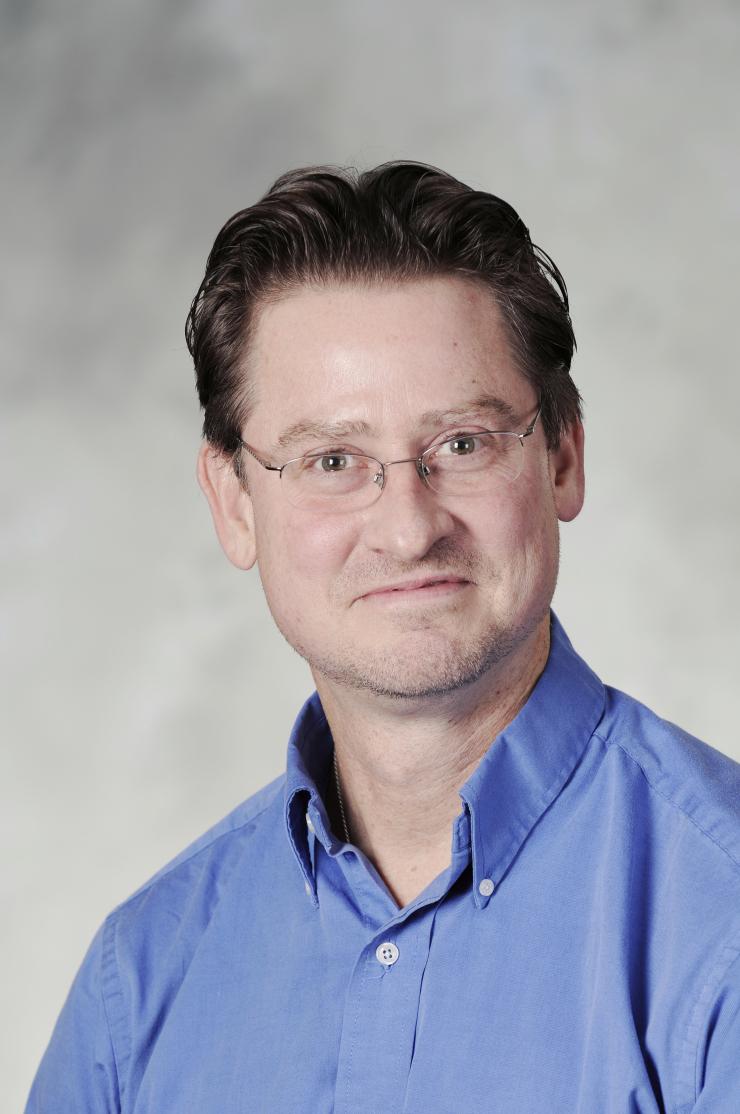
Mariel Borowitz is an associate professor in the Sam Nunn School of International Affairs at the Georgia Institute of Technology, director of the Georgia Tech Center for Space Policy and International Relations, and head of the Nunn School Program on International Affairs, Science, and Technology. Her research deals with international space policy issues. She has published on issues of space sustainability, space security, and development and exploration of the Moon. Her work has also covered developments in the Earth observation and remote sensing sector. Her book, Open Space: The Global Effort for Open Access to Environmental Satellite Data, published by MIT Press, examines trends in the development of data sharing policies governing Earth observing satellites, as well as interactions with the growing commercial remote sensing sector. Her work has been published in ScienceStrategic Studies QuarterlySpace PolicyAstropolitics, and New Space. Her research has been supported by grants from the National Science Foundation, the U.S. Department of Defense, and the National Aeronautics and Space Administration.

Borowitz is also currently detailed to the U.S. Office of Space Commerce in a half-time capacity as the director of International Space Situational Awareness (SSA) Engagement. In this role, she focuses on the development and implementation of an approach to international coordination on space situational awareness and space traffic coordination. She also works directly with the team developing the Traffic Coordination System for Space (TraCSS), which will provide space safety services to spacecraft operators around the world. Borowitz previously completed a detail as a policy analyst for the Science Mission Directorate at NASA Headquarters in Washington, D.C. from 2016 to 2018. In 2022, she testified to the U.S. House of Representatives Subcommittee on Space and Aeronautics in a hearing titled, "Space Situational Awareness: Guiding the Transition to a Civil Capability."

Borowitz earned a Ph.D. in public policy at the University of Maryland and a Masters degree in international science and technology policy from the George Washington University. She has a Bachelor of Science degree in aerospace engineering from the Massachusetts Institute of Technology.

Associate Professor
Director of the Georgia Tech Center for Space Policy and International Relations
Head of the Nunn School Program on International Affairs, Science, and Technology
Phone
404.385.1494
IRI And Role
Mariel
Borowitz
Show Regular Profile

Meisha Shofner

Meisha Shofner
meisha.shofner@mse.gatech.edu
Shofner Lab

Meisha L. Shofner is a professor in the School of Materials Science and Engineering at Georgia Institute of Technology, joining the faculty following post-doctoral training at Rensselaer Polytechnic Institute. She received her B.S. in Mechanical Engineering from The University of Texas at Austin and her Ph.D. in Materials Science from Rice University. Prior to beginning graduate school, she was employed as a design engineer at FMC in the Subsea Engineering Division, working at two plant locations (Houston, Texas and the Republic of Singapore), and she is a registered Professional Engineer in Georgia.

Shofner’s research area is processing-structure-property relationships of polymers and composites. Specifically, she designs processing strategies to attain hierarchical structures in these materials to improve properties and has discovered scalable processing methods to produce auxetic structures and tensegrity-inspired structures. Additionally, she works with bioderived materials to produce composites with reduced environmental impact.  

Professor, School of Materials Science and Engineering
Phone
404.385.7216
Office
MRDC 4409
Additional Research

Biomolecular-Solids; Biomaterials; Composites; Polymers; Nanomaterials; Biofuels; Structure-property relationships in polymer nanocomposite materials; producing structural hierarchy in these materials for structural and functional applications.

Google Scholar
https://scholar.google.com/citations?hl=en&user=BrXwtO4AAAAJ&view_op=list_works&sortby=pubdate
MSE Profile Page
Meisha
Shofner
L.
Show Regular Profile

Jonathan Goldman

jongoldman@gatech.edu

Jonathan Goldman is the director of Quadrant-i (Q-i) in the Office of Commercialization. Quadrant-i supports faculty, researchers, and students in translating research into startups. Under Goldman's leadership, Quadrant-i will offer a comprehensive suite of programs, resources, and services to enhance the commercialization journey for Georgia Tech’s innovations. His leadership will focus on fostering a collaborative environment that encourages innovation and accelerates the transition from idea to impact.

A seasoned entrepreneur and commercialization expert, Goldman transitioned to Quadrant-i after a significant tenure with VentureLab, another key commercialization unit at Georgia Tech. During his initial years at VentureLab from 2002 to 2007, Goldman assisted in developing more than 10 companies that collectively attracted $300 million in funding. He was instrumental in forming the solar firm Suniva, later serving as its director of business development. After returning to VentureLab, he continued to foster entrepreneurial success among Georgia Tech researchers. Now at Quadrant-i, he is committed to advancing the Institute’s mission by transforming groundbreaking research into commercially successful enterprises. 

Quadrant-i
Director
Office
of Commercialization
Jonathan
Goldman
Show Regular Profile

Stephen E. Ralph

Stephen E. Ralph
stephen.ralph@ece.gatech.edu
Georgia Electronic Design Center

Stephen E. Ralph is a Professor with the School of Electrical and Computer Engineering at Georgia Tech. He received the BEE degree in Electrical Engineering with highest honors from the Georgia Institute of Technology in 1980. He received a Ph.D. in Electrical Engineering from Cornell University in 1988 for his work on highly nonequilibrium carrier transport in semiconductor devices. He is currently the director of the Georgia Electronic Design Center, a cross-disciplinary electronics and photonics research center focused on the synergistic development of high-speed electronic components and signal processing to enable revolutionary system performance. He is also the founder and director of the new Terabit Optical Networking Consortium, an industry led communications and information technology consortium. Prior to Georgia Tech he held a postdoctoral position at AT&T Bell Laboratories and was a visiting scientist with the Optical Sciences Laboratory at the IBM T. J. Watson research center. He has widely published in peer-reviewed journals and conferences and holds more than 10 patents in the fields of optical communications, optical devices and signal processing. His current research focuses on high-speed optical communications systems including modulation formats, coherent receivers, microwave photonics, integrated photonics and signal processing. Ralph is an Associate Editor of the IEEE Transactions on Electronic Devices. He is a Fellow of the Optical Society (OSA).

Professor, School of Electrical and Computer Engineering
Director, Georgia Electronic Design Center
Glen Robinson Chair in Electro-Optics, School of Electrical and Computer Engineering
Phone
404.894.5268
Office
TSRB 505
Additional Research

Integrated photonicsMachine learning and signal processingPhotonics in aerospace applicationsUltra high capacity optical communication systemsSimulation and modeling of communication systems

Google Scholar
https://scholar.google.com/citations?hl=en&user=ufG_N44AAAAJ&view_op=list_works&sortby=pubdate
LinkedIn ECE Profile Page
Stephen
Ralph
E.
Show Regular Profile

Amanda Stockton

Amanda Stockton
astockto@gatech.edu
https://sites.gatech.edu/stocktonlab/

Education
B.S., Chemistry, Massachusetts Institute of Technology, 2004; B.S., Aerospace Engineering, Massachusetts Institute of Technology, 2004; M.A., Chemistry, Brown University, 2006; Ph.D., Chemistry, University of California Berkeley, 2010

Research
Dr. Stockton joined the School of Chemistry and Biochemistry at the Georgia Institute of Technology in January 2015. Her research plans include (1) instrument development for in situ organic analysis in the search for extraterrestrial life, (2) microfluidic approaches to experimentally evaluating hypotheses on the origin of biomolecules and the emergence of life, and (3) terrestrial applications of these technologies for environmental analysis and point-of-care diagnostics.

Associate Professor
Phone
(404) 894-4090
Office
MoSE 1100K
Google Scholar
https://scholar.google.com/citations?user=CQ7x2L4AAAAJ&hl=en
Amanda
Stockton
Show Regular Profile

Christopher E. Carr

Christopher E. Carr
cecarr@gatech.edu
Lab Website

Christopher E. Carr is an engineer/scientist with training in aero/astro, electrical engineering, medical physics, and molecular biology. At Georgia Tech he is an Assistant Professor in the Daniel Guggenheim School of Aerospace Engineering with a secondary appointment in the School of Earth and Atmospheric Sciences. He is a member of the Space Systems Design Lab (SSDL) and runs the Planetary eXploration Lab (PXL). He serves as the Principal Investigator (PI) or Science PI for several life detection instrument and/or astrobiology/space biology projects, and is broadly interested in searching for and expanding the presence of life beyond Earth while enabling a sustainable human future. He previously served as a Research Scientist at MIT in the Department of Earth, Atmospheric and Planetary Sciences and a Research Fellow at the Massachusetts General Hospital in the Department of Molecular Biology. He serves as a Scott M. Johnson Fellow in the U.S. Japan Leadership Program.

Assistant Professor
School of Aerospace Engineering
School of Earth and Atmospheric Sciences
Phone
617-216-5012
Office
ESM 107B
Christopher E.
Carr
E.
Show Regular Profile

Nian Liu

Nian Liu
nliu82@mail.gatech.edu
Website

Nian Liu began as an Assistant Professor at Georgia Institute of Technology, School of Chemical and Biomolecular Engineering in January 2017. He received his B.S. in 2009 from Fudan University (China), and Ph.D. in 2014 from Stanford University, where he worked with Prof. Yi Cui on the structure design for Si anodes for high-energy Li-ion batteries. In 2014-2016, he worked with Prof. Steven Chu at Stanford University as a postdoc, where he developed in situ optical microscopy to probe beam-sensitive battery reactions. Dr. Liu 's lab at Georgia Tech is broadly interested in the combination of nanomaterials, electrochemistry, and light microscopy for understanding and addressing the global energy challenges. Dr. Liu is the recipient of the Electrochemical Society (ECS) Daniel Cubicciotti Award (2014) and American Chemical Society (ACS) Division of Inorganic Chemistry Young Investigator Award (2015).

Assistant Professor, School of Chemical and Biomolecular Engineering
Phone
404-894-5103
Office
ES&T 1230
Additional Research

Electronic Systems; Packaging and Components; Nanostructures & Materials; Optoelectronics Photonics & Phononics; Semiconductors; Materials & Processes

Google Scholar
https://scholar.google.com/citations?user=nvMAHY8AAAAJ&hl=en
LinkedIn Related Site
Nian
Liu
Show Regular Profile

Frank Rosenzweig

Frank Rosenzweig
frank.rosenzweig@biology.gatech.edu
Website

Frank Rosenzweig is a Professor in School of Biological Sciences. He holds Bachelors degrees in Comparative Literature and Zoology from University of Tennessee-Knoxville, and a PhD in Biology at University of Pennsylvania. He carried out postdoctoral studies at the University of Michigan. He was a professor at University of Idaho, University of Florida, and University of Montana before joining the Georgia Tech faculty in 2016. He served as the Director of the NASA Astrobiology Institute funded center “Reliving the Past” from 2015 to 2019.  His research group studies the ecological and evolutionary forces that produce and preserve genetic variation using experimental evolution  to illuminate how genetic variation maps onto organismal fitness.

Professor
Phone
404-385-4458
Office
EBB 2007
http://biosci.gatech.edu/people/frank-rosenzweig
Frank
Rosenzweig
Show Regular Profile

Martha Grover

Martha Grover
martha.grover@chbe.gatech.edu
Grover Group

Grover’s research activities in process systems engineering focus on understanding macromolecular organization and the emergence of biological function. Discrete atoms and molecules interact to form macromolecules and even larger mesoscale assemblies, ultimately yielding macroscopic structures and properties. A quantitative relationship between the nanoscale discrete interactions and the macroscale properties is required to design, optimize, and control such systems; yet in many applications, predictive models do not exist or are computationally intractable.

The Grover group is dedicated to the development of tractable and practical approaches for the engineering of macroscale behavior via explicit consideration of molecular and atomic scale interactions. We focus on applications involving the kinetics of self-assembly, specifically those in which methods from non-equilibrium statistical mechanics do not provide closed form solutions. General approaches employed include stochastic modeling, model reduction, machine learning, experimental design, robust parameter design, and estimation.

Professor, School of Chemical and Biomolecular Engineering
James Harris Faculty Fellow, School of Chemical and Biomolecular Engineering
Member, NSF/NASA Center for Chemical Evolution
Phone
404.894.2878
Office
ES&T 1228
Additional Research

Colloids; Crystallization; Organic and Inorganic Photonics and Electronics; Polymers; Discrete atoms and molecules interact to form macromolecules and even larger mesoscale assemblies, ultIMaTely yielding macroscopic structures and properties. A quantitative relationship between the nanoscale discrete interactions and the macroscale properties is required to design, optimize, and control such systems; yet in many applications, predictive models do not exist or are computationally intractable. The Grover group is dedicated to the development of tractable and practical approaches for the engineering of macroscale behavior via explicit consideration of molecular and atomic scale interactions. We focus on applications involving the kinetics of self-assembly, specific those in which methods from non-equilibrium statistical mechanics do not provide closed form solutions. General approaches employed include stochastic modeling, model reduction, machine learning, experimental design, robust parameter design, estIMaTion, and optimal control, monitoring and control for nuclear waste processing and polymer organic electronics

Google Scholar
https://scholar.google.com/citations?hl=en&user=PgpLoqIAAAAJ&view_op=list_works&sortby=pubdate
ChBE Profile Page
Martha
Grover
A.
Show Regular Profile

Jennifer Glass

Jennifer Glass
jennifer.glass@eas.gatech.edu
Website

The Glass research group studies the microbes that made Earth habitable, and, more specifically, the microbial mechanisms underpinning cryptic transformations of methane and nitrous oxide in oxygen-free ecosystems. Why focus on the microbial world? The Earth has been constantly inhabited for four billion years. For three-quarters of that time, life was solely microbial. Ancient microbes produced the gases that warmed the planet to clement temperatures when the sun was faint, and that invented the molecular machines that drive biogeochemical cycles. The co-evolution of Earth and life is woven into the fabric of our research group, which examines the interplay between microbes and the greenhouses gases that control planetary temperature. Our research informs the microbial metabolisms that (i) made the early Earth habitable for life, (ii) make the deep subsurface habitable for life, (iii) serve as biosignatures for life on exoplanets, and (iv) play crucial roles in regulating atmospheric fluxes of greenhouse gases on our warming planet.

Associate Professor, School of Earth and Atmospheric Sciences
Phone
404.894.3942
Additional Research

Anaerobic oxidation of methane, Environmental controls on greenhouse gas cycling, with afocus on methane and nitrous oxide, in terrestrial and marineecosystems Biogeochemical cycles of bioessential trace elements Marine microbiology, with a focus on anaerobic metabolisms Influence of trace metal bioavailability on microbial carbon and nitrogen cycling Integrating omic and geochemical datasets Co-evolution of microbial metabolisms and ocean chemistry over Earthhistory,

Google Scholar
https://scholar.google.com/citations?user=zKOyWKQAAAAJ&hl=en
Related Site
Jennifer
Glass
B.
Show Regular Profile