Brian Gunter

Brian Gunter
brian.gunter@ae.gatech.edu
Reaearch Website

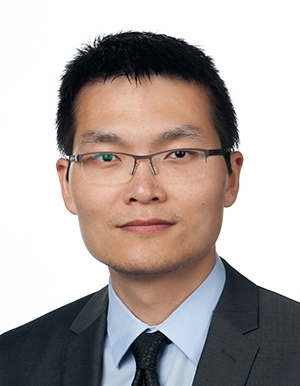
Brian Gunter is an Assistant Professor in Aerospace Engineering at the Georgia Institute of Technology. He received his B.S. in mechanical engineering from Rice University, and later his M.S. and Ph.D. in aerospace engineering from the University of Texas at Austin, specializing in orbital mechanics. Prior to joining Georgia Tech, Gunter was on the faculty of the Delft University of Technology (TU-Delft) in the Netherlands, as a member of the Physical and Space Geodesy section. His research activities involve various aspects of spacecraft missions and their applications, such as investigations into current and future laser altimetry missions, monitoring changes in the polar ice sheets using satellite data, applications of satellite constellations/formations, and topics surrounding kinematic orbit determination. He has been responsible for both undergraduate and graduate courses on topics such as satellite orbit determination, Earth and planetary observation, scientific applications of GPS, and space systems design. He is currently a member of the AIAA Astrodynamics Technical Committee, and also serves as the Geodesy chair for the Fall AGU Meeting Program Committee. He has received a NASA group achievement award for his work on the GRACE mission, and he is also a former recipient of a NASA Earth System Science Graduate Fellowship. He is a member of the American Institute of Aeronautics and Astronautics (AIAA), the American Geophysical Union (AGU), and the International Association of Geodesy (IAG).

Education

  • B.S., Mechanical Engineering, 1994, Rice University
  • M.S., Aerospace Engineering, 2000, The University of Texas at Austin;
  • Ph.D., Aerospace Engineering, 2004, The University of Texas at Austin;

Distinctions & Awards

Elected in 2020 to the status of Associate Fellow of the American Institute of Aeronautics and Astronautics; Visiting Research Fellow, Newcastle University, Newcastle-Upon-Tyne, UK, 2011; NASA Earth System Science Graduate Fellowship, 2002-2004; NASA Group Achievement Award, GRACE Project Team, 2004; Dolores Zohr b Liebmann Graduate Fellowship, 2000-2003; Earl Wright Endowed Presidential Scholarship in Engineering, 2000-2001

Associate Professor
Phone
404.385.2345
Office
ESM 205
Additional Research

satellite geodesy; space systems; orbital mechanics; Earth and planetary observation; remote sensing


Research Focus Areas
Google Scholar
https://scholar.google.com/citations?hl=en&user=ba8fWHIAAAAJ&view_op=list_works&sortby=pubdate
Brian
Gunter
Show Regular Profile

Morris Cohen

Morris Cohen
mcohen@gatech.edu
Website

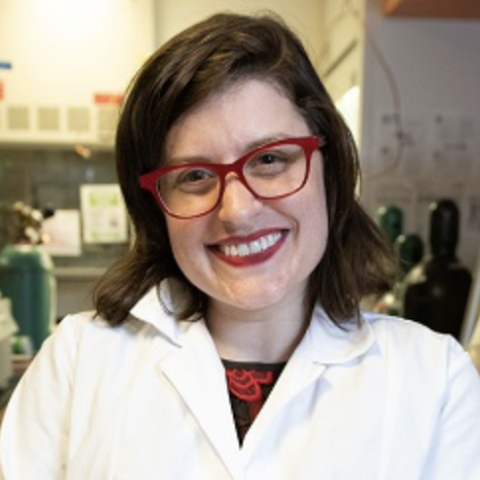
Morris Cohen received his B.S. and Ph.D. degrees in Electrical Engineering from Stanford University in 2003 and 2010, respectively, and served as a research scientist until August 2013. From September 2012 until August 2013, Dr. Cohen was appointed as AAAS Science and Technology Policy Fellow at the National Science Foundation. 

In Fall 2013, he joined the faculty in the School of ECE. He is a winner of the NSF CAREER Award in 2017, the ONR Young Investigator Award in 2015, and was chosen for the Santimay Basu Prize in 2014, an award given once per 3 years to an under-35 scientist by the International Union of Radio Science (URSI). 

Dr. Cohen is interested in the natural electricity of the Earth, including lightning, the electrically charged upper atmosphere, and the radiation-filled space environment. He uses radio waves at low frequencies measured all around the world to understand them, and develops resulting practical applications. His group also works on novel techniques to generate low frequency waves with nonconventional electrically-short antennas. He is an author of more than 60 journal publications. He employs a “flipped classroom” model in some of his courses to make the experience more active and engaging. 

He enjoys hiking, cooking, and traveling the world for work and play with his family.

Associate Professor, School of Electrical and Computer Engineering
Phone
(404) 894-8415
Office
VL W511
Additional Research

Electronics

Morris
Cohen
Show Regular Profile

W. Jud Ready

Jud Ready
jud.ready@gtri.gatech.edu
MSE Profile Page

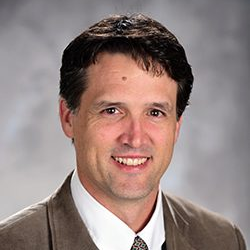
W. Jud Ready is the executive director of the Space Research Institute. Prior to this role, he served as associate director of external engagement for the Georgia Tech Institute for Matter and Systems and director of the Georgia Tech Center for Space Technology and Research. He has also been an adjunct professor in the School of Materials Science and Engineering at Georgia Tech and a principal research engineer on the research faculty of Georgia Tech Research Institute (GTRI) for over a dozen years. Prior to joining the Georgia Tech faculty, he worked for a major military contractor (General Dynamics) as well as in small business (MicroCoating Technologies). He has served as PI or co-PI for grants totaling ~$17M awarded by the Army, Navy, Air Force, DARPA, NASA, NSF, NIST, industry, charitable foundations and the States of Georgia and Florida. His current research focuses primarily on energy, aerospace, nanomaterial applications, and electronics reliability.

Executive Director, Space Research Institute
Principal Research Engineer, Georgia Tech Research Institute
Phone
404.407.6036
Additional Research

Materials Failure and Reliability; Carbon Nanotubes; Integrated photonics; Photovoltaics; Solar

GTRI
Geogia Tech Research Institute > Electro-Optical Systems Laboratory
Google Scholar
https://scholar.google.com/citations?hl=en&user=Hf8dRC4AAAAJ&view_op=list_works&sortby=pubdate
W. Jud
Ready
Show Regular Profile

Glenn Lightsey

Glenn Lightsey
glenn.lightsey@gatech.edu
AE Profile Page

E. Glenn Lightsey is the John W. Young Chair Professor in the Daniel Guggenheim School of Aerospace Engineering at Georgia Tech. He currently serves on the executive committee for the Space Research Initiative at Georgia Tech. Previously, he was the director of the Space Systems Design Lab from 2016-2023 and Center for Space Technology And Research at Georgia Tech from 2019-2023. 

Lightsey’s research program focuses on the technology of small satellites, including: guidance, navigation, and control systems; attitude determination and control; formation flying, satellite swarms, and cooperative control; proximity operations and unmanned spacecraft rendezvous; space based Global Positioning System receivers; radionavigation; propulsion; satellite operations; and space systems engineering. His group has built and operated several spacecraft for government sponsors. 

Lightsey has co-authored more than 180 technical articles and publications, including four book chapters. He is an AIAA Fellow and a Founding Member of the AIAA Small Satellite Technical Committee. He is Associate Editor-in-Chief of the Journal of Small Satellites. In the past he served as Associate Editor of the AIAA Journal of Guidance, Control, and Dynamics and Associate Editor of the AIAA Journal of Spacecraft and Rockets. Lightsey was previously employed at the University of Texas at Austin and NASA’s Goddard Space Flight Center.

John W. Young Chair Professor, Daniel Guggenheim School of Aerospace Engineering
Member, Space Research Initiative Steering Committee
Phone
404.385.4146
Office
ESM 110A/B
Additional Research

Small Satellites, Guidance and Control, and Spacecraft Technology.

Research Focus Areas
Google Scholar
https://scholar.google.com/citations?hl=en&user=EFUhzfYAAAAJ&view_op=list_works&sortby=pubdate
Space Research Initiative
Glenn
Lightsey
Show Regular Profile

Laurence Jacobs

Laurence Jacobs
laurence.jacobs@coe.gatech.edu
CEE Profile Page

Laurence J. Jacobs is associate dean for academic affairs in the College of Engineering at the Georgia Institute of Technology, professor of civil and environmental engineering, and professor of mechanical engineering. Jacobs received his Ph.D. in engineering mechanics from Columbia University and joined the faculty of Georgia Tech in 1988. Prior to receiving his Ph.D., he worked for two years in the aerospace industry and for one year as a structural engineer.

Professor Jacobs’ research focuses on the development of quantitative methodologies for the nondestructive evaluation and life prediction of structural materials. This includes the application of nonlinear ultrasound for the characterization of fatigue, creep, stress-corrosion, thermal embrittlement and radiation damage in metals. His work in cement-based materials includes the application of linear and nonlinear ultrasonic techniques to quantify microstructure and progressive micro-cracking in concrete.

Jacobs’ publications have been cited more than 4900 times with an h-index of 39 (Google Scholar), 31 (Scopus) or 28 (Web of Science) and he is a Fellow of the ASME. Professor Jacobs’ research has been funded by DOE, NSF, ONR, AFOSR, DARPA, NASA, US DOT, Georgia DOT, Exxon-Mobil, EPRI, Sandia National Lab and GE. He has been the PI or co-PI on over $8M worth of contracts since 1990. Jacobs has graduated 16 Ph.D. students (5 women and 2 African Americans) and 65 M.S. thesis students.

Professor, School of Civil and Environmental Engineering and School of Mechanical Engineering
Associate Dean for Academic Affairs, College of Engineering
Phone
404.894.2344
Office
Mason 2132A
Additional Research

Acoustics and dynamics, structural health monitoring, structural materials

Research Focus Areas
Google Scholar
https://scholar.google.com/citations?hl=en&user=5q1HqdwAAAAJ&view_op=list_works&sortby=pubdate
Laurence
Jacobs
J.
Show Regular Profile

Alexander Oettl

Alexander Oettl
alex.oettl@scheller.gatech.edu
Departmental Bio

Alex Oettl joined Scheller in 2009.  His research interests include the economics of innovation, knowledge spillovers, labor mobility, and economic geography.  His current work focuses on the production and diffusion of ideas at the individual, firm, and regional level.

Professor Oettl's research has been published in Management Science, Organization Science, Nature, Journal of Financial Economics, Review of Economics and Statistics, Proceedings of the National Academy of Sciences (PNAS), Journal of Urban Economics, Research Policy, Journal of International Business Studies, profiled in multiple media outlets, and presented at business schools around the world. He is a Research Associate at the National Bureau of Economic Research and a recipient of the Kauffman Junior Faculty Fellowship in Entrepreneurship Research.

PhD Coordinator, Strategy & Innovation
Co-Site Lead, CDL-Atlanta
Associate Professor
Phone
404-385-4570
Additional Research

Economics of InnovationProduction and Diffusion of Ideas

University, College, and School/Department
LinkedIn BBISS Initiative Lead Project - A Sustainability-Focused Stream of the Creative…
Alexander
Oettl
Show Regular Profile

Thomas Orlando

Thomas Orlando
thomas.orlando@chemistry.gatech.edu
School of Chemistry and Biochemistry Profile Page

Our group is primarily a surface chemistry and physics group which focuses on the use of high-powered pulsed lasers, low-energy electron scattering, micro-plasmas, mass spectrometry and ultrahigh vacuum surface science techniques. We use this "tool-set" as well as some scattering theory to unravel the details of non-thermal processes occurring under a variety of non-equilibrium conditions. Our group is based upon an interdisciplinary approach and thus our research programs span the realm of fundamental investigations in molecular physics, surface physics and chemistry, bio-physics, bio-polymer formation under pre-biotic conditions as well as working in applied areas of relevance to analytical technique developments, atmospheric chemistry, catalysis and molecular hydrogen generation.

Professor, School of Chemistry and Biochemistry
SEI Senior Advisor: Energy Minor
Phone
404.894.4012
Office
MoSE G209C
Additional Research

Surfaces and Interfaces; Catalysis; Advanced Characterization; Hydrogen; Nuclear

Google Scholar
https://scholar.google.com/citations?hl=en&user=6cbXFpkAAAAJ&view_op=list_works&sortby=pubdate
Electron and Photon Induced Chemistry on Surfaces Lab
Thomas
Orlando
Show Regular Profile

Koki Ho

Koki Ho
kokiho@gatech.edu
Lab Website

Dr. Koki Ho is the Dutton-Ducoffe Professor, an Associate Professor, and the director of the Space Systems Optimization Group in the Daniel Guggenheim School of Aerospace Engineering at Georgia Tech. His research focuses on developing modeling and optimization methods for rigorous space mission analysis and design. Some of his specific research interests include (1) network modeling for campaign-level space mission design; (2) optimization and probabilistic modeling for in-space logistics infrastructure design and operations; (3) design, deployment, and maintenance of mega-scale satellite constellations; and (4) sensor management for space domain awareness. His unique research connecting logistics-based modeling, optimization, systems engineering, and space applications has provided a substantial impact on modern and future space missions that involve multiple missions, multiple vehicles, and reusable infrastructure elements. Dr. Ho earned his Ph.D. at MIT and his bachelor’s and master’s degrees at the University of Tokyo. He is the recipient of the NSF CAREER Award (2020), the NASA Early Career Faculty Award (2019), the DARPA Young Faculty Award (2019), and the Luigi Napolitano Award (2015), and he is a co-author of one of the most downloaded Acta Astronautica articles. Dr. Ho served as the Chair of the AIAA Space Logistics Technical Committee in 2017-2024 and currently serves on the Steering Committee for the NASA-funded Consortium for Space Mobility and In-Space Servicing, Assembly, and Manufacturing Capabilities (COSMIC).

Education

  • B.Eng., Aeronautics and Astronautics, 2009, University of Tokyo;
  • M.Eng., Aeronautics and Astronautics, 2011, University of Tokyo;
  • Ph.D., Aeronautics and Astronautics, 2015, Massachusetts Institute of Technology

Distinctions & Awards

Honors:

  • 2020 NSF CAREER Award
  • 2019 DARPA Young Faculty Award
  • 2019 NASA Early Career Faculty Award
  • 2015 Luigi Napolitano Award
Dutton-Ducoffe Professor
Associate Professor
Phone
404.894.3078
Office
CODA E1052B
Additional Research
  • Space Logistics
  • Space Systems
  • Systems Design & Optimization
Google Scholar
https://scholar.google.com/citations?user=p8akSRAAAAAJ
LinkedIn Profile
Koki
Ho
Show Regular Profile

Matthew Gombolay

Matthew Gombolay
matthew.gombolay@cc.gatech.edu
IC Page

Dr. Matthew Gombolay is the Anne and Alan Taetle Assistant Professor of Interactive Computing at the Georgia Institute of Technology. He received a B.S. in Mechanical Engineering from the Johns Hopkins University in 2011, a S.M. in Aeronautics and Astronautics from MIT in 2013, and a Ph.D. in Autonomous Systems from MIT in 2017. Gombolay's research interests span robotics, AI/ML, human-robot interaction, and operations research. Between defending his dissertation and joining the faculty at Georgia Tech, Gombolay served as a technical staff member at MIT's Lincoln Laboratory transitioning his research for the U.S. Navy, earning him an R&D 100 Award for his development of "Human-Machine Collaborative Optimization via Apprenticeship Scheduling" (COVAS). His publication record includes a best paper award from American Institute for Aeronautics and Astronautics, and he was selected as a DARPA Riser in 2018. Dr. Gombolay's research has been highlighted in media outlets such as CNN, PBS, NBC, CBS, Harvard Business Review, Gizmodo, and national public radio

Anne & Alan Taetle Assistant Professor; School of Interactive Computing
Additional Research

Robotics; Artificial Intelligence; Machine Learning; Human-Robot Interaction

Google Scholar
https://scholar.google.com/citations?hl=en&user=Ihyz20wAAAAJ&view_op=list_works&sortby=pubdate
Matthew
Gombolay
Show Regular Profile

Panagiotis Tsiotras

Panagiotis  Tsiotras
tsiotras@gatech.edu
AE Page

Dr. Tsiotras holds the David & Andrew Lewis Endowed Chair in the School of Daniel Guggenheim School of Aerospace Engineering at Georgia Tech. He is also associate director at the Institute for Robotics and Intelligent Machines. His current research interests include nonlinear and optimal control and their connections with AI, planning, and decision-making, emphasizing autonomous ground, aerial, and space vehicles applications. He has published more than 350 journal and conference articles in these areas. Prior to joining the faculty at Georgia Tech, Dr. Tsiotras was an assistant professor of mechanical and aerospace engineering at the University of Virginia. He has also held visiting appointments with the MIT, JPL, INRIA, Rocquencourt, the Laboratoire de Automatique de Grenoble, and the Ecole des Mines de Paris (Mines ParisTech). Dr. Tsiotras is a recipient of the NSF CAREER award, the IEEE Technical Excellence Award in Aerospace Controls, the Outstanding Aerospace Engineer Award from Purdue, the Sigma Xi President and Visitor's Award for Excellence in Research, as well as numerous other fellowships and scholarships. He is currently the chief editor of the Frontiers in Robotics & AI, in the area of space robotics, and an associate editor for the Dynamic Games and Applications journal. In the past, he has served as an associate editor for the IEEE Transactions on Automatic Control, the AIAA Journal of Guidance, Control, and Dynamics, the IEEE Control Systems Magazine, and the Journal of Dynamical and Control Systems. He is a Fellow of the AIAA, IEEE, and AAS.

Professor & David and Andrew Lewis Chair; School of Aerospace Engineering
Associate Director, Institute for Robotics & Intelligent Machines
Phone
404.894.9526
Office
Knight 415C
Additional Research

controls; robotics; artificial intelligence; flying robots; spacecraft

Research Focus Areas
Google Scholar
https://scholar.google.com/citations?hl=en&user=qmVayjgAAAAJ&view_op=list_works&sortby=pubdate
Panagiotis
Tsiotras
Show Regular Profile