Shu Jia

Shu Jia
shu.jia@gatech.edu
The Jia Laboratory for Systems Biophotonics

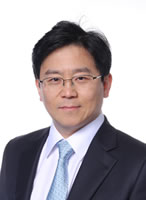
We strive to innovate in ways that both advance the imaging science and also impact biological and translational research. We are particularly interested in new imaging physics, bottom-up opto-electronic system design, as well as new principles for light propagation, light-matter interaction and image formation in complex biological materials, especially at the single-molecule level. Toward the application end, we have expertise in a wide range of imaging instrumentation and techniques, such as super-resolution, adaptive optics, light-field, miniaturized, light-sheet, computational microscopy and endoscopy.

Assistant Professor, Wallace H. Coulter Department of Biomedical Engineering
Phone
404.894.0290
Office
UAW 2112
Additional Research

Single-molecule biophotonicsSuper-resolution imagingAdvanced optical microscopy and instrumentation

Google Scholar
https://scholar.google.com/citations?hl=en&user=pcEf8kcAAAAJ&view_op=list_works&sortby=pubdate
LinkedIn BME Profile Page
Shu
Jia
Show Regular Profile

Gil Weinberg

Gil Weinberg
gilw@gatech.edu
School of Music Profile Page

Gil Weinberg is a professor and the founding director of Georgia Tech Center for Music Technology, where he leads the Robotic Musicianship group. His research focuses on developing artificial creativity and musical expression for robots and augmented humans. Among his projects are a marimba playing robotic musician called Shimon that uses machine learning for Jazz improvisation, and a prosthetic robotic arm for amputees that restores and enhances human drumming abilities. Weinberg presented his work worldwide in venues such as The Kennedy Center, The World Economic Forum, Ars Electronica, Smithsonian Cooper-Hewitt Museum, SIGGRAPH, TED-Ed, DLD and others. His music was performed with Orchestras such as Deutsches Symphonie-Orchester Berlin, the National Irish Symphony Orchestra, and the Scottish BBC Symphony while his research has been disseminated through numerous journal articles and patents. Dr. Weinberg received his MS and Ph.D. degrees in Media Arts and Sciences from MIT and his BA from the interdisciplinary program for fostering excellence in Tel Aviv University.

Professor; School of Music
Coordinator | M.S. & Ph.D. Programs; School of Music
Director; Center for Music Technology
Phone
404.894.8939
Additional Research

Music Technology; Computer Music; Robotics; Developing Artificial Creativity and Musical Expression for Robots and Augmented Humans

University, College, and School/Department
Google Scholar
https://scholar.google.com/citations?hl=en&user=-fyk-8UAAAAJ&view_op=list_works&sortby=pubdate
LinkedIn Georgia Tech Center for Music Technology
Gil
Weinberg
Show Regular Profile

May Dongmei Wang

May Dongmei Wang
maywang@bme.gatech.edu
Website

May Dongmei Wang, Ph.D., is The Wallace H Coulter Distinguished Faculty Fellow, professor of BME, ECE and CSE, Director of Biomedical Big Data Initiative, and Georgia Distinguished Cancer Scholar. She is also Petit Institute Faculty Fellow, Kavli Fellow, Fellow of AIMBE, Fellow of IEEE, and Fellow of IAMBE. She received BEng from Tsinghua University China and MS/PhD from Georgia Institute of Technology (GIT). Dr. Wang’s research and teaching are in Biomedical Big Data and AI-Driven Biomedical Health Informatics and Intelligent Reality (IR) for predictive, personalized, and precision health. She has published over 270 referred journal and conference proceeding articles (13,500+ GS-Citations) and delivered over 280 invited and keynote lectures. Dr. Wang’s research has been supported by NIH, NSF, CDC, GRA, GCC, VA, Children’s Healthcare of Atlanta, Enduring Heart Foundation, Wallace Coulter Foundation, Carol Ann and David Flanagan Foundation, Shriner’s Hospitals, Microsoft Research, HP, UCB, and Amazon.

Dr. Wang chairs IEEE Engineering in Medicine and Biology Society (EMBS) BHI-Technical Community and ACM Special Interest Group in Bioinformatics (SIGBio), and is the Senior Editor of IEEE Journal of Biomedical & Health Informatics (IF=7.02), and Associate Editor for IEEE Transactions on BME, and IEEE Review of BME. She was IEEE EMBS Distinguished Lecturer and PNAS (Proceeding of National Academy of Sciences) Emerging Area Editor. During the past decade, Dr. Wang has been a standing panelist for NIH Study Sections, NSF Smart and Connect Health, and Brain Canada, and has co-chaired and helped organize more than 10 conferences by IEEE Engineering in Medicine and Biologics  Gordon Research Conferences, ACM Special Interest Groups in Bioinformatics, and IEEE Future Directions.

Dr. Wang received GIT Outstanding Faculty Mentor for Undergrad Research Award and Emory University MilliPub Award for a high-impact paper cited over 1,000 times. She was selected into 2022 Georgia Tech LeadingWomen Program and 2021 Georgia Tech Provost Emerging Leaders Program. Previously, she was Carol Ann and David Flanagan Distinguished Faculty Fellow, GIT Biomedical Informatics Program Co-Director in ACTSI, and Bioinformatics and Biocomputing Core Director in NIH/NCI-Sponsored U54 Center for Cancer Nanotechnology Excellence.

Professor of BME, ECE, and CSE
The Wallace H. Coulter Distinguished Faculty Fellow
Director of Biomedical Big Data Initiative and Georgia Distinguished Cancer Scholar, Petit Institute Faculty Fellow, Kavli Fellow
AIMBE Fellow, IAMBE Fellow, IEEE Fellow Board of Directors of American Board of AI in Medicine,
Georgia Institute of Technology and Emory University
Phone
404-385-2954
Office
UAW 4106
Additional Research
  • Artificial Intelligence
  • Bioinformatics
  • Health & Life Sciences
Research Focus Areas
Google Scholar
https://scholar.google.com/citations?user=iCx27kUAAAAJ&hl=en&oi=sra
Related Site
May Dongmei
Wang
Show Regular Profile

Joel Kostka

Joel Kostka
joel.kostka@biology.gatech.edu
Website

Dr. Kostka is currently a professor of Biology at Georgia Institute of Technology (GT). Prior to GT, he was an Associate Professor at the Department of Oceanography, Florida State University. His research involves microorganism studies in geochemical cycles of pristine and contaminated ecosystems, from the oceans to the terrestrial subsurface.

Professor, School of Biological Sciences
Associate Chair of Research, School of Biological Sciences
Phone
(404) 385-3325
Research Focus Areas
Related Site
Joel
Kostka
Show Regular Profile

Pamela Peralta-Yahya

Pamela Peralta-Yahya
pperalta-yahya@chemistry.gatech.edu
Chem & BioChem Profile Page

Peralta-Yahya has been part of Georgia Tech since 2012. Her diverse research group composed of chemists, biologists, and chemical engineers works in the area of engineering biology, drawing from principles of biochemistry and engineering to build systems for chemical detection and production. Specifically, her group focuses on the development of G protein-coupled receptors for biotechnology and biomedical applications, and the engineering of biological systems for the production of fuels and functionalized plant natural products. Early on, her work was recognized with several awards including a DARPA Young Faculty Award, a DuPont Young Professor Award, a Kavli Fellowship by the US Academy of Science, and an NIH MIRA award. Her group’s key accomplishments are 1) the standardization of GPCR-based sensors in yeast to reduce the cost and accelerate the pace of drug discovery for these receptors, which are the target of over 30% of FDA approved drugs, and 2) the development of advanced biofuels, including pinene, which, when dimerized, has sufficient energy content to power rockets and missiles.  Today, her group is funded to work on these and other cutting edge areas – including how to power a rocket returning from Mars and how to make synthetic cells learn without evolution – by the National Institutes of Health, the National Science Foundation, the Department of Energy, and NASA.

Associate Professor, School of Chemistry and Biochemistry
Phone
404.894.4228
Office
MoSE 2100P
Additional Research

Bio-Inspired Materials; Biofuels; Cell biophysics; Cellular Materials; Biochemistry; Biomanufacturing; Energy; Biomaterials

Google Scholar
https://scholar.google.com/citations?hl=en&user=yUlt4sYAAAAJ&view_op=list_works&sortby=pubdate
Peralta-Yahya Group
Pamela
Peralta-Yahya
Show Regular Profile

Hang Lu

Hang Lu
hang.lu@gatech.edu
Lµ Fluidics Group

Hang Lu received her B.S. from the University of Illinois, Urbana-Champaign and her M.S.C.E.P and Ph.D. from the Massachusetts Institute of Technology. She is currently the Associate Dean for Research and Innovation in the College of Engineering and C. J. "Pete" Silas Chair, School of Chemical & Biomolecular Engineering at the Georgia Institute of Technology. Lu's research interests involve the interface of engineering and biology and her lab, the Lu Fluidics Group, is conducting research at these interface levels. The Lu Fluidics Group engineers BioMEMS (Bio Micro-Electro-Mechanical System) and microfluidic devices to address questions in neuroscience, cell biology, and biotechnology that are difficult to answer using conventional techniques.

Faces of Research - Profile Article

Associate Dean for Research and Innovation, College of Engineering
C. J. "Pete" Silas Chair, School of Chemical and Biomolecular Engineering
Phone
404.894.8473
Office
EBB 3017
Additional Research

Microfluidic systems for high-throughput screens and image-based genetics and genomicsSystems biology: large-scale experimentation and data miningMicrotechnologies for optical stimulation and optical recordingBig data, machine vision, automationDevelopmental neurobiology, behavioral neurobiology, systems neuroscienceCancer, immunology, embryonic development, stem cells

Google Scholar
https://scholar.google.com/citations?hl=en&user=DDKNuYgAAAAJ&view_op=list_works&sortby=pubdate
LinkedIn ChBE Profile Page
Hang
Lu
Show Regular Profile

Rudolph Gleason

Rudolph Gleason
rudy.gleason@me.gatech.edu

Rudolph (Rudy) L. Gleason began at Tech in Fall 2005 as an assistant professor. Prior, he was a postdoctoral fellow at Texas A&M University. He is currently a professor in the School of Mechanical Engineering and the School of Biomedical Engineering in the College of Engineering. Gleason’s research program has two key and distinct research aims. The first research aim is to quantify the link between biomechanics, mechanobiology, and tissue growth and remodeling in diseases of the vasculature and other soft tissues. The second research aim is to translate engineering innovation to combat global health disparities and foster sustainable development in low-resource settings around the world. Gleason serves as a Georgia Tech Institute for People and Technology initiative lead for research activities related to global health and well-being.

Professor, Mechanical Engineering and Biomedical Engineering
Joint Appointment in the School of Biomedical Engineering
Phone
404-385-7218
Office
TEP 205
Additional Research

Cardiovascular mechanics, soft tissue growth and remodeling, and tissue engineering

Google Scholar
https://scholar.google.com/scholar?hl=en&as_sdt=0,11&q=rl+gleason+jr&oq=RL+Gleason
LinkedIn Related Site
Rudolph
Gleason
L.
Show Regular Profile

Julien Meaud

Julien Meaud
julien.meaud@me.gatech.edu
Related Site

Julien Meaud joined Georgia Tech as an Assistant Professor of Mechanical Engineering in August 2013. Before joining Georgia Tech, he worked as a research fellow in the Vibrations and Acoustics Laboratory and in the Computational Mechanics Laboratory at the University of Michigan, Ann Arbor. 

Dr. Meaud investigates the mechanics and physics of complex biological systems and the mechanics and design of engineering materials using theoretical and computational tools. 

One of his research interests is auditory mechanics. In this research, he develops computational multiphysics models of the mammalian ear based on the finite element method. The mammalian ear is a nonlinear transducer with excellent frequency selectivity, high sensitivity, and good transient capture. The goal of this basic scientific research is to better understand how the mammalian ear achieves these characteristics. This research could have important clinical applications as it could help in the development of better treatment and the improvement of diagnostic tools for hearing loss. It could also have engineering applications, such as the design of biometic sensors. This research is truly interdisciplinary as it includes aspects of computational mechanics, structural acoustics, nonlinear dynamics, biomechanics and biophysics. 

Dr. Meaud is also interested in the mechanics, design and optimization of composite materials, particularly of their response to cyclic loads. Tradtional engineering and natural materials with high damping (such as rubber) tends to have low stiffness. However, the microarchitecture of composite materials that consist of a lossy polymer and a stiff constituent can be designed to simultaneously obtain high stiffness and high damping. Using computational tools such as finite element methods and topology optimization, the goal of Dr. Meaud's research is to design composite materials with these unconventional properties. One of his future goal is to extend the design of these materials to the finite strain regime and high frequency ranges, in order to obtained materials tailored for the targetted application. This research includes aspects of mechanics of materials, computational mechanics and structural dynamics. 

In Dr. Meaud's research group, students will learn theoretical and computational techniques that are used extensively to solve engineering problems in academic research and industry. Students will develop knowledge and expertise in a broad array of mechanical engineering areas. The knowledge that students will gain in computational mechanics, nonlinear and structural dynamics, structural acoustics, dynamics and composite materials could be applied to many domains in their future career.

Associate Professor
Phone
404-385-1301
Office
Love 129
Additional Research

Meaud investigates the mechanics and physics of complex biological systems and the mechanics and design of engineering materials using theoretical and computational tools. One of his research interests is auditory mechanics. In this research, he develops computational multiphysics models of the mammalian ear based on the finite element method. The mammalian ear is a nonlinear transducer with excellent frequency selectivity, high sensitivity, and good transient capture. The goal of this basic scientific research is to better understand how the mammalian ear achieves these characteristics. This research could have important clinical applications as it could help in the development of better treatment and the improvement of diagnostic tools for hearing loss. It could also have engineering applications, such as the design of biometic sensors. This research is truly interdisciplinary as it includes aspects of computational mechanics, structural acoustics, nonlinear dynamics, biomechanics and biophysics. Dr. Meaud is also interested in the mechanics, design and optimization of composite materials, particularly of their response to cyclic loads. Tradtional engineering and natural materials with high damping (such as rubber) tends to have low stiffness. However, the microarchitecture of composite materials that consist of a lossy polymer and a stiff constituent can be designed to simultaneously obtain high stiffness and high damping. Using computational tools such as finite element methods and topology optimization, the goal of Dr. Meaud's research is to design composite materials with these unconventional properties. One of his future goal is to extend the design of these materials to the finite strain regime and high frequency ranges, in order to obtained materials tailored for the targetted application. This research includes aspects of mechanics of materials, computational mechanics and structural dynamics.

Research Focus Areas
Google Scholar
https://scholar.google.com/citations?user=jJTt8i8AAAAJ&hl=en&oi=ao
Julien
Meaud
Show Regular Profile

Raymond P. Vito

Raymond P. Vito
rpvito@gatech.edu

Having retired as Vice Provost, Dr. Vito is a Professor Emeritus of Mechanical Engineering and currently works part-time. He was one of the founders of The InVenture Prize and has been pivotal in the creation, development, evolution and delivery of the CREATE-X program. His startup expertise is in the area of medical devices, an area where he has conducted research and holds several patents.

Dr. Vito began his research career in nonlinear vibrations but switched within two years of receiving his Ph.D. to biomechanics, especially soft tissue mechanics. He began at Tech in 1974 as an Assistant Professor. Prior, he was a Postdoctoral Fellow at McMaster University, Canada.

Professor Emeritus
Phone
404-894-2792
Office
Petit Biotechnology Building, Office 2308
Additional Research
Dr. Vito's research interest is in the mechanical determinants of rupture of atherosclerotic plaque. Plaque rupture is important in stroke and heart attack because it precipitates the formation of a thrombus (blood clot) which then breaks away and causes an obstruction of flow. Experiments and modeling are used to determine what compositional factors predispose a plaque to rupture. Dr. Vito collaborates with people interested in detecting vulnerable plaque using magnetic resonance imaging and with others who want to intervene with drugs or genetic manipulation to reduce the likelihood of plaque rupture. His current research is sponsored by the National Science Foundation.
Google Scholar
http://scholar.google.com/scholar?q=raymond+p+vito&hl=en&btnG=Search&as_sdt=80001&as_sdtp=on
Related Site
Raymond
Vito
P.
Show Regular Profile

J. Brandon Dixon

J. Brandon Dixon
dixon@gatech.edu
Website

Dr. Dixon began at Georgia Tech in August 2009 as an Assistant Professor. Prior to his current appointment, he was a staff scientist at Ecole Polytechnique Federal de Lausanne (Swiss Federal Institute of Technology - Lausanne) doing research on tissue-engineered models of the lymphatic system. Dr. Dixon received his Ph.D. in biomedical engineering while working in the Optical Biosensing Laboratory, where he developed an imaging system for measuring lymphatic flow and estimating wall shear stress in contracting lymphatic vessels. 

Dr. Dixon's research focuses on elucidating and quantifying the molecular aspects that control lymphatic function as they respond to the dynamically changing mechanical environment they encounter in the body. Through the use of tissue-engineered model systems and animal models, our research is shedding light on key functions of lymphatic transport, and the consequence of disease on these functions. One such function is the lymphatic transport of dietary lipid from the intestine to the circulation. Recent evidence from our lab suggests that this process involves active uptake into lymphatics by the lymphatic endothelial cells. There are currently no efficacious cures for people suffering from lymphedema, and the molecular details connecting lymphedema severity with clinically observed obesity and lipid accumulation are unknown. Knowledge of these mechanisms will provide insight for planning treatment and prevention strategies for people facing lipid-lymphatic related diseases. 

Intrinsic to the lymphatic system are the varying mechanical forces (i.e., stretch, fluid shear stress) that the vessels encounter as they seek to maintain interstitial fluid balance and promote crucial transport functions, such as lipid transport and immune cell trafficking. Thus, we are also interested in understanding the nature of these forces in both healthy and disease states, such as lymphedema, in order to probe the biological response of the lymphatic system to mechanical forces. The complexity of these questions requires the development of new tools and technologies in tissue engineering and imaging. In the context of exploring lymphatic physiology, students in Dr. Dixon's laboratory learn to weave together techniques in molecular and cell biology, biomechanics, imaging, computer programming, and image and signal processing to provide insight into the regulation of lymphatic physiology. Students in the lab also have the opportunity to work in an interdisciplinary environment, as we collaborate with clinicians, life scientists, and other engineers, thus preparing the student for a career in academia and basic science research, or a career in industry.

Professor
Phone
404-385-3915
Office
Petit Biotechnology Building, Office 2312
Google Scholar
https://scholar.google.com/citations?user=mPmRwdkAAAAJ&hl=en
LinkedIn Related Site
J. Brandon
Dixon
Show Regular Profile