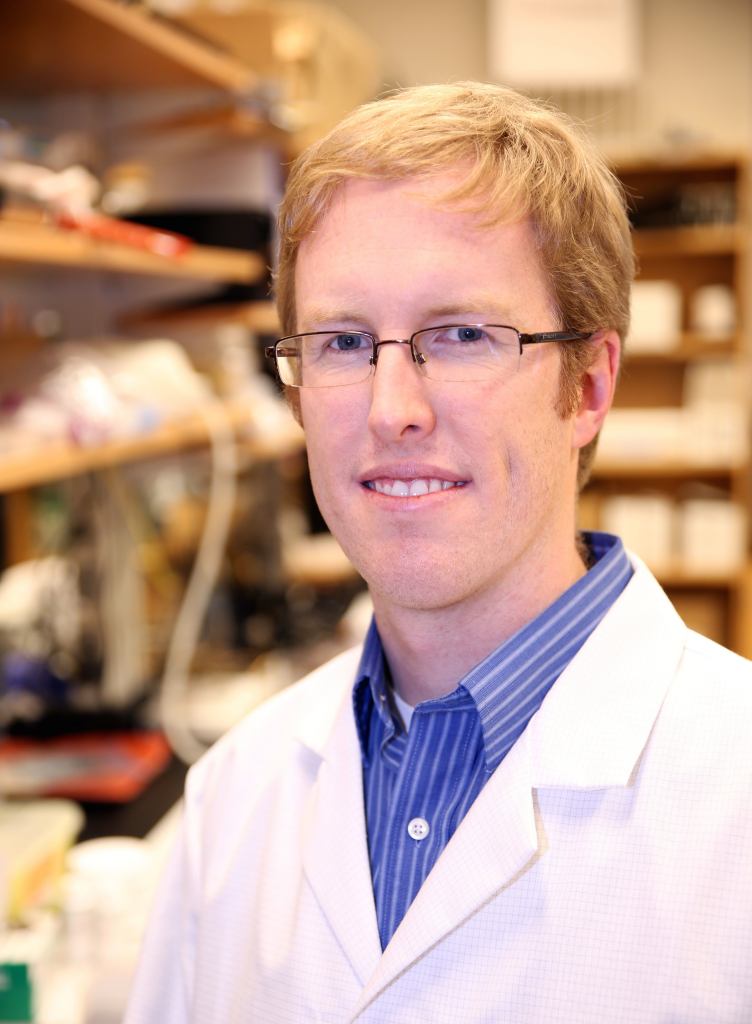
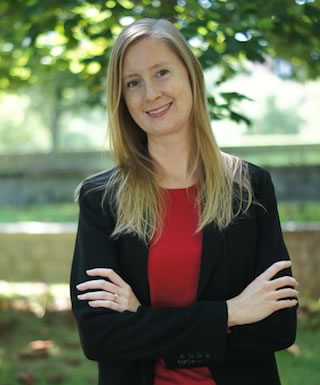
Peter Hesketh

Peter Hesketh
peter.hesketh@me.gatech.edu
ME Profile Page

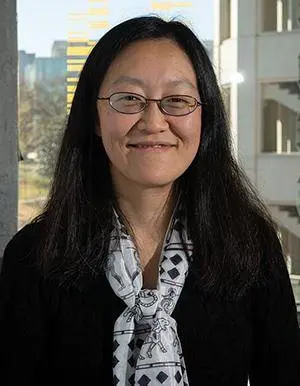
Peter Hesketh came to Georgia Tech in spring 2000 as a professor in the George W. Woodruff School of Mechanical Engineering. Prior, he was associate professor at the University of Illinois at Chicago. Hesketh's research interests involve sensors and micro/nano-electro-mechanical Systems (MEMS/NEMS). Many sensors are built by micro/nanofabrication techniques and this provides a host of advantages including lower power consumption, small size and light weight. The issue of manipulation of the sample in addition to introduce it to the chemical sensor array is often achieved with microfluidics technology. Combining photolithographic processes to define three-dimensional structures can accomplish the necessary fluid handling, mixing, and separation through chromatography. Hesketh is also interested in nanosensors, impedance based sensors, miniature magnetic actuators and the use of stereolithography for sensor packaging. He has published over sixty papers and edited fifteen books on microsensor systems.

Professor, Woodruff School of Mechanical Engineering
Phone
404.894.8496
Office
Love 317
Additional Research

Microfabrication; micromachining; sensors and actuators; biosensors; "Dr. Hesketh's research interests are in Sensors and Micro/Nano-electro-mechanical Systems (MEMS/NEMS).Many sensors are built by micro/nanofabrication techniques and this provides a host of advantages including lower power consumption, small size and light weight.The issue of manipulation of the sample in addition to introduce it to the chemical sensor array is often achieved with microfluidics technology.Combining photolithographic processes to define three-dimensional structures can accomplish the necessary fluid handling, mixing, and separation through chromatography.For example, demonstration of miniature gas chromatographyand liquid chromatography with micromachined separation columns demonstrates how miniaturization of chemical analytical methods reduces the separation time so that it is short enough, to consider the measurementequivalentto ""read-time"" sensing. A second focus area is biosensing. Professor Hesketh has worked on a number of biomedical sensors projects, including microdialysis for subcutaneous sampling, glucose sensors, and DNA sensors. Magnetic beads are being investigated as a means to transport and concentrate a target at a biosensor interface in a microfluidic format, in collaboration with scientists at the CDC. His research interests also include nanosensors, nanowire assembly by dielectrophoresis; impedance based sensors, miniature magnetic actuators; use of stereolithography for sensor packaging. He has published over sixty papers and edited fifteen books on microsensor systems."

Google Scholar
https://scholar.google.com/citations?hl=en&user=H41QBFQAAAAJ&view_op=list_works&sortby=pubdate
Peter
Hesketh
J.
Show Regular Profile

Alberto Fernandez-Nieves

Alberto Fernandez-Nieves
afn3@gatech.edu
Soft Condensed Matter Laboratory

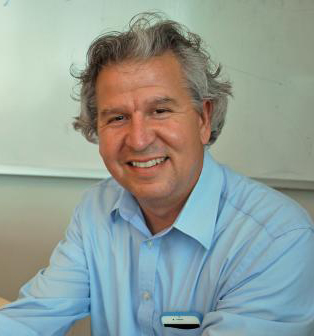
Soft materials are materials whose properties are determined by internal structures with dimensions between atomic sizes and macroscopic scales. They are characterized by energies that are typically comparable to kT. As a result, they have low elastic moduli, often ~1-10 Pascals. Typical soft materials include liquid crystals, polymers, colloidal suspensions and emulsion drops. These materials, unlike conventional simple liquids, are locally heterogeneous and can have broken symmetries that affect their physical properties. Hence, although they often exhibit liquid-like behavior, soft materials also often exhibit properties of solids. Our laboratory studies the physics of soft materials with a focus on the connection between microscopic order and macroscopic properties. The underlying theme is to pursue basic understanding and address fundamental questions. However, we also address applied problems and pursue industrial collaborations since many of the materials we study can be viewed as model systems for those that are often used in applications. Current projects include (i) studying the phase and non-equilibrium behavior and properties of dense microgel suspensions, (ii) understanding the consequences of confinement and curvature over the equilibrium states of ordered materials, which in many cases require the existence of topological defects in their ground states, and (iii) electrohydrodynamics of toroidal droplets and jets.

Associate Professor, School of Physics
Director, Soft Condensed Matter Laboratory
Phone
404.385.3667
Office
Boggs B19
Additional Research

Physics of soft materials with a focus on the connection between microscopic order and macroscopic properties, hydrodynamics, advanced characterization, polymers, computational mechanics

University, College, and School/Department
Google Scholar
https://scholar.google.com/scholar?hl=en&q=alberto+fernandez-nieves&btnG=&as_sdt=1,11&as_sdtp=
Physics Profile Page
Alberto
Fernandez-Nieves
Show Regular Profile

Yonggang Ke

Yonggang Ke
yonggang.ke@emory.edu
Ke Lab for Biomolecular Nanoengineering

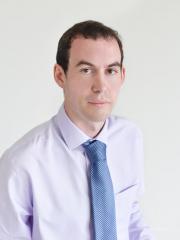
Yonggang Ke's research is highly interdisciplinary combining chemistry, biology, physics, material science, and engineering. The overall mission of his research is to use interdisciplinary research tools to program nucleic-acid-based "beautiful structures and smart devices" at nanoscale, and use them for scientific exploration and technological applications. Specifically, his team focuses on (1) developing new DNA self-assembly paradigms for constructing DNA nanostructures with greater structural complexity, and with controllable sizes and shapes; (2) developing new imaging or drug delivery systems based on DNA nanostructuresl; (3) exploring design of novel DNA-based nanodevices for understanding basic biological questions at molecular level; (4) developing DNA-templated protein devices for constructing artificial bio-reactors.

For cancer-related research/application, Ke will focus on using DNA/RNA nanostructures as drug delivery vehicles. He is also interested in using DNA/RNA nanostructures to study cancer cell biology at molecular level.

Assistant Professor, Wallace H. Coulter Department of Biomedical Engineering
Phone
404.712.2712
Office
Emory HSRB E186
Additional Research

Molecular engineeringNucleic acid self-assemblyTargeted imaging and delivery

Google Scholar
https://scholar.google.com/citations?user=jNXJdQ4AAAAJ&hl=en
LinkedIn BME Profile Page
Yonggang
Ke
Show Regular Profile

Frank Hammond III

Frank  Hammond III
frank.hammond@me.gatech.edu
The Adaptation Robotic Manipulation Laboratory

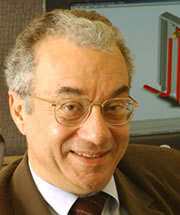
Frank L. Hammond III joined George W. Woodruff George W. Woodruff School of Mechanical Engineering in April 2015. Prior to this appointment, he was a postdoctoral research affiliate and instructor in the Department of Mechanical Engineering at MIT and a Ford postdoctoral research fellow at the Harvard School of Engineering and Applied Sciences. He received his Ph.D. in 2010 from Carnegie Mellon University.

Assistant Professor, School of Mechanical Engineering
Director, The Adaptation Robotic Manipulation Laboratory
Phone
404.385.4208
Office
UA Whitaker Room 4102
Additional Research

Hammond's research focuses on the design and control of adaptive robotic manipulation (ARM) systems. This class of devices exemplified by kinematic structures, actuation topologies, and sensing and control strategies that make them particularly well-suited to operating in unstructured, dynamically varying environments - specifically those involving cooperative interactions with humans. The ARM device design process uses an amalgamation of bioinspiration, computational modeling and optimization, and advanced rapid prototyping techniques to generate manipulation solutions which are functionally robust and versatile, but which may take completely non-biomorphic (xenomorphic) forms. This design process removes human intuition from the design loop and, instead, leverages computational methods to map salient characteristics of biological manipulation and perception onto a vast robotics design space. Areas of interest for ARM research include kinematically redundant industrial manipulation, wearable robotic devices for human augmentation, haptic-enabled teleoperative robotic microsurgery, and autonomous soft robotic platforms.

Google Scholar
https://scholar.google.com/citations?hl=en&user=H2QWyooAAAAJ&view_op=list_works&sortby=pubdate
LinkedIn ME Profile Page
Frank
Hammond III
L.
Show Regular Profile

Omer Inan

Omer Inan
omer.inan@ece.gatech.edu
INAN RESEARCH LAB

Omer T. Inan received his B.S., M.S., and Ph.D. degrees in Electrical Engineering from Stanford University in 2004, 2005, and 2009, respectively.

He worked at ALZA Corporation in 2006 in the Drug Device Research and Development Group. From 2007-2013, he was chief engineer at Countryman Associates, Inc., designing and developing several high-end professional audio products. From 2009-2013, he was a visiting scholar in the Department of Electrical Engineering at Stanford. In 2013, he joined the School of ECE at Georgia Tech as an assistant professor.

Inan is generally interested in designing clinically relevant medical devices and systems, and translating them from the lab to patient care applications. One strong focus of his research is in developing new technologies for monitoring chronic diseases at home, such as heart failure.

He and his wife were both varsity athletes at Stanford, competing in the discus and javelin throw events respectively.

Professor, School of Electrical and Computer Engineering
Linda J. and Mark C. Smith Chair, School of Electrical and Computer Engineering
Phone
404.385.1724
Office
TSRB 417
Additional Research

Medical devices for clinically-relevant applicationsNon-invasive physiological monitoringHome monitoring of chronic diseaseCardiomechanical signalsMedical instrumentation

Google Scholar
https://scholar.google.com/citations?hl=en&user=CURXz5UAAAAJ&view_op=list_works&sortby=pubdate
LinkedIn ECE Profile Page
Omer
Inan
T.
Show Regular Profile

Xing Xie

Xing Xie
xing.xie@ce.gatech.edu
CEE Profile Page

 Xing Xie is the Carlton S. Wilder Assistant Professor in the School of Civil and Environmental Engineering at Georgia Institute of Technology. Prior to joining Georgia Tech, he was a post-doctoral scholar at California Institute of Technology. He received his B.S. (2006) and M.S. (2008) degrees in Environmental Science & Engineering from Tsinghua University, and a second M.S. degree (2012) in Materials Science & Engineering and a Ph.D. degree (2014) in Civil & Environmental Engineering from Stanford University. His research focuses on the applications of innovative materials for sustainable and reliable water and energy. He has worked on many projects related to water treatment and reuse, microbial detection and quantification, energy and resource recovery, energy storage, etc. He has published more than 60 peer-reviewed articles with more than 6,000 citations

Carlton S. Wilder Junior Professor, School of Civil and Environmental Engineering
Assistant Professor, School of Civil and Environmental Engineering
Phone
404.894.9723
Office
ES&T 3236
Additional Research

Water & wastewater treatment; Energy & resources recovery; Energy storage; Salinity energy & desalination; self-sustained sanitation; Oil-water separation; Environmental monitoring

Google Scholar
https://scholar.google.com/citations?user=XiHhfOkAAAAJ&hl=en
LinkedIn Personal Research Site
Xing
Xie
Show Regular Profile

Chengzhi Shi

Chengzhi Shi
chengzhi.shi@me.gatech.edu
Departmental Bio

Dr. Shi joined Georgia Tech in August 2018 as an assistant professor. Prior, he worked as a graduate student researcher at the Department of Mechanical Engineering of the University of California, Berkeley and Materials Science Division of Lawrence Berkeley National Laboratory focusing on the study of acoustic angular momentum and the design and realization of acoustic metamaterials and high-speed acoustic communication. His Ph.D. dissertation (2018) focuses on the development of acoustic metamaterials and the physics of the angular momentum of sound. Prior to his Ph.D. study at the Department of Mechanical Engineering of the University of California, Berkeley, Dr. Shi completed his M.S. degree in mechanical engineering at the University of Michigan-Shanghai Jiao Tong University Joint Institute in Shanghai, China. His M.S. thesis (2013) focuses on the dynamics and vibration of cyclically symmetric rotating mechanical systems.

Assistant Professor
Phone
404-894-2558
Office
003 Love Manufacturing Building
Additional Research

Acoustic wave interactions with different cells including neurons, and imaging and treatment techniques resulted from the interactions.

Laboratory Site
Chengzhi
Shi
Show Regular Profile

Margaret Kosal

Margaret Kosal
margaret.kosal@inta.gatech.edu
Website

Margaret E. Kosal's research explores the relationships among technology, strategy, and governance. Her research focuses on two, often intersecting, areas: reducing the threat of weapons of mass destruction (WMD) and understanding the role of emerging technologies for security. Her work aims to understand and explain the role of technology and technological diffusion for national security at strategic and operational levels. In the changing post-Cold War environment, the most advanced military power no longer guarantees national or international security in a globalized world in which an increasing number of nation-states and non-state actors have access to new and potentially devastating dual-use capabilities. The long-term goals of her work are to understand the underlying drivers of technological innovation and how technology affects national security and modern warfare. She is interested in both the scholarly, theoretical level discourse and in the development of new strategic approaches and executable policy options to enable US dominance and to limit the proliferation of unconventional weapons. On the question of understanding the impact of emerging technology on national and international security her research considers what role will nanotechnology, cognitive science, biotechnology, and converging sciences have on states, non-state actors, balance of power, deterrence postures, security doctrines, nonproliferation regimes, and programmatic choices. Through examination of these real applications on the science (benign and defensive) and potential (notional) offensive uses of nanotechnology, she seeks to develop a model to probe the security implications of this emerging technology. The goal of the research is not to predict new specific technologies but to develop a robust analytical framework for assessing the impact of new technology on national and international security and identifying policy measures to prevent or slow proliferation of new technology - the next generation “WMD” - for malfeasant intentions. Kosal is the author of Nanotechnology for Chemical and Biological Defense (Springer Academic Publishers, 2009), which explores scenarios and strategies regarding the benefits and potential proliferation threats of nanotechnology and other emerging sciences for international security. She is also Director of the Sam Nunn Security Fellows Program and Co-Director of the Program on Emerging Technology within the Center for International Strategy, Technology, and Policy (CISTP).  Kosal was recently appointed Adjunct Scholar to the Modern War Institute at the US Military Academy/West Point. From 2012-2013, she as a senior advisor to the Chief of Staff of the US Army as part of his inaugural Strategic Studies Group (SSG). Before joining the Sam Nunn School of International Affairs, she was Science and Technology Advisor within the Office of the Secretary of Defense (OSD). Kosal also served as the first liaison to the Biological and Chemical Defense Directorate at the Defense Threat Reduction Agency (DTRA). She has been recognized for her leadership across the U.S. federal government, specifically for efforts to coordinate across the DoD as part of the interagency Nonproliferation and Arms Control Technology Working Group, reporting to the National Security Council (NSC), and as member of the interagency federal group charged with leading the National Nanotechnology Initiative (NNI). Kosal was nominated to and led the U.S. involvement in the NATO Nanotechnology for Defense Working Group. Her awards include the 2015 CETL/BP Junior Faculty Teaching Excellence Award, 2014 Georgia Tech Junior Faculty Outstanding Undergraduate Research Mentor Award, 2012 Ivan Allen Jr Legacy Award, 2010 INTAGO Faculty Award, CETL Class of 1969 Teaching Scholar, the OSD Award for Excellence, 2007 UIUC Alumni Association Recent Alumni Award, the President’s Volunteer Service Award, American Association for the Advancement of Science (AAAS) Defense Policy Fellow, and the Society of Porphyrins and Phthalocyanines Dissertation Research Award. Currently, she serves on the editorial board of the scholarly journals Studies in Conflict and Terrorism, the Journal of Strategic Security, the Journal of Defense Management, and Global Security: Health Science and Policy. Education: Ph.D., Chemistry, University of Illinois at Urbana-Champaign B.S., Chemistry, University of Southern California Awards and Distinctions: Senior Adjunct Scholar to the Modern War Institute at the U.S. Military Grand Challenges Faculty Fellow, AY2015-2016 & AY 2016-2017 2015-2016 CETL Class of 1969 Teaching Scholar 2015 CETL/BP Junior Faculty Teaching Excellence Award Gold Star Award in Recognition of the Highest Level of Accomplishment in Research, Ivan Allen College of Liberal Arts Dean Griffith Teaching Recognition – “Thank a Teacher” Award 2014 Georgia Tech Junior Faculty Outstanding Undergraduate Research Mentor Award Ivan Allen Jr. Legacy Faculty Award, 2012 INTAGO Faculty of the Year, 2010 Office of the Secretary of Defense Award for Excellence, 2007 University of Illinois at Urbana-Champaign Recent Alumni Award, 2007 President’s Volunteer Service Award, 2007 American Associatio for the Advancement of Science (AAAS) Science & Technology Fellowship, 2005-2007 American Chemical Society’s Chemical and Engineering News Top 2002 Supramolecular Chemistry research paper Areas of Expertise: Biotechnology Emerging Technology Military Nanotechnology National Security Nonproliferation Nuclear Weapons Terrorism US Foreign & Defense Policy

Professor, Sam Nunn School of International Affairs
Director, Sam Nunn Security Program
Editor-in-Chief, Politics and the Life Sciences
Phone
404-894-9664
Office
Habersham 303
Additional Research

Defense / National Security; Cyber Technology; Policy/Economics

Google Scholar
https://scholar.google.com/scholar?hl=en&q=margaret+Kosal&btnG=&as_sdt=1,11&as_sdtp=&oq=margaret
Related Site
Margaret
Kosal
E.
Show Regular Profile

Gleb Yushin

Gleb Yushin
gleb.yushin@mse.gatech.edu
YUSHIN GROUP

Gleb Yushin is a Professor at the School of Materials Science and Engineering at Georgia Institute of Technology and a Co-Founder of several companies, including Sila Nanotechnologies, Inc.. For his contributions to materials science, Yushin has received numerous awards and recognitions, including Kavli Fellow Award, R&D 100 Award (Y-Carbon's application), Honda Initiation Grant Award, National Science Foundation CAREER Award, Air Force Office of Scientific Research Young Investigator Award, and several distinctions from National Aeronautics and Space Administration (NASA), such as Nano 50 Award. Dr. Yushin has co-authored over 30 patents and patent applications, over 100 invited presentations and seminars and over 100 publications on nanostructured Electronic Materials related applications, including papers in Science, Nature Materials and other leading journals. His current research is focused on advancing energy storage materials and devices for electronics, transportation and grid applications.

Professor, School of Materials Science and Engineering
Phone
404.385.3261
Office
Love 371
Additional Research

CharacterizationMeasurementsPhotovoltaicsPolymersProcessing, Fabrication, & ManufacturingSynthesis

Google Scholar
https://scholar.google.com/citations?hl=en&user=TwX62mwAAAAJ&view_op=list_works&sortby=pubdate
LinkedIn MSE Profile Page
Gleb
Yushin
Show Regular Profile

Mark Styczynski

Mark Styczynski
mark.styczynski@chbe.gatech.edu
Website

Mark Styczynski is an Associate Professor in the School of Chemical & Biomolecular Engineering at the Georgia Institute of Technology (Georgia Tech), doing research at the interface of synthetic and systems biology as applied to metabolic systems. His synthetic biology work focuses on the development of low-cost, minimal-equipment biosensors for the diagnosis of nutritional deficiencies in the developing world. His systems biology work uses computational and experimental methods to characterize metabolic dynamics and regulation using metabolomics data. He has received young investigator awards from the NSF, DARPA, and ORAU. He has won multiple department-and institute-level teaching awards at Georgia Tech. He founded and was the first president of the Metabolomics Association of North America (MANA), and is a Council Member in the Engineering BiologyResearch Consortium.

Professor
Phone
404-894-2825
Office
EBB 4013
Additional Research
Modelling and controlling metabolic dynamics and regulation (metabolic engineering). Biofuels. Systems biology-based experimental and bioinformatics analysis of metabolism Synthetic biology for the development of biosensors and diagnostics The main focus of theStyczynski groupis the experimental and computational study of the dynamics and regulation of metabolism, with ultIMaTe applications in metabolic engineering, biotechnology, and biosensors/diagnostics.
Google Scholar
https://scholar.google.com/scholar?q=Mark+P+Styczynski&hl=en
Related Site
Mark
Styczynski
Show Regular Profile