Phanish Suryanarayana

Phanish Suryanarayana
phanish.suryanarayana@ce.gatech.edu
CEE Profile Page

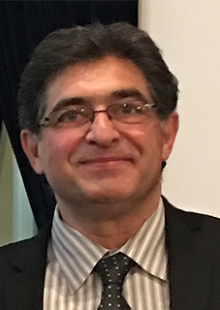
Phanish Suryanarayana joined the School of Civil and Environmental Engineering at the Georgia Institute of Technology in August 2011. He received his B.Tech. from Indian Institute of Technology, Madras, India in 2005. He obtained his M.S. in Aeronautics from California Institute of Technology in 2006. Subsequently, he received his Ph.D. in Aeronautics from California Institute of Technology in 2011 for his thesis titled "Coarse-graining Kohn-Sham Density Functional Theory". His research interests are in the areas of multiscale modeling, ab-initio calculations, density functional theory, continuum mechanics and smart materials. Overall, he is interested in developing efficient numerical methods for solving problems arising in a variety of fields. On a personal level, Dr. Suryanarayana is a sports enthusiast. He plays badminton, cricket, waterpolo, and ultimate frisbee. He also is an avid gamer (PC) and enjoys playing bridge and other board game

Associate Professor, School of Civil and Environmental Engineering
Phone
404.894.2773
Office
Mason 5139A
Additional Research
  • Computational Materials Science
  • Energy Use & Conservation
  • High Performance Computing
Google Scholar
https://scholar.google.com/citations?hl=en&user=emIr7xQAAAAJ&view_op=list_works&sortby=pubdate
Material Physics & Mechanics Group
Phanish
Suryanarayana
Show Regular Profile

Charles David Sherrill

Charles David Sherrill
sherrill@gatech.edu
Chem & Bio Chem Profile Page

Research in the Sherrill group focuses on the development of ab initio electronic structure theory and its application to problems of broad chemical interest, including the influence of non-covalent interactions in drug binding, biomolecular structure, organic crystals, and organocatalytic transition states. We seek to apply the most accurate quantum models possible for a given problem, and we specialize in generating high-quality datasets for testing new methods or machine-learning purposes. We have developed highly efficient algorithms and software to perform symmetry-adapted perturbation theory (SAPT) computations of intermolecular interactions, and we have used this software to analyze the nature of non-covalent pi-interactions in terms of electrostatics, London dispersion forces, induction/polarization, and short range exchange-repulsion. 

Regents Professor, School Chemistry and Biochemistry
Associate Director for Research and Education, Institute for Data Engineering and Science
Phone
404.894.4037
Office
MS&E 2100N
Additional Research
  • Computational Materials Science
  • Computational Chemistry
  • High-Performance Computing
  • Machine Learning
Research Focus Areas
University, College, and School/Department
Google Scholar
https://scholar.google.com/citations?hl=en&user=PN-rzYUAAAAJ&view_op=list_works&sortby=pubdate
Sherrill Group
Charles David
Sherrill
Show Regular Profile

Surya Kalidindi

Surya Kalidindi
surya.kalidindi@me.gatech.edu
ME Profile Page

Surya Kalidindi is a Regents Professor, and Rae S. and Frank H. Neely Chair Professor in the Woodruff School of Mechanical Engineering at Georgia Institute of Technology, Georgia, USA with joint appointments in the School of Materials Science and Engineering as well as the School of Computational Science and Engineering. Surya earned a Ph.D. in Mechanical Engineering from Massachusetts Institute of Technology in 1992, and joined the Department of Materials Science and Engineering at Drexel University as an Assistant Professor. After twenty years at Drexel University, Surya moved into his current position at Georgia Tech. Surya’s research efforts have made seminal contributions to the fields of crystal plasticity, microstructure design, and materials informatics. Surya has been elected a Fellow of ASM International, TMS, and ASME. In 2016, he and his group members have been awarded the top prize as well as one of the runner-up prizes in the national Materials Science and Engineering Data Challenge sponsored by the Air Force Research Lab in partnership with the National Institute of Standards and Technology and the U.S. National Science Foundation. He has also been awarded the Alexander von Humboldt Research Award, the Vannever Bush Faculty Fellow, the Government of India’s Vajra Faculty Award, and the Khan International Award.

Regents' Professor, School of Mechanical Engineering and Materials Science and Engineering
Rae S. & Frank H. Neely Chair, Woodruff School of Mechanical Engineering
Phone
404.385.2886
Office
B-H 192
Additional Research

Multiscale Modeling; Crystallization; computational mechanics; Materials Informatics; Data Analytics

Research Focus Areas
Google Scholar
https://scholar.google.com/citations?hl=en&user=C2k6mYwAAAAJ&view_op=list_works&sortby=pubdate
MINED Experimental Group
Surya
Kalidindi
Show Regular Profile

Yan Wang

Yan Wang
yan.wang@me.gatech.edu
ME Profile Page

Wang's research is in the areas of design, manufacturing, and Integrated computational materials engineering. He is interested in computer-aided design, geometric modeling and processing, computer-aided manufacturing, multiscale simulation, and uncertainty quantification.

Currently, Wang studies integrated product-materials design and manufacturing process design, where process-structure-property relationships are established with physics-based data-driven approaches for design optimization. The Multiscale Systems Engineering research group led by him develops new methodologies and computational schemes to solve the technical challenges of high dimensionality, high complexity, and uncertainty associated with product, process, and systems design at multiple length and time scales.

Computational design tools for multiscale systems with sizes ranging from nanometers to kilometers will be indispensable for engineers' daily work in the near future. The research mission of the Multiscale Systems Engineering group is to create new modeling and simulation mechanisms and tools with underlying scientific rigor that are suitable for multiscale systems engineering for better and faster product innovation. Our education mission is to train engineers of the future to gain necessary knowledge as well as analytical, computational, communication, and self-learning skills for future work in a collaborative environment as knowledge creators and integrators. 

Professor, Woodruff School of Mechanical Engineering
Phone
404.894.4714
Office
Callaway 472
Additional Research

Computer-aided engineering and design and manufacturing, modeling and simulation, nanoscale cad/cam/cae, product lifecycle management, applied algorithms, uncertainty modeling, multiscale modeling, materials design

Google Scholar
https://scholar.google.com/citations?hl=en&user=rK2ow1kAAAAJ&view_op=list_works&sortby=pubdate
Yan
Wang
Show Regular Profile

Victor Fung

Victor Fung
victorfung@gatech.edu
Fung Group

Victor Fung is an Assistant Professor in the School of Computational Science and Engineering. Prior to this position, he was a Wigner Fellow and a member of the Nanomaterials Theory Insitute in the Center for Nanophase Materials Sciences at Oak Ridge National Laboratory. A physical chemist by training, Fung now works at the intersection of scientific artificial intelligence, computing, and materials science/chemistry.

Assistant Professor of Computational Science and Engineering
Office
E1354B | CODA Building, 756 W Peachtree St NW, Atlanta, GA 30308
Additional Research

Quantum chemistrySurrogate models for quantum chemistryData-driven inverse designChemically-informed machine learningHigh-throughput computational simulations

Google Scholar
https://scholar.google.com/citations?hl=en&user=2QsddMIAAAAJ&view_op=list_works&sortby=pubdate
LinkedIn
Victor
Fung
Show Regular Profile

Peter Ludovice

Peter Ludovice
pete.ludovice@chbe.gatech.edu
Research Website
Associate Professor
Phone
(404) 894-1835
Additional Research

Materials and Nanotechnology; Complex Systems; Biotechnology

IRI And Role
Google Scholar
https://scholar.google.com/citations?hl=en&user=W3r7XWEAAAAJ&view_op=list_works&sortby=pubdate
http://chbe.gatech.edu/people/peter-j-ludovice
Peter
Ludovice
Show Regular Profile

Jonathan Colton

Jonathan Colton
jonathan.colton@me.gatech.edu
ME Profile Pag

Colton's research interests are in the areas of design and manufacturing, focusing on polymers and polymer composites. Processing techniques, such as micro-molding, injection molding, filament winding, resin transfer molding and the like, are studied and used to fabricate these devices and products, such as smart composite structures.

The design of processing techniques and equipment for metamaterials also are being studied with applications being dielectric materials for electromagnetic applications. Due to the small-scale physics associated with their engineering, nano-scale metamaterials exhibit superior properties and enhanced performance.

Colton has a strong passion for the application of engineering for the common good – "humanitarian design and engineering" and "design that matters," - such as in developing countries and other resource limited environments. To be successful, multidisciplinary teams must work together to produce products that function as well as delight, that exceed customer's expectations, regardless of where the product is used. Along these lines, product design and role that the interactions between engineering and industrial design forms another research interest.

Professor, Woodruff School of Mechanical Engineering
Phone
404.894.7407
Office
Callaway 434
Additional Research

Manufacturing and CAE & Design; Humanitarian Design and Engineering (HumDE); Manufacturing; Production; and Design; Polymer and polymer composites; Biomedical and Medical Devices; Technologies for developing countries and other resource-limited environment; Product development and industrial design; Computer-Aided Engineering; Polymeric composites; Materials Design

Google Scholar
https://scholar.google.com/citations?hl=en&user=nW3g6dMAAAAJ&view_op=list_works&sortby=pubdate
Jonathan
Colton
S.
Show Regular Profile

Min Zhou

Min Zhou
min.zhou@me.gatech.edu
ME Profile Page

Zhou's research interests concern material behavior over a wide range of length scales. His research emphasizes finite element and molecular dynamics simulations as well as experimental characterization with digital diagnostics. The objective is to provide guidance for the enhancement of performance through material design and synthesis. Zhou maintains a high-performance computer cluster with 384 parallel processors and an intermediate-to-high strain rate material research facility which includes a split Hopkinson pressure bar apparatus, a tension bar apparatus, and a combined torsion-tension/torsion-compression bar apparatus.

Recent research focuses on the characterization of the dynamic shear failure resistance of structural metals and the role of microscopic damage in influencing failure processes through shear banding and fracture. Micromechanical models are developed to outline microstructural adjustments that can improve the performance of materials such as metal matrix composites, ceramic composites, composite laminates and soft composites. These models explicitly account for random microstructures as well as random crack and microcrack development. At the nanoscale, ongoing research focuses on the novel shape memory and pseudoelasticity that were recently discovered in metal (e.g., Cu, Au and Ni) nanowires. The coupling between the thermal and mechanical responses of semiconducting oxide (e.g., ZnO and GaN) nanowires is another active research direction which uses molecular dynamics simulations and continuum modeling. Dr. Zhou's group is also actively engaged in research on the equivalent continuum (EC) representation of atomistic deformation at different length scales. Related research projects are sponsored by the National Science Foundation (NSF), NASA, the Air Force Office of Scientific Research (AFOSR), the Air Force Research Lab (AFRL), the Office of Naval Research (ONR), the Army Research Office (ARO), industry, and the Center for Computational Materials Design (CCMD).

George W. Woodruff Professorship, Woodruff School of Mechanical Engineering
Phone
404.894.3294
Office
MRDC 4109
Additional Research

Computational MechanicsFracture & FatigueMechanics of Materials & ManufacturingMicro- and Nanoscale BehaviorNanomechanics.  

Google Scholar
https://scholar.google.com/citations?hl=en&user=f76HumIAAAAJ&view_op=list_works&sortby=pubdate
LinkedIn Dynamic Properties Research Laboratory
Min
Zhou
Show Regular Profile

Hamid Garmestani

Hamid Garmestani
hamid.garmestani@mse.gatech.edu

Hamid Garmestani is a professor in the School of Materials Science and Engineering at the Georgia Institute of Technology. He received his education from Cornell University (Ph.D. 1989 in Theoretical and Applied Mechanics) and the University of Florida (B.S. 1982 in Mechanical Engineering, M.S. 1984 in Materials Science and Engineering). After serving a year as a post-doctoral fellow at Yale University, he joined the Mechanical Engineering Department at Florida State University (FAMU-FSU College of Engineering) in 1990. 

Primary research and teaching interests include microstructure/property relationship in textured polycrystalline materials, composites, superplastic, magnetic and thin film layered structures. He uses phenomenological and statistical mechanics models in a computational framework to investigate microstructure and texture (micro-texture) evolution during processing and predict effective properties (mechanical, transport and magnetic). His present research interests are processing of fuel cell materials and modeling of their transport and mechanical properties.

Garmestani has been the recipient of a research award (FAR) through NASA in  1997. He received the Superstar in  Research award in 1999 by FSU-CRC.  He  has also been the recipient of the Engineering Research Award at the FAMU-FSU College of Engineering, Spring 2000. He is a member of the editorial board of the International Journal of Plasticity and board of reviewers for journal of Metal Transaction.  He is presently funded through NSF (MRD), NASA, Air Force and the Army.

Professor, School of Materials Science and Engineering
Phone
404.385.4495
Office
Love 361
Additional Research

computational mechanics; micro and nanomechanics; Electrical charge storage and transport; Fuel Cells

Google Scholar
https://scholar.google.com/citations?hl=en&user=P2kgdO0AAAAJ&view_op=list_works&sortby=pubdate
MSE Profile Page
Hamid
Garmestani
Show Regular Profile

Leonid Bunimovich

Leonid Bunimovich
bunimovh@math.gatech.edu

Leonid Abramowich Bunimovich (born August 1, 1947) is a Soviet and American mathematician, who made fundamental contributions to the theory of dynamical systems, statistical physics, and various applications.

 Bunimovich received his bachelor's degree in 1967, master's degree in 1969, and Ph.D. in 1973 from the University of Moscow. His masters and Ph.D. thesis advisor was Yakov G. Sinai. 

Bunimovich is a Regents' Professor of mathematics at the Georgia Institute of Technology, a Fellow of the Institute of Physics, and was awarded Humboldt Prize in Physics.

Regents' Professor, School of Mathematics
Phone
404.894.4748
Office
Skiles 136
Additional Research

Materials data sciences, numerical modeling, quantum materials

Research Focus Areas
University, College, and School/Department
Google Scholar
https://scholar.google.com/citations?hl=en&user=8ThJpRsAAAAJ&view_op=list_works&sortby=pubdate
Leonid
Bunimovich
Show Regular Profile