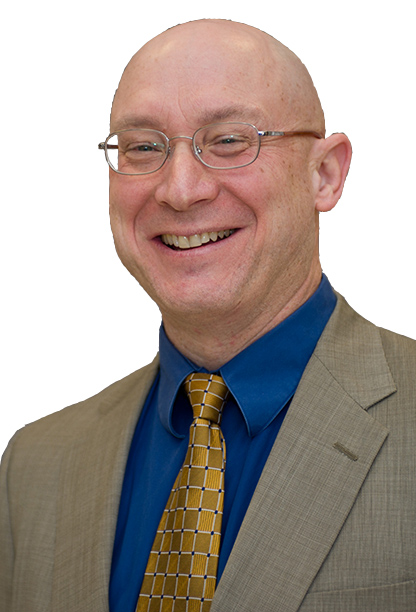
Julian Jose Rimoli

Julian Jose Rimoli
julian.rimoli@aerospace.gatech.edu
AE Profile Page

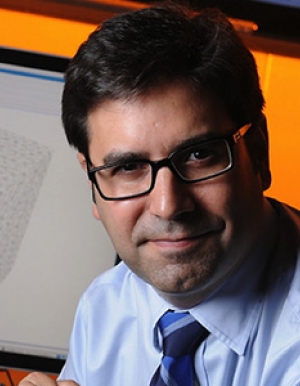
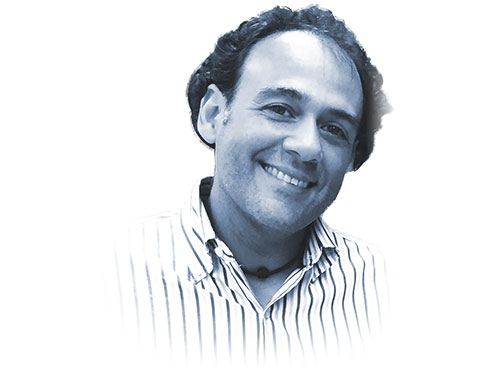
Julian J. Rimoli is an associate professor of aerospace engineering at the Georgia Institute of Technology. Rimoli obtained his engineering diploma in aeronautics from Universidad Nacional de La Plata in 2001. He moved to the United States in 2004 and pursued graduate studies at Caltech, receiving his M.Sc. in aeronautics in 2005 and his Ph.D. in aeronautics in 2009. He then accepted a postdoctoral associate position at the Department of Aeronautics and Astronautics at MIT in Cambridge, MA, where he conducted research and supervised graduate students for more than a year and a half. In January 2011, Rimoli joined Georgia Tech as assistant professor of aerospace engineering. His research interests lie within the broad field of computational solid mechanics with particular focus on aerospace applications. Rimoli has a special interest in problems involving multiple length and time scales, and in the development of theories and computational techniques for seamlessly bridging those scales. He is a member of AIAA, ASME, and USACM and is the recipient of the NSF CAREER Award, the Donald W. Douglas Prize Fellowship, the Ernest E. Sechler Memorial Award in Aeronautics, the James Clerk Maxwell Young Writers Prize, the Loockheed Dean's Award for Excellence in Teaching, and the Goizueta Junior Faculty Professorship.

Pratt and Whitney Professor, Aerospace Engineering
Associate Professor, Aerospace Engineering
Phone
404.894.8386
Additional Research

fracture and fatigue; Modeling; computational mechanics

Research Focus Areas
University, College, and School/Department
Google Scholar
https://scholar.google.com/citations?hl=en&user=R09eONcAAAAJ&view_op=list_works&sortby=pubdate
Computational Solid Mechanics Lab
Julian Jose
Rimoli
Show Regular Profile

Uzi Landman

Uzi Landman
uzi.landman@physics.gatech.edu
Physics Profile Page

Uzi Landman is an Israeli/American computational physicist, the Fuller E. Callaway Professor of Computational Materials Science at the Georgia Institute of Technology. 

He earned a B.Sc. in chemistry at the Hebrew University, Jerusalem in 1965, an M.Sc. in chemistry from the Weizmann Institute in 1966 and a D.Sc. from the Israel Institute of Technology in 1969. His research interests included surface and materials science, solid state physics and nanoscience. 

He joined the faculty of Georgia Tech in 1977 as an associate professor of physics and made professor in 1979, In 1988 he was promoted to regents professor of physics, a title he still holds. In 1992 he became director of the Center for Computational Materials science, at Georgia and in 1995 appointed Fuller E. Callaway endowed Chair in Computational Materials Science.  

In 1989, he was elected a Fellow of the American Physical Society "for applications of numerical simulation modeling of both the status structure and nonequilibrium dynamics of solid surfaces, interfaces, and small clusters."  In 2000, he was awarded the Feynman Prize in Nanotechnology by the Foresight Institute. 

He received the 2005 Aneesur Rahman Prize for Computational Physics, which is the highest honor given by the American Physical Society for work in computational physics. He was also awarded the 2008 Humboldt Research Award for Senior U.S. Scientists.

Regents' and Institute Professor, School of Physics
F.E. Callaway Chair in Computational Materials Science
Director, Center for Computational Materials Science
Phone
404.894.3368
Office
Howey W411/W410
Additional Research

quantum materials; condensed matter systems; Surfaces and Interfaces; Epitaxial Growth

Research Focus Areas
University, College, and School/Department
Google Scholar
https://scholar.google.com/citations?hl=en&user=mFl_LRcAAAAJ&view_op=list_works&sortby=pubdate
Uzi
Landman
Show Regular Profile

Guillermo Goldsztein

Guillermo Goldsztein
ggold@math.gatech.edu

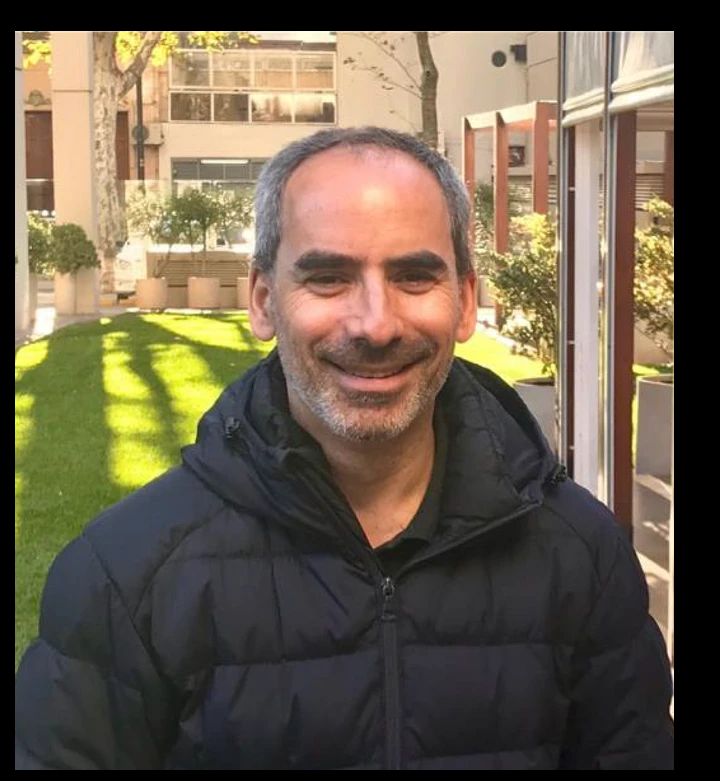
Professor Goldsztein is originally from Buenos Aires, Argentina. In 1992 he received his undergraduate degree in mathematics from the University of Buenos Aires and in 1997 a Ph.D. in mathematics from MIT. During the three following years (1997-2000), he was a postdoctoral scholar and lecturer in applied mathematics at CalTech. Since 2000, he has been a faculty member of the School of Mathematics of Georgia Tech, where he is now a full professor. Professor Goldsztein enjoys applying mathematics that can be used in other other fields of science such as computational biology, machine learning, and the intersection between math and physics. Machine learning is among his areas of expertise.

Professor, School of Mathematics
Phone
404.894.2286
Office
Skiles 112
Additional Research

computational mechanics

Research Focus Areas
University, College, and School/Department
LinkedIn
Guillermo
Goldsztein
Show Regular Profile

Karl Jacob

Karl Jacob
karl.jacob@mse.gatech.edu

Karl I. Jacob, a professor of Materials Science and Engineering with a joint appointment in the G. W. Woodruff School of Mechanical Engineering, teaches graduate and undergraduate courses on polymer physics and engineering, rheology, and mechanics of polymeric materials. His graduate work was in the area of numerical analysis of vibrating three-dimensional structures. He came to Georgia Tech from DuPont Corporation in 1995. His initial work at the DuPont Dacron Research Laboratory was in the area of fiber-reinforced composite materials and in the development and modeling of fiber spinning processes. He then moved to the DuPont Central Research and Development Department, where he was involved in molecular modeling, computational chemistry, and diffusion.

Jacob is a member of the American Academy of Mechanics, the American Society of Mechanical Engineers, the Sigma Xi Research Society, and the Phi Kappa Phi Honor Society.

Professor, School of Materials Science and Engineering and School of Mechanical Engineering
Phone
404.894.2541
Office
MRDC-1 4509
Additional Research

"Dr. Jacob's research is directed at stress induced phase changes, nanoscale characterization of materials, synthesis of polymeric nanofibers, mechanical behavior of fiber assemblies (particularly related to biological systems and biomimitic systems), nanoparticle reinforced composites, transdermal drug delivery systems, large scale deformation of rubbery (networked) polymers, and nanoscale fracture of materials. The objectives in this work, using theoretical, computational and experimental techniques, is to understand the effect of micro- and nano- structures in the behavior of materials in order to try to design the micro/nano structures for specific materials response. Dr. Jacob plans are to continue current research interests with a multidisciplinary thrust with more emphasis in bio related areas and to start some work on the dynamic behavior of materials and structures. Graduate students could benefit from the interdisciplinary nature of the work combining classical continuum mechanics with nanoscale analysis for various applications, particularly in the nano and bio areas. Dr. Jacob has extensive experience in vibrations and stability of structures, mechanics of polymeric materials, behavior of fiber assemblies, stress-induced phase transformation, diffusion, and molecular modeling. His research involves the application of mechanics principles, both theoretical and experimental, in the analysis and design of materials for various applications.";Fibers; smart textiles; fuel cells; Polymeric composites

University, College, and School/Department
MSE Profile Page
Karl
Jacob
I.
Show Regular Profile

Seung Soon Jang

Seung Soon Jang
SeungSoon@mse.gatech.edu
MSE Profile Page

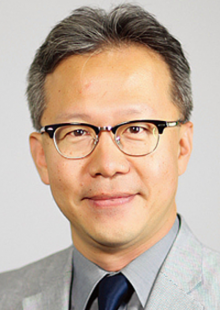
Seung Soon Jang joined the School of Materials Science and Engineering at the Georgia Institute of Technology in July 2007. Jang worked at Samsung Electronics and the Materials and Process Simulation Center (MSC) at CalTech performing various researches in nanoelectronics, fuel cell, and interfacial systems as a director of Supramolecular Technology for six years.

His research interest includes computations and theories to characterize and design nanoscale systems based on the molecular architecture-property relationship, which are especially relevant to molecular electronics, molecular machines, fuel cell technology and biotechnology.

Professor, School of Materials Science and Engineering
Director, Computational NanoBio Technology Lab
Phone
404.385.3356
Office
Love 351
Additional Research

Jang's research interest is to characterize and design nanoscale systems based on the molecular architecture-property relationship using computations and theories, which are especially relevant to designing new biomaterials for drug delivery and tissue engineering. Currently, he is focusing on 1) NanoBio-mechanics for DNA, lipid bilayer, and hydrogel systems; 2) Molecular interaction of Alzheimer proteins with various small molecules. Dr. Jang is also interested in various topics such as nanoelectronics, nanostructured energy technologies for fuel cell, battery and photovoltaic devices.;Computational mechanics; Nanostructured Materials; Polymeric composites; Biomaterials; Fuel Cells; Delivery and Storage

Google Scholar
https://scholar.google.com/citations?hl=en&user=SW0u-asAAAAJ&view_op=list_works&sortby=pubdate
Computational NanoBio Technology Lab
Seung Soon
Jang
Show Regular Profile

Alberto Fernandez-Nieves

Alberto Fernandez-Nieves
afn3@gatech.edu
Soft Condensed Matter Laboratory

Soft materials are materials whose properties are determined by internal structures with dimensions between atomic sizes and macroscopic scales. They are characterized by energies that are typically comparable to kT. As a result, they have low elastic moduli, often ~1-10 Pascals. Typical soft materials include liquid crystals, polymers, colloidal suspensions and emulsion drops. These materials, unlike conventional simple liquids, are locally heterogeneous and can have broken symmetries that affect their physical properties. Hence, although they often exhibit liquid-like behavior, soft materials also often exhibit properties of solids. Our laboratory studies the physics of soft materials with a focus on the connection between microscopic order and macroscopic properties. The underlying theme is to pursue basic understanding and address fundamental questions. However, we also address applied problems and pursue industrial collaborations since many of the materials we study can be viewed as model systems for those that are often used in applications. Current projects include (i) studying the phase and non-equilibrium behavior and properties of dense microgel suspensions, (ii) understanding the consequences of confinement and curvature over the equilibrium states of ordered materials, which in many cases require the existence of topological defects in their ground states, and (iii) electrohydrodynamics of toroidal droplets and jets.

Associate Professor, School of Physics
Director, Soft Condensed Matter Laboratory
Phone
404.385.3667
Office
Boggs B19
Additional Research

Physics of soft materials with a focus on the connection between microscopic order and macroscopic properties, hydrodynamics, advanced characterization, polymers, computational mechanics

University, College, and School/Department
Google Scholar
https://scholar.google.com/scholar?hl=en&q=alberto+fernandez-nieves&btnG=&as_sdt=1,11&as_sdtp=
Physics Profile Page
Alberto
Fernandez-Nieves
Show Regular Profile

Rampi Ramprasad

Rampi Ramprasad
rampi.ramprasad@mse.gatech.edu
MSE Profile Page

Ramprasad joined the School of Materials Science and Engineering at Georgia Tech in February 2018. Prior to joining Georgia Tech, he was the Centennial Term Professor of Materials Science and Engineering at the University of Connecticut. He joined the University of Connecticut in Fall 2004 after a 6-year stint with Motorola’s R&D laboratories at Tempe, AZ. Ramprasad received his B. Tech. in Metallurgical Engineering at the Indian Institute of Technology, Madras, India, an M.S. degree in Materials Science and Engineering at the Washington State University, and a Ph.D. degree also in Materials Science and Engineering at the University of Illinois, Urbana-Champaign.

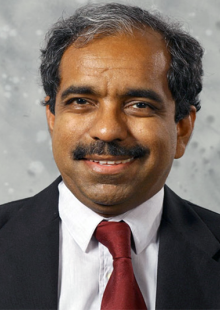
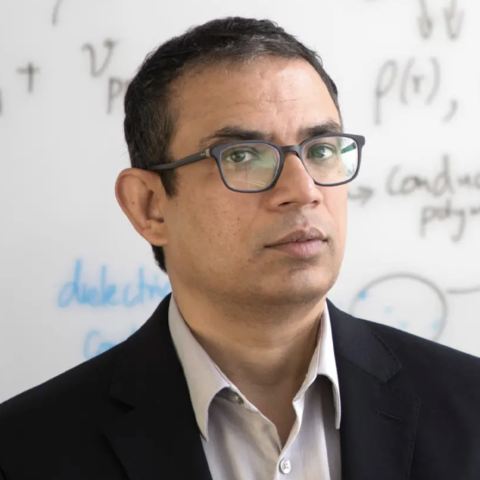
Ramprasad’s area of expertise is in the development and utilization of computational and data-driven (machine learning) methods aimed at the design and discovery of new materials. Materials classes under study include polymers, metals and ceramics (mainly dielectrics and catalysts), and application areas include energy production and energy storage. Prof. Ramprasad’s research has been funded by the Office of Naval Research (ONR), the National Science Foundation (NSF), the Department of Energy (DOE), the Army Research Office (ARO), and Toyota Research Institute (TRI). He has lead a ONR-sponsored Multi-disciplinary University Research Initiative (MURI) in the past to accelerate the discovery of polymeric capacitor dielectrics for energy storage, and is presently leading another MURI aimed at the understanding and design of dielectrics tolerant to enormous electric fields.

Ramprasad is a Fellow of the American Physical Society, an elected member of the Connecticut Academy of Science and Engineering, and the recipient of the Alexander von Humboldt Fellowship and the Max Planck Society Fellowship for Distinguished Scientists.

Michael E. Tennenbaum Family Chair, Materials Science and Engineering
Georgia Research Alliance Eminent Scholar in Energy Sustainability
Phone
404.385.2471
Office
Love 366
Additional Research

Data Analytics; Materials discovery; Energy Storage; Modeling; Electronic Materials; Electronics

University, College, and School/Department
Ramprasad Group
Rampi
Ramprasad
Show Regular Profile

Chloé Arson

Chloé Arson
chloe.arson@ce.gatech.edu
CEE Profile Page

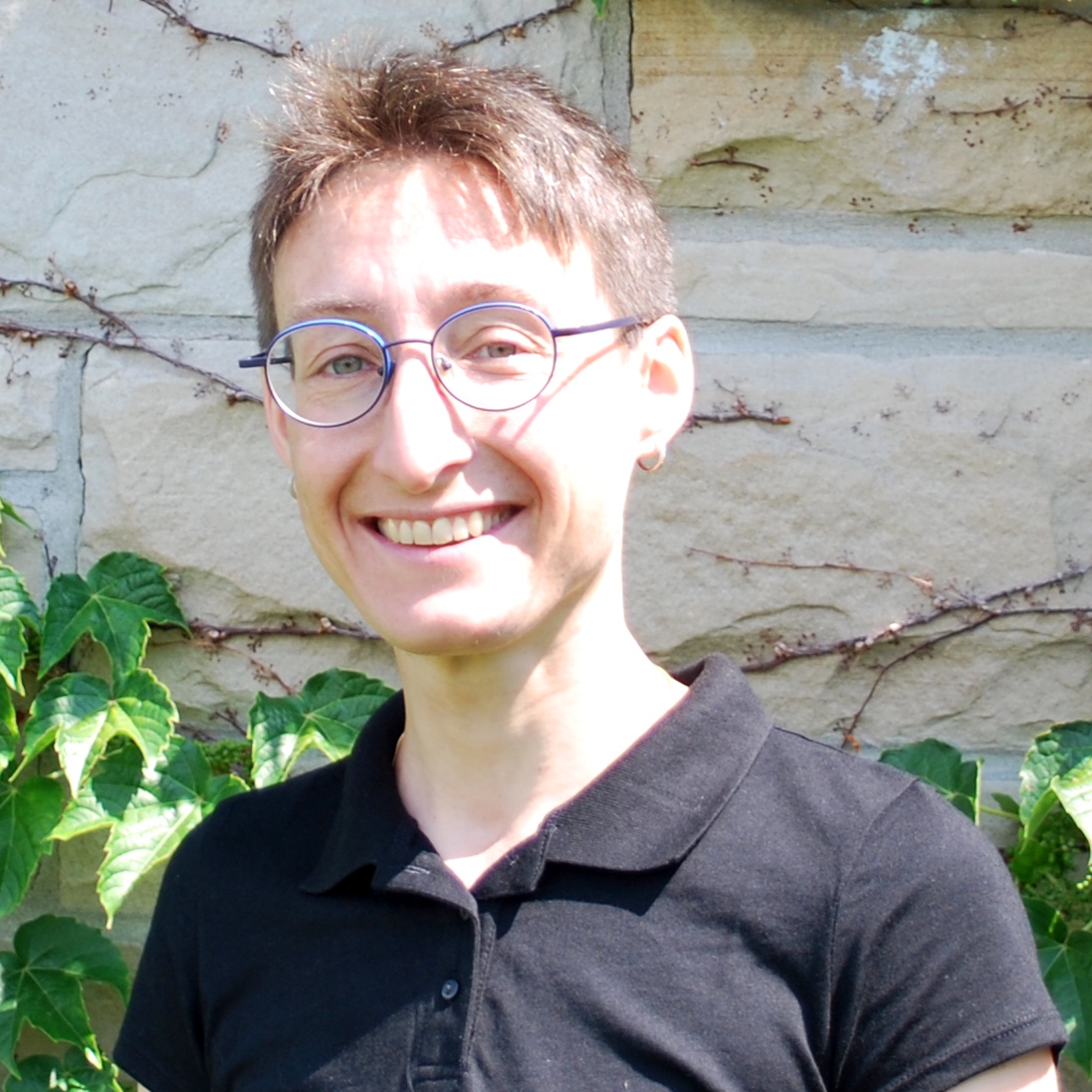
Chloé Arson is a professor in the School of Civil and Environmental Engineering (CEE) at Cornell University and an adjunct faculty in the Schools of CEE and Earth and Atmospheric Sciences at the Georgia Institute of Technology (Georgia Tech). She earned her Ph.D. at Ecole Nationale des Ponts et Chaussées (France) in 2009. She was an assistant professor at Texas A&M University from 2009 to 2012. Then, she worked as an assistant professor (2012-2016), associate professor (2016-2022) and professor (2022-2023) in the Georgia Tech School of CEE. Arson joined the faculty at Cornell University in Summer 2023.

Adjunct Professor, School of Civil and Environmental Engineering
Phone
404.385.0143
Additional Research

Numerical modeling, geomaterials, bio-inspired materials

Chloe
Arson
Show Regular Profile

David S. Sholl

David S.  Sholl
david.sholl@chbe.gatech.edu
ChBE Profile Page

Sholl’s research focuses on materials whose macroscopic dynamic and thermodynamic properties are strongly influenced by their atomic-scale structure. Much of this research involves applying computational techniques such as molecular dynamics, Monte Carlo simulations and quantum chemistry methods to materials of interest. Although the group's work is centered on computational methods, it involves extensive collaboration with experimental groups and industrial partners.

Professor, School of Chemical and Biomolecular Engineering
Phone
404.894.2822
Office
ES&T 2214
Additional Research

Metal-Organic Frameworks; Separation Membranes; Separations Technology; Carbon Capture; Hydrogen; SMART Manufacturing; Sustainable Manufacturing; Biochemicals

Google Scholar
https://scholar.google.com/citations?hl=en&user=BR7UkKYAAAAJ&view_op=list_works&sortby=pubdate
Sholl Research Group
David S.
Sholl
Show Regular Profile

Donald White

Donald White
don.white@ce.gatech.edu
CEE Profile Page

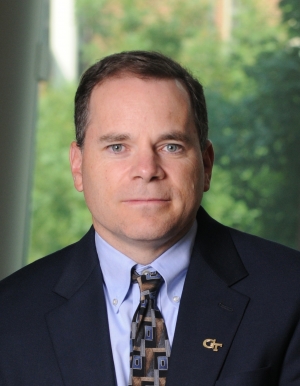
Don White is a professor in the School of Civil and Environmental Engineering (CEE). He has been a member of the CEE faculty at Georgia Tech since 1997. Prior to joining Georgia Tech, White served on the faculty at the Purdue University School of Civil Engineering from 1987 to 1996. He received his doctorate in Structural Engineering from Cornell University in 1988, and is an alumnus of North Carolina State University. Prior to graduate study, White worked as a structural engineer in Raleigh, NC.

White’s research covers a broad area of design and behavior of steel and composite steel-concrete structures as well as computational mechanics, methods of nonlinear analysis and applications to design. White is a member of the AISC Technical Committees 4, Member Design, and 10, Loads, Analysis and Stability, the AISI Bridge Design Advisory Group, the AISC Specification Committee, and several AASHTO/NSBA Steel Bridge Collaboration Task Groups. He is past Chair of the SSRC Task Group 29, Second-Order Inelastic Analysis of Frames and currently serves on the Executive Committee of the SSRC.

White has served as a major contributor to the steel design and structural analysis sections of the AASHTO LRFD Bridge Design Specifications and the ANSI/AISC Specification for Structural Steel Build­ings during the past 20 years. He was a lead author on the 1997 ASCE publication Effective Length and Notional Load Approaches for Assessing Frame Stability: Implications for American Steel Design, which was a precursor of the development of the AISC Direct analysis Method of design, referred to as the DM. Furthermore, White was a major participant ad hoc task group efforts leading to the development of the DM, which is the preferred method of stability design in the AISC Specification for Design of Steel Building Structures. Subsequent to these developments, the Metal Building Manufacturers Association (MBMA) provided White the opportunity to extend a number of these developments to updated procedures for design of frames using web-tapered members, which is captured within the AISC/MBMA Design Guide 25. White received the 2005 Special Achievement Award and the 2009 T.R. Higgins lectureship award from AISC for his research on design criteria for steel and composite steel-concrete members in bridge and building construction. He received the 2006 Shortridge Hardesty Award from ASCE for his research on advanced frame stability concepts and practical design formulations. For efforts leading to the comprehensive update to the 2005 AASHTO LRFD provisions for steel I- and box-girder bridge design, and unification of AASHTO LRFD provisions for straight and curved girder bridge design, White received the 2007 Richard S. Fountain Bridge Task Force Award and, with M. Grubb and W. Wright, the 2006 Richardson Medal from the Engineers’ Society of Western Pennsylvania.

White has conducted research on a wide range of topics relating to stability analysis and design and construction engineering of steel bridge structures. This includes work on construction simulation of curved and skewed steel bridges, investigation of the behavior of thin-web girders, and stability of components and structural systems during construction and in their final constructed condition. He was one of several researchers privileged to be involved closely with curved steel bridge experimental testing at the FHWA Turner Fairbank Highway Research Center from 1997 through 2005. White was P.I. and lead author of the NCHRP Report 725, Guidelines for Analytical Methods and Construction Engineering of Curved and Skewed Steel Girder Bridges. This work contributed additional substantive advances to the state-of-the-art in the engineering of curved and skewed steel girder bridge structures. White is currently P.I. on a multi-year FHWA-sponsored effort with the goal of modernizing the AASHTO LRFD provisions pertaining to all types of noncomposite box-section members including truss members, edge girders in cable-stayed spans, arch ribs, arch ties, and tower legs.

Professor, School of Civil and Environmental Engineering
Phone
404.894.5839
Office
Mason 5139B
Additional Research

Computer-Aided Engineering; computational mechanics; Structural Materials

Research Focus Areas
Google Scholar
https://scholar.google.com/citations?hl=en&user=XMsIVW0AAAAJ&view_op=list_works&sortby=pubdate
Donald
White
W.
Show Regular Profile