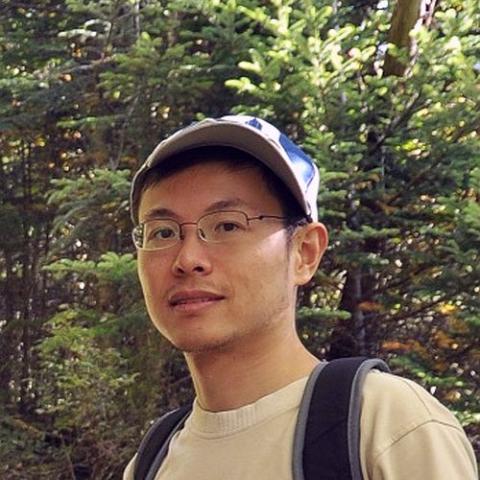
Julia Yang

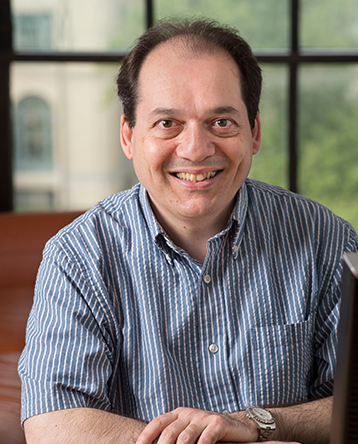
Portrait of Julia Yang
jhyang@gatech.edu
Yang Lab @ Georgia Tech

Julia Yang, Ph.D. is an Assistant Professor in the School of Chemical and Biomolecular Engineering at Georgia Tech. Her research has enabled fundamental understanding of battery materials by advancing computational approaches to resolve transport in disordered electrodes and explain reactivity in organic electrolytes. She is a co-author on more than 14 publications and four patents, a recipient of the Harvard University Center for the Environment Fellowship (2022-2024), and a NextProf Nexus alum (2023). She is deeply committed to educating the next generation of diverse minds by prioritizing equity, inclusivity, and belonging, starting from within the classroom and beyond. 

Prof. Yang received her B.S. in Materials Science and Engineering, with an additional major in Physics, from Carnegie Mellon University and her Ph.D. in Materials Science and Engineering from U.C. Berkeley as an NDSEG Fellow under the guidance of Prof. Gerbrand Ceder. During her graduate studies, she was an AI Resident with X, the Moonshot Factory. She led postdoctoral work at Harvard University as an Environmental Fellow working with Prof. Boris Kozinsky and collaborating with Prof. Ah-Hyung Alissa Park. 

Assistant Professor, School of Chemical and Biomolecular Engineering
Office
Bunger-Henry 303
Additional Research
  • Computational Chemistry
  • Organic Electronics
Google Scholar
https://scholar.google.com/citations?hl=en&user=GUYnP_cAAAAJ&view_op=list_works&sortby=pubdate
LinkedIn Profile Departmental Bio
Julia
Yang
Show Regular Profile

Nick Sahinidis

Nick Sahinidis
nikos@gatech.edu
Website

Nick Sahinidis is the Butler Family Chair and Professor in the H. Milton Stewart School of Industrial and Systems Engineering and the School of Chemical and Biomolecular Engineering at Georgia Tech. His current research activities are at the interface between computer science and operations research, with applications in various engineering and scientific areas, including: global optimization of mixed-integer nonlinear programs: theory, algorithms, and software; informatics problems in chemistry and biology; process and energy systems engineering. Sahinidis has served on the editorial boards of many leading journals and in various positions within AIChE (American Institute of Chemical Engineers). He has also served on numerous positions within INFORMS (Institute for Operations Research and the Management Sciences), including Chair of the INFORMS Optimization Society. He received an NSF CAREER award, the INFORMS Computing Society Prize, the MOS Beale-Orchard-Hays Prize, the Computing in Chemical Engineering Award, the Constantin Carathéodory Prize, and the National Award and Gold Medal from the Hellenic Operational Research Society. Sahinidis is a member of the U.S. National Academy of Engineering and a fellow of AIChE and INFORMS.

Gary C. Butler Family Chair, School of Chemical and Biomolecular Engineering
Professor, School of Industrial and Systems Engineering and School of Chemical and Biomolecular Engineering
Phone
(404) 894-3036
Research Focus Areas
Nick
Sahinidis
Show Regular Profile

Nian Liu

Nian Liu
nliu82@mail.gatech.edu
Website

Nian Liu began as an Assistant Professor at Georgia Institute of Technology, School of Chemical and Biomolecular Engineering in January 2017. He received his B.S. in 2009 from Fudan University (China), and Ph.D. in 2014 from Stanford University, where he worked with Prof. Yi Cui on the structure design for Si anodes for high-energy Li-ion batteries. In 2014-2016, he worked with Prof. Steven Chu at Stanford University as a postdoc, where he developed in situ optical microscopy to probe beam-sensitive battery reactions. Dr. Liu 's lab at Georgia Tech is broadly interested in the combination of nanomaterials, electrochemistry, and light microscopy for understanding and addressing the global energy challenges. Dr. Liu is the recipient of the Electrochemical Society (ECS) Daniel Cubicciotti Award (2014) and American Chemical Society (ACS) Division of Inorganic Chemistry Young Investigator Award (2015).

Associate Professor, School of Chemical and Biomolecular Engineering
Robert G. Miller Faculty Fellow, School of Chemical and Biomolecular Engineering
Phone
404-894-5103
Office
ES&T 1230
Additional Research

Electronic Systems; Packaging and Components; Nanostructures & Materials; Optoelectronics Photonics & Phononics; Semiconductors; Materials & Processes

Google Scholar
https://scholar.google.com/citations?user=nvMAHY8AAAAJ&hl=en
LinkedIn Related Site
Nian
Liu
Show Regular Profile

Martha Grover

Martha Grover
martha.grover@chbe.gatech.edu
Grover Group

Grover’s research activities in process systems engineering focus on understanding macromolecular organization and the emergence of biological function. Discrete atoms and molecules interact to form macromolecules and even larger mesoscale assemblies, ultimately yielding macroscopic structures and properties. A quantitative relationship between the nanoscale discrete interactions and the macroscale properties is required to design, optimize, and control such systems; yet in many applications, predictive models do not exist or are computationally intractable.

The Grover group is dedicated to the development of tractable and practical approaches for the engineering of macroscale behavior via explicit consideration of molecular and atomic scale interactions. We focus on applications involving the kinetics of self-assembly, specifically those in which methods from non-equilibrium statistical mechanics do not provide closed form solutions. General approaches employed include stochastic modeling, model reduction, machine learning, experimental design, robust parameter design, and estimation.

Professor, School of Chemical and Biomolecular Engineering
James Harris Faculty Fellow, School of Chemical and Biomolecular Engineering
Member, NSF/NASA Center for Chemical Evolution
Phone
404.894.2878
Office
ES&T 1228
Additional Research

Colloids; Crystallization; Organic and Inorganic Photonics and Electronics; Polymers; Discrete atoms and molecules interact to form macromolecules and even larger mesoscale assemblies, ultIMaTely yielding macroscopic structures and properties. A quantitative relationship between the nanoscale discrete interactions and the macroscale properties is required to design, optimize, and control such systems; yet in many applications, predictive models do not exist or are computationally intractable. The Grover group is dedicated to the development of tractable and practical approaches for the engineering of macroscale behavior via explicit consideration of molecular and atomic scale interactions. We focus on applications involving the kinetics of self-assembly, specific those in which methods from non-equilibrium statistical mechanics do not provide closed form solutions. General approaches employed include stochastic modeling, model reduction, machine learning, experimental design, robust parameter design, estIMaTion, and optimal control, monitoring and control for nuclear waste processing and polymer organic electronics

Google Scholar
https://scholar.google.com/citations?hl=en&user=PgpLoqIAAAAJ&view_op=list_works&sortby=pubdate
ChBE Profile Page
Martha
Grover
A.
Show Regular Profile

Xiao Liu

Xiao Liu
xiao.liu@isye.gatech.edu
Department Webpage
David M. McKenney Family Associate Professor, School of Industrial Systems Engineering
Office
Groseclose 339
Additional Research

Domain-aware data-driven methodologies for scientific and engineering applications, environment and energy, urban resilience, applied statistics, system informatics and reliability engineering, model interactions between solar energy production and wildfires.

Research Focus Areas
Personal Website of Xiao Liu
Xiao
Liu
Show Regular Profile

Omar Asensio

Omar Asensio
asensio@pubpolicy.gatech.edu
Website

Omar I. Asensio is an Associate Professor in the Jimmy and Rosalynn Carter School of Public Policy and the Director of the Data Science & Policy Lab at Georgia Tech. During the 2023-2024 academic year, he was a fellow at the Institute for Business in Global Society at Harvard Business School. Professor Asensio’s research focuses on climate and electrification strategies at the intersection of technology, AI, and sustainability. He employs large-scale data, field experiments, and human-in-the-loop AI systems to address innovation challenges in energy systems, transportation, and human mobility. He contributed to the zero emission vehicles (ZEV) policy guidance for COP26 and the Glasgow Climate Pact.

Prof. Asensio is a member of the U.S. National Academies of Sciences, Engineering, and Medicine (NASEM) New Voices 2021 cohort, which recognizes early- to-mid career leaders for exceptional contributions to science, engineering and medicine. He is a two-time former chair of the Natural Resource, Energy, and Environmental Policy section of APPAM, and is the recipient of the 2023 Faculty Excellence in Research Award from the Ivan Allen College. At Georgia Tech, he is a Brook Byers Institute for Sustainable Systems (BBISS) Fellow and a faculty affiliate of the Institute for Data Engineering & Science (IDEaS), the Machine Learning Center, and the Strategic Energy Institute (SEI).

Professor Asensio has received multiple awards for his research, including the National Science Foundation CAREER Award, the Alliance for Research on Corporate Sustainability (ARCS) Emerging Scholar Award, and the Research Impact on Practice Award (RIPA) from the Academy of Management’s Organizations & the Natural Environment Division (ONE-NBS). His work has been published in leading journals such as Nature Energy, Nature Sustainability, and PNAS. 

Professor Asensio’s research and teaching have been supported by awards from the National Science Foundation, Microsoft, ESRI, the U.S. State Department’s Diplomacy Lab, and the U.S. Department of Energy. His work has informed policy advisory communications for the U.S. National Academy of Sciences, the UK government, the United Nations Economic Commission for Latin America and the Caribbean, and the IndiaAI initiative. His research has been featured in popular press, including Bloomberg, Scientific American, Motor Trend, Fast Company, NPR’s All Things Considered, Yahoo! News, The Huffington Post, and the Washington Post.

Dr. Asensio serves as Associate Editor of Data & Policy journal published by Cambridge University Press. He earned his doctorate in Environmental Science & Engineering with specialties in Economics from UCLA.

Associate Professor, School of Public Policy
Additional Research

Cyber/ Information Technology; Strategic Planning; Building Technologies; Electric Vehicles; Policy/Economics; Public Policy; Energy Efficiency and Conservation

Data Science and Policy Lab
Omar
Asensio
Show Regular Profile

Iris Tien

Iris Tien
itien@ce.gatech.edu
Website
Assistant Professor, School of Civil and Environmental Engineering
Williams Family Early-Career Professor, School of Civil and Environmental Engineering
Phone
(404) 894-8269
Additional Research

Smart Infrastructure

University, College, and School/Department
Iris
Tien
Show Regular Profile

Saman Zonouz

Saman Zonouz
szonouz6@gatech.edu
Departmental Bio
Associate Professor, School of Cybersecurity and Privacy, School of Electrical and Computer Engineering
Saman
Zonouz
Show Regular Profile

Molei Tao

Molei Tao
mtao@gatech.edu
Personal Website

Molei Tao received B.S. in Math & Physics in 2006 from Tsinghua Univ. (Beijing) and Ph.D. in Control & Dynamical Systems with a minor in Physics in 2011 from Caltech (advisor: Houman Owhadi, co-advisor: Jerry Marsden). Afterwards, he worked as a postdoc in Computing & Mathematical Sciences at Caltech from 2011 to 2012, and then as a Courant Instructor at NYU from 2012 to 2014. From 2014 on, he has been an assistant, and then associate professor in School of Math at Georgia Tech. He is a recipient of W.P. Carey Ph.D. Prize in Applied Mathematics (2011), American Control Conference Best Student Paper Finalist (2013), NSF CAREER Award (2019), AISTATS best paper award (2020), IEEE EFTF-IFCS Best Student Paper Finalist (2021), Cullen-Peck Scholar Award (2022), GT-Emory AI.Humanity Award (2023), a Plenary Speaker at Georgia Scientific Computing Symposium (2024), a Keynote Speaker at (2024) International Conference on Scientific Computing and Machine Learning, SONY Faculty Innovation Award (2024), Best Poster Award at 2024 international conference “Recent Advances and Future Directions for Sampling” held at Yale, and Richard Duke Fellowship (2025).

Professor, School of Mathematics
Phone
(404) 894-8380;
Additional Research
  • Energy Harvesting
  • Smart Infrastructure
Molei
Tao
Show Regular Profile