Subhro Guhathakurta
- City and Regional Planning
- Cyber/ Information Technology
- Strategic Planning
- Visualizations
Nuclear
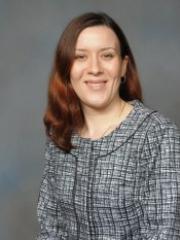
Dr. Akanksha Menon is an Assistant Professor in the Woodruff School of Mechanical Engineering at Georgia Tech. Prior to this, she was a Rosenfeld Postdoctoral Fellow at Lawrence Berkeley National Laboratory, where she performed research on hybrid membrane-thermal desalination processes using solar energy, and she also contributed to the development of thermal energy storage materials. Dr. Menon completed her Ph.D. at Georgia Tech, where she focused on developing semiconducting polymers and new device architectures for thermoelectric energy harvesting. She holds a bachelor's degree from Texas A&M University at Qatar, as well as a master’s degree in Mechanical Engineering from Georgia Tech.
Her research group at Georgia Tech is working on technologies for the water-energy nexus.
Dennis Hess’s research interests are in thin film science and technology, surface and interface modification and characterization, microelectronics processing and electronic materials. His group focuses on the establishment of fundamental structure-property relationships and their connection to chemical process sequences used in the fabrication of novel films, electronic materials, devices, and nanostructures. Control of the surface properties of materials such as dielectrics, semiconductors, metals, and paper or paper board by film deposition or surface modification allows the design of such surfaces for a variety of applications in microelectronics, packaging, sensors, microfluidics, and separation processes.
Electronics; Thin Films; Surfaces and Interfaces; plasma processing; Papermaking; Coatings & Barriers; Films & Coatings; Biomaterials
Baabak Ashuri is Executive Director of the Professional Master’s in Occupational Safety and Health (PMOSH), Professor of Civil and Environmental Engineering, Professor of Building Construction, and Fellow of the Brook Byers Institute for Sustainable Systems (BBISS) at Georgia Tech. Dr. Ashuri’s research has advanced theoretical foundations and applications of data analytics, economic decision analysis, and quantitative methods for infrastructure systems and construction engineering and management, allowing other researchers to use his findings for enhancing the performance of infrastructure operations on several subdomains directly related to pre-construction decisions, e.g., artificial intelligence (AI) and design automation, alternative contracting methods (ACMs), infrastructure finance and public-private partnership (P3), and energy technology investments. Dr. Ashuri has 242 publications in these fields, including 86 refereed journal articles, 103 peer-reviewed conference papers, 50 research reports and guidebooks, 1 co-edited book, and 2 referred book chapters. Dr. Ashuri secured a funding amount of over $17M from the National Science Foundation (NSF), Federal Highway Administration (FHWA), Department of Energy (DOE), Build America Beurre (BAC), Georgia Department of Transportation (Georgia DOT), South Carolina Department of Transportation (SCDOT), Construction Industry Institute (CII), Royal Institution of Chartered Surveyors (RICS), Southeast Transportation Consortium (STC), Louisiana Transportation Research Center (LTRC), Turner Construction, and Perkins + Will, to name a few. Dr. Ashuri received many awards including the American Society of Civil Engineers (ASCE) (Thomas Fitch Rowland paper award), the American Association of State Highway and Transportation Officials (AASHTO) High Value Research “Sweet Sixteen” Award, and the Design-Build Institute of America (DBIA) (Distinguished Leadership – Faculty). Dr. Ashuri has chaired the ASCE Construction Research Council (CRC) and served on the ASCE Construction Institute (CI) Board of Governors. Dr. Ashuri serves as the Southern Region Director of the USDOT Build America Center (BAC), which leads cutting-edge research on the use of innovative financing, funding, and project delivery solutions.
Building Technologies; System Design & Optimization
Mr. Caravati is a Principal and Founder of Applied Plasma Arc Technologies, LLC and a Senior Research Scientist and Professional Geologist at the Georgia Tech Research Institute (GTRI), the applied research arm of the Georgia Institute of Technology. He received his Bachelor’s degree in Geology from the University of Dayton, Ohio, and a Master of Science in Geology-Hydrogeology track from the University of South Florida in Tampa, Florida. He earned a Master’s degree in Business Administration (International Business) from the Stetson School of Business and Economics at Mercer University in Atlanta. He began work with GTRI in 2002.
Mr. Caravati served as a Hydrogeologist, Project Manager, and Project Director for a wide range of water resources and water quality projects in the United States, Mexico and England. He has led numerous water resource investigations that included delineating watersheds using aerial imagery and GIS tools, well installation and testing programs, monitoring and field data collection programs, and developing ground water flow and contaminant transport models for predictive studies. Since 2008, he served as Director of the Environmental Safety and Occupational Health Programs at GTRI, and as Program Manager for environmental engineering research for a global services provider. Mr. Caravati also served as a research lead in Georgia Tech’s Plasma Arc Research Facility.
Mr. Caravati’s areas of research include the design and prototyping of dry sanitation systems; testing of chemical and biological sensor systems for environmental applications; modeling of renewable energy systems for rural areas; water supply and wastewater studies for sustainability and energy efficiency; and water resource investigations for rural watersheds in developing countries. He serves as a Research Advisor to Georgia Tech’s Engineering Students Without Borders chapter, and in 2007 he led or participated in projects in Angola, Bolivia, and Yellowstone National Park, and served in an advisory capacity for projects in Kenya, Japan, Korea, Guam, and Ireland.
Solar
Ramprasad joined the School of Materials Science and Engineering at Georgia Tech in February 2018. Prior to joining Georgia Tech, he was the Centennial Term Professor of Materials Science and Engineering at the University of Connecticut. He joined the University of Connecticut in Fall 2004 after a 6-year stint with Motorola’s R&D laboratories at Tempe, AZ. Ramprasad received his B. Tech. in Metallurgical Engineering at the Indian Institute of Technology, Madras, India, an M.S. degree in Materials Science and Engineering at the Washington State University, and a Ph.D. degree also in Materials Science and Engineering at the University of Illinois, Urbana-Champaign.
Ramprasad’s area of expertise is in the development and utilization of computational and data-driven (machine learning) methods aimed at the design and discovery of new materials. Materials classes under study include polymers, metals and ceramics (mainly dielectrics and catalysts), and application areas include energy production and energy storage. Prof. Ramprasad’s research has been funded by the Office of Naval Research (ONR), the National Science Foundation (NSF), the Department of Energy (DOE), the Army Research Office (ARO), and Toyota Research Institute (TRI). He has lead a ONR-sponsored Multi-disciplinary University Research Initiative (MURI) in the past to accelerate the discovery of polymeric capacitor dielectrics for energy storage, and is presently leading another MURI aimed at the understanding and design of dielectrics tolerant to enormous electric fields.
Ramprasad is a Fellow of the American Physical Society, an elected member of the Connecticut Academy of Science and Engineering, and the recipient of the Alexander von Humboldt Fellowship and the Max Planck Society Fellowship for Distinguished Scientists.
Data Analytics; Materials discovery; Energy Storage; Modeling; Electronic Materials; Electronics
Pascal Van Hentenryck is an A. Russell Chandler III Chair and Professor in the H. Milton Stewart School of Industrial and Systems Engineering at Georgia Tech. Prior to this appointment, he was a professor of Computer Science at Brown University for about 20 years, he led the optimization research group (about 70 people) at National ICT Australia (NICTA) (until its merger with CSIRO), and was the Seth Bonder Collegiate Professor of Engineering at the University of Michigan. Van Hentenryck is also an Honorary Professor at the Australian National University.
Van Hentenryck is a Fellow of AAAI (the Association for the Advancement of Artificial Intelligence) and INFORMS (the Institute for Operations Research and Management Science). He has been awarded two honorary doctoral degrees from the University of Louvain and the university of Nantes, the IFORS Distinguished Lecturer Award, the Philip J. Bray Award for teaching excellence in the physical sciences at Brown University, the ACP Award for Research Excellence in Constraint Programming, the ICS INFORMS Prize for Research Excellence at the Intersection of Computer Science and Operations Research, and an NSF National Young Investigator Award. He received a Test of Time Award (20 years) from the Association of Logic Programming and numerous best paper awards, including at IJCAI and AAAI. Van Hentenryck has given plenary/semi-plenary talks at the International Joint Conference on Artificial Intelligence (twice), the International Symposium on Mathematical Programming, the SIAM Optimization Conference, the Annual INFORMS Conference, NIPS, and many other conferences. Van Hentenryck is program co-chair of the AAAI’19 conference, a premier conference in Artificial Intelligence.
Van Hentenryck’s research focuses in Artificial Intelligence, Data Science, and Operations Research. His current focus is to develop methodologies, algorithms, and systems for addressing challenging problems in mobility, energy systems, resilience, and privacy. In the past, his research focused on optimization and the design and implementation of innovative optimization systems, including the CHIP programming system (a Cosytec product), the foundation of all modern constraint programming systems and the optimization programming language OPL (now an IBM Product). Van Hentenryck has also worked on computational biology, numerical analysis, and programming languages, publishing in premier journals in these areas.
Van Hentenryck runs the Seth Bonder summer Camp in Computational and Data Science for middle- and high-school students every summer.
Electric Vehicles
Steven Biegalski is the Chair of Nuclear and Radiological Engineering and Medical Physics Program at Georgia Institute of Technology. He has three degrees in nuclear engineering from University of Maryland, University of Florida, and University of Illinois, respectively. Early in his career Dr. Biegalski was the Director of Radionuclide Operations at the Center for Monitoring Research. In this position Dr. Biegalski led international efforts to develop and implement radionuclide effluent monitoring technologies. This work supported both US national capabilities and international treaties. Dr. Biegalski was a faculty member at The University of Texas at Austin for 15 years and held the position of Reactor Director for The University of Texas at Austin TRIGA reactor for over a decade. He has advised 25 Ph.D. students to graduation and holds Professional Engineering licenses in the states of Texas and Virginia.
Nuclear
Dr. Grijalva joined the Georgia Institute of Technology in the summer of 2009 as Associate Professor of Electrical and Computer Engineering. He is the Director of the Advanced Computational Electricity Systems (ACES) Laboratory, where he conducts research on real-time power system control, informatics, and economics, and renewable energy integration in power. From 2012-2015, Dr. Grijalva served as the Strategic Energy Institute (SEI) Associate Director for Electricity Systems, responsible for coordinating large efforts on electricity research and policy at Georgia Tech. Dr. Grijalva received the Electrical Engineer degree from EPN-Ecuador in 1994, the M.S. Certificate in Information Systems from ESPE-Ecuador in 1997, and the M.S. and Ph.D. degrees in Electrical Engineering from the University of Illinois at Urbana-Champaign in 1999 and 2002, respectively. He was a post-doctoral fellow in Power and Energy Systems at the University of Illinois from 2003 to 2004. From 1995 to 1997, he was with the Ecuadorian National Center for Energy Control (CENACE) as engineer and manager of the Real-Time EMS Software Department. From 2002 to 2009, he was with PowerWorld Corporation as a senior software architect and developer of innovative real-time and optimization applications used today by utilities, control centers, and universities in more than 60 countries. Dr. Grijalva is a leading researcher on ultra-reliable architectures for critical energy infrastructures. He has pioneered work on de-centralized and autonomous power system control, renewable energy integration in power, and unified network models and applications. He is currently the principal investigator of various future electricity grid research projects for the US Department of Energy, ARPA-E, EPRI, PSERC as well as other Government organizations, research consortia, and industrial sponsors. Research interests: Power system and smart grid computation De-centralized and autonomous power control architectures Ultra-reliable electricity internetworks Seamless integration of large-scale renewable energy Electricity markets design and power system economics