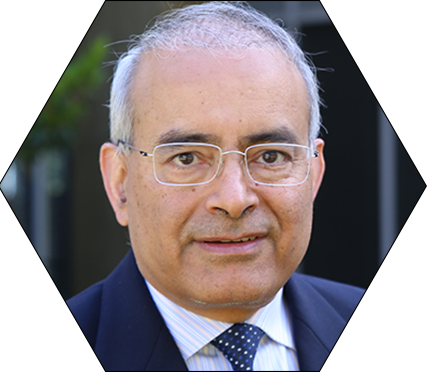
Lauren Garten

Lauren Garten
lauren.garten@mse.gatech.edu

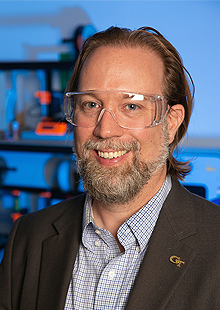
Lauren Garten joined the School of Materials Science and Engineering as an assistant professor in Fall 2021. Her group focuses on developing new materials for energy and electronic applications, particularly at the nexus between ferroelectricity, ferromagnetism, electronics, and photovoltaics. 

Lauren received her B.S. in ceramic engineering from the Missouri University of Science and Technology. She then went on to earn a Ph.D. in material science from the Pennsylvania State University for her work on ferroelectric, piezoelectric, and dielectric synthesis and characterization with Prof. Susan Trolier-McKinstry. She then became a post-doc at the National Renewable Energy Laboratory working on metastable materials for energy applications. After a very short stint as a material scientist at Sandia National Laboratory, she won the NRC Research Associateship from the National Academies of Science, Engineering, and Math which was hosted at the U.S. Naval Research Lab (NRL). She then received the Jerome and Isabella Karle Distinguished Scholar Fellowship from NRL to work on lead-free multiferroic materials and devices.

Assistant Professor, School of Materials Science and Engineering
Phone
404-894-5748
Office
Pettit 210
Additional Research

Electronics, Energy Harvesting, Energy Storage, Solar

University, College, and School/Department
Departmental Bio
Lauren
Garten
Show Regular Profile

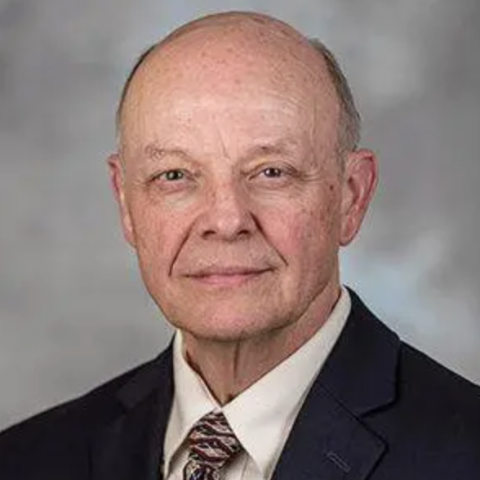
Scott Sinquefield

Scott Sinquefield
Scott.Sinquefield@rbi.gatech.edu
Website

Scott Sinquefield completed his Ph.D. in Chemical Engineering in 1998 at Oregon State University. He spent three years working with the Multi-Fuel Combustion Group at the Combustion Research Facility at Sandia National Labs (Livermore); where he performed the experimental portion of his thesis research. He joined the Chemical Recovery group at IPST in 1998 and was lead.engineer in the construction and operation of the Pressurize Entrained Flow Reactor facility. He now leads the research program on black liquor gasification. He has extensive experience in the design and construction of pilot research reactors and control systems. He also has expertise in boiler fire-side fouling and thermodynamic modeling of aqueous electrolyte systems.

Senior Research Engineer
Phone
(404) 385-0241
Additional Research

Gasification; Biofuels; Chemical Recovery; Environmental Processes; Separation Technologies

University, College, and School/Department
Scott
Sinquefield
Show Regular Profile

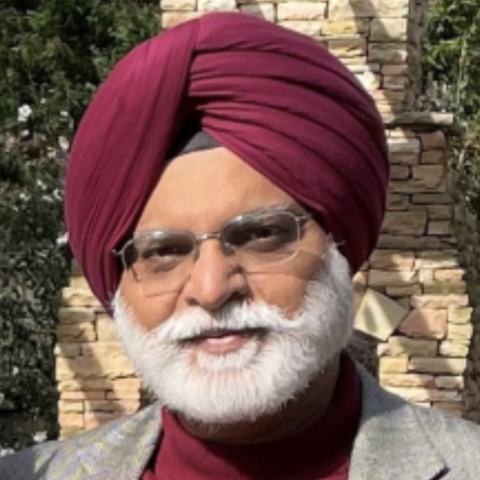
Preet Singh

Preet Singh
preet.singh@mse.gatech.edu
Corrosion and Materials Lab

Prior to joining MSE in July 2003 Professor Singh was a faculty member in Corrosion and Materials Engineering Group at The Institute of Paper Science and Technology (IPST) since 1996.  While in IPST Singh worked on fundamental as well as applied research projects related to the corrosion problems in the pulp and paper industry. From 1990 to 1996, he was a Senior Research Associate at Case Western Reserve University, Cleveland, Ohio, working on various materials and corrosion related research projects, including damage accumulation in metal matrix composites (MMCs), Environmental sensitive fracture of Al-alloys MMCs, and High temperature oxidation of Nb/Nb5Si3 composites. He received the Alcan International's Fellowship in 1988-90 to work on "Effects of Low Melting Point Impurities on Slow Crack Growth in Al Alloys,"  He has published over 50 papers in reputed scientific journals and conference proceedings. He is active member of NACE, TMS, TAPPI and has co-organized a number of international symposiums.

Reliable performance of the materials is very important for any industrial process and especially for the chemical process industry for the manufacture of a high quality product. Material selection is generally based on the required material properties, low initial capital investment, and minimum maintenance. Changes in the process parameters to improve products can often lead to higher corrosion susceptibilities of the plant materials. Moreover, with increase in capital cost, there is pressure to extend the life of existing plant equipment beyond its original design life. Corrosion and Materials Engineers are also playing a key role in selecting, maintaining, and modifying materials for changing needs for every industry. Corrosion Science and Engineering research includes understanding the basic mechanisms involved in material degradation in given environments and using that knowledge to develop a mitigation strategy against environment-induced failures

Professor, School of Materials Science and Engineering
Associate Chair of Graduate Studies, School of Materials Science and Engineering
Phone
404.894.6641
Office
IPST 246
Additional Research

Composites; fracture and fatigue; stress corrosion; Materials Failure and Reliability; Biofuels; Chemical Recovery; Environmental Processes; Sustainable Manufacturing; Energy & Water; Corrosion & Reliability

Google Scholar
https://scholar.google.com/citations?hl=en&user=AqrDFI8AAAAJ&view_op=list_works&sortby=pubdate
MSE Profile Page
Preet
Singh
Show Regular Profile

Carson Meredith

Carson Meredith headshot photo
carson.meredith@chbe.gatech.edu
ChBE Profile Page

Carson Meredith is Professor and James Preston Harris Faculty Fellow in the School of Chemical & Biomolecular Engineering at Georgia Tech and serves as Executive Director of the Renewable Bioproducts Institute (RBI). 


His research focuses on sustainable materials and bioproducts, with particular emphasis on biomass-derived polymers such as cellulose and chitin nanomaterials. Representing the contributions of students and collaborators, this work addresses critical challenges in packaging, coatings, and recycling, and has been featured in NewsweekNBC Nightly NewsBBC, and NPR. Meredith’s research also includes innovations in polymer films, foams, composites and particle adhesion.


Meredith has published over 140 peer-reviewed articles and book chapters, with more than 7,600 citations. His recent research includes the development of recyclable nanocellulose coatings and water vapor-resistant films using renewable materials. He has received multiple patents and has led over $30 million in federal and industry funded research. 


Meredith has served in leadership roles across campus and nationally. At Georgia Tech, he has led RBI since 2020, one of eleven interdisciplinary research institutes, where he has built a community of over 70 faculty focused on circular materials, bio industrial manufacturing, and low-impact papermaking. He is also a member of advisory boards for the Bioproducts Institute (University of British Columbia) and the DOE Joint Bioenergy Institute (JBEI) and serves on the editorial board of Green Materials


He teaches courses in forest product technology and sustainable materials, and co-founded GT-EQUAL, the first American Chemistry Society Bridge Program in chemical engineering. He also led the development of a graduate certificate in Data Science for the Chemical Industry and created a MOOC on High-Throughput Development of Materials, which has reached over 14,000 learners. 


Meredith earned his Ph.D. in Chemical Engineering from the University of Texas at Austin and his B.Ch.E. from Georgia Tech. 

Shape 

Research 

Meredith’s research centers on sustainable materials and bioproducts, with a focus on: 

  • Cellulose and chitin nanomaterials 

  • Renewable packaging and coatings         

  • Polymer thin films and foams

  • Particle adhesion 

  • Energy efficient drying in natural fiber manufacturing


His work integrates environmental sustainability into materials design and manufacturing, and he collaborates across disciplines to advance scalable climate solutions. 

Shape 

Awards and Distinctions 


Selected Publications 

  • Hickmann, T., Tao, L., Stingelin, N., Meredith, J.C. (2024). Low-water-permeability foils based on bio-renewable cellulose-derivatives. RSC Sustainability, 2, 3451–3455. 

  • Ji, Y., Shen, D.E., Lu, Y., Schueneman, G.T., Shofner, M.L., Meredith, J.C. (2023). Aqueous-based recycling of cellulose nanocrystal / chitin nanowhisker barrier coatings. ACS Sustainable Chemistry and Engineering, 11, 10874–10883. 

  • Shin, D., Choi, W.T., Lin, H., Qu, Z., Breedveld, V., Meredith, J.C. (2019). Humidity-Tolerant Capillary Viscous Adhesion of the Honey Bee Pollen Basket Fluid. Nature Communications, 10, 1379. 

  • Satam, C., Irvin, C.W., Lang, A.W., Jallorina, J.C.R., Shofner, M.L., Reynolds, J.R., Meredith, J.C. (2018). Spray-Coated Multilayer Cellulose Nanocrystal—Chitin Nanofiber Films for Barrier Applications. ACS Sustainable Chemistry and Engineering, 6, 10637–10644. 


A full list of publications is available on Google Scholar. 

Executive Director, Renewable Bioproducts Institute
Professor and James Harris Faculty Fellow, School of Chemical and Biomolecular Engineering
Phone
404.385.2151
Office
ES&T 1212
Additional Research

Catalysis; Cellulosic Nanomaterials; Separation Technologies; Nanocellulose Applications; Aerogels & Hydrogels; Films & Coatings; Coatings & Barriers; Biomaterials


Google Scholar
https://scholar.google.com/citations?hl=en&user=3qOG6PUAAAAJ&view_op=list_works&sortby=pubdate
https://www.linkedin.com/in/carson-meredith-8aa1838/ The Meredith Group Renewable Bioproducts Institute
Carson
Meredith
Show Regular Profile

Dennis Hess

Dennis Hess
dennis.hess@chbe.gatech.edu
ChBE Profile Page

Dennis Hess’s research interests are in thin film science and technology, surface and interface modification and characterization, microelectronics processing and electronic materials. His group focuses on the establishment of fundamental structure-property relationships and their connection to chemical process sequences used in the fabrication of novel films, electronic materials, devices, and nanostructures. Control of the surface properties of materials such as dielectrics, semiconductors, metals, and paper or paper board by film deposition or surface modification allows the design of such surfaces for a variety of applications in microelectronics, packaging, sensors, microfluidics, and separation processes.

Professor Emeritus, School of Chemical and Biomolecular Engineering
Phone
(404) 894-5922
Additional Research

Electronics; Thin Films; Surfaces and Interfaces; plasma processing; Papermaking; Coatings & Barriers; Films & Coatings; Biomaterials

University, College, and School/Department
Hess Group
Dennis
Hess
W.
Show Regular Profile

Mark Losego

Mark Losego
losego@gatech.edu
Research Website

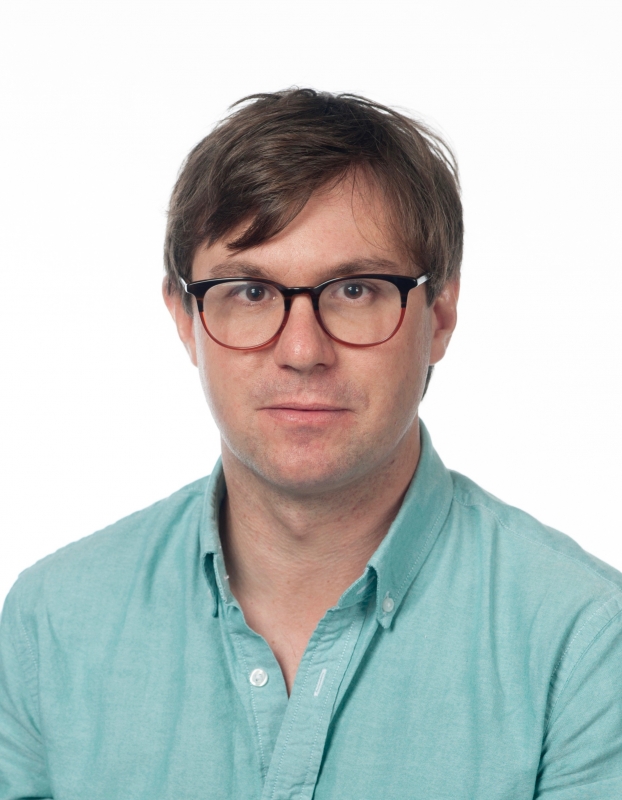
Mark D. Losego is a professor in the School of Materials Science and Engineering at Georgia Tech. The Losego research lab focuses on materials processing to develop novel organic-inorganic hybrid materials and interfaces for microelectronics, sustainable energy devices, national security technologies, and advanced textiles. The Losego Lab combines a unique set of solution and vapor phase processing methods to convert organic polymers into organic-inorganic hybrid materials, including developing the science to scale these processes for manufacturing.  Prof. Losego’s work is primarily experimental, and researchers in his lab gain expertise in the vapor phase processing of materials (atomic layer deposition, physical vapor deposition, vapor phase infiltration, etc.), the design and construction of vacuum equipment, interfacial and surface science, and materials and surface characterization. Depending on the project, Losego Lab researchers explore a variety of properties ranging from electrical to electrochemical to optical to thermal to sorptive to catalytic and more.

Professor, MSE Faculty Fellow, and Dean’s Education Innovation Professor
Phone
404.385.3630
Additional Research

Catalysis; Cellulose Nanomaterials; Coatings; Coatings and Barriers; Corrosion & Materials Engineering; Corrosion and Reliability; Energy; Films and Coatings; Microporous Materials; Nanocellulose Applications; Nanomaterials; New Materials; Polymers; Vapor Phase Processing

Related Site
Mark
Losego
Show Regular Profile

Rhett Mayor

Rhett Mayor
rhett.mayor@me.gatech.edu
Website

Dr. Mayor is a distinguished expert in thermal sciences, electro-mechanical machine design, and micro-manufacturing. As the inventor of the DwHX cooling technology for electric machines, he specializes in the research and development of advanced power electronics cooling, electric machine design, micro-power generation, and sustainable energy systems. Alongside his technical pursuits, Dr. Mayor has a rich entrepreneurial backdrop, having navigated product-oriented tech startups and led multiple advanced research and development programs. His expertise is sought in IP litigation, where he serves as a technical authority. 

He has presented keynotes and seminars on diverse topics, from micro-manufacturing and electric machines to energy systems. He teaches courses in mechanical engineering courses at Georgia Tech, including machine design, manufacturing processes, design thinking and internal combustion engines, including H2ICE, and has taught courses as a visiting lecturer in China, France, Saudi Arabia, and South Africa. He has a substantial academic contribution with over 120 publications in leading archival journals and conferences and is a member of ASME and IEEE and SME. 

Dr. Mayor's commitment goes beyond teaching and research as he engages in service as the Secretary of the Faculty. He strives to build on the learnings from the pandemic to expand the resourcefulness, understanding, and trust in shared governance. Moreover, Dr. Mayor serves as the faculty advisor for the Student Competition Center, further highlighting his commitment to student mentoring and leadership development. He looks forward to implementing AI in a robust manner in institute learnings, as a core capability in education.

Associate Professor, Woodruff School of Mechanical Engineering
Interim Associate Dean for Faculty and Graduate Student Affairs, College of Lifetime Learning
Phone
404.894.0301
Office
Callaway Manufacturing Research Building, 435
Additional Research

Manufacturing and Heat Transfer; Combustion and Energy Systems; Micro-factories; micro/meso-scale manufacturing processes; integrated micro-mechatronics; micro-engines; micro-power generation

Rhett
Mayor
Show Regular Profile

Natalie Stingelin

Natalie  Stingelin
natalie.stingelin@mse.gatech.edu
ChBE Profile Page

Previously a professor of organic functional materials at the Department of Materials, Imperial College of London, Natalie Stingelin joined Georgia Tech in 2016. She focuses her research on the broad field of organic functional materials, including organic electronics; multifunctional inorganic/organic hybrids; smart, advanced optical systems based on organic matter; and bioelectronics. Associate Editor of the Journal of Materials Chemistry, she has published more than 130 papers and 6 issued patents. She is a co-investigator of the newly established EPSRC Centre for Innovative Manufacturing in Large Area Electronics, and she leads the EC Marie-Curie Training Network 'INFORM' that involves 11 European partners. She was awarded the Institute of Materials, Minerals & Mining's Rosenhain Medal and Prize (2014) and the Chinese Academy of Sciences (CAS) President's International Fellowship Initiative (PIFI) Award for Visiting Scientists (2015).

Professor, School of Chemical and Biomolecular Engineering
Phone
404.894.5192
Office
ES&T L1220
Additional Research

Organic electronics; Bioelectronics

Research Focus Areas
University, College, and School/Department
Google Scholar
https://scholar.google.com/citations?hl=en&user=ZILIcOwAAAAJ&view_op=list_works&sortby=pubdate
Stingelin Lab
Natalie
Stingelin
Show Regular Profile

Martin Mourigal

Martin Mourigal
mourigal@gatech.edu
Physics Profile Page

Martin Mourigal received the B.S in Materials from Ecole des Mines de Nancy in 2004. He later received his M.S. and Ph.D. in physics from Ecole Polytechnique Federale (EPFL) located in Lausanne, Switzerland in 2007 and 2011, respectively. He was also a postdoctoral research fellow in John Hopkins University from 2011 until 2014. He joined Georgia Tech in 2015 and is currently an assistant professor in the School of Physics. Mourigal's lab focuses on the study of collective electronic and magnetic phenomena in quantum materials. His research exploits the unique strengths of neutron and X-ray scattering to probe the organization and the dynamics of matter at the nanoscale.In addition to his own lab research, Mourigal is the co-director of the Georgia Tech Quantum Alliance, a university wide program that will work towards solving problems in optimization, cryptography, and artificial intelligence. Mourigal was awarded the Cullen Peck Faculty Scholar Award from Georgia Tech in 2019. He was also awarded the National Science Foundation CAREER Award for excellence as a young educator and researcher in 2018.

Professor, School of Physics
Initiative Lead, Georgia Tech Quantum Alliance
Phone
404.385.5669
Office
Howey C202
Additional Research

Quantum Materials, Micro and Nanomechanics, Ferroelectronic Materials, Materials Data Sciences, Electronics

University, College, and School/Department
Google Scholar
https://scholar.google.com/citations?hl=en&user=utYY3jYAAAAJ&view_op=list_works&sortby=pubdate
Mourigal Lab
Martin
Mourigal
Show Regular Profile

Yogendra Joshi

Yogendra Joshi
yogendra.joshi@me.gatech.edu
ME Profile Page

Prior to joining the Georgia Tech faculty in 2001 as a Professor, Yogendra Joshi held academic positions at the University of Maryland, College Park, and the Naval Postgraduate School, Monterey, California. He also worked in the semiconductor assembly industry on process thermal model development. He was named to the McKenney/Shiver Chair in 2004.

John M. McKenney and Warren D. Shiver Distinguished Chair, George W. Woodruff School of Mechanical Engineering
Professor, George W. Woodruff School of Mechanical Engineering and School of Electrical and Computer Engineering
Phone
404.385.2810
Office
Love 338
Additional Research

Thermal SystemsSystem Design & Optimization

Google Scholar
https://scholar.google.com/citations?hl=en&user=YIW1IqcAAAAJ&view_op=list_works&sortby=pubdate
Microelectronics & EmergingTechnologies Thermal Lab
Yogendra
Joshi
Show Regular Profile