Seung Soon Jang

Seung Soon Jang
SeungSoon@mse.gatech.edu
MSE Profile Page

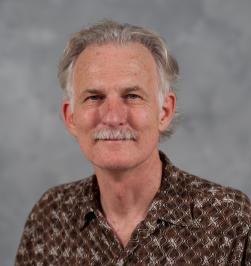
Seung Soon Jang joined the School of Materials Science and Engineering at the Georgia Institute of Technology in July 2007. Jang worked at Samsung Electronics and the Materials and Process Simulation Center (MSC) at CalTech performing various researches in nanoelectronics, fuel cell, and interfacial systems as a director of Supramolecular Technology for six years.

His research interest includes computations and theories to characterize and design nanoscale systems based on the molecular architecture-property relationship, which are especially relevant to molecular electronics, molecular machines, fuel cell technology and biotechnology.

Professor, School of Materials Science and Engineering
Director, Computational NanoBio Technology Lab
Phone
404.385.3356
Office
Love 351
Additional Research

Jang's research interest is to characterize and design nanoscale systems based on the molecular architecture-property relationship using computations and theories, which are especially relevant to designing new biomaterials for drug delivery and tissue engineering. Currently, he is focusing on 1) NanoBio-mechanics for DNA, lipid bilayer, and hydrogel systems; 2) Molecular interaction of Alzheimer proteins with various small molecules. Dr. Jang is also interested in various topics such as nanoelectronics, nanostructured energy technologies for fuel cell, battery and photovoltaic devices.;Computational mechanics; Nanostructured Materials; Polymeric composites; Biomaterials; Fuel Cells; Delivery and Storage

Google Scholar
https://scholar.google.com/citations?hl=en&user=SW0u-asAAAAJ&view_op=list_works&sortby=pubdate
Computational NanoBio Technology Lab
Seung Soon
Jang
Show Regular Profile

Claire Berger

cb299@gatech.edu
Website

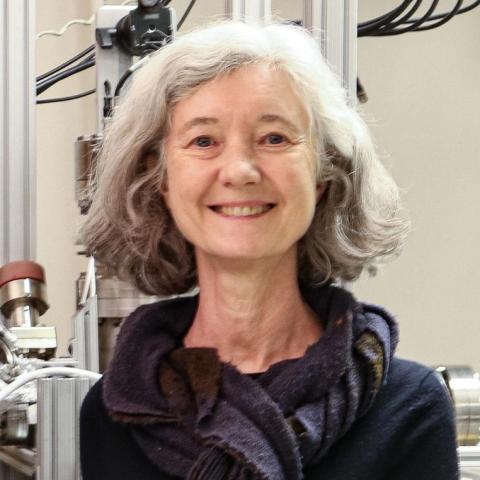
Claire Berger is Director of Research at the French National Center for Scientific Research - Néel Institute working at the Georgia Institute of Technology in W. A. de Heer’s group. She obtained the PhD in Physics from the University of Grenoble, France, with a dissertation on the electronic properties of AlMn quasicrystals. She then moved to a postdoc position at the Centre d’Etudes Atomiques, where she produced and studied amorphous films, and was hired as a researcher at the CNRS ‘s Laboratory for Study of Electronic Properties of Solids (LEPES), in Grenoble. She focused the first part of her carrier on electronic properties of quasicrystalline materials grown and characterized at LEPES. She contributed to the experimental evidence for a metal-insulator transition in these metal- based compounds. 

At Georgia Tech, her current scientific interests are primarily nanoscience and electronic property of graphene-based systems. She co-authored the first article demonstrating the two dimensional properties of graphene and proposing graphene for electronics, and together with Walt de Heer and Phil First she co-authored the first patent for graphene electronics (2003). 

She is co-author of more than 200 publications in international journals, has a citation index of 10,880 and an H index of 41.

Professor of the Practice, School of Physics
Phone
(404) 385-1685
University, College, and School/Department
Claire
Berger
Show Regular Profile

Ajeet Rohatgi

Ajeet Rohatgi
ajeet.rohatgi@ece.gatech.edu
ECE Profile Page

Ajeet Rohatgi received the B.S. (E.E.) degree from Indian Institute of Technology in 1971, the M.S. (Materials Engineering) from Virginia Polytechnic Institute and State University in 1973, and the Ph.D. in Metallurgy and Materials Science from Lehigh University in 1977. He joined the Westinghouse Research and Development Center in Pittsburgh, Pennsylvania in 1977 and became a Westinghouse Fellow while working on the science and technology of photovoltaic and microelectronic devices. Rohatgi joined the ECE faculty at Georgia Tech in 1985 and started a program on photovoltaics, which has become one of the best in the country. He has become an internationally recognized leader in photovoltaics. He is the founding director of the first university-based DOE Center of Excellence in Photovoltaic Research and Education. He is the author of more than 300 publications and holds 10 U.S. patents. Rohatgi has received numerous awards and distinctions from professional societies and Georgia Tech. He is the founder and CTO for Suniva.

Regents' Professor, School of Electrical and Computer Engineering
John H. Weitnauer, Jr. Chair, College of Engineering
Georgia Research Alliance Eminent Scholar
Phone
404.894.7692
Office
VL W121
Additional Research

silicon devices; solar cells; dielectrics; Compund Semiconductors; solar energy

Google Scholar
https://scholar.google.com/citations?hl=en&user=qJ98P7EAAAAJ&view_op=list_works&sortby=pubdate
University Center of Excellence for Photovoltaics
Ajeet
Rohatgi
Show Regular Profile

Gleb Yushin

Gleb Yushin
gleb.yushin@mse.gatech.edu
YUSHIN GROUP

Gleb Yushin is a Professor at the School of Materials Science and Engineering at Georgia Institute of Technology and a Co-Founder of several companies, including Sila Nanotechnologies, Inc.. For his contributions to materials science, Yushin has received numerous awards and recognitions, including Kavli Fellow Award, R&D 100 Award (Y-Carbon's application), Honda Initiation Grant Award, National Science Foundation CAREER Award, Air Force Office of Scientific Research Young Investigator Award, and several distinctions from National Aeronautics and Space Administration (NASA), such as Nano 50 Award. Dr. Yushin has co-authored over 30 patents and patent applications, over 100 invited presentations and seminars and over 100 publications on nanostructured Electronic Materials related applications, including papers in Science, Nature Materials and other leading journals. His current research is focused on advancing energy storage materials and devices for electronics, transportation and grid applications.

Professor, School of Materials Science and Engineering
Phone
404.385.3261
Office
Love 371
Additional Research

CharacterizationMeasurementsPhotovoltaicsPolymersProcessing, Fabrication, & ManufacturingSynthesis

Google Scholar
https://scholar.google.com/citations?hl=en&user=TwX62mwAAAAJ&view_op=list_works&sortby=pubdate
LinkedIn MSE Profile Page
Gleb
Yushin
Show Regular Profile

Walter de Heer

Walter de Heer
eheer@physics.gatech.edu
Physics Profile

Walter Alexander “Walt” de Heer is a Dutch physicist and nanoscience researcher known for discoveries in the electronic shell structure of metal clusters, magnetism in transition metal clusters, field emission and ballistic conduction in carbon nanotubes, and graphene-based electronics.

De Heer earned a doctoral degree in Physics from the University of California, Berkeley in 1986 under the supervision of Walter D. Knight. He worked at the École Polytechnique Fédérale de Lausanne in Switzerland from 1987 to 1997, and is currently a Regents' Professor of Physics at the Georgia Institute of Technology. He directs the Epitaxial Graphene Laboratory in the School of Physics and leads the Epitaxial Graphene Interdisciplinary Research Group at the Georgia Tech Materials Research Science and Engineering Center.

Regents' Professor, School of Physics
Phone
(404) 894-7879
Additional Research

Electronics; Carbon Nanotubes; Epitaxial Growth; Graphene; Nanomaterials; quantum materials

University, College, and School/Department
Google Scholar
https://scholar.google.com/citations?hl=en&user=klW4cOMAAAAJ&view_op=list_works&sortby=pubdate
Website Wikipedia Article
Walter
de Heer
Show Regular Profile

W. Jud Ready

Jud Ready
jud.ready@gtri.gatech.edu
MSE Profile Page

W. Jud Ready is the executive director of the Space Research Institute. Prior to this role, he served as associate director of external engagement for the Georgia Tech Institute for Matter and Systems and director of the Georgia Tech Center for Space Technology and Research. He has also been an adjunct professor in the School of Materials Science and Engineering at Georgia Tech and a principal research engineer on the research faculty of Georgia Tech Research Institute (GTRI) for over a dozen years. Prior to joining the Georgia Tech faculty, he worked for a major military contractor (General Dynamics) as well as in small business (MicroCoating Technologies). He has served as PI or co-PI for grants totaling ~$17M awarded by the Army, Navy, Air Force, DARPA, NASA, NSF, NIST, industry, charitable foundations and the States of Georgia and Florida. His current research focuses primarily on energy, aerospace, nanomaterial applications, and electronics reliability.

Executive Director, Space Research Institute
Principal Research Engineer, Georgia Tech Research Institute
Phone
404.407.6036
Additional Research

Materials Failure and Reliability; Carbon Nanotubes; Integrated photonics; Photovoltaics; Solar

GTRI
Geogia Tech Research Institute > Electro-Optical Systems Laboratory
Google Scholar
https://scholar.google.com/citations?hl=en&user=Hf8dRC4AAAAJ&view_op=list_works&sortby=pubdate
W. Jud
Ready
Show Regular Profile

Samuel Graham

Samuel Graham
sam.graham@me.gatech.edu
ME Profile Page

Samuel Graham is the Rae S. and Frank H. Neely Professor in the School of Mechanical Engineering at the Georgia Institute of Technology. He also holds an appointment in the School of Materials Science and Engineering at Georgia Tech and a joint appointment with the Energy and Transportation Science Division at Oak Ridge National Laboratories. His research focuses on the packaging and reliability of electronic devices ranging from wide bandgap semiconductors to flexible organic electronics and wearable sensors. His is a member of the Center for Organic Photonics and Electronics at Georgia Tech and a co-founder of the Heat Lab which provides thermal solutions for electronics packaging.

Eugene C. Gwaltney, Jr. School Chair, Woodruff School Mechanical Engineering
Professor, Woodruff School of Mechanical Engineering
Director, Electronics Manufacturing and Reliability Laboratory
Phone
404.894.2264
Office
Love 339
Additional Research

Heat Transfer; Nanostructured Materials; Electronic Systems, Devices, Components, & Packaging; Materials Failure and Reliability; Thermal Systems

Google Scholar
https://scholar.google.com/citations?hl=en&user=Fm4mJrsAAAAJ&view_op=list_works&sortby=pubdate
Electronics Manufacturing and Reliability Laboratory
Samuel
Graham
Show Regular Profile

Rosario Gerhardt

Rosario Gerhardt
rosario.gerhardt@mse.gatech.edu
MSE Profile Page

Rosario A. Gerhardt joined the faculty of Georgia Tech as associate professor in January 1991.  She was promoted to full professor in 2001.  Prior to coming to Georgia Tech she worked as an assistant research professor at the Center for Ceramics Research at Rutgers University from 1986-1990 and as a post-doctoral research associate at Rutgers for two years and at Columbia University in New York City for one year.  She also worked as an ASEE/NASA Faculty Fellow at the NASA Marshall Space Flight Center in Huntsville, AL during summer 1995 and as a visiting professor at the Center for Nanomaterials Science (CNMS) at Oak Ridge National Laboratory in Oak Ridge, TN during the 2007-2008 academic year. She regularly interacts with researchers at various industrial companies and national laboratories. Her research work has been funded by the National Science Foundation, the U.S. Department of Energy, NASA and various industrial companies.

Gerhardt's research focuses on determining structure-property-processing relationships in a wide range of materials. Most recently, her research group has focused on making and characterizing polymer and ceramic composites containing conducting and semiconducting nanofillers and on the synthesis and assembly of nanoparticles into thin films useful for use as transparent electrodes, solar cell components, microwave heatable inserts, conductive paper, etc. Over the years, she has worked with a variety of ceramic materials such as dielectric insulators, ionic conductors and ceramic superconductors in bulk and thin film form, as well as with intrinsic conducting polymers. Her work also extends onto non-electronics related materials such as fiber and particulate reinforced composites and metallic alloys that are used for wear applications and as components in the hot-sections of gas turbine engines. Most of her work has dealt with the electrical and microstructural characterization of materials using impedance and dielectric spectroscopy, resistivity measurements, and structural characterization via microscopic techniques such as optical, SEM, TEM and AFM, and x-ray and neutron scattering methods. More recently, her group has also added various optical spectroscopy techniques to their repertoire of characterization methods (FTIR, UV-Vis and Raman).

Gerhardt is a fellow of the American Ceramic Society (ACeRS) and a member of the Materials Research Society(MRS), the IEEE/Dielectrics Division and Instrument and Measurement Division, the Metallurgical Society(TMS), the American Association for the Advancement of Science (AAAS), the American Society for Non-Destructive Testing (ASNT), the International Microelectronics and Packaging Society(IMAPS) and the Microscopy Society of America(MSA). She is also a member of Sigma Xi, Keramos and Tau Beta Pi. She has been active as an executive officer of the Electronics Division of the American Ceramic Society, having served as Chair of that division during the 2000-2001 year and on other capacities since then. She also serves as the faculty advisor for the Student Chapter of ACeRS and MRS at Georgia Tech and has been co-organizer of numerous symposia both at ACerS, MRS and other societies. She is a member of the National Research Council Associateship Panel Review Program. She is the author or co-author of over 200 refereed publications and has served as research advisor to more than 40 graduate students. Gerhardt and one of her students recently received one of the 2011 ASNT fellowship awards. 

One of Gerhardt’s long term research goals is to establish that electrical measurements can be used as a non-destructive method for microstructural characterization at all length scales. She was the leading organizer of a symposium series on the same subject at the Materials Research Society Meetings during the 1995, 1997 and 2001 Fall Meetings from which three proceedings books were published (MRS Proc. Vols. 411, 500 and 699). In addition, she teaches a graduate course at Georgia Tech (MSE7140) where she covers the theory and applications of impedance spectroscopy from the microstructural point of view.  She is currently writing a textbook on this subject, which is due to be published in 2013.  She is also the editor of a recent book entitled “Properties and Applications of Silicon Carbide” that was published by In-Tech publications in 2011


Professor and Goizueta Foundation Faculty Chair, School of Materials Science and Engineering
Phone
404.894.6886
Office
Love 168
Additional Research

Advanced Characterization; Ceramics; Conducting Polymers; Plasmonics; Nanostructured Materials; Printing Technology; Nanocellulose Applications; Films & Coatings; Biomaterials

Google Scholar
https://scholar.google.com/citations?hl=en&user=J1WD2TwAAAAJ&view_op=list_works&sortby=pubdate
Rosario
Gerhardt
Show Regular Profile