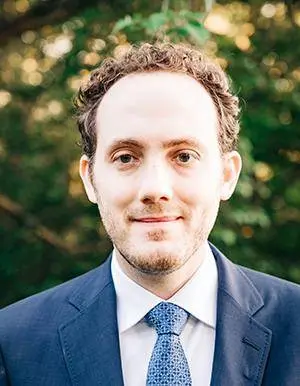
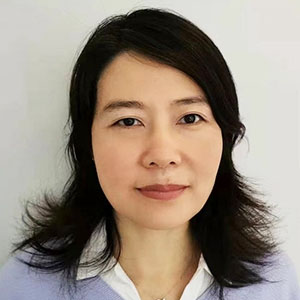
Meisha Shofner

Meisha Shofner
meisha.shofner@mse.gatech.edu
Shofner Lab

Meisha L. Shofner is a professor in the School of Materials Science and Engineering at Georgia Institute of Technology, joining the faculty following post-doctoral training at Rensselaer Polytechnic Institute. She received her B.S. in Mechanical Engineering from The University of Texas at Austin and her Ph.D. in Materials Science from Rice University. Prior to beginning graduate school, she was employed as a design engineer at FMC in the Subsea Engineering Division, working at two plant locations (Houston, Texas and the Republic of Singapore), and she is a registered Professional Engineer in Georgia.

Shofner’s research area is processing-structure-property relationships of polymers and composites. Specifically, she designs processing strategies to attain hierarchical structures in these materials to improve properties and has discovered scalable processing methods to produce auxetic structures and tensegrity-inspired structures. Additionally, she works with bioderived materials to produce composites with reduced environmental impact.  

Professor, School of Materials Science and Engineering
Phone
404.385.7216
Office
MRDC 4409
Additional Research

Biomolecular-Solids; Biomaterials; Composites; Polymers; Nanomaterials; Biofuels; Structure-property relationships in polymer nanocomposite materials; producing structural hierarchy in these materials for structural and functional applications.

Google Scholar
https://scholar.google.com/citations?hl=en&user=BrXwtO4AAAAJ&view_op=list_works&sortby=pubdate
MSE Profile Page
Meisha
Shofner
L.
Show Regular Profile

Kamran Paynabar

Kamran Paynabar
kamran.paynabar@isye.gatech.edu
Departmental Bio

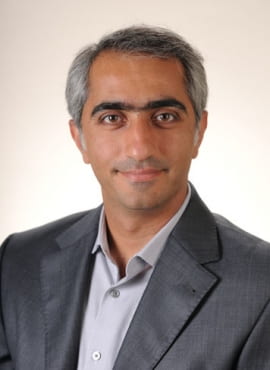
Kamran Paynabar is the Fouts Family Early Career Professor and Associate Professor in the H. Milton Stewart School of Industrial and Systems Engineering at Georgia Tech. He received his B.Sc. and M.Sc. in Industrial Engineering from Iran in 2002 and 2004, respectively, and his Ph.D. in Industrial and Operations Engineering from The University of Michigan in 2012. He also holds an M.A. in Statistics from The University of Michigan. His research interests comprise both applied and methodological aspects of machine-learning and statistical modeling integrated with engineering principles. He is a recipient of the INFORMS Data Mining Best Student Paper Award, the Best Application Paper Award from IIE Transactions, the Best QSR refereed paper from INFORMS, and the Best Paper Award from POMS. He has been recognized with the Georgia Tech campus level 2014 CETL/BP Junior Faculty Teaching Excellence Award and the Provost Teaching and Learning Fellowship. He served as the chair of QSR of INFORMS, and the president of QCRE of IISE.

Assistant Professor
Phone
404.385.3141
Office
Groseclose Building, Room 436
Additional Research
  • Aerospace
  • Artificial Intelligence
  • Automotive
  • Big Data Analytics
  • Biobased Materials
Personal Website
Kamran
Paynabar
Show Regular Profile

Guanghui (George) Lan

 Guanghui (George) Lan
george.lan@isye.gatech.edu
Website

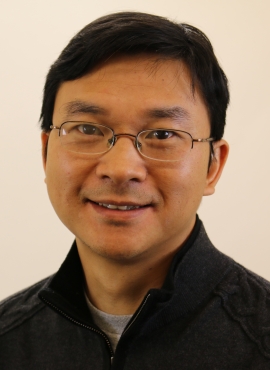
George Lan is an A. Russell Chandler III Professor of Industrial and Systems Engineering at Georgia Institute of Technology.  His research and teaching interests lie in theory, algorithms and applications of stochastic optimization and nonlinear programming.  Most of his current research concerns the design of efficient algorithms for solving challenging optimization problems, especially those arising from data analytics, machine learning, and reinforcement learning. He is actively pursuing the applications of these methodologies in healthcare and sustainability areas. Dr. Lan serves as the associate editor for Computational Optimization and Applications (2014 – present), Mathematical Programming (2016 – present) and SIAM Journal on Optimization (2016  – present). Dr. Lan is an associate director for the center of machine learning at Georgia Tech.

Associate Professor
Additional Research

Chromatin; Epigenetics    

Guanghui (George)
Lan
Show Regular Profile

Lily Cheung

Lily Cheung
lily.cheung@gatech.edu
Website

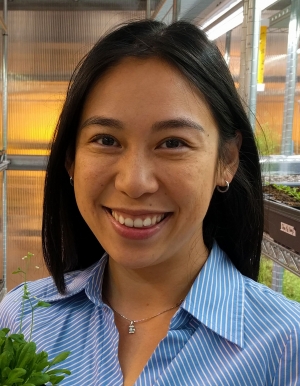
Lily Cheung got her research start as a sophomore at Rutgers University, where she graduated Summa Cum Laude with a B.S. in Chemical Engineering in 2008. She then earned her Ph.D. in Chemical Engineering from Princeton University in 2013. Under the supervision of Stanislav Shvartsman, she characterized gene regulatory networks controlling the development of the model organism Drosophila melanogaster, using a combination of molecular biology, genetics, and reaction-diffusion modeling.

During her postdoctoral training with Wolf Frommer at the Carnegie Institution for Science, she designed biomolecular sensors to quantify sugar transport in plants. Her current interests include the use of high-throughput quantitative techniques and mathematical modeling to advance our understanding of how metabolic and gene regulatory networks interact to control plant growth.

Lily is the recipient of a NSF NPGI Postdoctoral Fellowship in Biology, a NSF CAREER Award, and a Human Frontier Science Program Early Career Award.

Assistant Professor
Phone
404-894-2826
Office
ES&T L1230
Additional Research

Engineering of genetically encoded biosensors Quantitative fluorescence microscopy and image analysis Computational models of gene regulatory networks Transcriptional regulation and developmental biology of plants The past fifteen years has seen dramatic advancements in genome sequencing and editing. The cost of sequencing a genome has decreased by two orders of magnitude, giving rise to new systems-level approaches to biology research that aim to understand life as an emerging property of all the molecular interactions in an organism. At the same time, technologies that allow site-specific modifications of the genome are enabling researchers to manipulate multicellular organisms in unprecedented ways. From reductionist approaches to systems biology, and from conventional plant breeding to synthetic biology, the future of plant biology research relies on the adoption of computational methods to analyze experimental data and develop predictive models. In biomedicine, mathematical models are already revolutionizing drug discovery; in agriculture, they have the potential to generate more efficient, faster growing crop varieties. The goal of the Cheung lab is to bring quantitative techniques and mathematical modeling to plants in order to gain systems-level insight into their physiology and development - particularly to understanding how metabolic and gene regulatory networks interact to control homeostasis and growth.

Research Focus Areas
Related Site
Lily
Cheung
S.
Show Regular Profile

Karl Jacob

Karl Jacob
karl.jacob@mse.gatech.edu

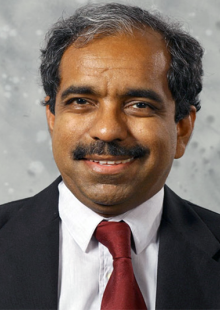
Karl I. Jacob, a professor of Materials Science and Engineering with a joint appointment in the G. W. Woodruff School of Mechanical Engineering, teaches graduate and undergraduate courses on polymer physics and engineering, rheology, and mechanics of polymeric materials. His graduate work was in the area of numerical analysis of vibrating three-dimensional structures. He came to Georgia Tech from DuPont Corporation in 1995. His initial work at the DuPont Dacron Research Laboratory was in the area of fiber-reinforced composite materials and in the development and modeling of fiber spinning processes. He then moved to the DuPont Central Research and Development Department, where he was involved in molecular modeling, computational chemistry, and diffusion.

Jacob is a member of the American Academy of Mechanics, the American Society of Mechanical Engineers, the Sigma Xi Research Society, and the Phi Kappa Phi Honor Society.

Professor, School of Materials Science and Engineering and School of Mechanical Engineering
Phone
404.894.2541
Office
MRDC-1 4509
Additional Research

"Dr. Jacob's research is directed at stress induced phase changes, nanoscale characterization of materials, synthesis of polymeric nanofibers, mechanical behavior of fiber assemblies (particularly related to biological systems and biomimitic systems), nanoparticle reinforced composites, transdermal drug delivery systems, large scale deformation of rubbery (networked) polymers, and nanoscale fracture of materials. The objectives in this work, using theoretical, computational and experimental techniques, is to understand the effect of micro- and nano- structures in the behavior of materials in order to try to design the micro/nano structures for specific materials response. Dr. Jacob plans are to continue current research interests with a multidisciplinary thrust with more emphasis in bio related areas and to start some work on the dynamic behavior of materials and structures. Graduate students could benefit from the interdisciplinary nature of the work combining classical continuum mechanics with nanoscale analysis for various applications, particularly in the nano and bio areas. Dr. Jacob has extensive experience in vibrations and stability of structures, mechanics of polymeric materials, behavior of fiber assemblies, stress-induced phase transformation, diffusion, and molecular modeling. His research involves the application of mechanics principles, both theoretical and experimental, in the analysis and design of materials for various applications.";Fibers; smart textiles; fuel cells; Polymeric composites

University, College, and School/Department

MSE Profile Page
Karl
Jacob
I.
Show Regular Profile

Akanksha Menon

Akanksha Menon
akanksha.menon@me.gatech.edu
Akanksha Menon Profile

Dr. Akanksha Menon is an Assistant Professor in the Woodruff School of Mechanical Engineering at Georgia Tech. Prior to this, she was a Rosenfeld Postdoctoral Fellow at Lawrence Berkeley National Laboratory, where she performed research on hybrid membrane-thermal desalination processes using solar energy, and she also contributed to the development of thermal energy storage materials. Dr. Menon completed her Ph.D. at Georgia Tech, where she focused on developing semiconducting polymers and new device architectures for thermoelectric energy harvesting. She holds a bachelor's degree from Texas A&M University at Qatar, as well as a master’s degree in Mechanical Engineering from Georgia Tech.

Her research group at Georgia Tech is working on technologies for the water-energy nexus.

Assistant Professor, Woodruff School of Mechanical Engineering
Research Focus Areas
Akanksha
Menon
Show Regular Profile

Lauren Garten

Lauren Garten
lauren.garten@mse.gatech.edu

Lauren Garten joined the School of Materials Science and Engineering as an assistant professor in Fall 2021. Her group focuses on developing new materials for energy and electronic applications, particularly at the nexus between ferroelectricity, ferromagnetism, electronics, and photovoltaics. 

Lauren received her B.S. in ceramic engineering from the Missouri University of Science and Technology. She then went on to earn a Ph.D. in material science from the Pennsylvania State University for her work on ferroelectric, piezoelectric, and dielectric synthesis and characterization with Prof. Susan Trolier-McKinstry. She then became a post-doc at the National Renewable Energy Laboratory working on metastable materials for energy applications. After a very short stint as a material scientist at Sandia National Laboratory, she won the NRC Research Associateship from the National Academies of Science, Engineering, and Math which was hosted at the U.S. Naval Research Lab (NRL). She then received the Jerome and Isabella Karle Distinguished Scholar Fellowship from NRL to work on lead-free multiferroic materials and devices.

Assistant Professor, School of Materials Science and Engineering
Phone
404-894-5748
Office
Pettit 210
Additional Research

Electronics, Energy Harvesting, Energy Storage, Solar

University, College, and School/Department

Departmental Bio
Lauren
Garten
Show Regular Profile

Preet Singh

Preet Singh
preet.singh@mse.gatech.edu
Corrosion and Materials Lab

Prior to joining MSE in July 2003 Professor Singh was a faculty member in Corrosion and Materials Engineering Group at The Institute of Paper Science and Technology (IPST) since 1996.  While in IPST Singh worked on fundamental as well as applied research projects related to the corrosion problems in the pulp and paper industry. From 1990 to 1996, he was a Senior Research Associate at Case Western Reserve University, Cleveland, Ohio, working on various materials and corrosion related research projects, including damage accumulation in metal matrix composites (MMCs), Environmental sensitive fracture of Al-alloys MMCs, and High temperature oxidation of Nb/Nb5Si3 composites. He received the Alcan International's Fellowship in 1988-90 to work on "Effects of Low Melting Point Impurities on Slow Crack Growth in Al Alloys,"  He has published over 50 papers in reputed scientific journals and conference proceedings. He is active member of NACE, TMS, TAPPI and has co-organized a number of international symposiums.

Reliable performance of the materials is very important for any industrial process and especially for the chemical process industry for the manufacture of a high quality product. Material selection is generally based on the required material properties, low initial capital investment, and minimum maintenance. Changes in the process parameters to improve products can often lead to higher corrosion susceptibilities of the plant materials. Moreover, with increase in capital cost, there is pressure to extend the life of existing plant equipment beyond its original design life. Corrosion and Materials Engineers are also playing a key role in selecting, maintaining, and modifying materials for changing needs for every industry. Corrosion Science and Engineering research includes understanding the basic mechanisms involved in material degradation in given environments and using that knowledge to develop a mitigation strategy against environment-induced failures

Professor, School of Materials Science and Engineering
Associate Chair of Graduate Studies, School of Materials Science and Engineering
Phone
404.894.6641
Office
IPST 246
Additional Research

Composites; fracture and fatigue; stress corrosion; Materials Failure and Reliability; Biofuels; Chemical Recovery; Environmental Processes; Sustainable Manufacturing; Energy & Water; Corrosion & Reliability

Google Scholar
https://scholar.google.com/citations?hl=en&user=AqrDFI8AAAAJ&view_op=list_works&sortby=pubdate
MSE Profile Page
Preet
Singh
Show Regular Profile

Carson Meredith

Carson Meredith headshot photo
carson.meredith@chbe.gatech.edu
ChBE Profile Page

Carson Meredith is Professor and James Preston Harris Faculty Fellow in the School of Chemical & Biomolecular Engineering at Georgia Tech and serves as Executive Director of the Renewable Bioproducts Institute (RBI). 


His research focuses on sustainable materials and bioproducts, with particular emphasis on biomass-derived polymers such as cellulose and chitin nanomaterials. Representing the contributions of students and collaborators, this work addresses critical challenges in packaging, coatings, and recycling, and has been featured in NewsweekNBC Nightly NewsBBC, and NPR. Meredith’s research also includes innovations in polymer films, foams, composites and particle adhesion.


Meredith has published over 140 peer-reviewed articles and book chapters, with more than 7,600 citations. His recent research includes the development of recyclable nanocellulose coatings and water vapor-resistant films using renewable materials. He has received multiple patents and has led over $30 million in federal and industry funded research. 


Meredith has served in leadership roles across campus and nationally. At Georgia Tech, he has led RBI since 2020, one of eleven interdisciplinary research institutes, where he has built a community of over 70 faculty focused on circular materials, bio industrial manufacturing, and low-impact papermaking. He is also a member of advisory boards for the Bioproducts Institute (University of British Columbia) and the DOE Joint Bioenergy Institute (JBEI) and serves on the editorial board of Green Materials


He teaches courses in forest product technology and sustainable materials, and co-founded GT-EQUAL, the first American Chemistry Society Bridge Program in chemical engineering. He also led the development of a graduate certificate in Data Science for the Chemical Industry and created a MOOC on High-Throughput Development of Materials, which has reached over 14,000 learners. 


Meredith earned his Ph.D. in Chemical Engineering from the University of Texas at Austin and his B.Ch.E. from Georgia Tech. 

Shape 

Research 

Meredith’s research centers on sustainable materials and bioproducts, with a focus on: 

  • Cellulose and chitin nanomaterials 

  • Renewable packaging and coatings         

  • Polymer thin films and foams

  • Particle adhesion 

  • Energy efficient drying in natural fiber manufacturing


His work integrates environmental sustainability into materials design and manufacturing, and he collaborates across disciplines to advance scalable climate solutions. 

Shape 

Awards and Distinctions 


Selected Publications 

  • Hickmann, T., Tao, L., Stingelin, N., Meredith, J.C. (2024). Low-water-permeability foils based on bio-renewable cellulose-derivatives. RSC Sustainability, 2, 3451–3455. 

  • Ji, Y., Shen, D.E., Lu, Y., Schueneman, G.T., Shofner, M.L., Meredith, J.C. (2023). Aqueous-based recycling of cellulose nanocrystal / chitin nanowhisker barrier coatings. ACS Sustainable Chemistry and Engineering, 11, 10874–10883. 

  • Shin, D., Choi, W.T., Lin, H., Qu, Z., Breedveld, V., Meredith, J.C. (2019). Humidity-Tolerant Capillary Viscous Adhesion of the Honey Bee Pollen Basket Fluid. Nature Communications, 10, 1379. 

  • Satam, C., Irvin, C.W., Lang, A.W., Jallorina, J.C.R., Shofner, M.L., Reynolds, J.R., Meredith, J.C. (2018). Spray-Coated Multilayer Cellulose Nanocrystal—Chitin Nanofiber Films for Barrier Applications. ACS Sustainable Chemistry and Engineering, 6, 10637–10644. 


A full list of publications is available on Google Scholar. 

Executive Director, Renewable Bioproducts Institute
Professor and James Harris Faculty Fellow, School of Chemical and Biomolecular Engineering
Phone
404.385.2151
Office
ES&T 1212
Additional Research

Catalysis; Cellulosic Nanomaterials; Separation Technologies; Nanocellulose Applications; Aerogels & Hydrogels; Films & Coatings; Coatings & Barriers; Biomaterials

Google Scholar
https://scholar.google.com/citations?hl=en&user=3qOG6PUAAAAJ&view_op=list_works&sortby=pubdate
https://www.linkedin.com/in/carson-meredith-8aa1838/ The Meredith Group Renewable Bioproducts Institute
Carson
Meredith
Show Regular Profile

Mark Losego

Mark Losego
losego@gatech.edu
Research Website

Mark D. Losego is a professor in the School of Materials Science and Engineering at Georgia Tech. The Losego research lab focuses on materials processing to develop novel organic-inorganic hybrid materials and interfaces for microelectronics, sustainable energy devices, national security technologies, and advanced textiles. The Losego Lab combines a unique set of solution and vapor phase processing methods to convert organic polymers into organic-inorganic hybrid materials, including developing the science to scale these processes for manufacturing.  Prof. Losego’s work is primarily experimental, and researchers in his lab gain expertise in the vapor phase processing of materials (atomic layer deposition, physical vapor deposition, vapor phase infiltration, etc.), the design and construction of vacuum equipment, interfacial and surface science, and materials and surface characterization. Depending on the project, Losego Lab researchers explore a variety of properties ranging from electrical to electrochemical to optical to thermal to sorptive to catalytic and more.

Professor, MSE Faculty Fellow, and Dean’s Education Innovation Professor
Phone
404.385.3630
Additional Research

Catalysis; Cellulose Nanomaterials; Coatings; Coatings and Barriers; Corrosion & Materials Engineering; Corrosion and Reliability; Energy; Films and Coatings; Microporous Materials; Nanocellulose Applications; Nanomaterials; New Materials; Polymers; Vapor Phase Processing

Related Site
Mark
Losego
Show Regular Profile