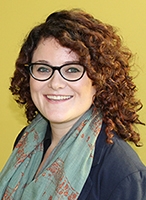
Munmun De Choudhury

Munmun De Choudhury
munmund@gatech.edu
http://www.munmund.net/biography.html

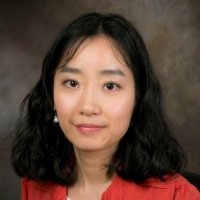
Munmun De Choudhury is an Associate Professor at the School of Interactive Computing in Georgia Institute of Technology. Dr. De Choudhury is renowned for her groundbreaking contributions to the fields of computational social science, human-computer interaction, and digital mental health. Through fostering interdisciplinary collaborations across academia, industry, and public health sectors, Dr. De Choudhury and her collaborators have contributed significantly to advancing the development of computational techniques for early detection and intervention in mental health, as well as in unpacking how social media use benefits or harms mental well-being. De Choudhury's contributions have been recognized worldwide, with significant scholarly impact evidenced by numerous awards like induction into the SIGCHI Academy and the 2023 SIGCHI Societal Impact Award. Beyond her academic achievements, Dr. De Choudhury is a proactive community leader, a persistent contributor to policy-framing and advocacy initiatives, and is frequently sought for expert advice to governments, and national and international media.


Associate Professor; Director of Social Dynamics and Well-Being Laboratory; Co-Lead of Children's Healthcare of Atlanta Pediatric Technology Center at Georgia Tech's Patient-Centered Care Delivery
Phone
4043858603
Munmun
De Choudhury
Show Regular Profile

Vahid Serpooshan

Vahid Serpooshan
vahid.serpooshan@emory.edu

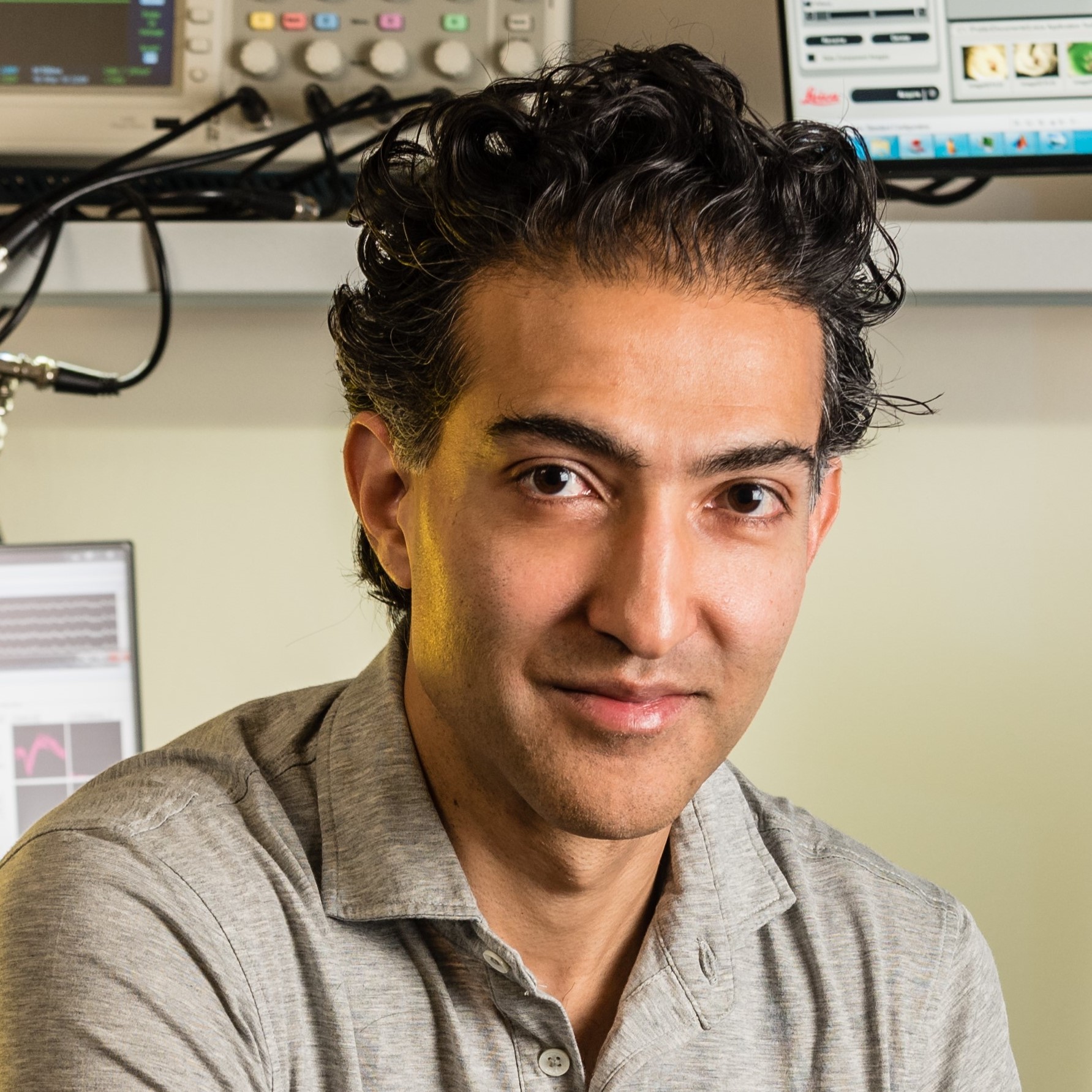
My research laboratory uses a multidisciplinary approach to design and develop micro/nano-scale tissue engineering technologies with the ultimate goal of generating functional bioartificial tissues and organs. Reaching this goal requires the skills and expertise from several disciplines including cell biology, medicine, nanotechnology, biochemistry, and materials science and engineering. Current projects in my lab include: 1) Bioengineering iPSC-derived, functional cardiac tissues using 3D bioprinting technology for in vitro disease modeling and drug screening; 2) Engineering cardiac patch systems to regenerate damaged myocardium in murine and swine models of ischemic heart injury; 3) 3D bioprinting-based liver and bone tissue engineering; and 4) Synthesis and characterization of smart nanobiomaterials (e.g., functionalized nanoparticles) for diverse biomedical applications including drug delivery and medical imaging.

Assistant Professor
http://www.serpooshanlab.com/
Vahid
Serpooshan
Show Regular Profile

Eva Dyer

Eva Dyer
evadyer@gatech.edu
Website

Dyer’s research interests lie at the intersection of machine learning, optimization, and neuroscience. Her lab develops computational methods for discovering principles that govern the organization and structure of the brain, as well as methods for integrating multi-modal datasets to reveal the link between neural structure and function.

Assistant Professor
Phone
404-894-4738
Office
UAW 3108
Additional Research

Eva Dyer’s research combines machine learning and neuroscience to understand the brain, its function, and how neural circuits are shaped by disease. Her lab, the Neural Data Science (NerDS) Lab, develops new tools and frameworks for interpreting complex neuroscience datasets and building machine intelligence architectures inspired by the brain. Through a synergistic combination of methods and insights from both fields, Dr. Dyer aims to advance the understanding of neural computation and develop new abstractions of biological organization and function that can be used to create more flexible AI systems.

Research Focus Areas
Google Scholar
https://scholar.google.com/citations?user=Sb_jcHcAAAAJ&hl=en
LinkedIn Related Site
Eva
Dyer
L.
Show Regular Profile

Christopher Wiese

Christopher Wiese
ChrisWiese@gatech.edu
Website

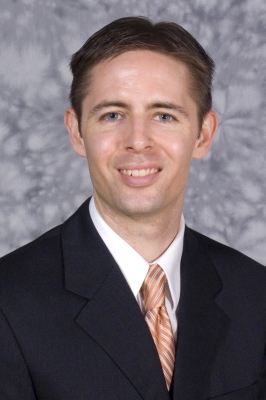
My research focuses on three major areas: (a) understanding and improving worker well-being, (b) temporal dynamics in team contexts, and (c) research methods. Collectively, my research seeks to improve our understanding of optimal human functioning more generally, across time, and within specific contexts (e.g., organizational, teams).

Assistant Professor
University, College, and School/Department
Christopher
Wiese
Show Regular Profile

Young Jang

Young Jang
young.jang@gatech.edu
Lab Website

Dr. Jang’s lab uses multi-disciplinary approaches to study muscle stem cell biology and develops bioactive stem cell delivery vehicles for use in regenerative medicine. Dr. Jang’s lab studies both basic aspects of muscle stem cell biology, especially systemic/metabolic regulations of stem cell and stem cell niche, as well as more translational aspects of muscle stem cell and mesenchymal stem cell for use in therapeutic approaches for musculoskeletal aging, neuromuscular diseases, and traumatic injuries.

Assistant Professor
Phone
404-385-3058
Office
Petit Biotechnology Building, Office 3304 & AP 1231
Additional Research
Dr. Jang's lab uses multi-disciplinary approaches to study muscle stem cell biology and develops bioactive stem cell delivery vehicles for use in regenerative medicine. Dr. Jang's lab studies both basic aspects of muscle stem cell biology, especially systemic/metabolic regulations of stem cell and stem cell niche, as well as more translational aspects of muscle stem cell and mesenchymal stem cell for use in therapeutic approaches for musculoskeletal aging, neuromuscular diseases, and traumatic injuries. 1. Metabolic regulation of stem cell function 2. Systemic regulation of muscle homeostasis 3. Engineering muscle stem cell niche for regenerative medicine
Google Scholar
https://scholar.google.com/citations?user=37e-BIYAAAAJ&hl=en
https://biosci.gatech.edu/people/young-jang
Young
Jang
C.
Show Regular Profile

Terry Snell

Terry Snell
terry.snell@biosci.gatech.edu

Terry Snell, an Emeritus Professor in the School of Biological Sciences, is a member of the Parker H. Petit Institute for Bioengineering and Bioscience.

Professor Emeritus
Phone
404-385-4498
Office
Cherry Emerson 201
Additional Research
Chemical ecology of zooplankton; mate recognition; evolutionary ecology; aquatic toxicology; gene expression in response to environmental stress; aquaculture. 
Research Focus Areas
Google Scholar
https://scholar.google.com/citations?user=_4PzVMEAAAAJ&hl=en
http://biosciences.gatech.edu/people/terry-snell
Terry
Snell
Show Regular Profile

Kirill Lobachev

Kirill Lobachev
kirill.lobachev@biology.gatech.edu

My laboratory investigates molecular mechanisms underlying eukaryotic genome stability. Chromosomal rearrangements create genetic variation that can have deleterious or advantageous consequences. Karyotypic abnormalities are a hallmark of many tumors and hereditary diseases in humans. Chromosome rearrangements can also be a part of the programmed genetic modifications during cellular differentiation and development. In addition, gross DNA rearrangements play a major role in the chromosome evolution of eukaryotic organisms. Therefore, elucidation of molecular mechanisms leading to chromosome instability is important for studying human pathology and also for our understanding of the fundamental processes that determine the architecture and dynamics of eukaryotic genomes. 

My overall contribution to the field of genome instability has been the demonstration of the phenomenon that repeats often found in eukaryotic genomes are potent sources of genome instability. Specifically, I have been investigating one of the most fundamental and enigmatic processes as to how repetitive sequences that adopt non-canonical DNA secondary structures, such as hairpins and cruciforms, cause replication arrest, double-strand breaks, and gross chromosomal rearrangements. Using molecular biology approaches, we investigate the instability of secondary structure-forming repeats in Saccharomyces cerevisiae, Schizosaccharomyces pombe, and human fibroblasts.

Associate Professor
Phone
404-385-6197
Office
Petit Biotechnology Building, Office 2303
Additional Research
Using yeastSaccharomyces cerevisiaeas a model, my laboratory investigates molecular mechanisms underlying eukaryotic genome stability. Chromosomal rearrangements create genetic variation that can have deleterious or advantageous consequences. Karyotypic abnormalities are a hallmark of many tumors and hereditary diseases in humans. Chromosome rearrangements can also be a part of the programmed genetic modifications during cellular differentiation and development. In addition, gross DNA rearrangements play a major role in chromosome evolution of eukaryotic organisms. Therefore, elucidation of molecular mechanisms leading to chromosome instability is important for studying the human pathology and also for our understanding of the fundamental processes that determine the architecture and dynamics of eukaryotic genomes. Myoverall contributionto the field of genome instability has been the demonstration of the phenomenon that repeats often found in higher eukaryotic genomes including the human genome are potent sources of double-strand breaks (DSB) and gross chromosomal rearrangements (GCR). Specifically, my lab, is investigating how repetitive sequences that can adopt non-B DNA secondary structures pose a threat to chromosomal integrity dictated by their size and arrangement. Currently three sequence motifs are studied in my laboratory: inverted repeats; Friedreich's ataxia GAA/TTC trinucleotide repeats and G-quadruplex-forming tracts. We also are collaborating with Dr. Malkova lab, University of Iowa, to study one of the outcomes of the DSB formation at unstable repeats - break-induced replication.
Research Focus Areas
Google Scholar
https://scholar.google.com/citations?user=SagVxawAAAAJ&hl=en
http://biosciences.gatech.edu/people/kirill-lobachev
Kirill
Lobachev
S.
Show Regular Profile

Stanislav Emelianov

Stanislav Emelianov
stas@gatech.edu
Website

Dr. Stanislav Emelianov is a Joseph M. Pettit Endowed Chair, Georgia Research Alliance Eminent Scholar, and Professor of Electrical & Computer Engineering and Biomedical Engineering at the Georgia Institute of Technology. He is also appointed at the Emory University School of Medicine, where he is affiliated with Winship Cancer Institute, Department of Radiology, and other clinical units. Furthermore, Dr. Emelianov is Director of the Ultrasound Imaging and Therapeutics Research Laboratory at the Georgia Institute of Technology focused on the translation of diagnostic imaging & therapeutic instrumentation, and nanobiotechnology for clinical applications. 

Throughout his career, Dr. Emelianov has been devoted to the development of advanced imaging methods capable of detecting and diagnosing cancer and other pathologies, assisting treatment planning, and enhancing image-guided therapy and monitoring of the treatment outcome. He is specifically interested in intelligent biomedical imaging and sensing ranging from molecular imaging to small animal imaging to clinical applications. Furthermore, Dr. Emelianov develops approaches for image-guided molecular therapy and therapeutic applications of ultrasound and electromagnetic energy. Finally, nanobiotechnology plays a critical role in his research. In the course of his work, Dr. Emelianov has pioneered several ultrasound-based imaging techniques, including shear wave elasticity imaging and molecular photoacoustic imaging. Overall, projects in Dr. Emelianov's laboratory, which focuses on cancer and other diseases, range from molecular imaging to functional imaging and tissue differentiation, from drug delivery and release to image-guided surgery and intervention.

Joseph M. Pettit Chair
Georgia Research Alliance Eminent Scholar
Professor
Phone
404-385-0373
Office
MoSE 4100M
Additional Research
Diagnostic imaging and patient-specific image-guided therapeutics including cancer imaging and diagnosis. Emelianov's research interests are in the areas of intelligent diagnostic imaging and patient-specific image-guided therapeutics including cancer imaging and diagnosis, the detection and treatment of atherosclerosis, the development of imaging and therapeutic nanoagents, guided drug delivery and controlled release, simultaneous anatomical, functional, cellular and molecular imaging, multi-modal imaging, and image-guided therapy.
University, College, and School/Department
Google Scholar
https://scholar.google.com/citations?user=MYCK3VYAAAAJ&hl=en
Related Site
Stanislav
Emelianov
Show Regular Profile

Amit Reddi

Amit Reddi
amit.reddi@chemistry.gatech.edu

Metalloproteins constitute one of the largest classes of proteins in the proteome and are involved in virtually every metabolic and signaling pathway of consequence to human health and disease. Broadly speaking, the Reddi laboratory is interested in determining the cellular, molecular, and chemical mechanisms by which metalloproteins are activated by cells, and once activated, how they communicate with other biomolecules to promote normal metabolism and physiology, placing an emphasis on systems relevant to cancer, neurodegenerative disorders, and infectious diseases. Current projects in the lab are focused on elucidating heme trafficking pathways and the role of Cu/Zn Superoxide Dismutase (SOD1) in redox signaling. Prospective students will get broad training in disciplines that span modern biochemistry, bioinorganic chemistry, biophysics, chemical biology, molecular genetics, and cell biology.      

Associate Professor
Phone
404-385-1428
Office
Petit Biotechnology Building, Office 3313
Additional Research
Metalloproteins constitute one of the largest classes of proteins in the proteome and are involved in virtually every metabolic and signaling pathway of consequence to human health and disease. Broadly speaking, the Reddi laboratory is interested in determining the cellular, molecular, and chemical mechanisms by which metalloproteins are activated by cells, and once activated, how they communicate with other biomolecules to promote normal metabolism and physiology, placing an emphasis on systems relevant to cancer, neurodegenerative disorders, and infectious diseases. Current projects in the lab are focused on elucidating heme trafficking pathways and the role of Cu/Zn Superoxide Dismutase (SOD1) in redox signaling. Prospective students will get broad training in disciplines that span modern biochemistry, bioinorganic chemistry, biophysics, chemical biology, molecular genetics, and cell biology.
Google Scholar
https://scholar.google.com/citations?user=5c8uJMAAAAAJ&hl=en&oi=ao
Amit
Reddi
R.
Show Regular Profile

Neha Garg

Neha Garg
neha.garg@chemistry.gatech.edu
Website

Professor Garg received a Bachelors in Engineering in Biotechnology from University Institute of Technology and Masters in Science from Indian Institute of Technology, Delhi. During her masters, she spent several months in Berlin, Germany while conducting research with Professor Marion Ansorge Schumacher at Technical University, Berlin as an DAAD Fellow. Garg obtained her Ph.D. in 2013 from the University of Illinois, Urbana Champaign under the direction of Professor Wilfred A. van der Donk and Professor Satish Nair. She then joined Professor Pieter C Dorrestein's research laboratory as a postdoctoral research associate at the University of California, San Diego. Garg joined the faculty at GeorgiaTech in 2017.

Associate Professor
Phone
404-385-5677
Office
EBB 4016
Additional Research
Eukaryotes, including humans, are 'petri dishes', hosting an abundant and a rich prokaryotic 'microbiome'. The Garg Lab aims to understand the molecular interactions between a eukaryotic host and its microbiome, and how these molecular interactions dictate human health and disease. Using a concoction of innovative tools including bioinformatics, clinical microbiology, mass spectrometry, DNA sequencing, and mass spectrometry-based 2D and 3D spatial imaging, we aim to delineate specific molecules that modulate the dynamics of microbial involvement in our response to genetic and environmental triggers of disease. We characterize the biosynthesis of these small molecule natural products to innovate developement of new therapeutics.
Google Scholar
https://scholar.google.com/citations?user=sbW316EAAAAJ&hl=en
Related Site
Neha
Garg
Show Regular Profile