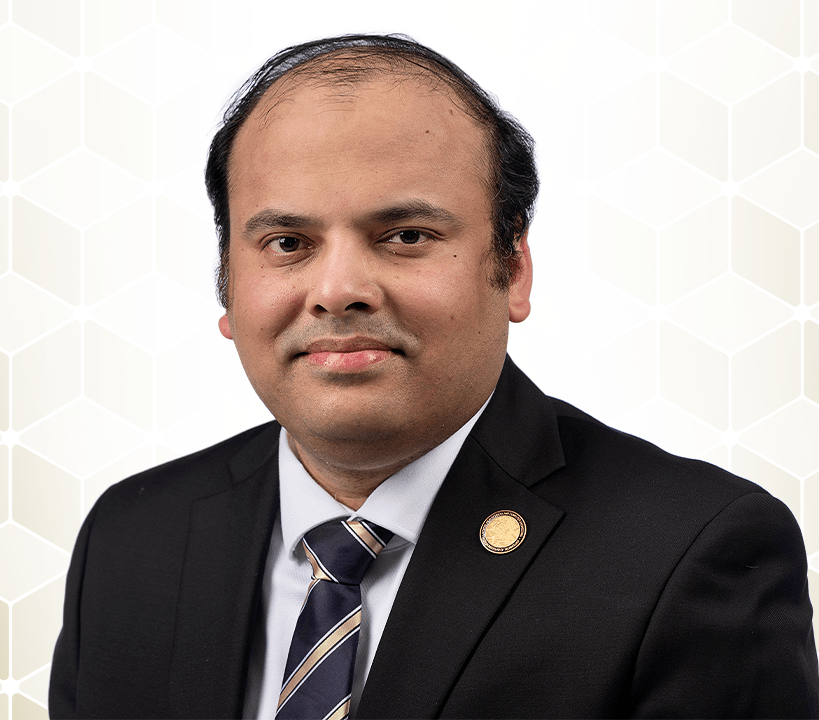
Johannes Leisen
Ravi Kane is the Garry Betty/V Foundation Chair and GRA Eminent Scholar in Cancer Nanotechnology. He received a B.S. in Chemical Engineering from Stanford University in 1993. Also, he received an M.S. in Chemical Engineering Practice and a Ph.D. in Chemical Engineering from MIT, working with Bob Cohen and Bob Silbey. After postdoctoral research with George Whitesides in the Department of Chemistry and Chemical Biology at Harvard University, he joined Rensselaer Polytechnic Institute (RPI) as an assistant professor in 2001. He was promoted to associate professor in 2006, to full professor in 2007, and to the P.K. Lashmet Professor in 2008. He served as the head of RPI’s Howard P. Isermann Department of Chemical and Biological Engineering before moving to Georgia Tech in 2015. Prof. Kane has graduated 27 Ph.D students and contributed to over 130 scientific publications.
Dr. Wood completed his graduate training at the Massachusetts Institute of Technology. While there he worked under the guidance of Drs. H. Harry Asada and Roger Kamm to develop and use microfluidics to identify mechanisms governing vascular geometry.
During his postdoc, Dr. Wood worked under Dr. Kevin Haigis (Beth Israel Deaconess Medical Center and Harvard Medical School) and Dr. Douglas Lauffenburger (Massachusetts Institute of Technology) to use systems biology to identify novel signaling mechanisms driving neuronal death in Alzheimer's disease and epithelial cell death during intestinal inflammation.
Aditi Das did her BSc. (Hons.) Chemistry from St. Stephen's College Delhi, followed by M.S. (Chemistry) from I.I.T (Kanpur). She received her Ph.D. in Chemistry from Princeton University. She did post-doctoral work with Prof. Steve Sligar. She joined University of Illinois, Urbana-Champaign (UIUC) as a tenure track assistant professor in 2012. In 2019, she was promoted to associate professor with tenure. In 2022, she joined School of Chemistry and Biochemistry at Georgia Institute of Technology as an associate professor with tenure. Her research is in the area of enzymology of oxygenases that are involved lipid metabolism and cannabinoid metabolism.
Das is recipient of an American Heart Associate (AHA) career award and has been funded by National Institute of Health (NIH - NIGMS, NIDA and NCCIH), USDA, and National Multiple Sclerosis Society (NMSS). Her research was recognized by several National awards: Young Investigator award From Eicosanoid Research Foundation, Mary Swartz Rose Young Investigator Award and E.L.R. Stokstad award from American Society for Nutrition (ASN) for outstanding research on bioactive compounds for human health. She is also the recipient of Zoetis Research Excellence Award from her college. She was a co-organizer of the International Conference on Cytochrome P450. Recently her laboratory contributed several papers on cannabinoid metabolism by p450s. In recognition of this work, she was awarded El Sohly award from the ACS-Cannabis division for excellence in Cannabis research and is invited to give plenary lecture at ISSX meeting. Das is also a standing study section member of BBM NIH study section.
Thomas DiChristina, Ph.D., received a BS in Chemical Engineering from the University of Rochester (NY) in 1982, a MS in Chemistry from the University of Bordeaux (France) in 1984, a Ph.D. in Environmental Engineering Science from the California Institute of Technology (CA) in 1989, and a Postdoctoral Fellowship from the Woods Hole Oceanographic Institution (MA) in 1993. DiChristina has been at Professor of Microbiology in the School of Biological Sciences at Georgia Tech for 29 years.
Melissa Lambeth Kemp received her B.S. in Nuclear Engineering from MIT and her Ph.D. in Bioengineering from University of Washington. Dr. Kemp joined the faculty at Georgia Tech in 2006 after completing postdoctoral training at MIT. Her expertise is in computational modeling of metabolism and signal transduction, as well as developing statistical modeling tools to examine network relationships in high-dimension datasets. One major aspect of her research program linking ROS – the byproducts of aerobic metabolism – to the fundamental way that cells interpret instructions from their environment, their neighbors, and their own genetic blueprint. Specific applications of her diverse work include systems modeling of transient phosphatase oxidation of kinase cascades, patient-specific differences in cytotoxicity to redox-cycled chemotherapeutics and radiation, and the coordination of oxidative metabolism with epithelial-to-mesenchymal transition. Her research program also includes a component of developing high-throughput screening methods for assaying cue-signal-response relationships in cells and analytical tools for single cell gene expression.
Dr. Kemp currently serves as the Research Director of the multi-site NSF Engineering Research Center “Cell Manufacturing Technologies”. In her former role as Associate Director of the NSF Science and Technology Center “Emergent Behavior of Integrated Cellular Systems”, she spearheaded the multi-site center’s computational activities by developing agent-based models of context-dependent cellular decisions to generate new hypotheses of intercellular communication in pluripotent stem cell differentiation and emergent patterning; this work continues currently in quantifying organizational principles and spatial relationships in iPSC-derived tissues from multi-omics data. Dr. Kemp’s career honors include a Whitaker Graduate Fellowship, Merck/CSBi postdoctoral fellowship, Georgia Cancer Coalition Distinguished Scholar, NIH New Innovator Award, and the CSB2 Prize for Innovative Measurement Methods from the Council for Systems Biology in Boston.
Arijit Raychowdhury is currently an Professor in the School of Electrical and Computer Engineering at the Georgia Institute of Technology where he joined in January, 2013. He received his Ph.D. degree in Electrical and Computer Engineering from Purdue University (2007) and his B.E. in Electrical and Telecommunication Engineering from Jadavpur University, India (2001). His industry experience includes five years as a Staff Scientist in the Circuits Research Lab, Intel Corporation, and a year as an Analog Circuit Designer with Texas Instruments Inc. His research interests include low power digital and mixed-signal circuit design, design of power converters, sensors and exploring interactions of circuits with device technologies. Raychowdhury holds more than 25 U.S. and international patents and has published over 80 articles in journals and refereed conferences. He serves on the Technical Program Committees of DAC, ICCAD, VLSI Conference, and ISQED and has been a guest associate-editor for JETC. He has also taught many short courses and invited tutorials at multiple conferences, workshops and universities. He is the winner of the Intel Labs Technical Contribution Award, 2011; Dimitris N. Chorafas Award for outstanding doctoral research, 2007; the Best Thesis Award, College of Engineering, Purdue University, 2007; Best Paper Awards at the International Symposium on Low Power Electronic Design (ISLPED) 2012, 2006; IEEE Nanotechnology Conference, 2003; SRC Technical Excellence Award, 2005; Intel Foundation Fellowship, 2006; NASA INAC Fellowship, 2004; M.P. Birla Smarak Kosh (SOUTH POINT) Award for Higher Studies, 2002; and the Meissner Fellowship 2002. Raychowdhury is a Senior Member of the IEEE
Design of low power digital circuits with emphasis on adaptability and resiliencyDesign of voltage regulators, adaptive clocking, and power managementDevice-circuit interactions for logic and storageAlternative compute architectures
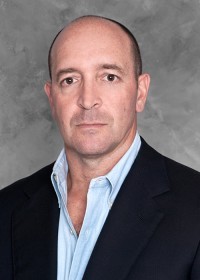
Research in the Peroni laboratory focuses on the use of regenerative therapies ranging from cellular to blood derived products to treat musculoskeletal injuries, with a concentration on minimally invasive surgery such as laparoscopy, thoracoscopy and arthroscopy.
Current research project: The surgery, performed in May, is the second successful feline kidney transplant using feline adult stem cells performed at the hospital. “To the best of our knowledge, UGA is the only veterinary facility in the world to use adult stem cells in feline kidney transplantation,” said Dr. Chad Schmiedt, a board-certified small animal surgeon who heads UGA’s feline kidney transplant program.
The service laboratory is managed by research professionals Merrilee Thoresen and Jenny Mumaw, who is enrolled in the college’s doctor of veterinary medicine program and will graduate in 2016. The service is headed by Dr. John Peroni, a board-certified large animal surgeon and associate professor whose research focus includes stem cell therapeutics. Read More