

4 min read
How a middle schooler with cerebral palsy became a vital contributor to Georgia Tech’s cutting-edge robotic exoskeleton research — offering data, feedback, and a passion for innovation.
13 min read
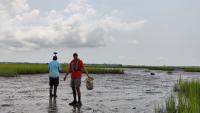
Flooding can be an existential threat, affecting everything from infrastructure to health. Georgia Tech researchers are developing solutions to monitor and forecast flooding, as well as restore ecosystems to prevent future flooding. These efforts support communities’ resilience in the face of climate change and keep the U.S. secure.

8 min read
Milka Trajkova grew up wanting to be a professional ballerina — and she was, until an injury closed the curtain on her career. But this didn’t end her interest in ballet. While Trajkova doesn’t dance anymore, she builds artificial intelligence (AI) apps to help dancers perfect their technique and improve their performance. Trajkova uses AI to turn artistic movement into data and bring more respect to the technical skills required in dance.

9 min read
Scott Gilliland’s winding path led to breakthroughs in wearable tech that solve challenges for people with Parkinson’s and help us understand dolphin communication.

3 min read
Georgia Tech’s expertise helped The Chai Box transform a family ritual into a successful product featured in Costco and on the pages of Forbes magazine. It’s the perfect blend of heritage, research, and real-life results.

7 min read
Salimah LaForce studies where information systems fail and where they can be improved. Her work helps ensure that people with disabilities aren’t sidelined when it comes to safety, health, and opportunity.

7 min read
Wildfires have spread across the planet for millennia, but they are increasing as the climate warms. Decimated forests, depleted crops, and destroyed buildings are the hallmark of wildfire devastation. Another is the effect on air quality and even the entire climate system. Researchers at Georgia Tech offer solutions for not only surviving — but also benefiting from — fire.

9 min read
With so many paths to research careers at Georgia Tech, finding the right one can be daunting. In an ongoing feature series, Unexpected Paths, we explore the journeys of 12 research faculty members from across the Institute and learn about their unique paths to research. In this feature, follow Angshuman Guin as he discusses his research into traffic patterns and how faculty serve as the connective tissue of the Institute.

1 min read
As the planet warms, changing weather patterns are only one effect. Warming air is often more toxic, leading to asthma and even heart attacks. A better understanding of these air quality changes can help society mitigate their consequences. Georgia Tech researchers are innovating ways to study air quality — beginning with prehistoric insights and zooming all the way to satellites in our orbit.

7 min read
Eric Shen loves art and science in equal measure — and believes it’s possible for creatives to build STEM careers that foster joy. He discusses his work with color-changing windows and why he continues to be at Georgia Tech after over a decade.


