
Digital Doppelgängers
Jan 27, 2026 —
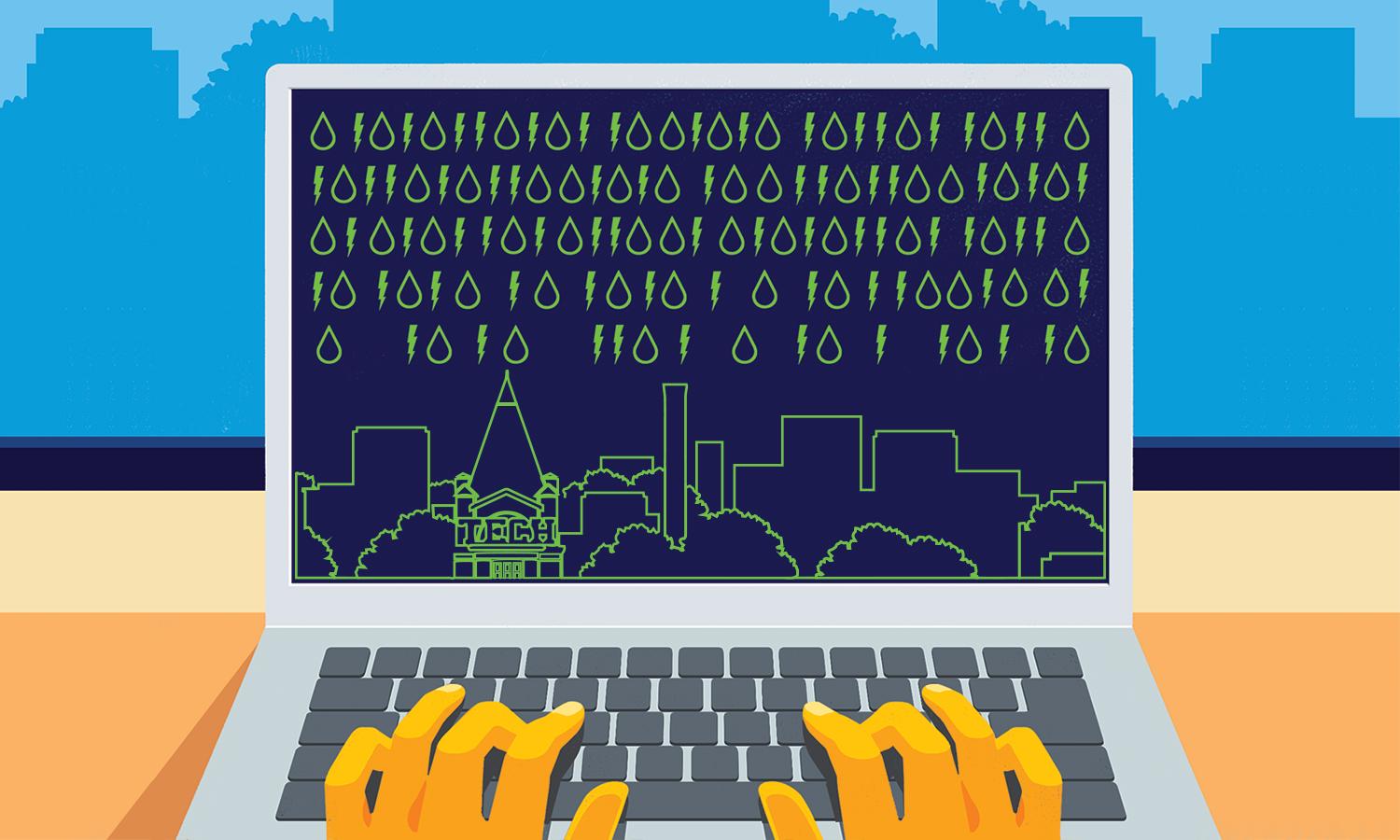
Extreme weather, congested streets, aging infrastructure — just some of the challenges that communities and their residents face every day. Solving them requires more than traditional planning; it demands tools that can anticipate problems before they happen.
One of the tools our researchers are turning to is called a digital twin. These virtual models mirror real-world systems in real time to make communities safer, transportation smarter, and campus operations more efficient.
Unlike static simulations, digital twins evolve with live data. They allow decision-makers to respond to changing conditions with speed and precision. Whether it’s predicting how floodwaters will move through a city or minimizing traffic delays for emergency vehicles, digital twins offer a new way to manage complexity. By blending artificial intelligence, sensor networks, and advanced analytics, Georgia Tech engineers are creating solutions that don’t just react — they prepare, adapt, and improve the systems we rely on every day.
Jason Maderer
College of Engineering


