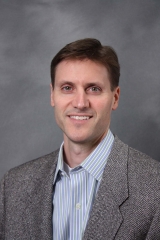
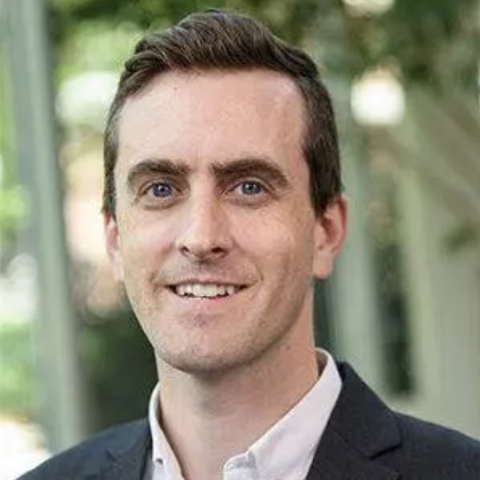
Peter Loutzenhiser

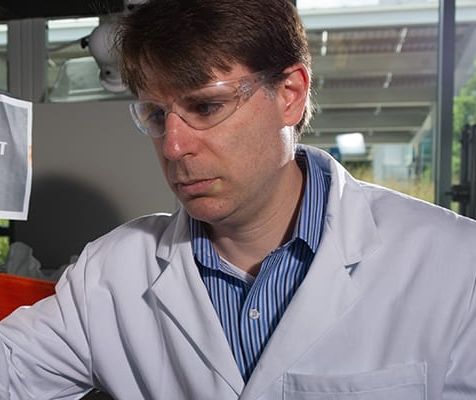
Peter Loutzenhiser
peter.loutzenhiser@me.gatech.edu
Website
Associate Professor, Woodruff School of Mechanical Engineering
Phone
(404) 894-3012
Additional Research

Energy Storage; Gasification; Hydrogen; Solar

University, College, and School/Department
Peter
Loutzenhiser
Show Regular Profile

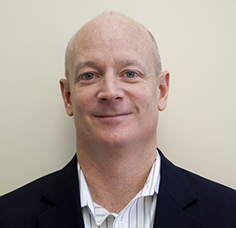
Kevin Caravati

Kevin Caravati
kevin.caravati@gtri.gatech.edu
Departmental Bio

Mr. Caravati is a Principal and Founder of Applied Plasma Arc Technologies, LLC and a Senior Research Scientist and Professional Geologist at the Georgia Tech Research Institute (GTRI), the applied research arm of the Georgia Institute of Technology. He received his Bachelor’s degree in Geology from the University of Dayton, Ohio, and a Master of Science in Geology-Hydrogeology track from the University of South Florida in Tampa, Florida. He earned a Master’s degree in Business Administration (International Business) from the Stetson School of Business and Economics at Mercer University in Atlanta. He began work with GTRI in 2002.

Mr. Caravati served as a Hydrogeologist, Project Manager, and Project Director for a wide range of water resources and water quality projects in the United States, Mexico and England. He has led numerous water resource investigations that included delineating watersheds using aerial imagery and GIS tools, well installation and testing programs, monitoring and field data collection programs, and developing ground water flow and contaminant transport models for predictive studies. Since 2008, he served as Director of the Environmental Safety and Occupational Health Programs at GTRI, and as Program Manager for environmental engineering research for a global services provider. Mr. Caravati also served as a research lead in Georgia Tech’s Plasma Arc Research Facility. 

Mr. Caravati’s areas of research include the design and prototyping of dry sanitation systems; testing of chemical and biological sensor systems for environmental applications; modeling of renewable energy systems for rural areas; water supply and wastewater studies for sustainability and energy efficiency; and water resource investigations for rural watersheds in developing countries. He serves as a Research Advisor to Georgia Tech’s Engineering Students Without Borders chapter, and in 2007 he led or participated in projects in Angola, Bolivia, and Yellowstone National Park, and served in an advisory capacity for projects in Kenya, Japan, Korea, Guam, and Ireland.

GTRI Liaison for Sustainability Research
Principal Research Scientist
Manager, Energy and Sustainability Research Program
Phone
(404) 407-8058
Additional Research

Solar

Research Focus Areas
GTRI
Geogia Tech Research Institute
Kevin
Caravati
Show Regular Profile

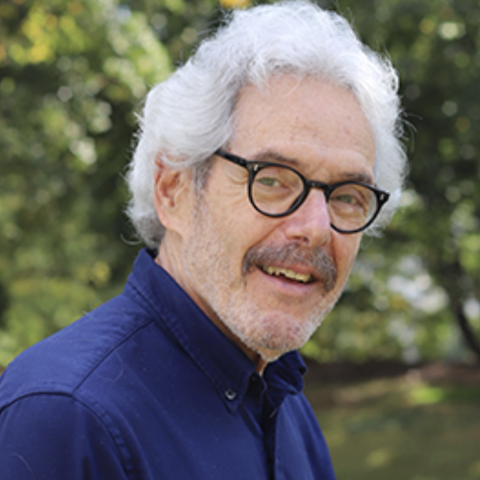
Bernard Kippelen

Bernard Kippelen
bernard.kippelen@ece.gatech.edu
ECE Profile Page

Bernard Kippelen was born and raised in Alsace, France. He studied at the University Louis Pasteur in Strasbourg where he received a Maitrise in Solid-State Physics in 1985, and a Ph.D. in Nonlinear Optics in 1990. From 1990 to 1997 he was Charge de Recherches at the CNRS, France. In 1994, he joined the faculty of the Optical Sciences Center at the University of Arizona. There, he developed a research and teaching program on polymer optics and plastic electronics. In August 2003, Dr. Kippelen joined the School of Electrical and Computer Engineering at the Georgia Institute of Technology where his research ranges from the investigation of fundamental physical processes (nonlinear optical activity, charge transport, light harvesting and emission), to the design, fabrication and testing of light-weight flexible optoelectronic devices and circuits based on nanostructured organic materials. He currently serves as director of the Center for Organic Photonics and Electronics, and as co-president of the Lafayette Institute, a major optoelectronics commercialization initiative that is based at Georgia Tech-Lorraine in Metz, France. He currently holds 25 patents and has co-authored over 270 refereed publications and 14 book chapters. His publications have received over 20,000 citations and his h-index is 73 (Google Scholar). He served as chair and co-chair of numerous international conferences on organic optoelectronic materials and devices and as deputy editor of Energy Express. He was the founding editor of Energy Express.

Professor, School of Electrical and Computer Engineering
Director, Center for Organic Photonics and Electronics
Vice Provost for International Initiatives
Steven A. Denning Chair for Global Engagement
Phone
404.385.5163
Office
MoSE 4239
Additional Research

Photovoltaics; Organic Photonics and Electronics; Integrated Photonics; Flexible Electronics; Optical Materials; Nanocellulose Applications; Films & Coatings; Sustainable Manufacturing; Biomaterials

Google Scholar
https://scholar.google.com/citations?hl=en&user=aAfyDCsAAAAJ&view_op=list_works&sortby=pubdate
Kippelen Group
Bernard
Kippelen
Show Regular Profile

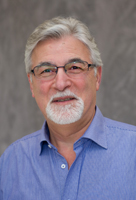
Ari Glezer

Ari Glezer
ari.glezer@me.gatech.edu
Website

Dr. Glezer began at Tech in 1992 as an Associate Professor. He was named to the Woodruff Chair in Thermal Systems in 2002. Prior, he was an Assistant and Associate Professor at the University of Arizona.

Professor, Woodruff School of Mechanical Engineering
Woodruff Chair, Thermal Systems
Phone
404.894.3266
Office
Love Building, Room 239
Additional Research

Wind; Fluid Mechanics and Heat Transfer; Combustion; and Energy Systems; Fluid mechanics; turbulent shear flows; flow control; diagnostics

Research Focus Areas
University, College, and School/Department
Fluid Mechanics Research Laboratory
Ari
Glezer
Show Regular Profile

Christopher Jones

Christopher Jones
cjones@chbe.gatech.edu
ChBE Profile Page

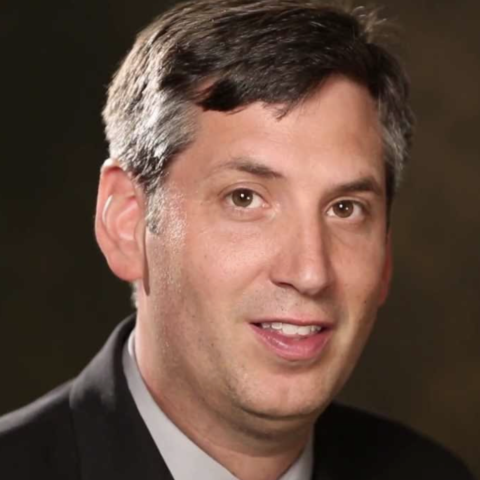
Chris Jones was born in suburban Detroit, Michigan in July of 1973. After his primary and secondary schooling and 14 years living Troy, Michigan, he enrolled as a chemical engineering student at the University of Michigan. In route to earning a BSE in chemical engineering, Chris carried out research on transition metal carbide and nitride catalytic materials under the direction of Levi Thompson. After graduating in 1995, Chris moved to Pasadena, California, to study inorganic materials chemistry and catalysis under Mark E. Davis at Caltech. There he earned M.S. and Ph.D. degrees in chemical engineering in 1997 and 1999, respectively. Subsequently, he studied organometallic chemistry and olefin polymerization under the direction of both Davis and John E Bercaw at Caltech. He started as an assistant professor at Georgia Tech in the summer of 2000 and was promoted to associate professor in July 2005. In May, 2005, he was appointed the J. Carl and Sheila Pirkle Faculty Fellow, followed by a promotion to professor in July 2008. He was named New-Vision Professor of Chemical and Biomolecular Engineering in July 2011. In 2015, he became the Love Family Professor of Chemical and Biomolecular Engineering, and in 2019 the William R. McLain Chair. Chris was named the associate vice president for research at Georgia Tech in November 2013. In this role, he directed 50% of his time on campus-wide research administration with a primary focus on interdisciplinary research efforts and policy related to research institutes, centers and research core facilities. In 2018, he served as the interim executive vice-president for research, before returning full time to his research and teaching roles in chemical and biomolecular engineering in 2019.

Jones directs a research program focused primarily on catalysis and CO2 separation, sequestration and utilization. A major focus of his laboratory is the development of materials and processes for the removal of CO2 from air, or “direct air capture” (DAC). In 2010 he was honored with the Ipatieff Prize from the American Chemical Society for his work on palladium catalyzed Heck and Suzuki coupling reactions. That same year, he was selected as the founding Editor-in-Chief of ACS Catalysis, a new multi-disciplinary catalysis journal published by the American Chemical Society. In 2013, Chris was recognized by the North American Catalysis Society with the Paul E. Emmett Award in Fundamental Catalysis and by the American Society of Engineering Education with the Curtis W. McGraw Research Award. In 2016 he was recognized by the American Institute of Chemical Engineers with the Andreas Acrivos Award for Professional Progress in Chemical Engineering, distinguishing him as one of the top academic chemical engineers under 45. In 2020, after ten years building and leading ACS Catalysis, he was selected as the founding Editor-in-Chief of JACS Au by an international editorial search committee commissioned by the ACS. Dr. Jones has been PI or co-PI on over $72M in sponsored research in the last seventeen years, and as of December 2020, has published over 300 papers that have been cited >28,000 times. He has an H-Index of 82 (Google Scholar).

Professor and John F. Brock III School Chair, School of Chemical and Biomolecular Engineering
Phone
404.385.1683
Office
ES&T 2202
Additional Research

CO2 capture, catalysis, membrane and separations, separations technology, catalysis, carbon capture, biofuels

Google Scholar
https://scholar.google.com/citations?hl=en&user=ltWKpYgAAAAJ&view_op=list_works&sortby=pubdate
Jones Group Website
Christopher
Jones
Show Regular Profile

Richard Simmons

Richard Simmons
richard.simmons@me.gatech.edu

Richard Simmons is currently a Principal Research Engineer and the Director of Research and Studies at Georgia Tech’s Strategic Energy Institute (SEI) where he directs cross-cutting energy projects with an emphasis on clean electric power, vehicle efficiency and alternative fuels. He is also an instructor in Georgia Tech’s Woodruff School of Mechanical Engineering, with a specialization in design, mechatronics, and thermal systems. 

Simmons received his bachelor's degree from Georgia Tech, and masters and Ph.D. from Purdue, all in Mechanical Engineering. He is a licensed professional engineer (PE) with more than 20 years of RD&D experience in automotive, advanced materials, and alternative energy and fuels. 

From 2009 to 2012, he served a prestigious American Association for the Advancement of Science S&T (Science and Technology) Policy Fellowship at the U.S. Department of State, providing technical analysis on international policy issues related to renewable energy. He has recently authored numerous publications including an open-access eBook entitled “Understanding the Global Energy Crisis” (Purdue Press, 2014), several book chapters and journal articles related to advanced energy technologies, transportation energy technology, and future energy policy strategies.

Director, Research and Studies
Principal Research Engineer
Phone
(404) 385-6326
Additional Research

Biofuels

Research Focus Areas
University, College, and School/Department
Richard
Simmons
Show Regular Profile

Ryan Lively

Ryan Lively
ryan.lively@chbe.gatech.edu
Website

Ryan Lively was born in 1984. He spent approximately 16 years in Gainesville, FL and attended almost every home football game at The Swamp. He enrolled at Georgia Tech in 2002 as an eager Chemical Engineering student and has been a Yellow Jacket at heart ever since. During his studies at Georgia Tech, Ryan worked on research projects as diverse as ab initio quantum mechanical methods to estimate molecular binding energies, fresh Georgia peach preservation, composite spinneret design, dual-layer hollow fiber membrane spinning, and sorbent-loaded fiber spinning. Ryan introduced a rapid temperature swing adsorption (RTSA) approach for post-combustion CO2 capture, which was successfully demonstrated by adapting knowledge developed in membrane science to design unique nanoscale composite adsorbent/heat exchangers. After his Ph.D. (awarded in 2010), he spent almost 3 years as a post-doctoral research engineer at Algenol Biofuels, where he published 25 papers and filed two U.S. patent applications. His work at Algenol focused on developing energy-efficient liquid and vapor separation systems for downstream biofuel purification. 

He is now the Thomas C. DeLoach Professor in the School of Chemical & Biomolecular Engineering at the Georgia Institute of Technology. His current research seeks to revolutionize fluid separation processes critical to the global energy and carbon infrastructure. He has a specific focus on membrane- and adsorbent-based science and technology to address some of the most difficult chemical separations. His group’s research activities range from fundamental material science and discovery to translational engineering applications focusing on making and testing separation devices. 

Ryan has received a variety of awards for his research efforts including the 2020 Allan P. Colburn Award from AIChE, and the 2022 Curtis W. McGraw Award from ASEE. He is currently an Editor for the Journal of Membrane Science and is the Secretary of the North American Membrane Society. He is the Director of the Center for Understanding & Controlling Accelerated and Gradual Evolution of Materials for Energy (UNCAGE-ME), an Energy Frontier Research Center of the US Department of Energy. He has over 160 publications in the field of separations including articles in Science, Nature and other impactful venues.

Professor, School of Chemical and Biomolecular Engineering
Thomas C. DeLoach Jr. Endowed Professorship
Phone
(404) 894-8795
Additional Research

Biofuels; Carbon Capture; Separations Technology; Membranes; Adsorbents;Polymers; Microporous Materials

Google Scholar
https://scholar.google.com/citations?hl=en&user=1ktJriEAAAAJ&view_op=list_works&sortby=pubdate
Research Website
Ryan
Lively
Show Regular Profile