Ajeet Rohatgi

Ajeet Rohatgi
ajeet.rohatgi@ece.gatech.edu
ECE Profile Page

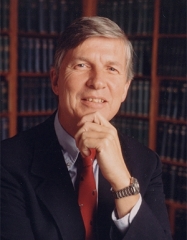
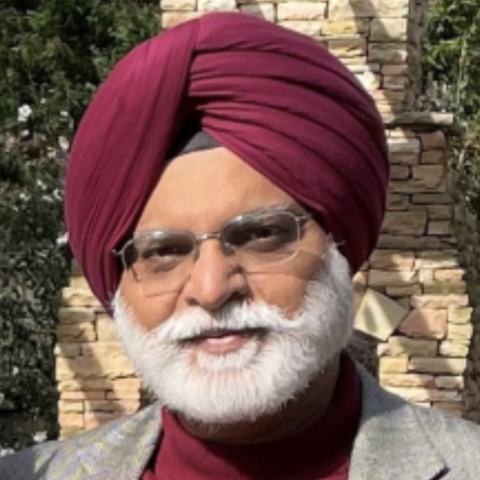
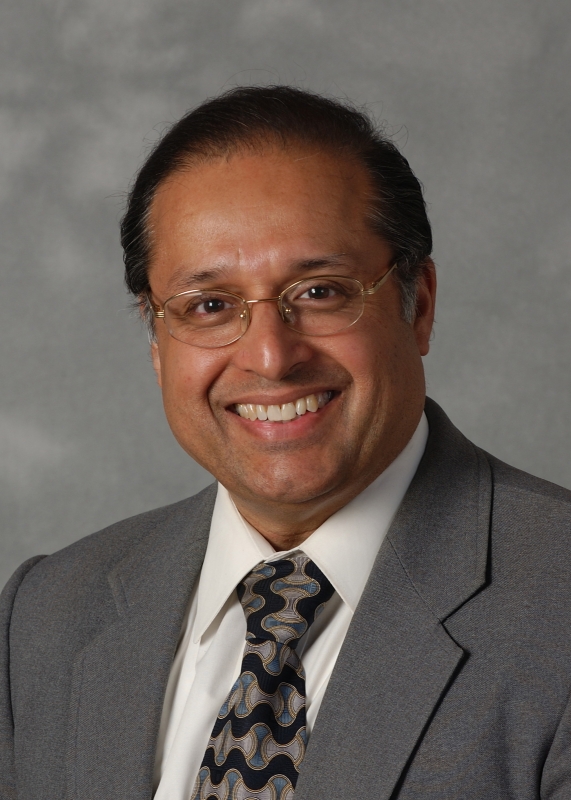
Ajeet Rohatgi received the B.S. (E.E.) degree from Indian Institute of Technology in 1971, the M.S. (Materials Engineering) from Virginia Polytechnic Institute and State University in 1973, and the Ph.D. in Metallurgy and Materials Science from Lehigh University in 1977. He joined the Westinghouse Research and Development Center in Pittsburgh, Pennsylvania in 1977 and became a Westinghouse Fellow while working on the science and technology of photovoltaic and microelectronic devices. Rohatgi joined the ECE faculty at Georgia Tech in 1985 and started a program on photovoltaics, which has become one of the best in the country. He has become an internationally recognized leader in photovoltaics. He is the founding director of the first university-based DOE Center of Excellence in Photovoltaic Research and Education. He is the author of more than 300 publications and holds 10 U.S. patents. Rohatgi has received numerous awards and distinctions from professional societies and Georgia Tech. He is the founder and CTO for Suniva.

Regents Professor, School of Electrical and Computer Engineering
John H. Weitnauer, Jr. Chair, College of Engineering
Georgia Research Alliance Eminent Scholar
Phone
404.894.7692
Office
VL W121
Additional Research

silicon devices; solar cells; dielectrics; Compund Semiconductors; solar energy
Google Scholar
https://scholar.google.com/citations?hl=en&user=qJ98P7EAAAAJ&view_op=list_works&sortby=pubdate
University Center of Excellence for Photovoltaics
Ajeet
Rohatgi
Show Regular Profile

Mark Styczynski

Mark Styczynski
mark.styczynski@chbe.gatech.edu
Website

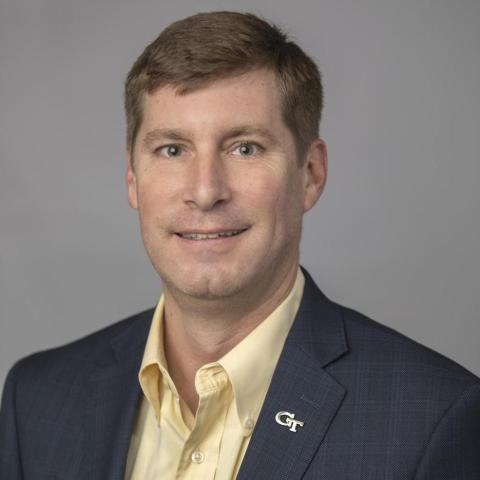
Mark Styczynski is an Associate Professor in the School of Chemical & Biomolecular Engineering at the Georgia Institute of Technology (Georgia Tech), doing research at the interface of synthetic and systems biology as applied to metabolic systems. His synthetic biology work focuses on the development of low-cost, minimal-equipment biosensors for the diagnosis of nutritional deficiencies in the developing world. His systems biology work uses computational and experimental methods to characterize metabolic dynamics and regulation using metabolomics data. He has received young investigator awards from the NSF, DARPA, and ORAU. He has won multiple department-and institute-level teaching awards at Georgia Tech. He founded and was the first president of the Metabolomics Association of North America (MANA), and is a Council Member in the Engineering BiologyResearch Consortium.

Professor
Phone
404-894-2825
Office
EBB 4013
Additional Research
Modelling and controlling metabolic dynamics and regulation (metabolic engineering). Biofuels. Systems biology-based experimental and bioinformatics analysis of metabolism Synthetic biology for the development of biosensors and diagnostics The main focus of theStyczynski groupis the experimental and computational study of the dynamics and regulation of metabolism, with ultIMaTe applications in metabolic engineering, biotechnology, and biosensors/diagnostics.
Google Scholar
https://scholar.google.com/scholar?q=Mark+P+Styczynski&hl=en
Related Site
Mark
Styczynski
Show Regular Profile

W. Jud Ready

Jud Ready
jud.ready@gtri.gatech.edu
MSE Profile Page

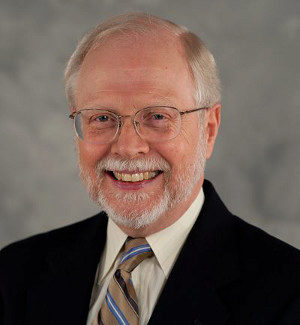
W. Jud Ready is the executive director of the Space Research Institute. Prior to this role, he served as associate director of external engagement for the Georgia Tech Institute for Matter and Systems and director of the Georgia Tech Center for Space Technology and Research. He has also been an adjunct professor in the School of Materials Science and Engineering at Georgia Tech and a principal research engineer on the research faculty of Georgia Tech Research Institute (GTRI) for over a dozen years. Prior to joining the Georgia Tech faculty, he worked for a major military contractor (General Dynamics) as well as in small business (MicroCoating Technologies). He has served as PI or co-PI for grants totaling ~$17M awarded by the Army, Navy, Air Force, DARPA, NASA, NSF, NIST, industry, charitable foundations and the States of Georgia and Florida. His current research focuses primarily on energy, aerospace, nanomaterial applications, and electronics reliability.

Executive Director, Space Research Institute
Principal Research Engineer, Georgia Tech Research Institute
Phone
404.407.6036
Additional Research

Materials Failure and Reliability; Carbon Nanotubes; Integrated photonics; Photovoltaics; Solar

GTRI
Geogia Tech Research Institute > Electro-Optical Systems Laboratory
Google Scholar
https://scholar.google.com/citations?hl=en&user=Hf8dRC4AAAAJ&view_op=list_works&sortby=pubdate
W. Jud
Ready
Show Regular Profile

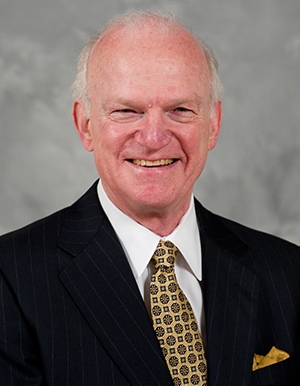
Ronald Rousseau

Ronald Rousseau
ronald.rousseau@chbe.gatech.edu
Departmental Bio
Professor
Cecil J. "Pete" Silas Chair Emeritus
Phone
(404) 894-2868
Additional Research

Separations Technology; Biofuels; Energy & Water; Separation Technologies

University, College, and School/Department
Personal Website
Ronald
Rousseau
Show Regular Profile

Akanksha Menon

Akanksha Menon
akanksha.menon@me.gatech.edu
Akanksha Menon Profile

Dr. Akanksha Menon is an Assistant Professor in the Woodruff School of Mechanical Engineering at Georgia Tech. Prior to this, she was a Rosenfeld Postdoctoral Fellow at Lawrence Berkeley National Laboratory, where she performed research on hybrid membrane-thermal desalination processes using solar energy, and she also contributed to the development of thermal energy storage materials. Dr. Menon completed her Ph.D. at Georgia Tech, where she focused on developing semiconducting polymers and new device architectures for thermoelectric energy harvesting. She holds a bachelor's degree from Texas A&M University at Qatar, as well as a master’s degree in Mechanical Engineering from Georgia Tech.

Her research group at Georgia Tech is working on technologies for the water-energy nexus.

Assistant Professor, Woodruff School of Mechanical Engineering
Research Focus Areas
Akanksha
Menon
Show Regular Profile

Scott Sinquefield

Scott Sinquefield
Scott.Sinquefield@rbi.gatech.edu
Website

Scott Sinquefield completed his Ph.D. in Chemical Engineering in 1998 at Oregon State University. He spent three years working with the Multi-Fuel Combustion Group at the Combustion Research Facility at Sandia National Labs (Livermore); where he performed the experimental portion of his thesis research. He joined the Chemical Recovery group at IPST in 1998 and was lead.engineer in the construction and operation of the Pressurize Entrained Flow Reactor facility. He now leads the research program on black liquor gasification. He has extensive experience in the design and construction of pilot research reactors and control systems. He also has expertise in boiler fire-side fouling and thermodynamic modeling of aqueous electrolyte systems.

Senior Research Engineer
Phone
(404) 385-0241
Additional Research

Gasification; Biofuels; Chemical Recovery; Environmental Processes; Separation Technologies

University, College, and School/Department
Scott
Sinquefield
Show Regular Profile

Preet Singh

Preet Singh
preet.singh@mse.gatech.edu
Corrosion and Materials Lab

Prior to joining MSE in July 2003 Professor Singh was a faculty member in Corrosion and Materials Engineering Group at The Institute of Paper Science and Technology (IPST) since 1996.  While in IPST Singh worked on fundamental as well as applied research projects related to the corrosion problems in the pulp and paper industry. From 1990 to 1996, he was a Senior Research Associate at Case Western Reserve University, Cleveland, Ohio, working on various materials and corrosion related research projects, including damage accumulation in metal matrix composites (MMCs), Environmental sensitive fracture of Al-alloys MMCs, and High temperature oxidation of Nb/Nb5Si3 composites. He received the Alcan International's Fellowship in 1988-90 to work on "Effects of Low Melting Point Impurities on Slow Crack Growth in Al Alloys,"  He has published over 50 papers in reputed scientific journals and conference proceedings. He is active member of NACE, TMS, TAPPI and has co-organized a number of international symposiums.

Reliable performance of the materials is very important for any industrial process and especially for the chemical process industry for the manufacture of a high quality product. Material selection is generally based on the required material properties, low initial capital investment, and minimum maintenance. Changes in the process parameters to improve products can often lead to higher corrosion susceptibilities of the plant materials. Moreover, with increase in capital cost, there is pressure to extend the life of existing plant equipment beyond its original design life. Corrosion and Materials Engineers are also playing a key role in selecting, maintaining, and modifying materials for changing needs for every industry. Corrosion Science and Engineering research includes understanding the basic mechanisms involved in material degradation in given environments and using that knowledge to develop a mitigation strategy against environment-induced failures

Professor, School of Materials Science and Engineering
Associate Chair of Graduate Studies, School of Materials Science and Engineering
Phone
404.894.6641
Office
IPST 246
Additional Research

Composites; fracture and fatigue; stress corrosion; Materials Failure and Reliability; Biofuels; Chemical Recovery; Environmental Processes; Sustainable Manufacturing; Energy & Water; Corrosion & Reliability

Google Scholar
https://scholar.google.com/citations?hl=en&user=AqrDFI8AAAAJ&view_op=list_works&sortby=pubdate
MSE Profile Page
Preet
Singh
Show Regular Profile