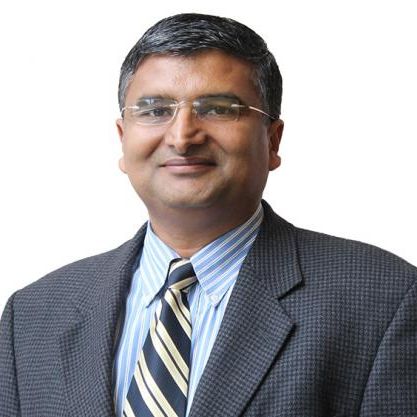
Robert Butera

Robert Butera
rbutera@gatech.edu
Website
Chief Research Operations Officer
Professor
Phone
404-894-2935
Office
UAW 3111
Additional Research

Neuromodulation of peripheral nerve activity real-time control methods applied to electrophysiology measurements Autonomic modulation of visceral organs. Our laboratory combines engineering and neuroscience to tackle real-world problems. We utilize techniques including intracellular and extracellular electrophysiology, computational modeling, and real-time computing.

Research Focus Areas
Google Scholar
https://scholar.google.com/citations?hl=en&user=_DT8jHD7dGYJ&view_op=list_works&sortby=pubdate
Related Site
Robert
Butera
Show Regular Profile

Jaydev Desai

Jaydev Desai
jaydev@gatech.edu
Website

Jaydev P. Desai, Ph.D, is currently a Professor and BME Distinguished Faculty Fellow in the Wallace H. Coulter Department of Biomedical Engineering at Georgia Tech. Prior to joining Georgia Tech in August 2016, he was a Professor in the Department of Mechanical Engineering at the University of Maryland, College Park (UMCP). He completed his undergraduate studies from the Indian Institute of Technology, Bombay, India, in 1993. He received his M.A. in Mathematics in 1997, M.S. and Ph.D. in Mechanical Engineering and Applied Mechanics in 1995 and 1998 respectively, all from the University of Pennsylvania. He was also a Post-Doctoral Fellow in the Division of Engineering and Applied Sciences at Harvard University. He is a recipient of several NIH R01 grants, NSF CAREER award, and was also the lead inventor on the "Outstanding Invention of 2007 in Physical Science Category" at the University of Maryland, College Park. He is also the recipient of the Ralph R. Teetor Educational Award. In 2011, he was an invited speaker at the National Academy of Sciences "Distinctive Voices" seminar series on the topic of "Robot-Assisted Neurosurgery" at the Beckman Center. He was also invited to attend the National Academy of Engineering's 2011 U.S. Frontiers of Engineering Symposium. He has over 150 publications, is the founding Editor-in-Chief of the Journal of Medical Robotics Research, and Editor-in-Chief of the Encyclopedia of Medical Robotics (currently in preparation). His research interests are primarily in the area of image-guided surgical robotics, rehabilitation robotics, cancer diagnosis at the micro-scale, and rehabilitation robotics. He is a Fellow of the ASME and AIMBE.

Professor and Distinguished Faculty Fellow, Wallace H. Coulter Department of Biomedical Engineering
Associate Director, Institute for Robotics and Intelligent Machines
Director, Georgia Center for Medical Robotics
Phone
404.385.5381
Office
UA Whitaker Room 3112
Additional Research

Image-guided surgical robotics, Rehabilitation robotics; Cancer diagnosis at the micro-scale.

Google Scholar
https://scholar.google.com/citations?hl=en&user=hpbQN-AAAAAJ&view_op=list_works&sortby=pubdate
Related Site
Jaydev
Desai
Show Regular Profile

W. Hong Yeo

W. Hong Yeo
woonhong.yeo@me.gatech.edu
ME Profile Page

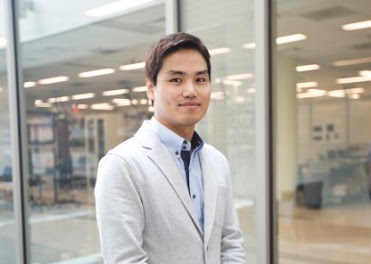
Dr. Yeo holds the titles of G.P. "Bud" Peterson and Valerie H. Peterson Endowed Professor, as well as Harris Saunders Jr. Endowed Professor, in the Woodruff School of Mechanical Engineering and the Coulter Department of Biomedical Engineering at Georgia Tech. He is also the director of the Wearable Intelligent Systems and Healthcare Center (WISH Center) and the KIAT-Georgia Tech Semiconductor Electronics Center (K-GTSEC). Dr. Yeo's research focuses on understanding the fundamentals of soft materials, deformable mechanics, interfacial physics, manufacturing, and the integration of hard and soft materials for the development of biomedical systems. He earned his Ph.D. in mechanical engineering and genome sciences from the University of Washington in Seattle and subsequently worked as a postdoctoral research fellow at the University of Illinois at Urbana-Champaign. With over 180 peer-reviewed publications, Dr. Yeo has contributed to many prestigious journals, including Nature Materials, Nature Machine Intelligence, Nature Communications, and Science Advances. He is an IEEE Senior Member and has received numerous awards, including the Visiting Professorship from the Institute Jean Lamour at the Université de Lorraine in France, the Lucy G. Moses Lectureship Award at the Mount Sinai School of Medicine, the NIH Trailblazer Young Investigator Award, the IEEE Outstanding Engineer Award, the Emory School of Medicine Research Award, the Imlay Innovation Award, the American Heart Association Innovative Project Award, the Sensors Young Investigator Award, the Med-X Young Investigator Award, and the Outstanding Service Award from the Korea Institute for Advancement of Technology, as well as the Outstanding Yonsei Scholar Award. Dr. Yeo is also the founder of two startup companies: Huxley Medical, Inc. and WisMedical, Inc.

Professor, Woodruff School of Mechanical Engineering
Faculty, Wallace H. Coulter Department of Biomedical Engineering
Director, WISH Center
Phone
404.894.9425
Office
Marcus Nano 4133
Additional Research

Human-machine interface; hybrid materials; bio-MEMS; Soft robotics. Flexible Electronics; Human-machine interface; hybrid materials; Electronic Systems, Devices, Components, & Packaging; bio-MEMS; Soft robotics. Yeo's research in the field of biomedical science and bioengineering focuses on the fundamental and applied aspects of biomolecular interactions, soft materials, and nano-microfabrication for the development of nano-biosensors and soft bioelectronics.


Google Scholar
https://scholar.google.com/citations?hl=en&user=ryhsv18AAAAJ&view_op=list_works&sortby=pubdate
Bio-Interfaced Translational Nanoengineering Group Wearable Intelligent Systems and Healthcare Center (WISH Center)
W. Hong
Yeo
Show Regular Profile

Craig Forest

Craig Forest
cforest@gatech.edu
Website

Craig Forest is a Professor and Woodruff Faculty Fellow in the George W. Woodruff School of Mechanical Engineering at Georgia Tech where he also holds program faculty positions in Bioengineering and Biomedical Engineering. He conducts research on miniaturized, high-throughput robotic instrumentation to advance neuroscience and genetic science, working at the intersection of bioMEMS, precision machine design, optics, and microfabrication. Prior to Georgia Tech, he was a research fellow in Genetics at Harvard Medical School. He obtained a Ph.D. in Mechanical Engineering from MIT in June 2007, M.S. in Mechanical Engineering from MIT in 2003, and B.S. in Mechanical Engineering from Georgia Tech in 2001. He is cofounder/organizer of one of the largest undergraduate invention competitions in the US—The InVenture Prize, and founder/organizer of one of the largest student-run makerspaces in the US—The Invention Studio. He was a recently a Fellow in residence at the Allen Insitutte for Brain Science in Seattle WA; he was awarded the Georgia Tech Institute for BioEngineering and BioSciences Junior Faculty Award (2010) and was named Engineer of the Year in Education for the state of Georgia (2013). He is one of the inaugural recipients of the NIH BRAIN Initiative Grants, a national effort to invent the next generation of neuroscience and neuroengineering tools. In 2007, he was a finalist on the ABC reality TV show "American Inventor.”

Professor
Phone
404.385.7645
Office
Petit Biotechnology Building, Office 1310
Additional Research
The Precision Biosystems Laboratory is focused on the creation and application of miniaturized, high-throughput, biological instrumentation to advance genetic science. The development of instruments that can nimbly load, manipulate, and measure many biological samples - not only simultaneously, but also more sensitively, more accurately, and more repeatably than under current approaches - opens the door to essential, comprehensive biological system studies. Our group strives to develop these tools, validate their performance with meaningful biological assays, and with our collaborators, pursue discoveries using the instruments. These instruments, and the discoveries they enable, could open new frontiers forthe design and control of biological systems.
Google Scholar
https://scholar.google.com/citations?user=q8FA7IEAAAAJ&hl=en
LinkedIn Precision Biosystems Laboratory
Craig
Forest
R.
Show Regular Profile

Constantine Dovrolis

Constantine Dovrolis
constantine@gatech.edu
Website
For more than a decade, Constantine Dovrolis has been exploring the evolution of our interconnected world. Dovrolis serves as a Professor in the School of Computer Science, College of Computing at the Georgia Institute of Technology and is an affiliate of the Institute for Information Security & Privacy. He received his Bachelor's of Computer Engineering from the Technical University of Crete in 1995; Master’s degree from the University of Rochester in 1996, and his Doctoral degree from the University of Wisconsin-Madison in 2000.  Prior to joining Georgia Tech in August 2002, Dovrolis held visiting positions at Thomson Research in Paris, Simula Research in Oslo, and FORTH in Crete. His current research focuses on the evolution of the Internet, Internet economics, and on applications of network measurement.  He also is interested in cross-disciplinary applications of network science as it relates to biology, clIMaTe science and neuroscience. Dovrolis has served as an editor for the IEEE/ACM’s Transactions on Networking, the ACM Communications Review, and he served as the program co-chair for PAM'05, IMC'07, CoNEXT'11, and as the general chair for HotNets'07.  He was honored with the National Science Foundation CAREER Award in 2003.                                                   
Professor
Phone
404-385-4205
Office
Klaus 3346
Additional Research
Data Mining & Analytics; IT Economics; Internet Infrastructure & Operating Systems Network science is an emerging discipline focusing on the analysis and design of complex systems that can be modeled as networks. During the last decade or so network science has attracted physicists, mathematicians, biologists, neuroscientists, engineers, and of course computer scientists. I believe that this area has the potential to create major scientific breakthroughs, especially because it is highly interdisciplinary. We have applied network science methods to investigate the "hourglass effect" in developmental biology. The developmental hourglass' describes a pattern of increasing morphological divergence towards earlier and later embryonic development, separated by a period of significant conservation across distant species (the "phylotypic stage''). Recent studies have found evidence in support of the hourglass effect at the genomic level. For instance, the phylotypic stage expresses the oldest and most conserved transcriptomes. However, the regulatory mechanism that causes the hourglass pattern remains an open question. We have used an evolutionary model of regulatory gene interactions during development to identify the conditions under which the hourglass effect can emerge in a general setting. The model focuses on the hierarchical gene regulatory network that controls the developmental process, and on the evolution of a population under random perturbations in the structure of that network. The model predicts, under fairly general assumptions, the emergence of an hourglass pattern in the structure of a temporal representation of the underlying gene regulatory network. The evolutionary age of the corresponding genes also follows an hourglass pattern, with the oldest genes concentrated at the hourglass waist. The key behind the hourglass effect is that developmental regulators should have an increasingly specific function as development progresses. Analysis of developmental gene expression profiles from Drosophila melanogaster and Arabidopsis thaliana provide consistent results with our theoretical predictions. We are currently working on the inference and analysis of functional and brain networks. More information about this project will be posted soon.
Research Focus Areas
Google Scholar
http://scholar.google.com/citations?user=gx5yJfcAAAAJ&hl=en&oi=ao
Related Site
Constantine
Dovrolis
Show Regular Profile

Cassie Mitchell

Cassie Mitchell
cassie.mitchell@bme.gatech.edu
Lab Website

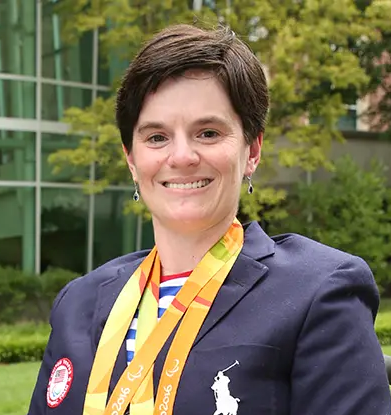
Dr. Cassie S. Mitchell is a research engineer, elite athlete, and mentor. She is a current member of the USA Paralympic team and research faculty in the Wallace H. Coulter Department of Biomedical Engineering at Georgia Institute of Technology and Emory University. At age 18 Cassie was afflicted with Devics Neuromyelitis Optica, leaving her as a quadriplegic and with visual impairments. Her faith and philosophy on life has helped her to overcome the resulting challenges. She graduated with a B.S. in Chemical Engineering from Oklahoma State University and a Ph.D. in Biomedical Engineering from GT/Emory. She enjoys mentoring high school and college students as well as new spinal cord injury patients at Shepherd Center Brain and Spinal Cord Rehabilitiation Hospital, Atlanta, Georgia.

Assistant Professor
Office
UAW 3106
Additional Research
  • Data Modeling for Diseases
  • Neuroscience
Research Focus Areas
Google Scholar
https://scholar.google.com/citations?user=FpxAYrgAAAAJ&hl=en
Personal Website
Cassie
Mitchell
S.
Show Regular Profile

N Apurva Ratan Murty

N Apurva Ratan Murty
ratan@gatech.edu
http://www.murtylab.com/

Ratan is an Assistant Professor of Cognition and Brain Science in the School of Psychology at Georgia Tech, and the Director of the Murty Lab (murtylab.com). He obtained his PhD from Indian Institute of Science (IISc) Bangalore and was a postdoctoral researcher in the Kanwisher and DiCarlo labs at MIT before moving to Georgia Tech. Research in the Murty Lab aims to uncover the neural codes and algorithms that enable us to see. The central theme of the lab's work is to integrate biological vision with artificial models of vision. The lab combines the benefits of closed-loop experimental testing (using 3T/7T human functional-MRI) with cutting-edge computational methods (like deep neural networks, generative algorithms, and AI interpretability) toward a new computationally precise understanding of human vision. This research also guides the development of neurally mechanistic biologically constrained models aimed to uncover a better understanding of the neurobiological changes that underlie perceptual abnormalities such as agnosias.

Assistant Professor
Office
131, JS Coon Building
Research Focus Areas
N Apurva Ratan
Murty
Show Regular Profile

Nathan McDonald

Nathan McDonald
nathan.mcdonald@gatech.edu
https://www.mcdonald-lab.org/

My lab investigates how our brains and nervous systems develop and function. We aim to understand molecularly how neurons build synapses, the specialized junctions that support rapid neuronal communication. Our brains build ~100 trillion synapses during development and continue to build synapses in daily adult life. The location and properties of these synaptic connections fundamentally determine neuronal function. We aim to understand how synapses are formed and function at a molecular and cellular level to advance a bottom-up understanding of the brain and identify avenues for the regeneration of synapses in neurodegenerative diseases. We approach this question using live-animal super-resolution imaging of synapse formation, in vitro biochemical reconstitutions, and genetics with CRISPR/Cas9. We primarily use the model organism C. elegans, a nematode worm with a well-defined nervous system containing just 302 neurons that make around 7000 synapses. With these tools, we are currently investigating synaptic cell adhesion signaling pathways and the liquid-liquid phase separation of core synaptic proteins as conserved mechanisms of synapse formation.

Assistant Professor
Office
EBB 3016
Research Focus Areas
Nathan
McDonald
Show Regular Profile

Alan Emanuel

Alan Emanuel
alan.emanuel@emory.edu
https://www.emanuellab.com/

The Emanuel lab investigates how the sense of touch is generated in the mammalian brain by combining modern neurophysiology with mouse genetic manipulations. Dr. Emanuel joined Emory University School of Medicine in January 2023 as an Assistant Professor in the Department of Cell Biology. Before joining Emory, he completed his postdoc at Harvard Medical School during which he investigated the contributions of mechanoreceptor subtypes to the central representation of touch. Dr. Emanuel earned his Ph.D. from Harvard University by studying the biophysical properties of retinal ganglion cell photoreceptors.

Assistant Professor of Cell Biology
Phone
404-727-1286
Office
615 Michael St., Room 615, Atlanta, GA 30322
Alan
Emanuel
Show Regular Profile

Nathan Damen

Nathan Damen
nathan.damen@gtri.gatech.edu

Nate Damen is a Research Engineer I with Aerospace, Transportation and Advanced Systems Laboratory of Georgia Tech Research Institute. Damen’s work at ATAS has focused on Mixed Reality applications, robotics, the automation of CAR-T cellular expansions, and bioreactor design. Before joining GTRI, Damen conducted research into the manipulation of textiles with Softwear Automation and the design of deformable parcel manipulation systems with Dorabot. His creative work ATLTVHEAD with the Atlanta Beltline Inc., includes the creation of several wearable electronic systems for remote computing and novel interactions between wearable systems and live user input from those walking the Atlanta Beltline. 

Research Engineer 1
Phone
(678) 215-4891
GTRI
Geogia Tech Research Institute
Nathan
Damen
Show Regular Profile