Farzaneh Najafi

Farzaneh Najafi
fnajafi3@gatech.edu
Najafi Lab Website

Overview:
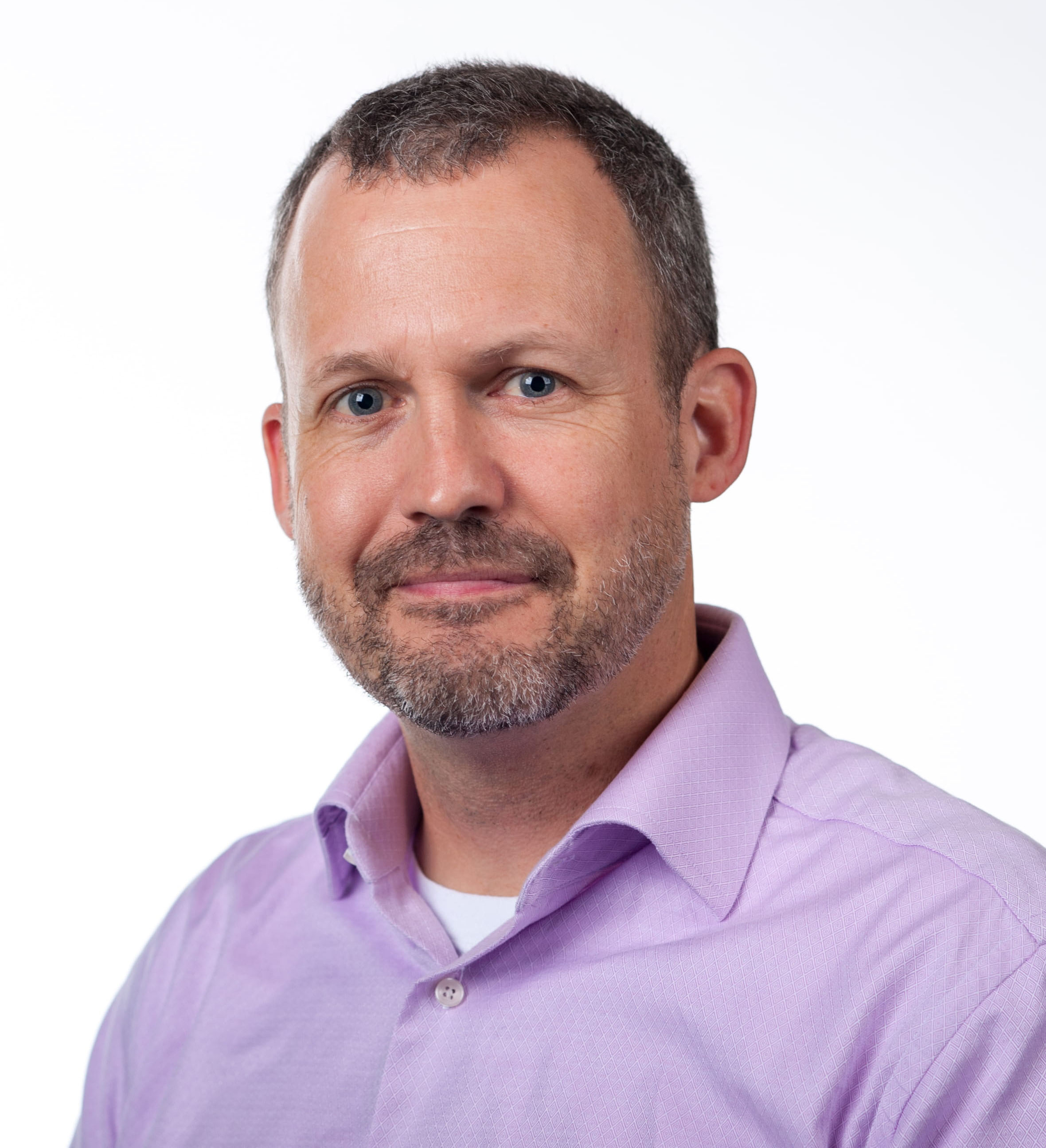
Our brain not only processes sensory signals but also makes predictions about the world. Generating and updating predictions are essential for our survival in a rapidly changing environment. Multiple brain regions including the cerebellum and the cortex are thought to be involved in the processing of prediction signals (aka predictive processing). However, it is not clear what circuit mechanisms and computations underlie predictive processing in each region, and how the cortical and cerebellar prediction signals interact to support cognitive and sensorimotor behavior. Our lab is interested in figuring out these questions by using advanced experimental and computational techniques in systems neuroscience.

Assistant Professor
Phone
2672519137
Office
IBB 3314
Additional Research

Research Interests: Systems and behavioral neuroscience; Computational neuroscience; Predictive processing; Brain area interactions; Cortex and cerebellum; Population coding
Farzaneh
Najafi
Show Regular Profile

Hannah Choi

Hannah Choi
hannahch@gatech.edu
https://hannahchoi.math.gatech.edu/

Hannah Choi is an Assistant Professor in the School of Mathematics at Georgia Tech. Her research focuses on mathematical approaches to neuroscience, with primary interests in linking structures, dynamics, and computation in data-driven brain networks at multiple scales. Before coming to Georgia Tech, she was a postdoctoral fellow at the University of Washington and also a visiting scientist at the Allen Institute for Brain Science, and spent one semester at the Simons Institute for the Theory of Computing at the University of California, Berkeley as a Patrick J McGovern Research Fellow. She received her Ph.D. in Applied Mathematics from Northwestern University and her BA in Applied Mathematics from the University of California, Berkeley.

Assistant Professor
University, College, and School/Department
Hannah
Choi
Show Regular Profile

Eberhard O. Voit

Eberhard O. Voit
eberhard.voit@bme.gatech.edu
Website

Eberhard Voit’s research interests are in the area of complex biomedical systems. Work in his lab focuses on genomic, metabolic, and signaling systems with applications reaching from microbial and plant systems to human diseases. Voit has authored or co-authored about two hundred fifty scientific articles and book chapters as well as several books. Voit is an elected a fellow in the American Institute for Medical and Biological Engineering (AIMBE) and the American Association for the Advancement of Science (AAAS).

Professor
David D. Flanagan Chair
Georgia Research Alliance Eminent Scholar in Systems Biology
Phone
404-385-5057
Office
EBB 2115B
Google Scholar
https://scholar.google.com/citations?user=usBmHhIAAAAJ&hl=en&oi=sra
Coulter Department of Biomedical Engineering
Eberhard
Voit
O.
Show Regular Profile

Garrett Stanley

Garrett Stanley
garrett.stanley@bme.gatech.edu
Website

Garrett Stanley is the McCamish Foundation Distinguished Chair in the Department of Biomedical Engineering at Georgia Tech and Emory University and is the Co-Director of the Georgia Tech Neural Engineering Center. He has formal training, both at undergraduate and doctorate levels, in engineering (specifically trained in Control Theory through all of his graduate work), and has worked extensively in the field of neuroscience, specifically in sensory processing in the brain, and more specifically in vision and somatosensation (touch). 

From 1999 to 2007, he was an Associate Professor in the Division of Engineering & Applied Sciences at Harvard University, where he was the leader of the Harvard Biocontrols Laboratory. Professor Stanley is now a faculty member in the Department of Biomedical Engineering at Georgia Tech/Emory University (2008-2013 Associate Professor, 2014-present Full Professor), and leads several programmatic efforts at the interface between basic neuroscience and neurotechnology (Co-Direct the GT Neural Engineering Center, Direct Computational Neuroscience training program, Director of Graduate Studies, etc.). In terms of research, he is the leader of the Neural Coding group in the Laboratory for Neuroengineering. 

The research of his group has been funded by the National Institute of Health, National Science Foundation, the Office of Naval Research, DARPA, and several private foundations. Prof. Stanley’s group routinely publishes our research in the top Neuroscience journals, along with more technical work in engineering journals. He is considered a leader in the field nationally and internationally.

McCamish Foundation Distinguished Chair
Carol Ann and David D. Flanagan Professor
BME Faculty Fellow
Phone
404-385-5037
Office
UAW 3107
Research Focus Areas
Google Scholar
https://scholar.google.com/citations?user=zJQPWQwAAAAJ&hl=en
Coulter Department of Biomedical Engineering
Garrett
Stanley
Show Regular Profile

Chethan Pandarinath

Chethan Pandarinath
chethan@gatech.edu
Website

Our work centers on understanding how the brain represents information and intention, and using this knowledge to develop high-performance, robust, and practical assistive devices for people with disabilities and neurological disorders. We take a dynamical systems approach to characterizing the activity of large populations of neurons, combined with rigorous systems engineering (signal processing, machine learning, and real-time systems) to advance the performance of brain-machine interfaces and neuromodulatory devices.

Adjunct Assistant Professor
Phone
404-727-2851
Office
Emory WMRB 6001
Additional Research

Our work centers on understanding how the brain represents information and intention, and using this knowledge to develop high-performance, robust, and practical assistive devices for people with disabilities and neurological disorders. We take a dynamical systems approach to characterizing the activity of large populations of neurons, combined with rigorous systems engineering (signal processing, machine learning, control theory, real-time system design) to advance the performance of brain-machine interfaces and neuromodulatory devices.

Google Scholar
https://scholar.google.com/citations?hl=en&user=M3-z9G4AAAAJ&view_op=list_works&sortby=pubdate
Related Site
Chethan
Pandarinath
Show Regular Profile

Anqi Wu

Anqi Wu
anqiwu@gatech.edu
Anqi Wu Research

Anqi Wu is an Assistant Professor at the School of Computational Science and Engineering (CSE), Georgia Institute of Technology. She was a Postdoctoral Research Fellow at the Center for Theoretical Neuroscience, the Zuckerman Mind Brain Behavior Institute, Columbia University. She received her Ph.D. degree in Computational and Quantitative Neuroscience and a graduate certificate in Statistics and Machine Learning from Princeton University. Anqi was selected for the 2018 MIT Rising Star in EECS, 2022 DARPA Riser, and 2023 Alfred P. Sloan Fellow. Her research interest is to develop scientifically-motivated Bayesian statistical models to characterize structure in neural data and behavior data in the interdisciplinary field of machine learning and computational neuroscience. She has a general interest in building data-driven models to promote both animal and human studies in the system and cognitive neuroscience.

Assistant Professor
Phone
323-868-1604
Research Focus Areas
BRAin INtelligence and Machine Learning (BRAINML) Laboratory
Anqi
Wu, Ph.D.
Show Regular Profile

Machelle Pardue

Machelle Pardue
machelle.pardue@bme.gatech.edu
Website

Dr. Pardue is a Research Career Scientist at the Atlanta VA Medical Center, and a Professor in Wallace H. Coulter Department of Biomedical Engineering at Georgia Institute of Technology and Emory University School of Medicine. Dr. Pardue received her B.S. in zoology from the University of Wyoming and her doctorate in vision science and biology at the University of Waterloo. Her post-doctorate training in visual electrophysiology was completed with Dr. Neal Peachey at Loyola School of Medicine and Hines VA Hospital in Chicago and focused on biocompatibility of retinal prosthetics. Dr. Pardue moved to Atlanta in 2000 to join the Atlanta VA Medical Center and Emory University Department of Ophthalmology. She moved her academic appointment to Biomedical Engineering in 2015. Her research interests are focused on developing treatments for people with vision loss. To this end, she has developed three research themes within her lab: 1) neuroprotective and restorative treatments for retinal degeneration, 2) early detection and treatment of diabetic retinopathy, and 3) retinal mechanisms of refractive development and myopia. Her research has been continuously supported by the Department of Veterans Affairs, NIH, and private companies (1999-present). She has served on several VA and NIH grant review panels and frequently reviews manuscripts for several journals including Journal of Neuroscience, Investigative Ophthalmology and Visual Sciences, Molecular Vision, Vision Research, Journal of Neuroscience Methods, Journal of Neurochemistry and PlosOne.

Professor
Research Career Scientist, Center for Visual and Neurocognitive Rehabilitation
Phone
404-385-3666
Office
UAW 4104
Additional Research
Pardue's lab is focused on developing treatments for people with vision loss. Steps to successful treatment require understanding the mechanisms of the disease and characterizing temporal changes to identify therapeutic windows, with the ultimate goal of rehabilitation of visual function. She uses behavioral electrophysiological, morphological, molecular, and imaging approaches to evaluate changes in retinal function and structure. Her research is guided by applying knowledge of retinal circuits and visual processing, often leading to studies of cognition and the interaction of retinal and visual circuits during health and disease. Her studies start in animal models and move to human trials when possible.
Research Focus Areas
Google Scholar
https://scholar.google.com/citations?user=C3KozLgAAAAJ&hl=en
LinkedIn Related Site
Machelle
Pardue
Show Regular Profile

Eric Gaucher

Eric Gaucher
eric.gaucher@biology.gatech.edu
Website

Gaucher was guided in biochemistry by Peter Tipton and Bayesian Theory by George Smith. Gaucher subsequently earned his Ph.D. from the University of Florida under the tutelage of Steve Benner and Michael Miyamoto.[1] Gaucher received the Walter M. Fitch Award from the Society for Molecular Biology and Evolution for his graduate work.[2] He then did postdoctoral work with NASA's Astrobiology Institute in conjunction with a National Research Council Fellowship. After the two-year fellowship, Gaucher served as President of the Foundation for Applied Molecular Evolution.

Gaucher was hired as an Associate Professor by the Georgia Institute of Technology in 2008 [1][3][4] The Gaucher group conducts basic and applied research at the interface of molecular evolution and synthetic biology. As of February 2016, his h-index, as calculated by Google Scholar, is 25.[5]

Gaucher is also the founder and president of the early-stage biotechnology company General Genomics. His company exploits novel platforms to engineer proteins for the biomedical and industrial sectors.

Adjunct Associate Professor
Phone
404-385-3265
Office
EBB 5013
Additional Research
Our laboratory has diverse research interests including: evolutionary synthetic biology, molecular biology, comparative genomics, computational biology, bioinformatics, biomedicine, molecular evolution and origins of life, and evolution and engineering of protein thermostability.
Google Scholar
https://scholar.google.com/citations?user=IrX5ZzQAAAAJ&hl=en&oi=sra
http://www.biology.gatech.edu/people/eric-gaucher
Eric
Gaucher
A.
Show Regular Profile

Patrick McGrath

Patrick McGrath
patrick.mcgrath@biology.gatech.edu
Website

Patrick McGrath's research group is interested in understanding the genetic basis of heritable behavioral variation. In the current age, it has become cheap and easy to catalog the set of genetic differences between two individuals. But which genetic differences are responsible for generating differences in innate behaviors, including liability to neurological diseases such as autism, bipolar disease, and schizophrenia? How do these causative genetic variants modify a nervous system? Besides their role in disease, genetic variation is the substrate for natural selection. To understand how behavior evolves, we must understand how it varies.

Associate Professor
Phone
404-385-0071
Office
EBB 3013
Additional Research
Mostbiological traits have a strong genetic, or heritable, component. Understanding how genetic variation influences these phenotypes will be important for understanding common, heritable diseases like autism.However, the genetic architecture controlling most biological traits is incredibly complex - hundreds of interacting genes and variants combine in unknown ways to create phenotype.The McGrath lab is interested in using fundamentalmechanistic studies inC. elegansto identify, predict, and understand how genetic variation impacts the function of the nervous system.We are studying laboratory adapted strains and harnessing directed evolution experiments to understand how genetic changes affect development, reproduction, and lifespan. We combine quantitative genetics, CRISPR/Cas9, genomics, and computational approaches to address these questions.We believe this work will lead to insights into evolution, multigenic disease, and systems biology.
Google Scholar
https://scholar.google.com/citations?user=tbbfR50AAAAJ&hl=en
http://biosciences.gatech.edu/people/patrick-mcgrath
Patrick
McGrath
T.
Show Regular Profile

Vince Calhoun

Vince Calhoun
vcalhoun@gatech.edu
Learn more

Vince Calhoun, Ph.D., is the founding director of the tri-institutional Center for Translational Research in Neuroimaging and Data Science (TReNDS) where he holds appointments at Georgia State, Georgia Tech and Emory. He is the author of more than 900 full journal articles. His work includes the development of flexible methods to analyze neuroimaging data including blind source separation, deep learning, multimodal fusion and genomics, neuroinformatics tools. Calhoun is a fellow of the Institute of Electrical and Electronic Engineers, The American Association for the Advancement of Science, The American Institute of Biomedical and Medical Engineers, The American College of Neuropsychopharmacology, The Organization for Human Brain Mapping (OHBM) and the International Society of Magnetic Resonance in Medicine. He currently serves on the IEEE BISP Technical Committee and is also a member of IEEE Data Science Initiative Steering Committee as well as the IEEE Brain Technical Committee.

Director TReNDS
Director CABI
Distinguished University Professor
Vince
Calhoun
Show Regular Profile