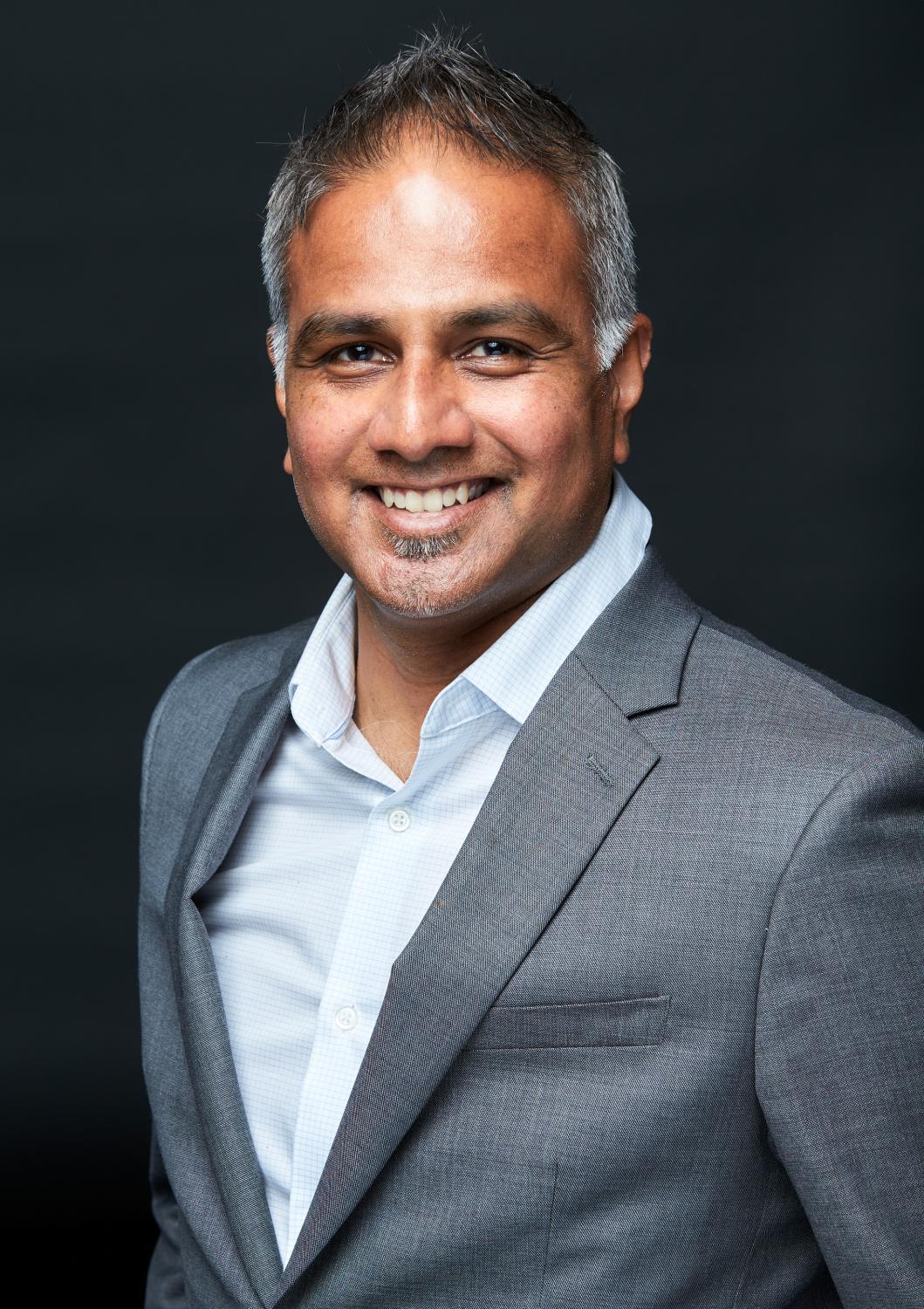
Srinivas Aluru

Srinivas Aluru
aluru@cc.gatech.edu
Website

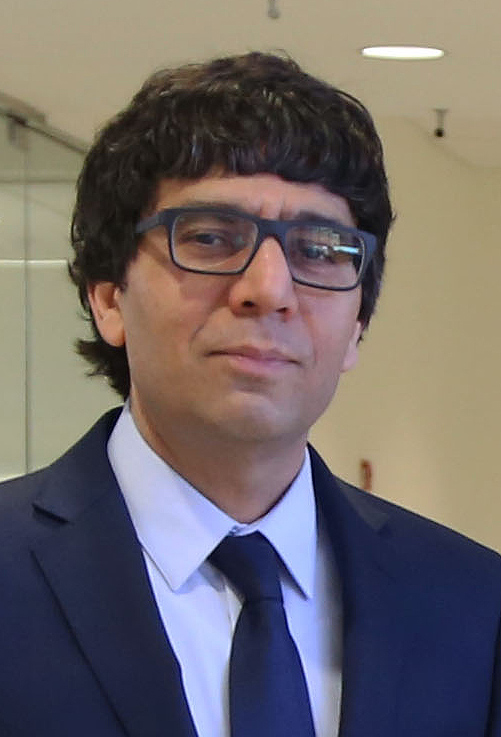
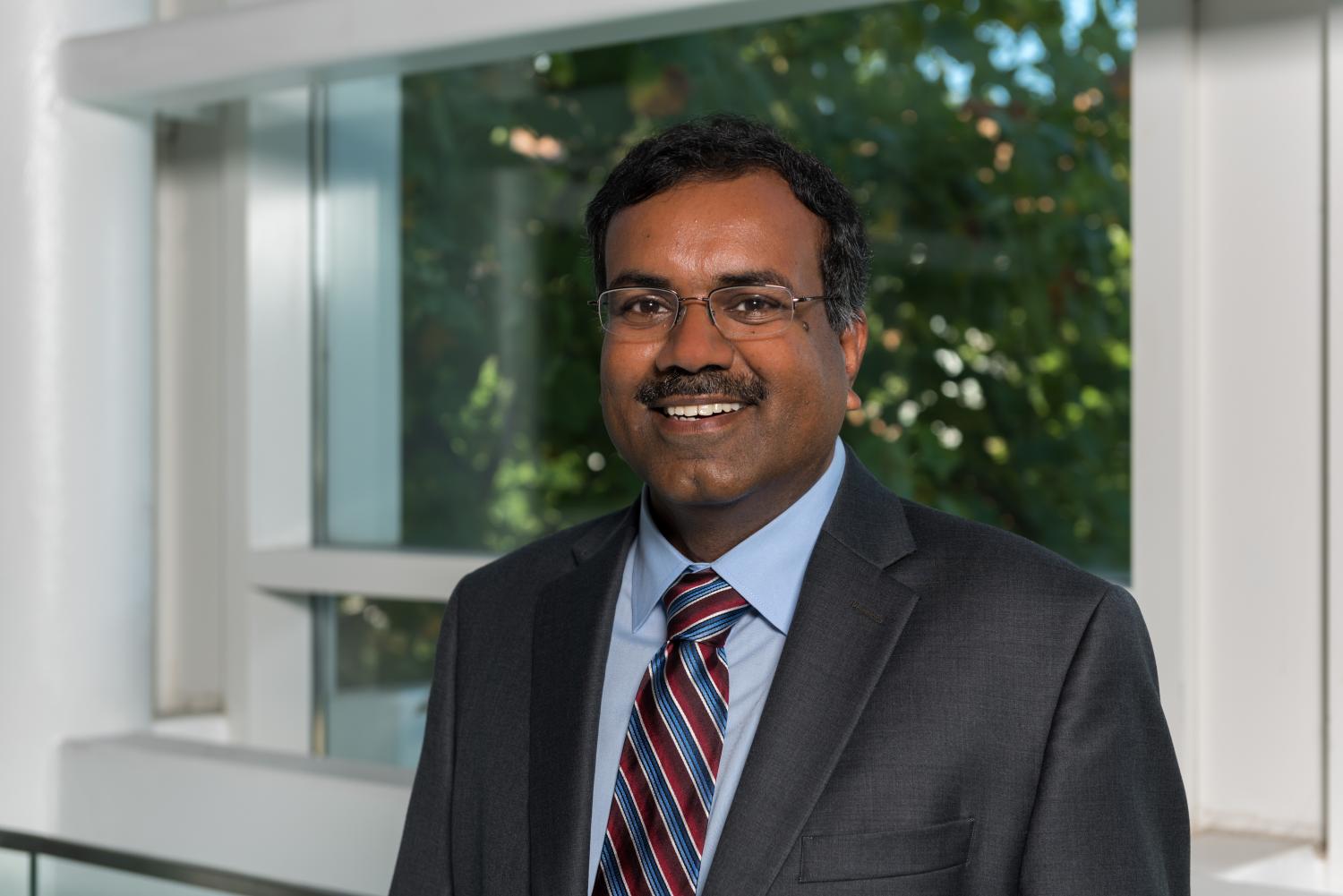
Srinivas Aluru is executive director of the Institute for Data Engineering and Science (IDEaS) and professor in the School of Computational Science and Engineering at Georgia Institute of Technology. He co-leads the NSF South Big Data Regional Innovation Hub which nurtures big data partnerships between organizations in the 16 Southern States and Washington D.C., and the NSF Transdisciplinary Research Institute for Advancing Data Science. Aluru conducts research in high performance computing, large-scale data analysis, bioinformatics and systems biology, combinatorial scientific computing, and applied algorithms. An early pioneer in big data, Aluru led one of the eight inaugural mid-scale NSF-NIH Big Data projects awarded in the first round of federal big data investments in 2012. He has contributed to NITRD and OSTP led white house workshops, and NSF and DOE led efforts to create and nurture research in big data and exascale computing. He is a recipient of the NSF Career award, IBM faculty award, Swarnajayanti Fellowship from the Government of India, the John. V. Atanasoff Discovery Award from Iowa State University, and the Outstanding Senior Faculty Research Award, Dean's award for faculty excellence, and the Outstanding Research Program Development Award at Georgia Tech. He is a Fellow of AAAS, IEEE, and SIAM, and is a recipient of the IEEE Computer Society Golden Core and Meritorious Service awards.

Sr. Assoc. Dean, College of Computing
Professor, College of Computing
Co-Lead PI, NSF South Big Data Regional Innovation Hub
Phone
404.385.1486
Additional Research

Bioinformatics; High Performance Computing; Systems Biology; Combinatorial Scientific Computing; Applied Algorithms
Google Scholar
https://scholar.google.com/citations?hl=en&user=YOGOScoAAAAJ&view_op=list_works&sortby=pubdate
Srinivas
Aluru
Show Regular Profile

Chaitanya Deo

Chaitanya Deo
chaitanya.deo@nre.gatech.edu
Website

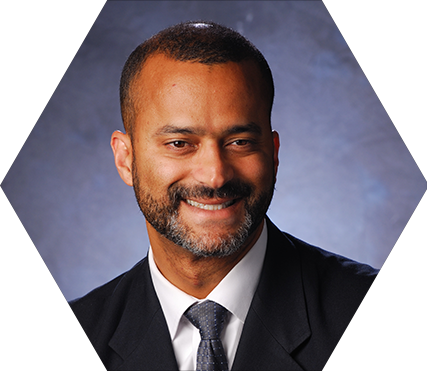
Dr. Deo came to Georgia Tech in August 2007 as an Assistant Professor of Nuclear and Radiological Engineering. Prior, he was a postdoctoral research associate in the Materials Science and Technology Division of the Los Alamos National Laboratory. He studied radiation effects in structural materials (iron and ferritic steels) and nuclear fuels (uranium dioxide). He also obtained research experience at Princeton University (Mechanical Engineering), Lawrence Livermore National Laboratory, and Sandia National Laboratories.

Professor, Woodruff School of Mechanical Engineering
Phone
(404) 385.4928
Additional Research

Nuclear; Thermal Systems; Materials In Extreme Environments; computational mechanics; Materials Failure and Reliability; Ferroelectronic Materials; Materials Data Sciences

Chaitanya
Deo
Show Regular Profile

Amirali Aghazadeh

Amirali Aghazadeh
aaghazadeh3@gatech.edu
Profile Page

Amirali Aghazadeh is an Assistant Professor in the School of Electrical and Computer Engineering and also program faculty of Machine Learning, Bioinformatics, and Bioengineering Ph.D. programs. He has affiliations with the Institute for Data Engineering and Science (IDEAS) and Institute for Bioengineering and Biosciences. Before joining Georgia Tech, Aghazaeh was a postdoc at Stanford and UC Berkeley and completed his Ph.D. at Rice University. His research focuses on developing machine learning and deep learning solutions for protein and small molecular design and engineering.
 

Assistant Professor
Phone
713-257-5758
Office
CODA S1209
Google Scholar
https://scholar.google.com/citations?hl=en&user=87wBxzUAAAAJ&view_op=list_works&sortby=pubdate
Amirali
Aghazadeh
Show Regular Profile

Chandra Raman

Chandra Raman
craman@gatech.edu
Raman Lab at Georgia Tech

The Raman Group has two main thrusts.  The team utilizes sophisticated tools to cool atoms to temperatures less than one millionth of a degree above absolute zero. Using these tools, they explore topics ranging from superfluidity in Bose-Einstein condensates (BECs) to quantum antiferromagnetism in a spinor condensate.  In another effort the team partners with engineers to build cutting edge atomic quantum sensors on-chip that can one day be mass-produced.

Professor, School of Physics
Phone
404.894.9062
Office
Howey N04
Additional Research

Spinor Bose-Einstein Condensates

University, College, and School/Department
Google Scholar
https://scholar.google.com/citations?hl=en&user=mBHjtLEAAAAJ&view_op=list_works&sortby=pubdate
LinkedIn Physics Profile Page
Chandra
Raman
Show Regular Profile

Seung-Kyum Choi

Seung-Kyum Choi
seungkyum.choi@me.gatech.edu

Seung-Kyum Choi directly began at Georgia Tech in Fall 2006 as an assistant professor. Prior to joining Georgia Tech, he was a research assistant at Wright State University, conducting research on uncertainty quantification techniques for the analytical certification of complex engineered systems.  

Associate Professor, Woodruff School of Mechanical Engineering
Phone
404.894.9218
Office
MARC 260
Additional Research

Additive/Advanced Manufacturing; Computer-Aided Engineering; Materials Failure and Reliability; Modeling; Uncertainty Modeling

Research Focus Areas
Google Scholar
https://scholar.google.com/citations?hl=en&user=p90igT8AAAAJ&view_op=list_works&sortby=pubdate
Seung-Kyum
Choi
Show Regular Profile

Mo Li

Mo Li
mo.li@mse.gatech.edu
MSE Profile Page

Professor Mo Li received his Ph.D. in applied physics in 1994 from California Institute of Technology under the supervision of Professor William L. Johnson and Professor William A. Goddard.

After a brief staying as a postdoctoral fellow at Caltech and the Argonne National Laboratory, he joined Morgan Stanley & Co. in New York. He came back to academia in 1998. From 1998 to 2001 he was an assistant professor at the Johns Hopkins University. Currently he is a professor at the Georgia Institute of Technology.

Professor, School of Materials Science and Engineering
Director, Computational Materials Science Group
Phone
404.385.2472
Office
Love 365
Additional Research

computational mechanics; micro and nanomechanics; Nanomaterials; Materials In Extreme Environments

Research Focus Areas
Google Scholar
https://scholar.google.com/citations?hl=en&user=cScfSDoAAAAJ&view_op=list_works&sortby=pubdate
Computational Materials Science Group
Mo
Li
Show Regular Profile

Arun Gokhale

Arun Gokhale
arun.gokhale@mse.gatech.edu
MSE Profile Page

Arun M. Gokhale is a Professor in the School of Materials Science and Engineering at the Georgia Institute of Technology. Prior to joining the Georgia Tech faculty in 1989, Gokhale’s work history encompassed fifteen years of teaching, and industrial research and development experience. Gokhale holds a B.Tech (1970) and M.Tech (1972) in Metallurgical Engineering from the Indian Institute of Technology, and a Ph.D. in Materials Science and Engineering (1977) from the University of Florida. 

Gokhale’s research interests include quantitative fractography, damage evolution in composites, microstructural evolution during deformation and fracture, with primary focus on quantitative description of microstructure and its evolution during materials processes.

Gokhale has written 200 papers in reputed scientific journals and conference proceedings. He has given more than 100 invited lectures in the national and international conferences and seminars. He is a Fellow of ASM International. He served as Vice President of International Society for Stereology (1992-96). He has served on the editorial boards of several international journals.

Professor, School of Materials Science and Engineering
Phone
404.894.2887
Office
Love 265
Additional Research

Composites; computational mechanics; deformation and degradation; micro and nanomechanics

Research Focus Areas
Google Scholar
https://scholar.google.com/citations?hl=en&user=sP6Z8eoAAAAJ&view_op=list_works&sortby=pubdate
Arun
Gokhale
M.
Show Regular Profile

Arash Yavari

Arash  Yavari
arash.yavari@ce.gatech.edu
Geometric Solid Mechanics Group

Professor Yavari joined the School of Civil and Environmental Engineering at the Georgia Institute of Technology in January 2005. He received his B.S. in Civil Engineering from Sharif University of Technology, Tehran, Iran in 1997. He continued his studies at The George Washington University where he obtained an M.S. in Mechanical Engineering in 2000. He then moved to Pasadena, CA and obtained his Ph.D. in Mechanical Engineering (Applied Mechanics option with minor in Mathematics) from the California Institute of Technology in 2005. Professor Yavari is a Fellow of the Society of Engineering Science and a member of the American Academy of Mechanics.

Professor Yavari's interests are in developing systematic theories of discrete mechanics for crystalline solids with defects. Defects play a crucial role in determining the properties of materials. The development of atomistic methods including density functional theory, bond-order potentials and embedded atom potentials has enabled a detailed study of such defects. However, much of the work is numerical and often with ad hoc boundary/far-field conditions. Specifically, a systematic method for studying these discrete yet non-local problems is lacking. Design in small scales requires solving inverse problems and this is not possible with purely numerical techniques. From a mechanics point of view, defective crystals are modeled as discrete boundary-value problems. The challenging issues are extending the existing techniques from solid state physics for non-periodic systems, new developments in the theory of vector-valued partial difference equations, existence and uniqueness of solutions of discrete boundary-value problems and their symmetries, etc. The other efforts in this direction are understanding the geometric structure of discrete mechanics and its link with similar attempts in the physics and computational mechanics literatures and investigating the rigorous continuum limits of defective crystals

Professor, School of Civil and Environmental Engineering
Phone
404.894.2436
Office
Mason 4164
Additional Research

Data AnalyticsModelingStructural MaterialsNonlinear elasticity and anelasticityGeometric mechanicsComputational mechanicsMechanics of bulk and surface growth (accretion)

Research Focus Areas
Google Scholar
https://scholar.google.com/citations?hl=en&user=c3D1_uQAAAAJ&view_op=list_works&sortby=pubdate
CEE Profile Page
Arash
Yavari
Show Regular Profile

Rafi Muhanna

Placeholder for headshot
raft.huhanna@gatech.edu
CEE Profile Page

Muhanna is an associate professor in the School of Civil and Environmental Engineering at Georgia Institute of Technology. He obtained his B.S. in Civil Engineering from the University of Damascus in 1972, and his M.S. and Ph.D. degrees in the area of Solid and Structural Mechanics in 1976 and 1979, respectively from the Higher Institute for Structure and Architecture, Sofia, Bulgaria. He joined the faculty at the University of Damascus, Syria in 1980, and has also served on the faculty at Case Western Reserve University, Ohio and the University of Maryland (1991-2000). Muhanna has won a number of international prizes, among them: the Aga Khan Award for Architecture, one of the most prestigious international architectural awards, for the his masonry shell system without steel reinforcement (1992); the Golden Prize of the World Intellectual Property Organization (WIPO), for the best displayed patent at the International Fair of Damascus (1988); and the Special Prize of the United Nations HABITAT (1989). Muhanna's research activity is in the general area of solid and structural mechanics that includes uncertainty modeling, structural reliability, computational reliability, shell theory, and optimization of masonry building materials in structural systems. This research activity has culminated in the development of the new methods for reliable engineering computing, establishment of the Center for Reliable Engineering Computing (REC), and hosting the bi-annual international NSF sponsored workshop on Reliable Engineering Computing since 2004.

Associate Professor, School of Civil and Environmental Engineering
Director, Reliable Engineering Computing (REC)
Phone
404.385.1825
Office
Mason 4156
Additional Research

computational mechanics; Structural Materials; Materials Failure and Reliability

Research Focus Areas
Google Scholar
https://scholar.google.com/citations?hl=en&user=6F6SAxQAAAAJ&view_op=list_works&sortby=pubdate
Reliable Engineering Computing (REC)
Rafi
Muhanna
L.
Show Regular Profile

Jeffrey Streator

Jeffrey Streator
jeffrey.streator@me.gatech.edu
ME Profile Page

Streator’s research is concerned with the interactions between contacting surfaces, with particular emphasis on the roles played by surface roughness and by intervening liquid films. Much of this research is motivated by problems of adhesion or “stiction” that is prevalent in small-scale devices such as microelectromechanical systems (MEMS) and in the head-disk interface of computer disk drives. As device form factors continue to shrink the role of surface forces, such as liquid surface tension become increasingly dominant as compared to inertial forces. In this regard Streator has been interested in developing models that consider the interplay between liquid-drive capillary stresses and elastic restoring forces. This work has led to models of contact instabilities force generation predictions for both smooth and rough interfaces.

Associate Professor, Woodruff School of Mechanical Engineering
Phone
404.894.2742
Office
MRDC 4206
Additional Research

Surfaces and Interfaces; MEMS; Thin Films; Tribomaterials

Research Focus Areas
Jeffrey
Streator
L.
Show Regular Profile