Rudolph Gleason

Rudolph Gleason
rudy.gleason@me.gatech.edu

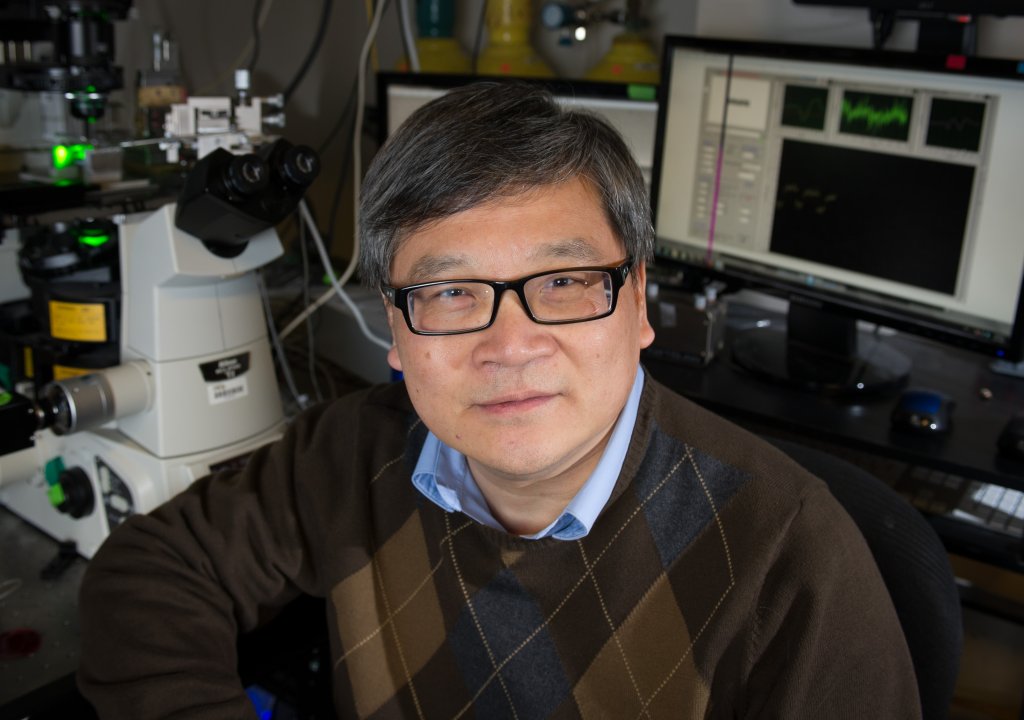
Rudolph (Rudy) L. Gleason began at Tech in Fall 2005 as an assistant professor. Prior, he was a postdoctoral fellow at Texas A&M University. He is currently a professor in the School of Mechanical Engineering and the School of Biomedical Engineering in the College of Engineering. Gleason’s research program has two key and distinct research aims. The first research aim is to quantify the link between biomechanics, mechanobiology, and tissue growth and remodeling in diseases of the vasculature and other soft tissues. The second research aim is to translate engineering innovation to combat global health disparities and foster sustainable development in low-resource settings around the world. Gleason serves as a Georgia Tech Institute for People and Technology initiative lead for research activities related to global health and well-being.

Professor, Mechanical Engineering and Biomedical Engineering
Joint Appointment in the School of Biomedical Engineering
Phone
404-385-7218
Office
TEP 205
Additional Research

Cardiovascular mechanics, soft tissue growth and remodeling, and tissue engineering

Google Scholar
https://scholar.google.com/scholar?hl=en&as_sdt=0,11&q=rl+gleason+jr&oq=RL+Gleason
LinkedIn Related Site
Rudolph
Gleason
L.
Show Regular Profile

Cheng Zhu

Cheng Zhu
cheng.zhu@bme.gatech.edu
Cellular and Molecular Biomechanics Laboratory

Our interests lie in the adhesion and signaling molecules of the immune system as well as those involved in platelet adhesion and aggregation. We are primarily focused on early cell surface interaction kinetics and their primary signaling responses, as these are critical in determining how a cell will ultimately respond upon contact with another cell. The majority of our work ranges from single molecule interaction studies using atomic force microscopy, molecular dynamics simulations, or biomembrane force probe assays to single cell studies using micropipette adhesions assays, fluorescence imaging techniques, or real-time confocal microscopy. These assays focus on the mechanics and kinetics of receptor-ligand binding and their downstream signaling effects within cells. T cell receptors, selectins, integrins, and their respective ligands are some of the cell surface molecules currently under investigation in our lab. Understanding the initial interaction between molecules such as these and their subsequent early signaling processes is crucial to elucidating the response mechanisms of these physiological systems. Ultimately, our research strives to help better understand the mechanisms within these systems for possible medical applications in autoimmunity, allergy, transplant rejection, and thrombotic disorders. 

Regents' Professor, Coulter Department of Biomedical Engineering
J. Erskine Love Jr. Endowed Chair, Coulter Department of Biomedical Engineering
Executive Director, International Programs, Coulter Department of Biomedical Engineering
Phone
404.894.3269
Office
UAW 1210
Additional Research

BioinformaticsBiomechanicsCell biophysicsElectron MicroscopyMechanobiology

Google Scholar
https://scholar.google.com/citations?hl=en&user=_tPv2wEAAAAJ&view_op=list_works&sortby=pubdate
LinkedIn BME Profile Page
Cheng
Zhu
Show Regular Profile

Jeannette Yen

Jeannette Yen
jeannette.yen@biology.gatech.edu
School of Biological Sciences Profile Page
Professor, School of Biological Sciences
Phone
404.385.1596
Office
Cherry Emerson A116
Additional Research

Aquatic chemical communicationHydrodynamicsSmall-Scale Biological-Chemical-Physical Interactions in Marine Zooplankton 

Google Scholar
https://scholar.google.com/scholar?q=Jeannette+Yen&btnG=&hl=en&as_sdt=0,11
Aquatic Chemical Ecology Lab
Jeannette
Yen
Show Regular Profile

Younan Xia

Younan Xia
younan.xia@bme.gatech.edu
ChBE Profile Page

Xia is the Brock Family Chair and Georgia Research Alliance (GRA) Eminent Scholar in Nanomedicine in the Wallace H. Coulter Department of Biomedical Engineering at Georgia Institute of Technology and Emory University, with joint appointments in School of Chemistry and Biochemistry, and School of Chemical and Biomolecular Engineering. Professor Xia received his Ph.D. degree in Physical Chemistry from Harvard University (with Professor George M. Whitesides) in 1996, his M.S. degree in Inorganic Chemistry from University of Pennsylvania (with the late Professor Alan G. MacDiarmid, a Nobel Laureate in Chemistry, 2000) in 1993, and his B.S. degree in Chemical Physics from the University of Science and Technology of China (USTC) in 1987. He came to the United States of America in 1991. Xia has received a number of prestigious awards, including the 2013 Nano Today Award, the ACS National Award in the Chemistry of Materials (2013), Fred Kavli Distinguished Lecture in Nanoscience at the MRS Spring Meeting (2013), AIMBE Fellow (2011), MRS Fellow (2009 ), NIH Director's Pioneer Award (2006), ACS Leo Hendrik Baekeland Award (2005), Camille Dreyfus Teacher Scholar (2002), David and Lucile Packard Fellowship in Science and Engineering (2000), Alfred P. Sloan Research Fellow (2000), NSF Early Career Development Award (2000), ACS Victor K. LaMer Award (1999), and Camille and Henry Dreyfus New Faculty Award (1997). Xia has been an Associate Editor of Nano Letters since 2002, and has served on the Advisory Boards of Particle & Particle Systems Characterization (2013-), Chemical Physics Letters (2013-), Chemistry: A European Journal (2013-), Chinese Journal of Chemistry (2013-), Angewandte Chemie International Edition (2011-), Advanced Healthcare Materials (2011-, inaugural chairman of the advisory board), Accounts of Chemical Research (2010-), Cancer Nanotechnology (2010-), Chemistry: An Asian Journal (2010-), Journal of Biomedical Optics (2010-), Nano Research (2009-), Science of Advanced Materials (2009-), Nano Today (2006-), Chemistry of Materials (2005-2007), Langmuir (2005-2010, 2013-2015), International Journal of Nanotechnology (2004-), and Advanced Functional Materials (2001-). He has also served as a Guest Editor of special issues for Advanced Materials (six times), Advanced Functional Materials (one time), MRS Bulletin (one time), and Accounts of Chemical Research (one time).

GRA Eminent Scholar in Nanomedicine, Wallace H. Coulter Department of Biomedical Engineering
Professor, Wallace H. Coulter Department of Biomedical Engineering
Brock Family Chair, Wallace H. Coulter Department of Biomedical Engineering
Professor, School of Chemistry and Biochemistry, and School of Chemical and Biomolecular Engineering
Phone
404.385.3209
Office
MSE 3100J
Additional Research
Catalysis; Nanomedicine; Bio-Inspired Materials; Tissue Engineering
Google Scholar
https://scholar.google.com/citations?hl=en&user=3gDWh4gAAAAJ&view_op=list_works&sortby=pubdate
Nanocages Lab
Younan
Xia
Show Regular Profile

Paul Russo

Paul Russo
paul.russo@mse.gatech.edu
MSE Profile Page

Paul S. Russo is a Professor of Materials Science and Engineering with a joint appointment in the School of Chemistry and Biochemistry at the Georgia Institute of Technology with expertise in polymer, biopolymer and particle chemistry.

His research interests are rooted in rodlike polymers, such as plant viruses, cellulose derivatives and aromatic backbone materials. Particular emphasis has been paid to molecular transport in complex fluids containing rods and to related measurement methods. Static and dynamic laser light scattering have been joined by fluorescence photobleaching recovery and pulsed field gradient NMR spectroscopy to measure diffusion in dilute and concentrated solutions, gels, and liquid crystals. Dialysis implementations of these techniques have permitted stability studies of the amyloid protein responsible for Alzheimer’s disease. Other materials of interest include organophilic polypeptides, which have been coupled to silica cores to yield hybrid particles that can carry hydrophobic payloads, such as enzymes. The same particles can also form colloidal crystals and linear arrays. Small-angle x-ray scattering plays a role in the characterization of these materials. Hydrophobic proteins are being used to template the synthesis of polymers in new and unusual shapes and to disperse oil following marine spills.

Professor, Materials Science and Engineering and School of Chemistry and Biochemistry
Hightower Chair in Biopolymers
Phone
404.385.2607
Office
MRDC 3508
Additional Research

Biomaterials; Polymers; Colloids; Biomaterials; Nanocellulose Applications; Biocomposites; New Materials; Cellulosic Nanomaterials; Polymer & Fiber

Google Scholar
https://scholar.google.com/citations?hl=en&user=K4CmCWMAAAAJ&view_op=list_works&sortby=pubdate
Russo Lab
Paul
Russo
S.
Show Regular Profile

H. Jerry Qi

H. Jerry Qi
qih@me.gatech.edu
Active Materials & Additive Manufacturing Lab

H. Jerry Qi is a professor and the Woodruff Faculty Fellow in the George W. Woodruff School of Mechanical Engineering at Georgia Institute of Technology. He received his bachelor degrees (dual degree), master and Ph.D. degree from Tsinghua University (Beijing, China) and a ScD degree from Massachusetts Institute of Technology (Boston, MA, USA). After one year postdoc at MIT, he joined University of Colorado Boulder as an assistant professor in 2004, and was promoted to associate professor with tenure in 2010. He joined Georgia Tech in 2014 as an associate professor with tenure and was promoted to a full professor in 2016. Qi is a recipient of NSF CAREER award (2007). He is a member of Board of Directors for the Society of Engineering Science. In 2015, he was elected to an ASME Fellow. The research in Qi's group is in the general area of soft active materials, with a focus on 1) 3D printing of soft active materials to enable 4D printing methods; and 2) recycling of thermosetting polymers. The material systems include: shape memory polymers, light activated polymers, vitrimers. On 3D printing, they developed a wide spectrum of 3D printing capability, including: multIMaTerial inkjet 3D printing, digit light process (DLP) 3D printing, direct ink write (DIW) 3D printing, and fused deposition modeling (FDM) 3D printing. These printers allow his group to develop new 3D printing materials to meet the different challenging requirements. For thermosetting polymer recycling, his group developed methods that allow 100% recycling carbon fiber reinforced composites and electronic packaging materials. Although his group develops different novel applications, his work also relies on the understanding and modeling of material structure and properties under environmental stimuli, such as temperature, light, etc, and during material processing, such as 3D printing. Constitutive model developments are typically based on the observations from experiments and are then integrated with finite element through user material subroutines so that these models can be used to solve complicated 3D multiphysics problems involving nonlinear mechanics. A notable example is their recent pioneer work on 4D printing, where soft active materials is integrated with 3D printing to enable shape change (or time in shape forming process). Recently, his developed a state-of-the-art hybrid 3D printing station, which allows his group to integrate different polymers and conduct inks into one system. Currently, his group is working on using this printing station for a variety of applications, including printed 3D electronics, printed soft robots, etc.

Professor, Woodruff School of Mechanical Engineering
Woodruff Faculty Fellow, Woodruff School of Mechanical Engineering
Phone
404.385.2457
Office
MRDC 4104
Additional Research

Additive/Advanced Manufacturing; micro and nanomechanics; Recycling; Soft Materials; Conducting Polymers


Google Scholar
https://scholar.google.com/citations?hl=en&user=JSjlLTgAAAAJ&view_op=list_works&sortby=pubdate
ME Profile Page
H. Jerry
Qi
Show Regular Profile

Valeria Milam

Valeria Milam
valeria.milam@mse.gatech.edu
MSE Profile Page

Valeria Tohver Milam joined the School of Materials Science and Engineering at Georgia Institute of Technology as an assistant professor in July 2004. She received her B.S. in Materials Science and Engineering with Honors from the University of Florida in 1993. After completing her M.S. degree (1997) in MSE at the University of Illinois, Urbana-Champaign, she interned at Sandia National Laboratories. She then completed her doctoral work at UIUC studying the phase behavior, structure and properties of nanoparticle-microsphere suspensions. Experimental results suggested a novel colloidal stabilization mechanism known as nanoparticle “haloing” in which otherwise negligibly charged microspheres become effectively charge-stabilized by their surrounding shell of highly charged nanoparticles.

After finishing her Ph.D. in 2001, her postdoctoral studies at the University of Pennsylvania focused on DNA-mediated colloidal assembly. The degree of specific attraction between DNA-grafted microspheres was found to vary with sequence length, sequence concentration and ionic strength. A variety of structures such as colloidal chains, rings and satellites were formed by varying the particle size ratio and suspension composition.

Associate Professor, School of Materials Science and Engineering
Phone
404.894.2845
Office
MoSE 3100L
Additional Research

Bio-Inspired Materials; Polymers; Nanostructured Materials; Colloids; Drug Delivery

Google Scholar
https://scholar.google.com/scholar?as_q=Valeria+T+Milam
LinkedIn Marcus Center for Therapeutic Cell Characterization and Manufacturing
Valeria
Milam
T.
Show Regular Profile

YongTae (Tony) Kim

YongTae (Tony) Kim
yongtae.kim@me.gatech.edu
Personal Website

Kim joined the Woodruff School of Mechanical Engineering as an Assistant Professor in July 2013. Prior to his current appointment, he was a Postdoctoral Associate in the David H. Koch Institute for Integrative Cancer Research at MIT, where he developed biomimetic microsystems for probing nanoparticle behaviors in the inflamed endothelium and for synthesizing therapeutic and diagnostic nanomaterials. His doctorate research at CMU focused on closed-loop microfluidic control systems for lab-on-a-chip applications to biochemistry and developmental biology. Prior to his Ph.D., he was a researcher in areas of dynamics, controls, and robotics at R&D Divisions of Hyundai-Kia Motors and Samsung Electronics for six years.

Associate Professor, Woodruff School of Mechanical Engineering
Phone
404.385.1478
Office
Marcus 3134
Additional Research

Multifunctional Materials; Biosensors; Bio-MEMS; Tissue Engineering

Google Scholar
https://scholar.google.com/citations?hl=en&user=Q13X9mMAAAAJ&view_op=list_works&sortby=pubdate
Multiscale Biosystems and Multifunctional Nanomaterials Lab
YongTae (Tony)
Kim
Show Regular Profile

Anthony J Arduengo

Portrait of Anthony J "Bo" Arduengo

After completing his Ph.D. studies in 1976, Professor Arduengo began his professional career at the DuPont company as a member of the research staff. Within a year, he accepted a position on the chemistry faculty at the University of Illinois. Dr. Arduengo returned to DuPont in 1984 to pursue applications for a previously unknown type of phosphorus compound (ADPO) that had been discovered by his research group at Illinois. In 1999 Professor Arduengo resumed his work in academe with research groups in Germany and the United States.

Aditi Das

Aditi Das

Aditi Das did her BSc. (Hons.) Chemistry from St. Stephen's College Delhi, followed by M.S. (Chemistry) from I.I.T (Kanpur). She received her Ph.D. in Chemistry from Princeton University. She did post-doctoral work with Prof. Steve Sligar. She joined University of Illinois, Urbana-Champaign (UIUC) as a tenure track assistant professor in 2012. In 2019, she was promoted to associate professor with tenure. In 2022, she joined School of Chemistry and Biochemistry at Georgia Institute of Technology as an associate professor with tenure.