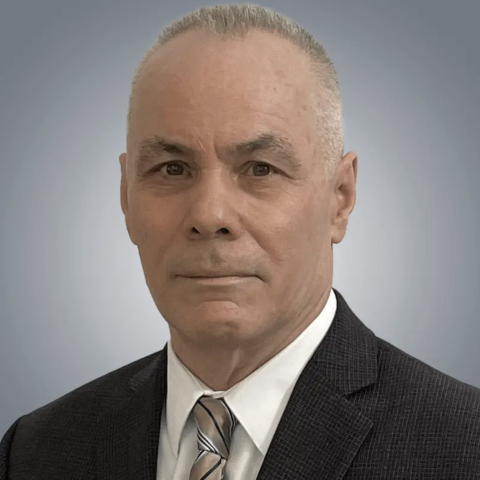
Andrew Medford

Andrew Medford
andrew.medford@chbe.gatech.edu
Website

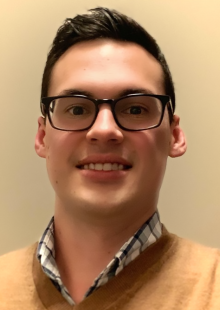
Dr. Medford is interested in leveraging materials informatics, statistics, and machine learning to maximize the practical impact of fundamental atomic-scale simulations in the field of surface science and catalysis. His research areas include heterogeneous catalysis, oxide surface chemistry, density functional theory, kinetic models, uncertainty quantification, and Bayesian optimization and inference.

Assistant Professor, School of Chemical and Biomolecular Engineering
Phone
(404) 385-5531
Additional Research

Catalysis, Biochemicals, Biorefining, Chemistry, Sugars, Molecular Simulations, Computational Biology

Andrew
Medford
J.
Show Regular Profile

Valerie Thomas

Valerie Thomas
valerie.thomas@isye.gatech.edu
ISyE Profile

Valerie Thomas is the Anderson-Interface Chair of Natural Systems and Professor in the H. Milton School of Industrial and Systems Engineering, with a joint appointment in the School of Public Policy. 

Dr. Thomas's research interests are energy and materials efficiency, sustainability, industrial ecology, technology assessment, international security, and science and technology policy. Current research projects include low carbon transportation fuels, carbon capture, building construction, and electricity system development. Dr. Thomas is a Fellow of the American Association for the Advancement of Science, and of the American Physical Society. She has been an American Physical Society Congressional Science Fellow, a Member of the U.S. EPA Science Advisory Board, and a Member of the USDA/DOE Biomass Research and Development Technical Advisory Committee. 

She has worked at Princeton University in the Princeton Environmental Institute and in the Center for Energy and Environmental Studies, and at Carnegie Mellon University in the Department of Engineering and Public Policy.

Dr. Thomas received a B. A. in physics from Swarthmore College and a Ph.D. in theoretical physics from Cornell University.

Anderson-Interface Chair of Natural Systems
Professor, School of Industrial and Systems Engineering
RBI Initiative Lead: Sustainability Analysis
Phone
(404) 894-0390
Additional Research

Hydrogen Transport/Storage; Biofuels; ClIMaTe/Environment; Electric Vehicles; System Design & Optimization; Energy and Materials Efficiency; Sustainability; Industrial Ecology; Technology Assessment; Science and Technology Policy

Website
Valerie
Thomas
Show Regular Profile

Bjarne Kreitz

Portrait of Bjarne Kreitz
bkreitz3@gatech.edu
Departmental Bio

Bjarne Kreitz is an incoming Assistant Professor of Chemical Engineering at Georgia Tech. Kreitz received a B.Sc. and M.Sc. in Chemical Engineering from Clausthal University of Technology (Germany). He obtained his Dr.-Ing. in Chemical Engineering from Clausthal University of Technology under the supervision of Prof. Thomas Turek, working on the microkinetic investigation of the transient methanation with experiments and multiscale modeling. 

Kreitz conducted postdoctoral work at Brown University with Prof. Franklin Goldsmith with a Feodor Lynen Postdoctoral Scholarship from the Alexander von Humboldt Foundation. Before joining Brown, he worked briefly as a postdoc at the Karlsruhe Institute of Technology (Germany) in the group of Prof. Olaf Deutschmann.

Assistant Professor, School of Chemical and Biomolecular Engineering
Additional Research
  • Complex Systems
  • Energy and Sustainability
Google Scholar
https://scholar.google.com/citations?hl=en&user=yuUYl_EAAAAJ&view_op=list_works&sortby=pubdate
LinkedIn Profile
Bjarne
Kreitz
Show Regular Profile

Erin L. Ratcliff

Portrait of Erin L. Ratcliff
eratcliff8@gatech.edu
Departmental Bio

Erin L. Ratcliff is a Full Professor in the School of Materials Science and Engineering and the School of Chemistry and Biochemistry at the Georgia Institute of Technology and holds a joint appointment at the National Renewable Energy Laboratory.  Prof. Ratliff is also the Associate Director of Scientific Continuity for Director of the currently funded Energy Frontier Research Center (EFRC) entitled “Center for Soft PhotoElectroChemical Systems (SPECS)”, a center which she directed at her prior appointment at University of Arizona.  

Her group “Laboratory for Interface Science for Printable Electronic Materials” uses a combination of applications and devices with electrochemistry, spectroscopies, microscopies, and synchrotron-based techniques to understand fundamental structure-property relationships of next-generation materials for energy conversion and storage and biosensing. Materials of interest include metal halide perovskites, π-conjugated materials, colloidal quantum dots, and metal oxides. Current research is focused on mechanisms of electron transfer and transport across interfaces, including semiconductor/electrolyte interfaces and durability of printable electronic materials.

Her research program has been funded by the Department of Energy Basic Energy Sciences, the Solar Energy Technology Office, Office of Naval Research, National Science Foundation, and the Nano Bio Materials Consortium.

Professor, School of Materials Science and Engineering
Professor, School of Chemistry and Biochemistry
Lab Page
Erin
Ratcliff
L
Show Regular Profile

Scott Danielsen

Scott Danielsen
scott.danielsen@mse.gatech.edu
https://danielsen.mse.gatech.edu/

Scott Danielsen is an Assistant Professor in the School of Materials Science and Engineering at the Georgia Institute of Technology. He obtained his Ph.D. in chemical engineering at the University of California, Santa Barbara in 2018 and his B.S.E. in chemical and biomolecular engineering at the University of Pennsylvania in 2014. He then spent five years as a postdoctoral associate at Duke University and as a visiting scholar at the University of North Carolina School of Medicine from 2019-2023. 

Prof. Danielsen’s group uses a combination of theoretical, computational, and experimental methods to reveal structure–property–processing relationships of soft materials. Their current primary research interests are the structure and dynamics of nonideal structured fluids, particularly polymer gels and biological fluids, with a focus on designing new materials and processing conditions for functional materials.

Assistant Professor, School of Materials Science and Engineering
Scott
Danielsen
Show Regular Profile

Sheng Dai

sheng.dai@ce.gatech.edu
Website

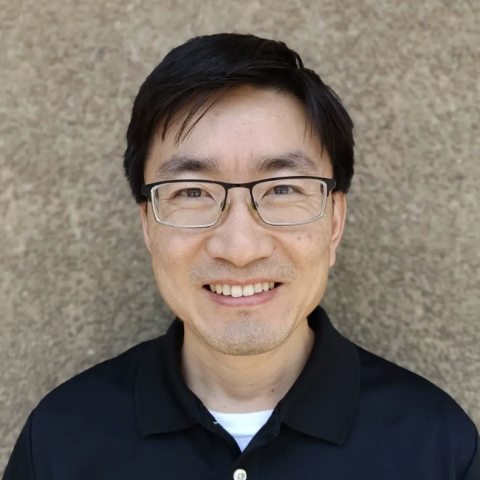
Sheng Dai, Ph.D., P.E., earned his degrees from Tongji University and Georgia Tech. He worked as an ORISE postdoc at the National Energy Technology Laboratory of the U.S. Department of Energy, and returned to Georgia Tech as a faculty member in 2015. He is currently an associate professor in the School of Civil and Environmental Engineering, Ocean Science and Engineering. and holds a courtesy appointment at the School of Earth and Atmospheric Sciences at Georgia Tech.

Dr. Dai's group addresses emerging energy and environment challenges through studying subsurface geomechanics, geomaterials characterization, energy geotechnics, bio-inspired geotechnics, flow in porous media, and granular dynamics. His research has been funded by federal funding agencies (DOE, NSF, NASA, DOT), national labs (INL, NETL), and industry (AECOM, GTI, Leidos).  Dr. Dai has been recognized for his research and teaching, including being a recipient of the NSF CAREER award, the ORISE Fellowship, the Bill Schutz Junior Faculty Teaching Award, and the Class of 1969 Teaching Fellows at Georgia Tech.

He is an associated editor of the Journal of Geophysical Research: Solid Earth and Advances in Geo-Energy Research, an editorial advisor of Geomechanics for Energy and Environment, and serves on the Pressure Core Advisory Board for U.S. Geological Survey, the GOM2 Marine Test Technical Advisory Committee for UT/DOE, the National Gas Hydrate Program for NETL, and the Task Force Leader of TC308 Energy Geotechnics of ISSMGE. 

Assistant Professor, School of Civil and Environmental Engineering
Phone
(404)385-4757
Additional Research

Oil/Gas; Combustion; Electronics; Energy Harvesting; Energy Storage; Thermal Systems

University, College, and School/Department
Sheng
Dai
Show Regular Profile

Thomas DiChristina

Thomas DiChristina
thomas.dichristina@biology.gatech.edu
Website

Thomas DiChristina, Ph.D., received a BS in Chemical Engineering from the University of Rochester (NY) in 1982, a MS in Chemistry from the University of Bordeaux (France) in 1984, a Ph.D. in Environmental Engineering Science from the California Institute of Technology (CA) in 1989, and a Postdoctoral Fellowship from the Woods Hole Oceanographic Institution (MA) in 1993. DiChristina has been at Professor of Microbiology in the School of Biological Sciences at Georgia Tech for 29 years. 

Professor, Microbiology, School of Biological Sciences
Phone
404.556.6829
Office
Ford Environmental and Technology Building, Room 1240
Thomas
DiChristina
Show Regular Profile

Seung Soon Jang

Seung Soon Jang
SeungSoon@mse.gatech.edu
MSE Profile Page

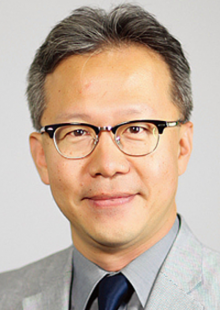
Seung Soon Jang joined the School of Materials Science and Engineering at the Georgia Institute of Technology in July 2007. Jang worked at Samsung Electronics and the Materials and Process Simulation Center (MSC) at CalTech performing various researches in nanoelectronics, fuel cell, and interfacial systems as a director of Supramolecular Technology for six years.

His research interest includes computations and theories to characterize and design nanoscale systems based on the molecular architecture-property relationship, which are especially relevant to molecular electronics, molecular machines, fuel cell technology and biotechnology.

Professor, School of Materials Science and Engineering
Director, Computational NanoBio Technology Lab
Phone
404.385.3356
Office
Love 351
Additional Research

Jang's research interest is to characterize and design nanoscale systems based on the molecular architecture-property relationship using computations and theories, which are especially relevant to designing new biomaterials for drug delivery and tissue engineering. Currently, he is focusing on 1) NanoBio-mechanics for DNA, lipid bilayer, and hydrogel systems; 2) Molecular interaction of Alzheimer proteins with various small molecules. Dr. Jang is also interested in various topics such as nanoelectronics, nanostructured energy technologies for fuel cell, battery and photovoltaic devices.;Computational mechanics; Nanostructured Materials; Polymeric composites; Biomaterials; Fuel Cells; Delivery and Storage

Google Scholar
https://scholar.google.com/citations?hl=en&user=SW0u-asAAAAJ&view_op=list_works&sortby=pubdate
Computational NanoBio Technology Lab
Seung Soon
Jang
Show Regular Profile

Micah Ziegler

Micah Ziegler
micah.ziegler@gatech.edu
Personal Website

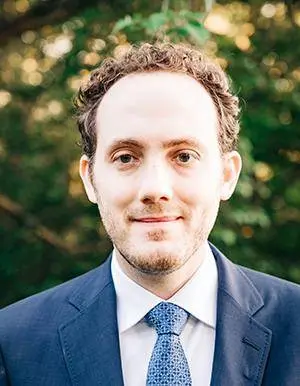
Dr. Micah S. Ziegler is an assistant professor in the School of Chemical and Biomolecular Engineering and the School of Public Policy.

Dr. Ziegler evaluates sustainable energy and chemical technologies, their impact, and their potential. His research helps to shape robust strategies to accelerate the improvement and deployment of technologies that can enable a global transition to sustainable and equitable energy systems. His approach relies on collecting and curating large empirical datasets from multiple sources and building data-informed models. His work informs research and development, public policy, and financial investment.

Dr. Ziegler conducted postdoctoral research at the Institute for Data, Systems, and Society at the Massachusetts Institute of Technology. At MIT, he evaluated established and emerging energy technologies, particularly energy storage. To determine how to accelerate the improvement of energy storage technologies, he examined how rapidly and why they have changed over time. He also studied how energy storage could be used to integrate solar and wind resources into a reliable energy system.

Dr. Ziegler earned a Ph.D. in Chemistry from the University of California, Berkeley and a B.S. in Chemistry, summa cum laude, from Yale University. In graduate school, he primarily investigated dicopper complexes in order to facilitate the use of earth-abundant, first-row transition metals in small molecule transformations and catalysis. Before graduate school, he worked in the Climate and Energy Program at the World Resources Institute (WRI). At WRI, he explored how to improve mutual trust and confidence among parties developing international climate change policy and researched carbon dioxide capture and storage, electricity transmission, and international energy technology policy. Dr. Ziegler was also a Luce Scholar assigned to the Business Environment Council in Hong Kong, where he helped advise businesses on measuring and managing their environmental sustainability.

Dr. Ziegler is a member of AIChE and ACS, and serves on the steering committee of Macro-Energy Systems. His research findings have been highlighted in media, including The New York Times, Nature, The Economist, National Geographic, BBC Newshour, NPR’s Marketplace, and ABC News.

Assistant Professor, School of Chemical and Biomolecular Engineering, School of Public Policy
SEI Lead: Energy Storage
Phone
404.894.5991
Office
ES&T 2228
Additional Research
  • Energy
  • Materials and Nanotechnology
  • Sustainable Engineering
Google Scholar
https://scholar.google.com/citations?hl=en&user=tMFMFdUAAAAJ&view_op=list_works&sortby=pubdate
LinkedIn ChBE Profile Page
Micah
Ziegler
Show Regular Profile