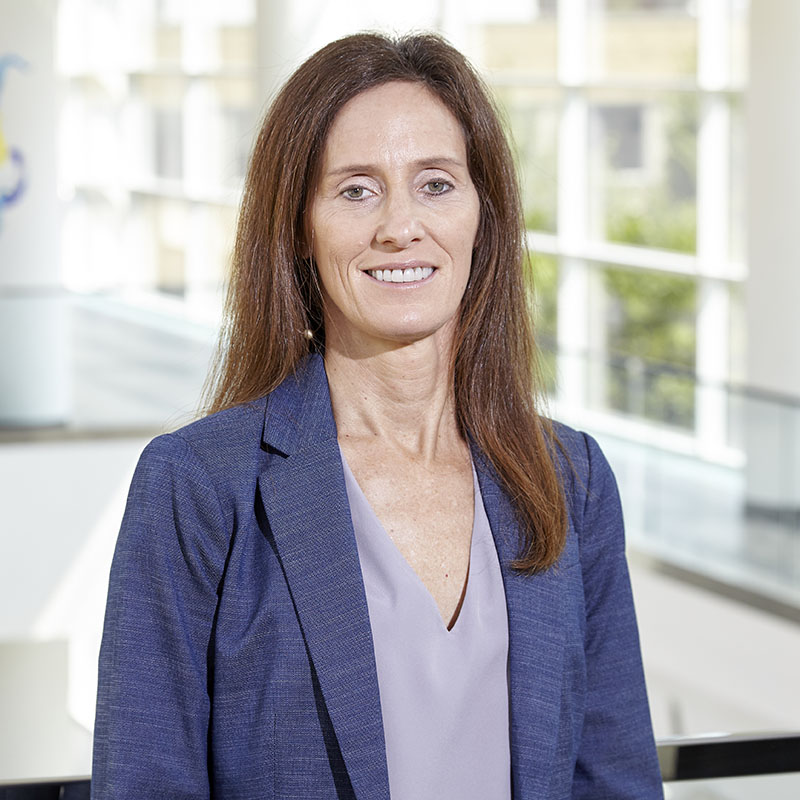
Renata Rawlings-Goss
AI; Health Information Technology; Network Science
Eric joined PACE in 2021, and currently leads the Research Computing Facilitation team, after having worked as a Cyberinfrastructure Architect and RCF. Before joining PACE, Eric could be found at Indiana University as a systems engineer with the XSEDE Campus Bridging team, providing HPC-oriented consultations to institutions across the US. He also worked closely with the Cyberinfrastructure Research Center at IU, providing support for several different science gateway projects. Prior to that, his research in condensed matter physics at Florida State University involved computational studies of the optical properties of strongly correlated materials.
Aaron joined the PACE team in May 2019 as a computing facilitator, and currently serves as the Scheduler Architect. Through supporting users, he grew to appreciate the opportunity to improve HPC workflows through scheduler and systems configurations that lower the barrier to entry and passively optimize code execution. Additionally, Aaron has been involved in the Vertically Integrated Projects (VIP) program since Spring 2020, mentoring multiple teams of students with the Team Phoenix VIP through international HPC competitions at the ISC-HPC and Supercomputing conferences and more recently, providing leadership for the Future Computing with the Rogues Gallery VIP as they research applications of novel compute architectures. Prior to joining PACE, Aaron studied free neutron and nuclear beta decay as a precision test of the Standard Model, which entailed a diverse range of activities, including particle simulation and detection, digital and analog signal processing, and algorithm optimization across x86, GPU, and FPGA architectures.
Aaron Drysdale, a Master of Computer Science graduate from Georgia Tech, is the Chief Technologist at the Cloud Hub. He manages the proposal process for research grants, organizes industry training sessions, and provides direct technical support to research teams utilizing cloud resources. Aaron's role also involves collaborating with Microsoft’s technical teams to resolve complex issues, ensuring seamless and efficient research progress. His expertise and proactive approach are vital to the success of the Cloud Hub's mission to advance innovative research.
Dr. Hyesoon Kim received her Ph.D. degree in electrical and computer engineering from the University of Texas at Austin. Her research interests include high-performance energy-efficient computer architectures, programmer-compiler-architecture interaction, low-power high-performance embedded processors, and compiler and hardware support for dynamic optimizations, virtual machines, and binary instrumentation.
Professor John Wise uses numerical simulations to study the formation and evolution of galaxies and their black holes. He is one of the lead developers of the community-driven, open-source astrophysics code Enzo and has vast experience running state-of-the-art simulations on the world’s largest supercomputers. He received his B.S. in Physics from the Georgia Institute of Technology in 2001. He then studied at Stanford University, where he received his Ph.D. in Physics in 2007. He went on to work at NASA’s Goddard Space Flight Center just outside of Washington, DC as a NASA Postdoctoral Fellow. Then in 2009, he was awarded the prestigious Hubble Fellowship which he took to Princeton University before arriving at Georgia Tech in 2011, coming back home after ten years roaming the nation.
Munmun De Choudhury is currently an associate professor at the School of Interactive Computing, Georgia Tech. Munmun’s research interests are in computational social science, with a focus on reasoning about personal and societal well-being from social digital footprints.
Social Media; Social Computing; Computational Social Science; Mental Health; Natural Language