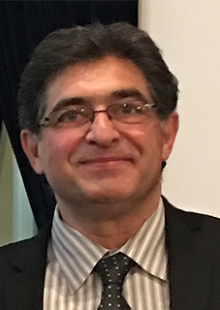
Panagiotis Tsiotras

Panagiotis  Tsiotras's profile picture
tsiotras@gatech.edu

Dr. Tsiotras holds the David & Andrew Lewis Endowed Chair in the School of Daniel Guggenheim School of Aerospace Engineering at Georgia Tech. He is also associate director at the Institute for Robotics and Intelligent Machines. His current research interests include nonlinear and optimal control and their connections with AI, planning, and decision-making, emphasizing autonomous ground, aerial, and space vehicles applications. He has published more than 350 journal and conference articles in these areas. Prior to joining the faculty at Georgia Tech, Dr. Tsiotras was an assistant professor of mechanical and aerospace engineering at the University of Virginia. He has also held visiting appointments with the MIT, JPL, INRIA, Rocquencourt, the Laboratoire de Automatique de Grenoble, and the Ecole des Mines de Paris (Mines ParisTech). Dr. Tsiotras is a recipient of the NSF CAREER award, the IEEE Technical Excellence Award in Aerospace Controls, the Outstanding Aerospace Engineer Award from Purdue, the Sigma Xi President and Visitor's Award for Excellence in Research, as well as numerous other fellowships and scholarships. He is currently the chief editor of the Frontiers in Robotics & AI, in the area of space robotics, and an associate editor for the Dynamic Games and Applications journal. In the past, he has served as an associate editor for the IEEE Transactions on Automatic Control, the AIAA Journal of Guidance, Control, and Dynamics, the IEEE Control Systems Magazine, and the Journal of Dynamical and Control Systems. He is a Fellow of the AIAA, IEEE, and AAS.

Professor & David and Andrew Lewis Chair; School of Aerospace Engineering
Associate Director, Institute for Robotics & Intelligent Machines
Phone
404.894.9526
Office
Knight 415C
Additional Research

controls; robotics; artificial intelligence; flying robots; spacecraft

Research Focus Areas
Google Scholar
https://scholar.google.com/citations?hl=en&user=qmVayjgAAAAJ&view_op=list_works&sortby=pubdate

Evangelos Theodorou

Evangelos Theodorou's profile picture
etheodorou3@mail.gatech.edu

Evangelos Theodorou earned his Diploma in Electronic and Computer Engineering from the Technical University of Crete (TUC), Greece in 2001. He has also received a MSc in Production Engineering from TUC in 2003, a MSc in Computer Science and Engineering from University of Minnesota in spring of 2007 and a MSc in Electrical Engineering on dynamics and controls from the University of Southern California(USC) in Spring 2010. In May of 2011 he graduated with his Ph.D., in Computer Science at USC. After his Ph.D., he became a Postdoctoral Research Associate with the department of Computer Science and Engineering, University of Washington, Seattle. In July 2013 he joined the faculty of the school of Aerospace Engineering at Georgia Institute of Technology as Assistant Professor. His theoretical research spans the areas of control theory, machine learning, information theory and statistical physics. Applications involve autonomous planning and control in robotics and aerospace systems, bio-inspired control and design.

Associate Professor; School of Aerospace Engineering
Phone
404.894.8197
Office
Guggenheim 448A
Additional Research

Nonlinear Stochastic Optimal Control; Machine Learning and Reinforcement Learning; Statistical Mechanics; Information Theory and Connections to Control Theory; Nonlinear State Estimation and Signal Processing; Adaptive; Nonlinear and Model Predictive Control.

Research Focus Areas
Google Scholar
https://scholar.google.com/citations?hl=en&user=dG9MV7oAAAAJ&view_op=list_works&sortby=pubdate

Suhas Jain

Suhas Jain's profile picture
suhasjain@gatech.edu

Suhas S. Jain is an Assistant Professor in the Woodruff School of Mechanical Engineering at Georgia Tech. He received his bachelor’s from NIT-Karnataka (India) in 2014, M.S. and Ph.D. from Stanford University in 2018 and 2022, respectively, all in mechanical engineering. Before coming to Georgia Tech, he was a postdoctoral fellow at the Center for Turbulence Research, Stanford University (2022-2023), a researcher at the Institute of Fluid Dynamics, Helmholtz-Zentrum Dresden-Rossendorf, Germany (2014-2015), and a project assistant at the Indian Institute of Science (2015-2016).

His research interests include computational modeling of fluid flows (multiphase flows; turbulent flows; compressible flows; and fluid-structure interaction) with a current focus on modeling atomization, sprays, and phase change for propulsion applications; ice accretion and aerodynamics for sustainable energy and aerospace design; and air-sea interaction modeling for understanding climate change; and modeling of fluid-solid and solid-solid systems for biomedical and high-speed applications. Through the integration of numerical modeling, high-performance computing, and data-driven approaches, Suhas and his group aim to address key challenges in these areas.

Assistant Professor
Additional Research
  • Computational Modeling
  • Machine Learning

John Reynolds

John Reynolds's profile picture
reynolds@chemistry.gatech.edu

John R. Reynolds is a Professor of Chemistry and Biochemistry, and Materials Science and Engineering at the Georgia Institute of Technology with expertise in polymer chemistry and serves as a member of the Center for Organic Photonics and Electronics (COPE). His research interests have involved electrically conducting and electroactive conjugated polymers for over 30 years with work focused to the development of new polymers by manipulating their fundamental organic structure in order to control their optoelectronic and redox properties. His group has been heavily involved in developing new polyheterocycles, visible and infrared light electrochromism, along with light emission from polymer and composite LEDs (both visible and near-infrared) and light emitting electrochemical cells (LECs). Further work is directed to using organic polymers and oligomers in photovoltaic cells.  Reynolds obtained his M.S. (1982) and Ph.D. (1984) degrees from the University of Massachusetts in Polymer Science and Engineering, he has published over 300 peer-reviewed scientific papers, has 15 patents issued and ~25 patents pending, and served as co-editor of the “Handbook of Conducting Polymers” which was published in 2007.  He was awarded the ACS Award in Applied Polymer Science in 2012.  He serves on the editorial board for the journals ACS Applied Materials and Interfaces, Macromolecular Rapid Communications, Polymers for Advanced Technologies, and the Journal of Macromolecular Science, Chemistry.

Professor, Chemistry and Biochemistry and Materials Science and Engineering
Phone
404.385.4390
Office
MoSE 2120B
Additional Research

Organic and Inorganic Photonics and Electronics; Conducting Polymers; LEDs & OLEDs; Materials Synthesis and Processing; Materials discovery; Chemistry; Polymers; Biomaterials

University, College, and School/Department
Google Scholar
https://scholar.google.com/citations?hl=en&user=QJOkOXUAAAAJ&view_op=list_works&sortby=pubdate

George White

George White's profile picture
george.white@gatech.edu

George will oversee activities designed to facilitate individual faculty members and teams of researchers in attracting extramural research funding, particularly opportunities with a focus or component involving external partnerships. This proactive and strategic role will allow George to assemble teams for creating collaborative research relationships with HBCUs and other MSIs, industry, government agencies, and other external organizations in order to respond to large-scale research opportunities.

Senior Director for Strategic Partnerships
Executive Director, Research Program Administration
Principal Research Engineer
Phone
404.407.6313
Additional Research

Additive/Advanced Manufacturing; Biomaterials; High Performance Computing; Quantum Computing

Research Focus Areas

Thomas Kurfess

Thomas Kurfess's profile picture
kurfess@gatech.edu

Professor Kurfess began his academic career at Carnegie Mellon University where he rose to the rank of Associate Professor. In 1994, he moved to the Georgia Institute of Technology where he rose to the rank of Professor in the George W. Woodruff School of Mechanical Engineering. In 2005, he was named Professor and BMW Chair of Manufacturing in the Department of Mechanical Engineering at Clemson University’s International Center for Automotive Research. In 2012, he returned to Georgia Tech as a Professor of Mechanical Engineering and the HUSCO/Ramirez Distinguished Chair in Fluid Power and Motion Control.

During 2012-2013, Dr. Kurfess was on leave serving as the Assistant Director for Advanced Manufacturing at the Office of Science and Technology Policy in the Executive Office of the President of the United States of America. In this position he had responsibility for engaging the Federal sector and the greater scientific community to identify possible areas for policy actions related to manufacturing. He was responsible for coordinating Federal advanced manufacturing R&D, addressing issues related to technology commercialization, identifying gaps in current Federal R&D in advanced manufacturing, and developing strategies to address these gaps. During  2019-2021 he was on leave serving as the Chief Manufacturing Officer and the Founding Director for the Manufacturing Science Division at Oak Ridge National Laboratory, where he was responsible for strategic planning in advanced manufacturing.

Professor Kurfess has served as a special consultant of the United Nations to the Government of Malaysia in the area of applied mechatronics and manufacturing, and as a participating guest at the Lawrence Livermore National Laboratory in their Precision Engineering Program. He has testified in a number of patent cases, including testifying at the International Trade Commission (ITC). He is currently the President of the American Society of Mechanical Engineers (ASME) and also serves on the Board of Governors of ASME. He is the CTO of the National Center for Manufacturing Sciences (NCMS) and serves on its Board of Directors. He also serves on the Board of Directors for the National Center for Defense Manufacturing and Machining (NCDMM), and on the Board of Trustees of the MT Connect Institute. He served on the Board of Directors for the Society of Manufacturing Engineers (SME) and was the President of SME in 2018. He is an appointed member of the Department of Energy, National Nuclear Security Administration, Advisory Committee for Nuclear Security, and an appointed member of the Department of the Navy Science and Technology Board.

His research focuses on the design and development of advanced systems targeting the automotive sector (OEM and supplier) including vehicle and production systems. He has significant experience in high precision manufacturing and metrology systems. He has received numerous awards including a National Science Foundation (NSF) Young Investigator Award, an NSF Presidential Faculty Fellowship Award, the ASME Pi Tau Sigma Award, SME Young Manufacturing Engineer of the Year Award, the ASME Blackall Machine Tool and Gage Award, the ASME Gustus L. Larson Award, an ASME Swanson Federal Award, and the SME Education Award. He is an elected member of the National Academy of Engineering, and a Fellow of the AAAS, the SME and the ASME.

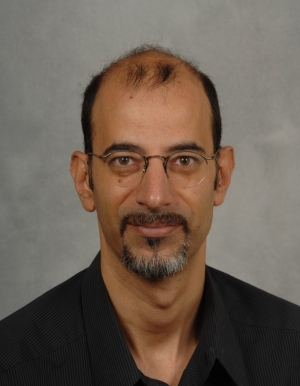
Executive Director, Georgia Tech Manufacturing Institute
Professor; HUSCO/Ramirez Distinguished Chair in Fluid Power and Motion Control
Phone
404.385.0959

Hamid Garmestani

Hamid Garmestani's profile picture
hamid.garmestani@mse.gatech.edu

Hamid Garmestani is a professor in the School of Materials Science and Engineering at the Georgia Institute of Technology. He received his education from Cornell University (Ph.D. 1989 in Theoretical and Applied Mechanics) and the University of Florida (B.S. 1982 in Mechanical Engineering, M.S. 1984 in Materials Science and Engineering). After serving a year as a post-doctoral fellow at Yale University, he joined the Mechanical Engineering Department at Florida State University (FAMU-FSU College of Engineering) in 1990. 

Primary research and teaching interests include microstructure/property relationship in textured polycrystalline materials, composites, superplastic, magnetic and thin film layered structures. He uses phenomenological and statistical mechanics models in a computational framework to investigate microstructure and texture (micro-texture) evolution during processing and predict effective properties (mechanical, transport and magnetic). His present research interests are processing of fuel cell materials and modeling of their transport and mechanical properties.

Garmestani has been the recipient of a research award (FAR) through NASA in  1997. He received the Superstar in  Research award in 1999 by FSU-CRC.  He  has also been the recipient of the Engineering Research Award at the FAMU-FSU College of Engineering, Spring 2000. He is a member of the editorial board of the International Journal of Plasticity and board of reviewers for journal of Metal Transaction.  He is presently funded through NSF (MRD), NASA, Air Force and the Army.

Professor, School of Materials Science and Engineering
Phone
404.385.4495
Office
Love 361
Additional Research

computational mechanics; micro and nanomechanics; Electrical charge storage and transport; Fuel Cells

Google Scholar
https://scholar.google.com/citations?hl=en&user=P2kgdO0AAAAJ&view_op=list_works&sortby=pubdate

Tamara Bogdanovic

Tamara Bogdanovic's profile picture
tamarab@gatech.edu

Tamara Bogdanović is a theoretical astrophysicist whose research interests include the ins and outs of some of the most massive black holes in the universe known as supermassive black holes. She investigates the physical processes that arise in accretion flows around supermassive black holes and uses them as luminous tracers of these otherwise dark objects. Some of the scenarios she and her colleagues study include the accretion of gas by the single and binary supermassive black holes as well as the accretion of stars that happen to be disrupted by the black hole tides in galactic nuclei. Tamara’s goal as a theorist is to predict the signatures of these interactions which can be searched for in observations, as well as to provide interpretation for some of the puzzling astrophysical events seen on the sky.

Professor
Additional Research

Particle Astrophysics

University, College, and School/Department

Laura Cadonati

 Laura Cadonati's profile picture
cadonati@gatech.edu

I joined the Center for Relativistic Astrophysics at GeorgiaTech in January 2015, from the University of Massachusetts Amherst. My principal research interests is gravitational wave astrophysics and LIGO – I have been a member of the LIGO Scientific Collaboration since 2002. I am also interested in particle astrophysics; I have been a member of the Borexino Collaboration (solar neutrino detection) until 2013 and the DarkSide Collaboration (direct dark matter search) until 2014.

Professor
Additional Research
  • Gravitational Wave Astrophysics
  • Particle Astophysics
University, College, and School/Department

Edwin Romeijn

Edwin Romeijn's profile picture
edwin.romeijn@isye.gatech.edu

Edwin Romeijn is the H. Milton and Carolyn J. Stewart School Chair and Professor in the H. Milton Stewart School of Industrial and Systems Engineering at Georgia Tech.

His areas of expertise include optimization theory and applications. His recent research activities deal with issues arising in radiation therapy treatment planning and supply chain management. In radiation therapy treatment planning, his main goal has been to develop new models and algorithms for efficiently determining effective treatment plans for cancer patients who are treated using radiation therapy, and treatment schedules for radiation therapy clinics. In supply chain optimization, his main interests are in the integrated optimization of production, inventory, and transportation processes, in particular in the presence of demand flexibility, limited resources, perishability, and uncertainty.

He previously served as Program Director for the Manufacturing Enterprise Systems, Service Enterprise Systems, and Operations Research programs at the National Science Foundation, and as Professor and Richard C. Wilson Faculty Scholar in the Department of Industrial and Operations Engineering at the University of Michigan. Before joining the University of Michigan in 2008, he was on the faculty of the Department of Industrial and Systems Engineering at the University of Florida and the Rotterdam School of Management at the Erasmus University Rotterdam in The Netherlands. 

He is a Fellow of the Institute of Operations Research and the Management Sciences (INFORMS) and the Institute of Industrial & Systems Engineers (IISE), and a member of the Mathematical Optimization Society (MOS), Society of Industrial and Applied Mathematics (SIAM), and the American Association of Physicists in Medicine (AAPM).

Professor and School Chair
Additional Research
  • Algorithms & Optimizations
  • Health & Life Sciences
Research Focus Areas