Josiah Hester

Josiah Hester
josiah@gatech.edu
Personal Site

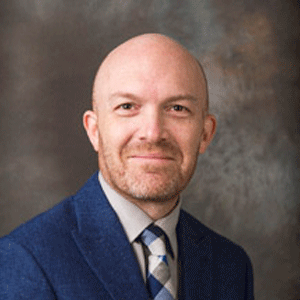
Josiah Hester works broadly in computer engineering, with a special focus on wearable devices, edge computing, and cyber-physical systems. His Ph.D. work focused on energy harvesting and battery-free devices that failed intermittentently. He now focuses on sustainable approaches to computing, via designing health wearables, interactive devices, and large-scale sensing for conservation. 
   
His work in health is focused on increasing accessibility and lowering the burden of getting preventive and acute healthcare. In both situations, he designs low-burden, high-fidelity wearable devices that monitor aspects of physiology and behavior, and use machine learning techniques to suggest or deliver adaptive and in-situ interventions ranging from pharmacological to behavioral. 
   
His work is supported by multiple grants from the NSF, NIH, and DARPA. He was named a Sloan Fellow in Computer Science and won his NSF CAREER in 2022. He was named one of Popular Science's Brilliant Ten, won the American Indian Science and Engineering Society Most Promising Scientist/Engineer Award, and the 3M Non-tenured Faculty Award in 2021. His work has been featured in the Wall Street Journal, Scientific American, BBC, Popular Science, Communications of the ACM, and the Guinness Book of World Records, among many others.
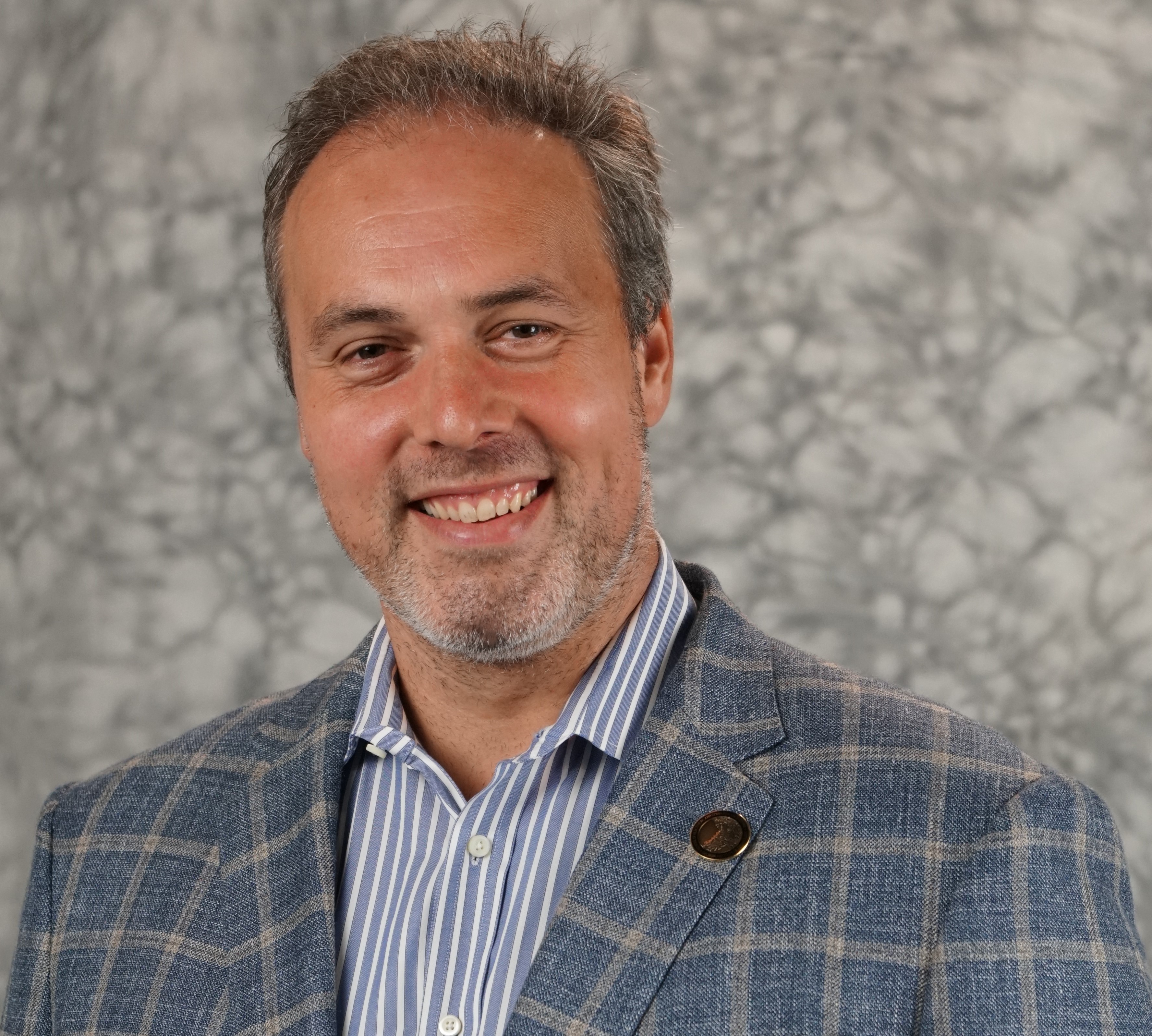
Interim Associate Director for Community-Engaged Research
Catherine M. and James E. Allchin Early Career Professor
Professor
Director, Ka Moamoa – Ubiquitous and Mobile Computing Lab
Office
TSRB 246
Ka Moamoa BBISS Initiative Lead Project—Computational Sustainability
Josiah
Hester
Show Regular Profile

Omer Inan

Omer Inan
omer.inan@ece.gatech.edu
INAN RESEARCH LAB

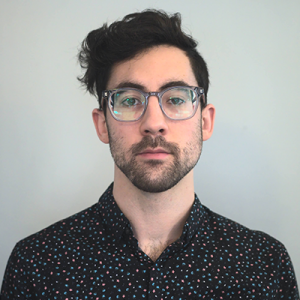
Omer T. Inan received his B.S., M.S., and Ph.D. degrees in Electrical Engineering from Stanford University in 2004, 2005, and 2009, respectively.

He worked at ALZA Corporation in 2006 in the Drug Device Research and Development Group. From 2007-2013, he was chief engineer at Countryman Associates, Inc., designing and developing several high-end professional audio products. From 2009-2013, he was a visiting scholar in the Department of Electrical Engineering at Stanford. In 2013, he joined the School of ECE at Georgia Tech as an assistant professor.

Inan is generally interested in designing clinically relevant medical devices and systems, and translating them from the lab to patient care applications. One strong focus of his research is in developing new technologies for monitoring chronic diseases at home, such as heart failure.

He and his wife were both varsity athletes at Stanford, competing in the discus and javelin throw events respectively.

Professor, School of Electrical and Computer Engineering
Linda J. and Mark C. Smith Chair, School of Electrical and Computer Engineering
Phone
404.385.1724
Office
TSRB 417
Additional Research

Medical devices for clinically-relevant applicationsNon-invasive physiological monitoringHome monitoring of chronic diseaseCardiomechanical signalsMedical instrumentation

Google Scholar
https://scholar.google.com/citations?hl=en&user=CURXz5UAAAAJ&view_op=list_works&sortby=pubdate
LinkedIn ECE Profile Page
Omer
Inan
T.
Show Regular Profile

Shu Jia

Shu Jia
shu.jia@gatech.edu
The Jia Laboratory for Systems Biophotonics

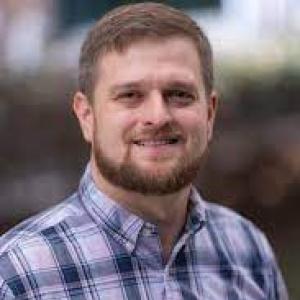
We strive to innovate in ways that both advance the imaging science and also impact biological and translational research. We are particularly interested in new imaging physics, bottom-up opto-electronic system design, as well as new principles for light propagation, light-matter interaction and image formation in complex biological materials, especially at the single-molecule level. Toward the application end, we have expertise in a wide range of imaging instrumentation and techniques, such as super-resolution, adaptive optics, light-field, miniaturized, light-sheet, computational microscopy and endoscopy.

Assistant Professor, Wallace H. Coulter Department of Biomedical Engineering
Phone
404.894.0290
Office
UAW 2112
Additional Research

Single-molecule biophotonicsSuper-resolution imagingAdvanced optical microscopy and instrumentation

Google Scholar
https://scholar.google.com/citations?hl=en&user=pcEf8kcAAAAJ&view_op=list_works&sortby=pubdate
LinkedIn BME Profile Page
Shu
Jia
Show Regular Profile

Adam Klein

Adam Klein
aklein4@emory.edu

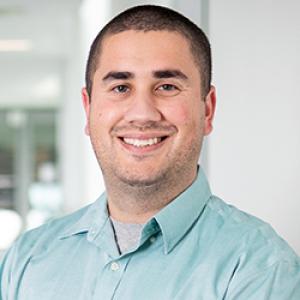
Adam M. Klein, MD, FACS, is Willard and Lillian Hackerman Professor in Voice in the Department of Otolaryngology at Emory University School of Medicine. Dr. Klein serves as Director of the Emory Voice Center and as Chief of the Division of Laryngology. Board certified with the American Board of Otolaryngology, Dr. Klein's clinical specialties include general otolaryngology, laryngeal disorders and the professional voice. 

Dr. Klein is a member of the Cancer Prevention and Control Research Program at Winship Cancer Institute. He is a Fellow of The American College of Surgeons and American Laryngological Association. He holds professional memberships with American Academy of Otolaryngology-Head and Neck Surgery, American Broncho-Esophagological Association, and Georgia Society for Otolaryngology.

Director, Emory Voice Center
Chief, Division of Laryngology
Willard and Lillian Hackerman Professor in Voice
Department of Otolaryngology - HNS
Phone
404-686-6774
Office
Emory University School of Medicine
Additional Research
Medical and Surgical Device Design, Development and Delivery
University, College, and School/Department
Related Site
Adam
Klein
M.
Show Regular Profile

Alexander Adams

Alex Adams

Alex Adams’s research focuses on designing, fabricating, and implementing new ubiquitous and wearable sensing systems. In particular, he is interested in how to develop these systems using equity-driven design principles for healthcare. Alex leverages sensing, signal processing, and fabrication techniques to design, deploy, and evaluate novel sensing technologies.

Nathan Damen

Nate Damen

Nate Damen is a Research Engineer I with Aerospace, Transportation and Advanced Systems Laboratory of Georgia Tech Research Institute. Damen’s work at ATAS has focused on Mixed Reality applications, robotics, the automation of CAR-T cellular expansions, and bioreactor design. Before joining GTRI, Damen conducted research into the manipulation of textiles with Softwear Automation and the design of deformable parcel manipulation systems with Dorabot.

Alexander T. Adams

Assistant Professor Alexander T. Adams

Alex Adams’s research focuses on designing, fabricating, and implementing new ubiquitous and wearable sensing systems. In particular, he is interested in how to develop these systems using equity-driven design principles for healthcare. Alex leverages sensing, signal processing, and fabrication techniques to design, deploy, and evaluate novel sensing technologies.

Josiah Hester

Josiah Hester

Josiah Hester works broadly in computer engineering, with a special focus on wearable devices, edge computing, and cyber-physical systems. His Ph.D. work focused on energy harvesting and battery-free devices that failed intermittentently. He now focuses on sustainable approaches to computing, via designing health wearables, interactive devices, and large-scale sensing for conservation. 
   

Holly Bauser-Heaton, MD, Ph.D.


 As a physician scientist, Dr. Bauser-Heaton's clinical and research interests are focused on pulmonary vascular disease. Our 3D bioprinted disease modeling allows study of patient specific geometries and cell types for potential therapeutic targets. Through collaborations with several IBB members, we have created a pipeline for disease modeling that includes computational fluid dynamics, particle image velocity measurement of shear stress, additive manufacturing and iPSC utilization. 

Jay Patel, Ph.D.


Jay Patel, Ph.D., is an Assistant Professor in the Department of Orthopaedics at Emory and a Health Science Specialist at the Atlanta VA. Patel joined the faculty at Emory in September 2020, and his program focuses on the repair and regeneration of musculoskeletal tissues (e.g., cartilage, meniscus), with an emphasis on using micro-scale findings to drive macro-scale therapies.