

1 min read
As the planet warms, changing weather patterns are only one effect. Warming air is often more toxic, leading to asthma and even heart attacks. A better understanding of these air quality changes can help society mitigate their consequences. Georgia Tech researchers are innovating ways to study air quality — beginning with prehistoric insights and zooming all the way to satellites in our orbit.

6 min read
Four people who have experienced brain implants shared their personal journeys, offering rare insight into the human side of neurotechnology.

3 min read
A Georgia Tech team earned second place in the ICRA Robot Teleoperation Contest for their EgoMimic algorithm, which allows robots to learn skills by mimicking human tasks from first-person video.

3 min read
A bold space mission led by Georgia Tech and NASA aims to capture the most detailed images of black holes yet by launching twin telescopes into orbit.

3 min read
Created by computer science undergraduates, the app makes the student organization’s job easier.

5 min read
Georgia Tech scientists have uncovered evidence that a mountain on the rim of Jezero Crater — where NASA’s Perseverance Rover is currently collecting samples for possible return to Earth — is likely a volcano.

4 min read
The multi-year research project could make scalable off-grid power sources a reality for rural communities and the military.

4 min read
As the world shifts toward electrification, the nations that command the battery supply chain will define the future of mobility, energy, and economic influence. For the U.S., the challenge isn’t just to keep pace — it’s to lead the charge.
4 min read
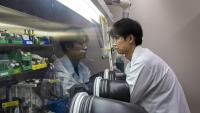
The solid-state battery would be game-changing for electric vehicles.

3 min read
In a world rapidly embracing artificial intelligence, researchers are turning their attention to a critical question: How can AI agents become not just tools, but true teammates?


