
6 min read
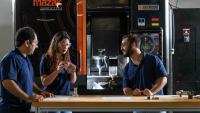
Georgia Tech’s hybrid manufacturing breakthroughs are reshaping how industries — from the U.S. Navy to aerospace and rail — repair and build critical parts. Fast, precise, and scalable, GTMI’s innovations turn complex problems into real world solutions, showcasing how cutting edge research becomes game changing impact.
7 min read
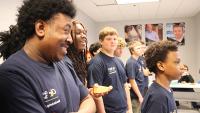
Students in rural Georgia are discovering new possibilities through Georgia Tech’s new Advanced Manufacturing Pathways program, where they design, build, and race custom cars while learning real manufacturing skills. With local educators and industry partners behind it, AMP is reshaping how communities imagine their future workforce.
7 min read
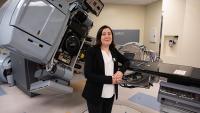
Nuclear waste can be managed safely with proper safety protocols. Researchers at Georgia Tech and around the world are working on safer reactor designs, advanced monitoring, and innovative recycling methods to turn nuclear waste into new opportunities — from clean energy to long-lasting batteries and even space power.

8 min read
Raven Davis, Georgia Tech Library’s first data analytics research scientist, blends data analysis, instruction, and collaboration to boost student success. From literature lover to data scientist, she now leads coding workshops, evaluates programs, and champions equity, envisioning libraries as tech-driven hubs for innovation and community.

9 min read
When we check the weather forecast, that information comes from satellites. When we FaceTime a friend, that call could come via satellites. From cellphone networks to national security systems, satellites are vital to our connected globe. Yet regulating how satellites function across borders is almost as complicated as the technology that launches them into space. Researchers in Georgia Tech’s Space Research Institute are shaping how satellites operate, both scientifically and politically.

1 min read
Before new technologies end up in your doctor’s office or car, they start in a Georgia Tech lab. Our work creates medical breakthroughs. Our studies help people better understand our changing climate. Our innovations create technologies that shift the paradigms of possibility. Here’s a look at some of our 2025 discoveries — and the people behind them.

7 min read
Inspired by MythBusters and her global childhood education, Nisha Detchprohm pursued mechanical engineering at Georgia Tech, earning both bachelor’s and master’s degrees. Now a research engineer at CEISMC, she creates accessible K-12 STEAM curricula and teacher training resources to spark curiosity and engagement. Through hands-on projects and creative tools, she conducts research with classroom impact, empowering educators and inspiring the next generation.
10 min read
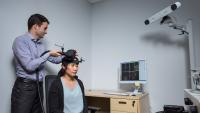
Faculty at Georgia Tech use their expertise in engineering, math, and computer science to apply common principles of these disciplines to neuroscience research. Within the Institute for Neuroscience, Neurotechnology, and Society (INNS), neuroscientists use these quantitative methods to understand how humans think, treat disorders such as Parkinson’s and Alzheimer’s, and better understand psychiatric disorders.

12 min read
Neuroscience experts from across Georgia Tech will soon come together for a new interdisciplinary research institute, the Institute for Neuroscience, Neurotechnology, and Society (INNS), launched in July. Faculty in INNS are helping to solve some of neuroscience’s most pressing problems, and many have promising medical applications. One important aspect of studying the brain is understanding how the brain and the body work together. Meet the researchers who study brain-body interactions, from monitoring the neuron degradation that causes Alzheimer’s to enhancing mobility for stroke survivors, in an effort to improve the health and quality of life for millions of Americans.


