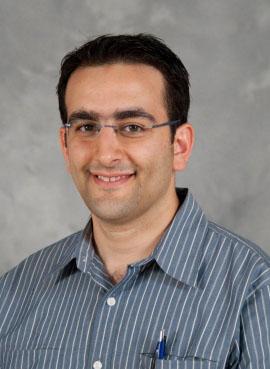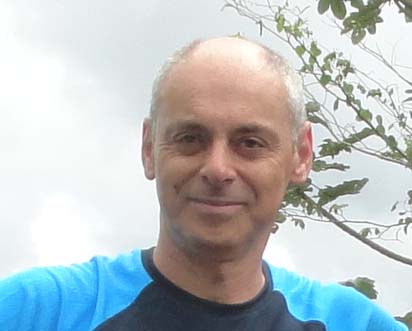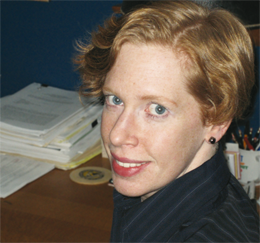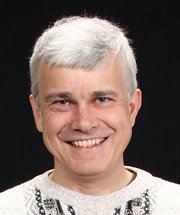
Melissa Kemp

Melissa Kemp
melissa.kemp@bme.gatech.edu
Website

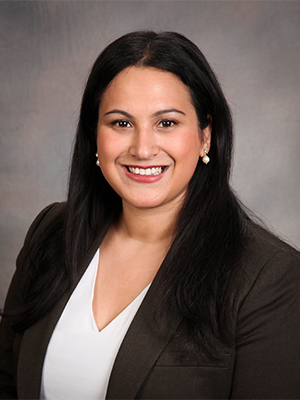
Melissa Lambeth Kemp received her B.S. in Nuclear Engineering from MIT and her Ph.D. in Bioengineering from University of Washington. Dr. Kemp joined the faculty at Georgia Tech in 2006 after completing postdoctoral training at MIT. Her expertise is in computational modeling of metabolism and signal transduction, as well as developing statistical modeling tools to examine network relationships in high-dimension datasets. One major aspect of her research program linking ROS – the byproducts of aerobic metabolism – to the fundamental way that cells interpret instructions from their environment, their neighbors, and their own genetic blueprint. Specific applications of her diverse work include systems modeling of transient phosphatase oxidation of kinase cascades, patient-specific differences in cytotoxicity to redox-cycled chemotherapeutics and radiation, and the coordination of oxidative metabolism with epithelial-to-mesenchymal transition. Her research program also includes a component of developing high-throughput screening methods for assaying cue-signal-response relationships in cells and analytical tools for single cell gene expression. 

Dr. Kemp currently serves as the Research Director of the multi-site NSF Engineering Research Center “Cell Manufacturing Technologies”. In her former role as Associate Director of the NSF Science and Technology Center “Emergent Behavior of Integrated Cellular Systems”, she spearheaded the multi-site center’s computational activities by developing agent-based models of context-dependent cellular decisions to generate new hypotheses of intercellular communication in pluripotent stem cell differentiation and emergent patterning; this work continues currently in quantifying organizational principles and spatial relationships in iPSC-derived tissues from multi-omics data. Dr. Kemp’s career honors include a Whitaker Graduate Fellowship, Merck/CSBi postdoctoral fellowship, Georgia Cancer Coalition Distinguished Scholar, NIH New Innovator Award, and the CSB2 Prize for Innovative Measurement Methods from the Council for Systems Biology in Boston.
Professor
Georgia Cancer Coalition Distinguished Cancer Scholar
Phone
404-385-6341
Office
EBB 3019
Additional Research
Systems biology, computational modeling, redox metabolism and signal tranduction.The Kemp Lab is focused on understanding how metabolism influences the decisions that cells make. Aging, stem cell differentiation, cancer metastasis, and inflammation rely on progressive changes in metabolism resulting in increased levels of reactive oxygen species. Collectively, the accumulation of these molecules is known as cellular oxidation, and pathological levels are referred to as oxidative stress. Our lab develops systems biology tools for investigating how cellular oxidation influences cellular fate and interpretation of cues from the extracellular environment. We are interested in the collective behavior that arises during stem cell differentiation, immune cell responses, or drug treatments from metabolic diversity in individual cells. Because of the numerous biochemical reactions involved, we develop computational models and analytical approaches to understand how complex protein network properties are influenced by redox-sensitive proteins; these proteins typically have reactive thiol groups that are post-translationally regulated in the presence of reactive oxygen species to alter activity and/or function. Experimentally, we develop novel high-throughput single cell techniques for the detection and quantification of intracellular oxidation.
Google Scholar
https://scholar.google.com/citations?user=WUN5ok8AAAAJ&hl=en
Related Site
Melissa
Kemp
L.
Show Regular Profile

Kostas Konstantinidis

Kostas Konstantinidis
kostas.konstantinidis@gatech.edu
Website

Dr. Kostas Konstantinidis joined the Georgia Institute of Technology as an Assistant Professor in November 2007. He received his BS in Agriculture Sciences from the Aristotle University of Thessaloniki (Greece) in 1999. He continued his studies at the Center for Microbial Ecology at Michigan State University (East Lansing, MI) under the supervision of Prof. James M. Tiedje, where he obtained a PhD in 2004. His PhD studies were fully supported by the Bouyoukos Fellowship program and were devoted in advancing our understanding of the ecology and physiology of soil bacteria through the comparative analysis of their whole-genome sequences. This research resulted in a NSF-funded project to advance the species definition for prokaryotes, which also fostered a short post-doc position at the Center for Microbial Ecology. He then moved to MIT and the laboratory of Prof. Edward DeLong to get trained on innovating metagenomic techniques. His work at MIT provided important new insights into the complexity and function of oceanic microbial communities as well as how life is adapting in the deep and cold Oceans. His research interests are at the interface of genomics and computational biology in the context of microbial ecology with the overarching goal to broaden understanding of the genetic and metabolic potential of the microbial world. Advancing our knowledge on these issues is essential for a better understanding of the microbes that power, by and large, the biogeochemical cycles that sustain life on Earth and cause or control important diseases in humans and animals. He is a member of the American Society for Microbiology (ASM), the International Society for Microbial Ecology (ISME) and the Association of Environmental Engineering and Science Professors (AEESP). Konstantinidis held the Carlton S. Wilder Junior Professorship for five years and subsequently received the Maulding Faculty Fellowship in the School of Civil and Environmental Engineering.

Professor
Phone
404-385-3628
Office
ES&T 3224
Additional Research

Environmental microbiology and genomics Computational approaches for studying the ecology and evolution of microorganisms Development of genomic and proteomic techniques to investigate and quantify in-situ important microbial-mediated processes Population and single-cell genomics Assessing the extent and value of biodiversity within natural assemblages of Bacteria and Archaea Biotechnological applications of microbial functional diversity Environmental relevance of microbial diseases Our laboratory focuses on the smallest organisms on the planet, the bacteria and the archaea, which represent the largest reservoir of biodiversity on Earth, drive the life-sustaining biogeochemical cycles, and cause or control diseases in humans, animals, and plants. Our scientific interests are at the interface of microbial ecology with engineering and computational biology. The long-term goals of our research is to broaden understanding of the genetic and metabolic diversity of the microorganisms and to explore this biodiversity for biotechnological applications.

Research Focus Areas
Google Scholar
http://scholar.google.com/citations?user=cT7dxlYAAAAJ&hl=en
Related Site
Kostas
Konstantinidis
Show Regular Profile

Shaheen Dewji, Ph.D.

Shaheen Dewji, Ph.D.
shaheen.dewji@gatech.edu

Shaheen Azim Dewji, Ph.D., (she/her/hers) is an Assistant Professor in the Nuclear & Radiological Engineering and Medical Physics Programs at the Georgia Institute of Technology, where she leads the Radiological Engineering, Detection, and Dosimetry (RED²) research group. Dewji joined Georgia Tech following three years as faculty at Texas A&M University in the Department of Nuclear Engineering, and as a Faculty Fellow of the Center for Nuclear Security Science and Policy Initiatives (NSSPI). In her prior role at Oak Ridge National Laboratory, where she remained for almost 9 years, Dewji was Radiological Scientist in the Center for Radiation Protection Knowledge. Her research interests include development of dose coefficients, shielding design, and nuclear material detection assay using gamma-ray spectroscopy. Her recent work has focused on associated challenges in uncertainty quantification in dose estimation/reconstruction associated with the external exposure and internal uptake of radionuclides associated with applications of emergency response, defense, nuclear medicine, and occupational/public safety using Monte Carlo radiation transport codes and internal dose modeling. Dewji completed her Masters and Ph.D. degrees in Nuclear and Radiological Engineering at the Georgia Institute of Technology in Atlanta, GA and was a fellow of the Sam Nunn Security Program. She received her Bachelor of Science in Physics from the University of British Columbia. Dewji currently serves on the National Academies of Science, Engineering, and Medicine – Nuclear and Radiation Studies Board and is a member of the Board of Directors for both the American Nuclear Society and Health Physics Society.
   

Assistant Professor
Phone
404.894.5800
Office
Boggs 3-15
Lab
Shaheen
Dewji
Azim
Show Regular Profile

Turgay Ayer

Turgay Ayer
tayer3@mail.gatech.edu
ISyE Profile

Turgay Ayer is the Virginia C. and Joseph C. Mello Chair and a professor in the H. Milton Stewart School of Industrial and Systems Engineering at Georgia Tech. Ayer also serves as the research director for healthcare analytics and business intelligence in the Center for Health & Humanitarian Systems at Georgia Tech and holds a courtesy appointment at Emory Medical School.

His research focuses on healthcare analytics and socially responsible business analytics with a particular emphasis on practice-focused research. His research papers have been published in top tier management, engineering, and medical journals, and covered by popular media outlets, including the Wall Street Journal, Washington Post, U.S. News, and NPR.

Ayer has received over $2.5 million grant funding and several awards for his work, including an NSF CAREER Award (2015), first place in MSOM Responsible Research in Operations Management (2019), first place in the MSOM Best Practice-Based Research Competition (2017), INFORMS Franz Edelman Laureate Award (2017), and Society for Medical Decision Making Lee Lusted Award (2009).

Ayer serves an associate editor for Operations Research, Management Science, and MSOM, and is a past president of the INFORMS Health Application Society. He received a B.S. in industrial engineering from Sabanci University in Istanbul, Turkey, and his M.S. and Ph.D. degrees in industrial and systems engineering from the University of Wisconsin–Madison.

Virginia C. and Joseph C. Mello Chair
Professor, Industrial and Systems Engineering
Research Director of Business Intelligence and Healthcare Analytics, Center for Health and Humanitarian Systems
Phone
404-385-6038
Additional Research

Socially Responsible Operations; Practice-focused Research; Healthcare Analytics

Google Scholar
https://scholar.google.com/citations?hl=en&user=BY9oaaoAAAAJ&view_op=list_works&sortby=pubdate
Personal Research Website Center for Health and Humanitarian Systems
Turgay
Ayer
Show Regular Profile

Boris Prilutsky

Boris Prilutsky
boris.prilutsky@biosci.gatech.edu
Website

The research focus of Boris Prilutsky's laboratory is Neural Control and Biomechanics of Movement. They study how the nervous system controls hundreds of muscles and kinematic degrees of freedom of the body to produce purposeful motor behaviors and how the neural control of motor behaviors is affected by neural and musculoskeletal injuries.

Professor
Phone
404-894-7659
Office
MSPO Program 1309D
Additional Research
The major research focus of my research is on biomechanics and motor control of locomotion and reaching movements in normal as well as in neurological and musculoskeletal pathological conditions. In particular, we study the mechanisms of sensorimotor adaptation to novel motor task requirements caused by visual impairament, peripheral nerve or spinal cord injury, and amputation. We also investigate how motor practice and sensory information affect selections of adaptive motor strategies.
Google Scholar
http://scholar.google.com/citations?user=gE3DQUEAAAAJ&hl=en
http://biosci.gatech.edu/people/boris-Prilutsky
Boris
Prilutsky
I.
Show Regular Profile

Frank Rosenzweig

Frank Rosenzweig
frank.rosenzweig@biology.gatech.edu
Website

Frank Rosenzweig is a Professor in School of Biological Sciences. He holds Bachelors degrees in Comparative Literature and Zoology from University of Tennessee-Knoxville, and a PhD in Biology at University of Pennsylvania. He carried out postdoctoral studies at the University of Michigan. He was a professor at University of Idaho, University of Florida, and University of Montana before joining the Georgia Tech faculty in 2016. He served as the Director of the NASA Astrobiology Institute funded center “Reliving the Past” from 2015 to 2019.  His research group studies the ecological and evolutionary forces that produce and preserve genetic variation using experimental evolution  to illuminate how genetic variation maps onto organismal fitness.

Professor
Phone
404-385-4458
Office
EBB 2007
http://biosci.gatech.edu/people/frank-rosenzweig
Frank
Rosenzweig
Show Regular Profile

Christine Heitsch

Christine Heitsch
heitsch@math.gatech.edu

Christine Heitsch is Professor of Mathematics at Georgia Tech, with courtesy appointments in Biological Sciences and Computational Science & Engineering as well as an affiliation with the Petit Institute for Bioengineering & Bioscience.

She is also Director of the new Southeast Center for Mathematics and Biology (SCMB), an NSF-Simons MathBioSys Research Center, and finishing her tenure directing the GT Interdisciplinary Mathematics Preparation and Career Training (IMPACT) Postdoctoral Program.

Heitsch's research interests lie at the interface between discrete mathematics and molecular biology, specifically combinatorial problems "as motivated by" and "with applications to" fundamental biomedical questions like RNA folding.

Students interested in pursuing graduate studies in discrete mathematical biology can do so through a number of GT PhD programs including Bioinformatics or Quantitative Biosciences as well as Algorithms, Combinatorics, and Optimization (ACO), Computational Science & Engineering (CSE), and (of course) Mathematics.
 

Professor
Phone
404-894-4758
Office
Skiles 211B
Additional Research
Heitsch's research interests lie at the interface between discrete mathematics and molecular biology, specifically combinatorial problems "as motivated by" and "with applications to" fundamental biomedical questions like RNA folding.
Research Focus Areas
University, College, and School/Department
Related Site
Christine
Heitsch
E.
Show Regular Profile

Christoph Fahrni

Christoph Fahrni
fahrni@chemistry.gatech.edu
Website

Christoph Fahrni earned a master’s degree in chemistry from the Federal Institute of Technology (ETH, Switzerland) and a Ph.D. degree in chemistry from the University of Basel (Switzerland). After working as a postdoctoral fellow at Northwestern University (Evanston, IL), he joined the School of Chemistry and Biochemistry at the Georgia Institute of Technology in 1999.

Professor
Associate Chair for Graduate and Postdoctoral Programs
Phone
404-385-1164
Office
Petit Biotechnology Building, Office 3310
Additional Research
Metals In Biological Systems. Approximately one third of all known proteins contain metal ions as cofactors and serve a wide variety of functions, such as structure stabilization, catalysis, electron transfer reactions or complex tasks, including signal transduction and gene regulation. Numerous diseases such as haemochromatosis or Menkes disease were found to be related with a defect in metal metabolism. Research is concerned with development of metal specific fluorescent probes for the investigation of the intracellular chemistry of trace elements, the mechanistic study of metalloprotein catalyzed reactions with unusual coordination geometries as well as the development of protein-based, semisynthetic organometallic catalysts in aqueous solution. Fluorescence Probes and Chelators for the Investigation of Intracellular Storage, Trafficking, and Homeostasis of Trace Elements. Until recently, little was known about how eukaryotic cells take up metal ions or regulate intracellular concentrations. Fluorescent chemosensors have been proven to be powerful and nondestructive tools for the study of intracellular metal ion distributions and have provided a wealth of information, including control of muscle contraction, nerve cell communication, hormone secretion, and immune cell activation. Research is concerned with the development of highly specific fluorescent probes for the detailed mechanistic investigation of copper storage and trafficking. Distribution and changes of intracellular copper concentration can be followed in vivo using fluorescence microscopy. Various combinatorial fluorophore libraries are being synthesized, which subsequently are screened for copper binding selectivity. Bioorganometallic Catalysis with Peptide and Protein Ligands. The distribution of metal ions in sea water can be directly correlated with their abundance in biological systems. Consequently, the platinum metals palladium, rhodium, iridium and platinum are not found in any of the natural occurring metalloproteins. Nevertheless, these cations are excellent catalysts for a wide variety of organometallic reactions. Research is focused on combining the rich chemistry of platinum metals with the advantage of proteins to catalyze reactions with high regio- and stereo-selectivity. Novel bioorganometallic catalysts are being developed via redesign of structurally well characterized proteins.
Research Focus Areas
Google Scholar
http://scholar.google.com/scholar?as_q=christoph+j+fahrni&num=10&as_epq=&as_oq=&as_eq=&as_occt=any&as_sauthors=cj+fahrni&as_publication=&as_ylo=&as_yhi=&as_sdt=1&as_subj=chm&as_sdts=11&btnG=Search+Scholar&hl=en
LinkedIn Related Site
Christoph
Fahrni
J.
Show Regular Profile

Ronghu Wu

Ronghu Wu
ronghu.wu@chemistry.gatech.edu
Website

Research in the Wu lab is mainly focused on mass spectrometry (MS)-based proteomics. They are developing innovative methods to globally identify and quantify proteins and their post-translational modifications (PTMs), including glycosylation and phosphorylation, and applying them for biomedical research. Protein PTMs plays essential roles in biological systems, and aberrant protein expression and modification are directly related to various human diseases, including cystic fibrosis, cancer and infectious diseases. Novel analytical methods will profoundly advance our understanding of protein function, which will lead to the identification of proteins or modified proteins as effective drug targets and the discovery of biomarkers for early disease detection.

Associate Professor
Phone
404-385-1515
Office
EBB 4011
Google Scholar
https://scholar.google.com/citations?user=sL3sQmwAAAAJ&hl=en&oi=ao
Related Site
Ronghu
Wu
Show Regular Profile

Lily Cheung

Lily Cheung
lily.cheung@gatech.edu
Website

Lily Cheung got her research start as a sophomore at Rutgers University, where she graduated Summa Cum Laude with a B.S. in Chemical Engineering in 2008. She then earned her Ph.D. in Chemical Engineering from Princeton University in 2013. Under the supervision of Stanislav Shvartsman, she characterized gene regulatory networks controlling the development of the model organism Drosophila melanogaster, using a combination of molecular biology, genetics, and reaction-diffusion modeling.

During her postdoctoral training with Wolf Frommer at the Carnegie Institution for Science, she designed biomolecular sensors to quantify sugar transport in plants. Her current interests include the use of high-throughput quantitative techniques and mathematical modeling to advance our understanding of how metabolic and gene regulatory networks interact to control plant growth.

Lily is the recipient of a NSF NPGI Postdoctoral Fellowship in Biology, a NSF CAREER Award, and a Human Frontier Science Program Early Career Award.

Assistant Professor
Phone
404-894-2826
Office
ES&T L1230
Additional Research
Engineering of genetically encoded biosensors Quantitative fluorescence microscopy and image analysis Computational models of gene regulatory networks Transcriptional regulation and developmental biology of plants The past fifteen years has seen dramatic advancements in genome sequencing and editing. The cost of sequencing a genome has decreased by two orders of magnitude, giving rise to new systems-level approaches to biology research that aim to understand life as an emerging property of all the molecular interactions in an organism. At the same time, technologies that allow site-specific modifications of the genome are enabling researchers to manipulate multicellular organisms in unprecedented ways. From reductionist approaches to systems biology, and from conventional plant breeding to synthetic biology, the future of plant biology research relies on the adoption of computational methods to analyze experimental data and develop predictive models. In biomedicine, mathematical models are already revolutionizing drug discovery; in agriculture, they have the potential to generate more efficient, faster growing crop varieties. The goal of the Cheung lab is to bring quantitative techniques and mathematical modeling to plants in order to gain systems-level insight into their physiology and development - particularly to understanding how metabolic and gene regulatory networks interact to control homeostasis and growth.
Research Focus Areas
Related Site
Lily
Cheung
S.
Show Regular Profile