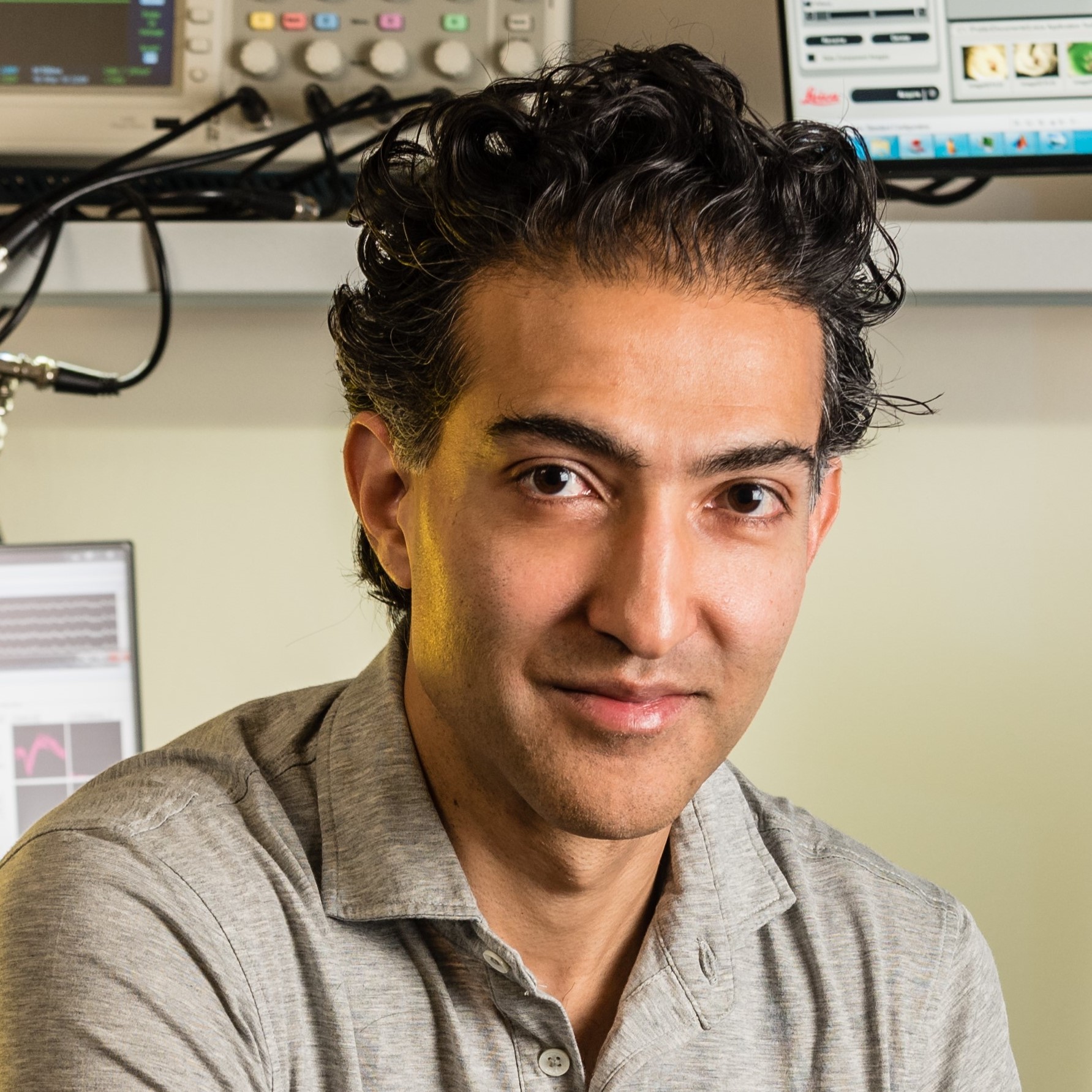
Bilal Haider

Bilal Haider
bilal.haider@bme.gatech.edu
Website

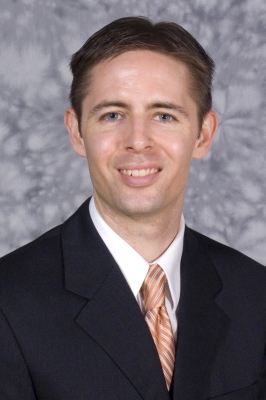
Bilal Haider is an assistant professor in the Wallace H. Coulter Department of Biomedical Engineering at Georgia Tech and Emory University. He received B.S. and M.S. degrees from the University of Illinois Urbana-Champaign and M.Phil. and Ph.D. degrees from Yale University. He joined the faculty at Georgia Tech after completing postdoctoral training at University College London.

Haider’s research measures, manipulates and deciphers neural circuit activity underlying normal and impaired visual perception, providing new insights into how the brain processes information and orchestrates behavioral actions.

Haider has received several prestigious awards, including from the Whitehall Foundation, Simons Foundation and the Alfred P. Sloan Foundation. His work has been published in leading journals, including NatureNature NeuroscienceNature Communications and Neuron.
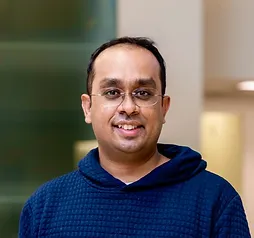
Assistant Professor
Phone
404-385-4935
Office
UAW 3104
Additional Research
Bilal Haider’s research goal is to measure, manipulate, and decipher neural circuit activity underlying visual perception and visual attention. He received B.S. and M.S. degrees from the University of Illinois Urbana-Champaign, M. Phil. and Ph.D. degrees from Yale University, and postdoctoral training at University College London. His lab uses advanced electrical, optical, and behavioral technologies to reveal insights into the inner workings of the brain in real-time and with unprecedented resolution. By discovering mechanisms  of information processing in neural circuits, his research provides critical steps towards understanding impairments in many neurological disorders such as schizophrenia, epilepsy, and autism spectrum disorder. 
Research Focus Areas
Google Scholar
https://scholar.google.com/citations?user=P5IKL5UAAAAJ&hl=en
LinkedIn Related Site
Bilal
Haider
Show Regular Profile

Christopher Rozell

Christopher Rozell
crozell@gatech.edu
SIPLab
Professor; School of Electrical and Computer Engineering
Director; Sensory Information Processing Lab
Phone
404.385.7671
Office
Centergy One 5218
Additional Research

Biological and computational vision Theoretical and computational neuroscience High-dimensional data analysis Distributed computing in novel architectures Applications in imaging, remote sensing, and biotechnology Dr. Rozell's research interests focus on the intersection of computational neuroscience and signal processing. One branch of this work aims to understand how neural systems organize and process sensory information, drawing on modern engineering ideas to develop improved data analysis tools and theoretical models. The other branch of this work uses recent insight into neural information processing to develop new and efficient approaches to difficult data analysis tasks.

Google Scholar
http://scholar.google.com/citations?user=JHuo2D0AAAAJ&hl=en&oi=ao
ECE Profile Page
Christopher
Rozell
J.
Show Regular Profile

Eva Dyer

Eva Dyer
evadyer@gatech.edu
Website

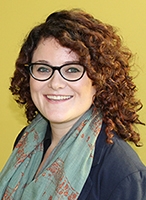
Dyer’s research interests lie at the intersection of machine learning, optimization, and neuroscience. Her lab develops computational methods for discovering principles that govern the organization and structure of the brain, as well as methods for integrating multi-modal datasets to reveal the link between neural structure and function.

Assistant Professor
Phone
404-894-4738
Office
UAW 3108
Additional Research

Eva Dyer’s research combines machine learning and neuroscience to understand the brain, its function, and how neural circuits are shaped by disease. Her lab, the Neural Data Science (NerDS) Lab, develops new tools and frameworks for interpreting complex neuroscience datasets and building machine intelligence architectures inspired by the brain. Through a synergistic combination of methods and insights from both fields, Dr. Dyer aims to advance the understanding of neural computation and develop new abstractions of biological organization and function that can be used to create more flexible AI systems.

Research Focus Areas
Google Scholar
https://scholar.google.com/citations?user=Sb_jcHcAAAAJ&hl=en
LinkedIn Related Site
Eva
Dyer
L.
Show Regular Profile

Young Jang

Young Jang
young.jang@gatech.edu
Lab Website

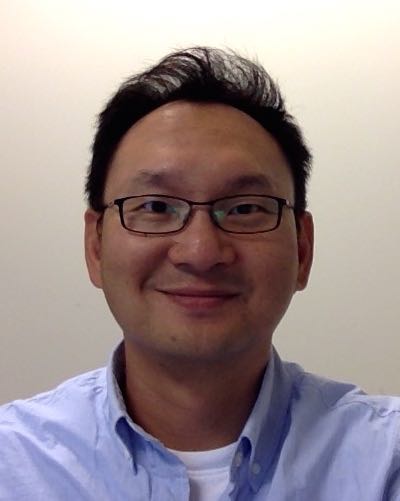
Dr. Jang’s lab uses multi-disciplinary approaches to study muscle stem cell biology and develops bioactive stem cell delivery vehicles for use in regenerative medicine. Dr. Jang’s lab studies both basic aspects of muscle stem cell biology, especially systemic/metabolic regulations of stem cell and stem cell niche, as well as more translational aspects of muscle stem cell and mesenchymal stem cell for use in therapeutic approaches for musculoskeletal aging, neuromuscular diseases, and traumatic injuries.

Assistant Professor
Phone
404-385-3058
Office
Petit Biotechnology Building, Office 3304 & AP 1231
Additional Research
Dr. Jang's lab uses multi-disciplinary approaches to study muscle stem cell biology and develops bioactive stem cell delivery vehicles for use in regenerative medicine. Dr. Jang's lab studies both basic aspects of muscle stem cell biology, especially systemic/metabolic regulations of stem cell and stem cell niche, as well as more translational aspects of muscle stem cell and mesenchymal stem cell for use in therapeutic approaches for musculoskeletal aging, neuromuscular diseases, and traumatic injuries. 1. Metabolic regulation of stem cell function 2. Systemic regulation of muscle homeostasis 3. Engineering muscle stem cell niche for regenerative medicine
Google Scholar
https://scholar.google.com/citations?user=37e-BIYAAAAJ&hl=en
https://biosci.gatech.edu/people/young-jang
Young
Jang
C.
Show Regular Profile

Daniel Goldman

Daniel Goldman
dgoldman3@gatech.edu
The Crab Lab

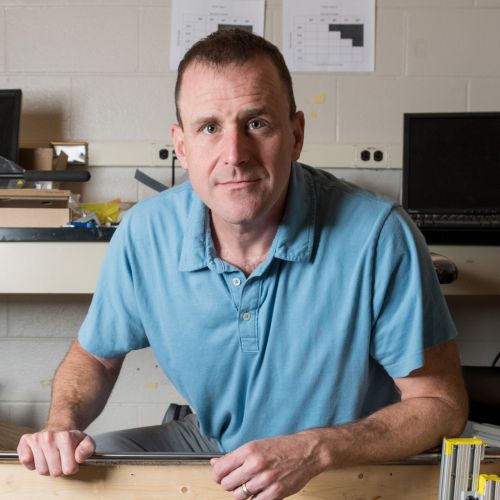
My research integrates my work in complex fluids and granular media and the biomechanics of locomotion of organisms and robots to address problems in nonequilibrium systems that involve interaction of matter with complex media. For example, how do organisms like lizards, crabs, and cockroaches cope with locomotion on complex terrestrial substrates (e.g. sand, bark, leaves, and grass). I seek to discover how biological locomotion on challenging terrain results from the nonlinear, many degree of freedom interaction of the musculoskeletal and nervous systems of organisms with materials with complex physical behavior. The study of novel biological and physical interactions with complex media can lead to the discovery of principles that govern the physics of the media. My approach is to integrate laboratory and field studies of organism biomechanics with systematic laboratory studies of physics of the substrates, as well as to create mathematical and physical (robot) models of both organism and substrate. Discovery of the principles of locomotion on such materials will enhance robot agility on such substrates

Dunn Family Professor; School of Physics
Director; Complex Rheology And Biomechanics (CRAB) Lab
Phone
404.894.0993
Office
Howey C202
Additional Research

biomechanics; neuromechanics; granular media; robotics; robophysics

University, College, and School/Department
Google Scholar
https://scholar.google.com/citations?hl=en&user=r7wE4M4AAAAJ&view_op=list_works&sortby=pubdate
Profile on GT Physics
Daniel
Goldman
I.
Show Regular Profile

Chengzhi Shi

Chengzhi Shi
chengzhi.shi@me.gatech.edu
Departmental Bio

Dr. Shi joined Georgia Tech in August 2018 as an assistant professor. Prior, he worked as a graduate student researcher at the Department of Mechanical Engineering of the University of California, Berkeley and Materials Science Division of Lawrence Berkeley National Laboratory focusing on the study of acoustic angular momentum and the design and realization of acoustic metamaterials and high-speed acoustic communication. His Ph.D. dissertation (2018) focuses on the development of acoustic metamaterials and the physics of the angular momentum of sound. Prior to his Ph.D. study at the Department of Mechanical Engineering of the University of California, Berkeley, Dr. Shi completed his M.S. degree in mechanical engineering at the University of Michigan-Shanghai Jiao Tong University Joint Institute in Shanghai, China. His M.S. thesis (2013) focuses on the dynamics and vibration of cyclically symmetric rotating mechanical systems.

Assistant Professor
Phone
404-894-2558
Office
003 Love Manufacturing Building
Additional Research

Acoustic wave interactions with different cells including neurons, and imaging and treatment techniques resulted from the interactions.

Laboratory Site
Chengzhi
Shi
Show Regular Profile

Giri Krishnan

Placeholder for headshot
giri@gatech.edu

Dr Krishnan is research professor in the Georgia Tech’s Interdisciplinary Research Institute, Institute for Data Engineering and Science, School of Computational Science and Engineering, College of Computing. He is an associate director of the Center for AI in Science and Engineering. His current interest is in developing AI methods for computational science problems across many domains. He is a computational neuroscientist by training, with past work spanning across a wide range of computational modeling and AI methods. His group's current focus is on generative methods for computational workflow, neural approaches for accelerating compute intensive problems and applying interpretable methods to scientific AI for advancing scientific understanding.

Prior to joining Georgia Tech, he was research scientist at UC San Diego and his research involved developing large-scale modeling of the brain to study sleep, memory and learning. In addition, he has contributed towards neuro-inspired AI and neuro-symbolic approaches. He is broadly interested in the emergence of intelligent behavior from neural computations in the brain and AI systems. 

Dr Krishnan has more than 50 publications and his research has been supported by multiple grants from NIH and NSF. He is passionate about open-science and reproducible science and strongly believes that progress in science requires reproducibility.

Associate Director, Center for Artificial Intelligence in Science and Engineering (ARTISAN)
Principal Research Scientist
Phone
404.894.2132
Office
CODA Building
Additional Research

AI : Deep learning, Neuro-symbolic ApproachesGeosciences.Molecular DynamicsNeuroscience : Theoretical and computational modeling

Research Focus Areas
Google Scholar
https://scholar.google.com/citations?hl=en&user=IGsdszkAAAAJ&view_op=list_works&sortby=pubdate
Giri
Krishnan
Show Regular Profile

Ratan Murty

Ratan Murty
ratan.murty@psych.gatech.edu
Personal Website

Ratan obtained his PhD in Neuroscience from the Indian Institute of Science, Bangalore (India) with Prof. SP Arun and completed his postdoctoral research at the Massachusetts Institute of Technology with Profs. Nancy Kanwisher and James J DiCarlo.​ He leads the Murty Vision, Cognition, and Computation Lab at Georgia Tech.

Ratan's research goal is to understand the neural codes and algorithms that support human vision.

Assistant Professor
Additional Research
NeurobiologyBiological VisionNeural Modeling
Research Focus Areas
Google Scholar
https://scholar.google.com/citations?hl=en&user=f7zaX8QAAAAJ&view_op=list_works&sortby=pubdate
School of Psychology Profile
Ratan
Murty
Show Regular Profile

Nabil Imam

Nabil Imam
nimam6@gatech.edu
Personal Website

Nabil Imam works on topics in machine learning and theoretical neuroscience with the goal of understanding general principles of neural coding and computation, and their technological applications.

Prof. Imam joined Georgia Tech faculty in January 2022.

Assistant Professor
Additional Research

Computational Neuroscience Neural Coding and Computation

Research Focus Areas
Google Scholar
https://scholar.google.com/citations?hl=en&user=DVK3S-AAAAAJ&view_op=list_works&sortby=pubdate
CSE Profile Page
Nabil
Imam
Show Regular Profile

Hang Lu

Hang Lu
hang.lu@gatech.edu
Lµ Fluidics Group

Hang Lu received her B.S. from the University of Illinois, Urbana-Champaign and her M.S.C.E.P and Ph.D. from the Massachusetts Institute of Technology. She is currently the Associate Dean for Research and Innovation in the College of Engineering and C. J. "Pete" Silas Chair, School of Chemical & Biomolecular Engineering at the Georgia Institute of Technology. Lu's research interests involve the interface of engineering and biology and her lab, the Lu Fluidics Group, is conducting research at these interface levels. The Lu Fluidics Group engineers BioMEMS (Bio Micro-Electro-Mechanical System) and microfluidic devices to address questions in neuroscience, cell biology, and biotechnology that are difficult to answer using conventional techniques.

Faces of Research - Profile Article

Associate Dean for Research and Innovation, College of Engineering
C. J. "Pete" Silas Chair, School of Chemical and Biomolecular Engineering
Phone
404.894.8473
Office
EBB 3017
Additional Research

Microfluidic systems for high-throughput screens and image-based genetics and genomicsSystems biology: large-scale experimentation and data miningMicrotechnologies for optical stimulation and optical recordingBig data, machine vision, automationDevelopmental neurobiology, behavioral neurobiology, systems neuroscienceCancer, immunology, embryonic development, stem cells

Google Scholar
https://scholar.google.com/citations?hl=en&user=DDKNuYgAAAAJ&view_op=list_works&sortby=pubdate
LinkedIn ChBE Profile Page
Hang
Lu
Show Regular Profile