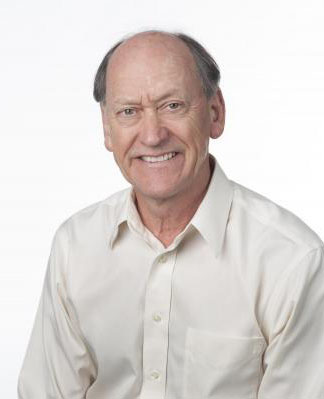
Aditi Das

Aditi Das
aditi.das@chemistry.gatech.edu
Chemistry Profile

Aditi Das did her BSc. (Hons.) Chemistry from St. Stephen's College Delhi, followed by M.S. (Chemistry) from I.I.T (Kanpur). She received her Ph.D. in Chemistry from Princeton University. She did post-doctoral work with Prof. Steve Sligar. She joined University of Illinois, Urbana-Champaign (UIUC) as a tenure track assistant professor in 2012. In 2019, she was promoted to associate professor with tenure. In 2022, she joined School of Chemistry and Biochemistry at Georgia Institute of Technology as an associate professor with tenure. Her research is in the area of enzymology of oxygenases that are involved lipid metabolism and cannabinoid metabolism.

Das is recipient of an American Heart Associate (AHA) career award and has been funded by National Institute of Health (NIH - NIGMS, NIDA and NCCIH), USDA, and National Multiple Sclerosis Society (NMSS). Her research was recognized by several National awards: Young Investigator award From Eicosanoid Research Foundation, Mary Swartz Rose Young Investigator Award and E.L.R. Stokstad award from American Society for Nutrition (ASN) for outstanding research on bioactive compounds for human health. She is also the recipient of Zoetis Research Excellence Award from her college. She was a co-organizer of the International Conference on Cytochrome P450. Recently her laboratory contributed several papers on cannabinoid metabolism by p450s. In recognition of this work, she was awarded El Sohly award from the ACS-Cannabis division for excellence in Cannabis research and is invited to give plenary lecture at ISSX meeting.  Das is also a standing study section member of BBM NIH study section. 

Associate Professor
Phone
609-203-6924
Office
3306 IBB
Aditi
Das
Show Regular Profile

Timothy Cope

Timothy Cope
tim.cope@gatech.edu
Website

My research interests center on control of movement by sensorimotor integration in the mammalian spinal cord. Using predominantly electrophysiological methods applied in vivo, we study neural signaling by spinal motoneurons, somatosensory neurons, and their central synapses. Our primary analyses include electrical properties, synaptic function, and firing behavior of single neurons. We are actively examining how these neurons and synapses respond soon and long after peripheral nerve injury and regeneration. Our recent findings demonstrate that successful regeneration of damaged sensory axons does not prevent complex reorganization of their synaptic connections made within the spinal cord. In separate studies, we are examining novel mechanisms of sensory encoding and their impairment which recently discovered in rodents treated with anti-cancer drugs. Both nerve regeneration and chemotherapy projects are driven by the long-term goal of accurately identifying the neural mechanisms behind movement disorders. We also continue to explore fundamental operations of the normal adult nervous system. Our most recent studies focus on synaptic modulation of motoneuron firing and on interspecies comparisons of spinal circuits.

Professor
Phone
404-385-4293
Office
555 14th Street NW Room 1425
Research Focus Areas
Google Scholar
https://scholar.google.com/citations?user=jzHG0ssAAAAJ&hl=en
https://biosci.gatech.edu/people/timothy-cope
Timothy
Cope
C.
Show Regular Profile

Lewis Wheaton

Lewis Wheaton
lewis.wheaton@ap.gatech.edu
Website

Dr. Lewis A. Wheaton received his Ph.D. in Neuroscience and Cognitive Sciences from the University of Maryland, College Park in 2005. He was a fellow at the National Institutes of Health (Medical Neurology Branch, 2001-2005) studying neural function and recovery of motor control after stroke. In mid-2005 he was awarded a post-doctoral fellowship at the Baltimore Veterans Affairs Medical Center (Maryland) where he performed neuroscience research in aging and stroke motor control in Veterans.

In 2008, Dr. Wheaton joined the School of Applied Physiology at Georgia Tech as an Assistant Professor. He became tenured in 2014 and is currently an Associate Professor in Biological Sciences. Dr. Wheaton is the Director of the Cognitive Motor Control Laboratory at Georgia Tech, engaged in over $1 million in state and federal research funding focused on understanding aspects of human motor control rehabilitation in aging, stroke and amputation. His lab has employed numerous high school, undergraduate, graduate, and post-doctoral fellows. He is the course director for 4 courses in the School of Biological Sciences (Human Neuroimaging, Movement Disorders, Human Neuroanatomy, and the History of Neuroscience). He has Chaired/Co-Chaired 3 international conferences focused on motor control research and clinical outcomes, obtaining funding by federal and private sources. His research has yielded several manuscript publications in the field of motor control neuroscience, several focused expert reviews, and numerous conference presentations both in the US and abroad.

Dr. Wheaton is also an adjunct Associate Professor in the Department of Rehabilitation at Emory School of Medicine and a Member of the Children’s Center for Neurosciences Research at the Emory Children’s Pediatric Research Center.

Dr. Wheaton earned a BS (Biology) degree at Radford University (VA). He is an active parent volunteer at his children's schools and in the local community.

Associate Professor
Adjunct Associate Professor, Department of Rehabilitation Medicine, Emory University
Phone
404-385-2339
Office
555 14th Street 1309E
Additional Research

The Cognitive Motor Control Laboratory seeks to understand neurophysiology guiding skillful human-object interactions in upper extremity motor control. We use neuroimaging to identify anatomical and physiological circuits in humans that guide successful skilled behavior. Our clinical studies consider neural systems that can suffer injury or dysfunction related to deficits in skillful motor control, and how to utilize surrogate neural circuits in restorative motor therapies in stroke and upper limb amputation.

Research Focus Areas
Google Scholar
https://scholar.google.com/citations?user=Z_kEGKcAAAAJ&hl=en
http://biosci.gatech.edu/people/Lewis-Wheaton News Story about C-PIES Appointment
Lewis
Wheaton
A.
Show Regular Profile

Simon Sponberg

Simon Sponberg
simon.sponberg@physics.gatech.edu
Agile Systems Lab

During his graduate work at UC, Berkeley, Simon sought to uncover general principles of animal locomotion that reveal control strategies underlying the remarkable stability and maneuverability of movement in nature. His work has demonstrated the importance animals’ natural dynamics for maintaining stability in the absence of neural feedback. His research emphasizes the importance of placing neural control in the appropriate dynamical context using mathematical and physical models. He has collaborated with researchers at four other institutions to transfer these principles to the design of the next generation of bio-inspired legged robots. 

Simon received his Ph.D. in Integrative Biology at UC, Berkeley and has been a Hertz Fellow since 2002. His work has led to fellowships and awards from the National Science Foundation, the University of California, the Woods Hole Marine Biological Institute, the American Physical Society, the Society of Integrative and Comparative Biology, and the International Association of Physics Students. He is also currently affiliated the new Center for Interdisciplinary Bio-Inspiration in Education and Research (CIBER) at Berkeley.

Dunn Family Associate Professor; Physics & Biological Sciences
Director; Agile Systems Lab
Phone
404.385.4053
Office
Howey C205
Additional Research
A central challenge for many organisms is the generation of stable, versatile locomotion through irregular, complex environments. Animals have evolved to negotiate almost every environment on this planet. To do this, animals'nervous systems acquire, process and act upon information. Yet their brains must operate through the mechanics of the body's sensors and actuators to both perceive and act upon the environment. Ourresearch investigates howphysics and physiologyenable locomoting animals to achieve the remarkable stability and maneuverability we see in biological systems. Conceptually, this demands combining neuroscience, muscle physiology, and biomechanics with an eye towards revealing mechanism and principle -- an integrative science of biological movement. This emerging field, termedneuromechanics, does for biology what mechatronics, the integration of electrical and mechanical system design, has done for engineering. Namely, it provides a mechanistic context for the electrical (neuro-) and physical (mechanical) determinants of movement in organisms. Weexplore how animals fly and run stably even in the face of repeated perturbations, how the multifuncationality of muscles arises from their physiological properties, and how the tiny brains of insects organize and execute movement.
Research Focus Areas
University, College, and School/Department
Google Scholar
https://scholar.google.com/citations?user=kKFx7RgAAAAJ&hl=en
Physics Profile Page
Simon
Sponberg
Show Regular Profile

Ming-fai Fong

Ming-fai Fong
ming-fai.fong@bme.gatech.edu
https://fong-lab.github.io/

Ming-fai Fong is an Assistant Professor in the Coulter Department of Biomedical Engineering at Georgia Tech and Emory. She received her BS in Mechanical Engineering from MIT and Ph.D. in Neuroscience from Emory University. She completed her postdoctoral training in the Department of Brain and Cognitive Sciences at MIT and a visiting lectureship in the Neuroscience Department at Wellesley College.
 

Assistant Professor
Phone
404.894.6059
Office
UAW 3103
Ming-fai
Fong
Show Regular Profile

Boris Prilutsky

Boris Prilutsky
boris.prilutsky@biosci.gatech.edu
Website

The research focus of Boris Prilutsky's laboratory is Neural Control and Biomechanics of Movement. They study how the nervous system controls hundreds of muscles and kinematic degrees of freedom of the body to produce purposeful motor behaviors and how the neural control of motor behaviors is affected by neural and musculoskeletal injuries.

Professor
Phone
404-894-7659
Office
MSPO Program 1309D
Additional Research
The major research focus of my research is on biomechanics and motor control of locomotion and reaching movements in normal as well as in neurological and musculoskeletal pathological conditions. In particular, we study the mechanisms of sensorimotor adaptation to novel motor task requirements caused by visual impairament, peripheral nerve or spinal cord injury, and amputation. We also investigate how motor practice and sensory information affect selections of adaptive motor strategies.
Google Scholar
http://scholar.google.com/citations?user=gE3DQUEAAAAJ&hl=en
http://biosci.gatech.edu/people/boris-Prilutsky
Boris
Prilutsky
I.
Show Regular Profile

Michael Goodisman

Michael Goodisman
michael.goodisman@biology.gatech.edu
Website

Michael Goodisman is interested in understanding how evolutionary processes affect social systems and how sociality, in turn, affects the course of evolution. His research explores the molecular basis underlying sociality, the nature of selection in social systems, the breeding biology of social animals, the process of self-organization in social groups, and the course of development in social species. His teaching interests are centered on the importance of behavior, genetics, and ethics in biological systems. Goodisman also works to improve and advance undergraduate education.

Professor
Associate Chair for Undergraduate Education
Phone
404-385-6311
Office
Cherry Emerson A124
Additional Research
The evolution of sociality represented one of the major transition points in biological history. I am interested in understanding how evolutionary processes affect social systems and how sociality, in turn, affects the course of evolution. My research focuses on the molecular basis underlying sociality, the nature of selection in social systems, the breeding biology of social animals, the process of self-organization in social groups, and the course of development in social species.
Research Focus Areas
Google Scholar
https://scholar.google.com/citations?user=EvWHHJMAAAAJ&hl=en&oi=ao
http://www.biology.gatech.edu/people/michael-goodisman
Michael
Goodisman
D.
Show Regular Profile

T. Richard Nichols

T. Richard Nichols
trn@gatech.edu

T. Richard Nichols received the B.S. degree in biology from Brown University, Providence, RI, USA, in 1969, and the Ph.D. degree in physiology from Harvard University, Cambridge, MA, USA, in 1974. He is currently a Professor in the School of Biological Sciences at the Georgia Institute of Technology.,He is currently a Professor in the School of Biological Sciences at the Georgia Institute of Technology, Atlanta, GA, USA.

Professor
Phone
404-894-3986
Office
555 14th Street NW Room 1352
Additional Research
The work in this laboratory is focused on mechanisms underlying motor coordination in mammalian systems. These mechanisms are to be found in the structure and dynamic properties of the musculoskeletal system as well as in the organization of neuronal circuits in the central nervous system. Our work concerns the interactions between the musculoskeletal system and spinal cord that give rise to normal and abnormal movement and posture, and in the manner in which central pattern-generating networks are modified for specific motor tasks. Our studies have applications in several movement disorders, including spinal cord injury. The experimental approaches span a number of levels, from mechanical studies of isolated muscle cells to kinematic measurements of natural behavior in quadrupeds.
Google Scholar
https://scholar.google.com/scholar?q=Nichols+TR&btnG=&hl=en&as_sdt=0,11
http://biosci.gatech.edu/people/richard-nichols
T. Richard
Nichols
Show Regular Profile

Liang Han

Liang Han
lhan41@mail.gatech.edu
Website
Associate Professor
Phone
404-385-5219
Office
EBB 3014
Additional Research
We use a combination of molecular, cellular, immunohistochemical, electrophysiological, genetic and behavioral approaches to understand how the nervous system receives, transmits and interprets various stimuli to induce physiological and behavioral responses. We are particularly interested in the basic mechanisms underlying somatosensation, including pain, itch and mechanical sensations. Somatosensation is initiated by the activation of the primary sensory neurons in dorsal root ganglia and trigeminal ganglia. We have discovered the molecular identity of itch-sensing neurons in the peripheral and provided novel insights into the mechanisms of itch sensation (Han et.al. 2013 Nature Neuroscience). We are currently investigating how chronic itch associated with cutaneous or systemic disorders is initiated and transmitted. We are also interested in the sensory innervation in the respiratory system. Chronic respiratory diseases such as asthma and chronic obstructive pulmonary disease (COPD) are leading causes of illness and significant public health burdens. We recently identified a subset of vagal sensory neurons mediating bronchoconstriction and airway hyperresponsiveness (Han et. al. 2017 Nature Neuroscience). We are investigating how the sensory innervations in the airway contribute to the pathogenesis of respiratory diseases.
Research Focus Areas
Google Scholar
https://scholar.google.com/citations?hl=en&user=mRFXncEAAAAJ&view_op=list_works&citft=2&email_for_op=biohanliang@gmail.com
Liang
Han
Show Regular Profile

Pamela Bhatti

Pamela Bhatti
pamela.bhatti@ece.gatech.edu

Dr. Pamela Bhatti is Professor and Associate Chair for Strategic Initiatives and Innovation at the School of Electrical and Computer Engineering, Georgia Tech. Her research is dedicated to overcoming sensory loss in human hearing through focused neural stimulation, and novel implantable sensors. Dr. Bhatti also conducts research in cardiac imaging to assess and monitor cardiovascular disease. She received her B.S. in Bioengineering from the University of California, Berkeley (1989), her M.S. in Electrical Engineering from the University of Washington (1993), and her Ph.D. in Electrical Engineering from the University of Michigan, Ann Arbor (2006). In 2013, she earned an M.S. in Clinical Research from Emory University, and co-founded a startup company (Camerad Technologies) based on her research in detecting wrong-patient errors in radiology. Dr. Bhatti is the IEEE Journal of Translational Engineering in Health and Medicine, Editor-in-Chief; and, in 2017, received the Georgia Tech Class of 1934 Outstanding Interdisciplinary Activities Award.

Assistant Professor
Phone
404-894-7467
Office
MiRC 225
Additional Research

Biomedical sensors and subsystems including bioMEMS Neural prostheses: cochlear and vestibular Vestibular rehabilitation

Google Scholar
https://scholar.google.com/scholar?q=PT+Bhatti&btnG=&hl=en&as_sdt=0,11
Related Site
Pamela
Bhatti
T.
Show Regular Profile